
 Save 15% on your 1st Autoship learn more

 Email us
 Live Chat
 FAQs
FAQs





Introduction
You are sitting on the couch with your dog after a long day. Your pup leans in for a snuggle and a few happy licks. Suddenly, you notice a smell that is far from pleasant. While many owners think "dog breath" is just a normal part of life, it is often the first sign of a health issue. At BaxterBoo, we talk to pet parents every day who wonder if they really need to scrub those pearly whites or if a few biscuits will do the trick. This post covers why dental hygiene matters, how to start a routine at home, and when you need to call in the professionals. Taking care of your dog's mouth is a vital part of helping them live a long and comfortable life.
Quick Answer: Yes, you absolutely need to clean your dog's teeth. Regular brushing and professional cleanings prevent painful conditions like periodontal disease and protect your dog's heart and kidneys from bacterial infections.
Why Dental Care Is Not Optional
Many owners assume that chewing on bones or dry kibble is enough to keep a dog's mouth clean. This is a common myth. While certain textures can help rub off some surface debris, they cannot reach the bacteria hiding under the gum line. Just like humans, dogs develop plaque. This is a sticky film of bacteria that forms on the teeth within hours of eating. If you do not remove it, it hardens into tartar or calculus.
Once tartar forms, you cannot simply brush it away at home. It becomes a fortress for bacteria. This leads to gingivitis, which is the inflammation of the gums. If left alone, it progresses to periodontal disease. This condition destroys the tissues and bone that hold the teeth in place. It is not just about a missing tooth. The real danger is that bacteria from the mouth can enter the bloodstream. This can cause serious damage to the heart, liver, and kidneys.
Key Takeaway: Oral health is a window into your dog's overall wellness. Neglecting their teeth can lead to systemic infections that impact major organs.
Signs Your Dog Needs Dental Attention
It is helpful to check your dog's mouth at least once a week. You want to see pale pink gums and white teeth. If you notice any of the following signs, it is time to step up your home care or visit the vet. For more guidance, read our article about warning signs of bad teeth in dogs.
- Foul or "fishy" breath that does not go away.
- Yellow, brown, or gray deposits on the teeth near the gum line.
- Red, swollen, or bleeding gums.
- Difficulty picking up food or dropping kibble while eating.
- Pawing at the face or mouth.
- Loose or missing teeth.
- Excessive drooling, sometimes with tinges of blood.
If your dog stops eating or seems sensitive when you touch their face, they might be in significant pain. Dogs are very good at hiding discomfort. They will often continue to eat even with a severe toothache.
Vet Tip: If you notice a sudden change in your dog's breath or eating habits, schedule a veterinary exam. These can be signs of a fractured tooth or a deep infection that requires medical treatment.
How to Brush Your Dog’s Teeth
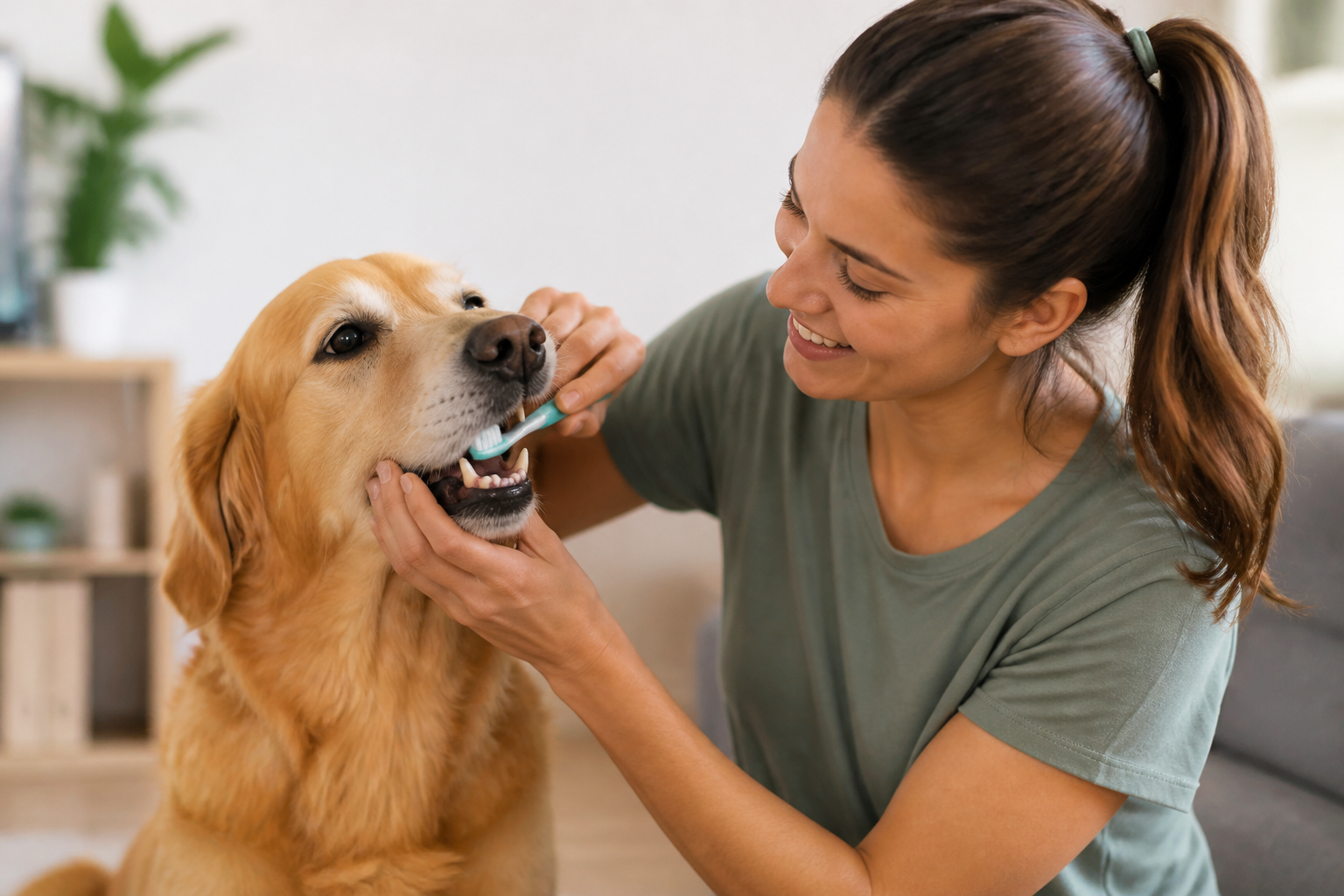
Brushing is the gold standard for home dental care. It might feel intimidating if your dog is not used to it. The goal is to make it a positive experience. You should never use human toothpaste. It contains ingredients like xylitol and fluoride that are toxic to dogs. Use a toothpaste specifically made for pets in flavors like chicken or peanut butter. You can also review these pet dental care tips before beginning.
Step 1: Get them used to your touch. Spend a few days just rubbing your finger along their gums and teeth. Do this when they are calm and relaxed.
Step 2: Introduce the toothpaste. Let your dog lick a small amount off your finger. Most dogs love the taste and will start to see the tube as a treat.
Step 3: Introduce the brush. You can use a finger brush or a long handled dog toothbrush. Put some paste on it and let them lick it.
Step 4: Start brushing. Gently lift the lip and brush the outside surfaces of the teeth in a circular motion. Focus on the area where the tooth meets the gum. You do not need to worry as much about the inside surfaces. The tongue usually helps keep those areas cleaner.
Step 5: Reward and praise. Always give a small treat or lots of affection afterward. You want them to look forward to the next session.
Bottom line: Daily brushing is ideal, but aim for at least three times a week to significantly reduce plaque buildup.
The Role of Professional Cleanings
Even with perfect brushing, most dogs will eventually need a professional cleaning. This is very different from what happens at a human dentist. For dogs, a thorough cleaning must be done under general anesthesia. This allows the vet to scale the teeth safely above and below the gum line. It also allows them to take dental X-rays.
X-rays are critical because a large portion of dental disease happens where you cannot see it. A tooth might look fine on the surface but have a painful abscess at the root. During the procedure, the vet will remove tartar, polish the enamel to prevent new plaque from sticking, and extract any teeth that are too damaged to save.
Our pet pharmacy at BaxterBoo works with Pet's Choice to provide FDA-approved medications that your vet might prescribe after a dental procedure. This includes antibiotics for infections or pain relief for those recovering from extractions. Having a pharmacy you trust makes it easier to manage your dog's recovery and long-term health.
Beyond the Brush: Dental Chews and Diets
If your dog simply will not tolerate brushing, there are other tools you can use. These should be seen as helpful additions rather than a total replacement for brushing and professional care. Our dog dental and breath care collection offers several options for building a routine.
Dental Chews and Treats
Products like Greenies are designed with a specific texture that helps scrub teeth as the dog chews. Many of these treats also contain ingredients that help break down tartar chemically. Look for products that have the Veterinary Oral Health Council (VOHC) seal of approval. You can explore our selection of Greenies products when choosing dental treats.
Dental Diets
Some premium brands like Royal Canin and Farmina Vet Life offer specific dental formulas. The kibble in these diets is often larger and more fibrous. This forces the dog to chew rather than swallow whole, which provides a mechanical cleaning effect. We carry a wide selection of these specialized foods to help you manage your dog's oral health through their daily meals.
Toys and Water Additives
Rubber toys with bumps and ridges can help massage gums and scrape away soft plaque. You can also find water additives that you simply pour into their bowl. These often contain enzymes that help kill the bacteria responsible for bad breath and plaque formation.
- Check for the VOHC seal on packaging.
- Avoid very hard toys like real bones or antlers, which can fracture teeth.
- Ensure the chew is the correct size for your dog to prevent choking.
- Monitor your dog whenever they are enjoying a dental chew.
For additional ideas, browse our guide to the best dental chews for dogs.
Key Takeaway: Combining different methods like dental diets, chews, and toys creates a multi-layered defense against gum disease.
Breed and Age Considerations
Not all dogs have the same dental needs. Breed and age play a huge role in how often you should visit the vet for a checkup.
Smaller breeds like Yorkies, Chihuahuas, and Pugs are much more prone to dental disease. Their teeth are often crowded into tiny mouths. This creates more nooks and crannies where bacteria can hide. These dogs may need professional cleanings as early as two years old. They often require yearly visits to stay on top of plaque.
Large breeds generally have more space between their teeth, but they are more prone to cracked or fractured teeth. This often happens from chewing on objects that are too hard. Senior dogs also require extra attention. As a dog ages, their immune system may not fight off oral bacteria as effectively. Regular exams are vital for seniors to prevent oral pain from affecting their quality of life.
Our MVP Rewards programme is a great way to save on the supplies you need for these frequent checks. You can earn points on every purchase of toothpaste, brushes, and dental treats, which helps make consistent care more affordable.
Creating a Sustainable Routine
The best way to ensure your dog's teeth stay clean is to make it a habit. Tie the dental routine to something you already do. Perhaps you brush their teeth right before you brush your own at night. Or maybe they get a dental chew every morning after their walk.
If you are just starting, do not expect to brush every tooth perfectly on the first try. It might take weeks for your dog to feel fully comfortable. Be patient and keep the sessions short. Even ten seconds of brushing is better than none at all.
When you use our Autoship programme for your favorite dental treats and toothpaste, you never have to worry about running out. This consistency is the secret to preventing expensive vet bills and keeping your dog's breath fresh.
Conclusion
Caring for your dog's teeth is one of the most impactful things you can do for their health. While it takes a bit of effort to start a brushing routine, the payoff is a happier dog and fewer emergency vet visits. Remember to watch for signs of trouble like bad breath or red gums. Work closely with your veterinarian to determine when a professional cleaning is necessary. We are here to support you with the best selection of dental tools and a pharmacy for any medical needs. Keeping those teeth clean ensures your dog stays by your side, healthy and ready for more snuggles, for many years to come. Check out our full collection of dog dental care products to get started today.
FAQ
How often should I brush my dog's teeth?
Ideally, you should brush your dog's teeth every day to remove plaque before it turns into tartar. If daily brushing is not possible, aim for at least three times a week to see a significant benefit. Consistency is more important than the length of each session.
Can I use a regular human toothbrush on my dog?
You can use a soft-bristled child's toothbrush if you do not have a specific dog brush. However, you must never use human toothpaste because it contains ingredients like xylitol that are poisonous to dogs. Always use a toothpaste formulated specifically for pets.
Are dental chews enough to keep teeth clean?
Dental chews are a great supplement but are usually not enough on their own. They primarily clean the chewing surfaces and do not reach the bacteria under the gum line as well as brushing does. Think of them as a helpful addition to a routine that includes brushing and vet checkups.
At what age should I start cleaning my dog's teeth?
You should start getting your dog used to mouth handling and brushing as a puppy. This helps them accept the routine as they grow older. Most veterinarians recommend a first professional dental assessment by the age of one or two, depending on the breed.






