
 Save 15% on your 1st Autoship learn more

 Email us
 Live Chat
 FAQs
FAQs





Introduction
Walking across your living room only to find a layer of fur stuck to your socks is a familiar experience for many pet owners. You might feel like you are losing a battle against the "tumbleweeds" of hair rolling across the hardwood floors. It can be frustrating to vacuum in the morning only to see new drifts of fur by the evening. At BaxterBoo, we know that while you love your dog, you do not necessarily love wearing their coat on your clothes. Brushing is the most effective way to manage this natural process. This post explores how regular grooming impacts hair loss, the best tools for different coat types, and when shedding indicates a health concern. Brushing is the foundation of a clean home and a healthy pet.
Why Brushing Is the Best Defense Against Shedding
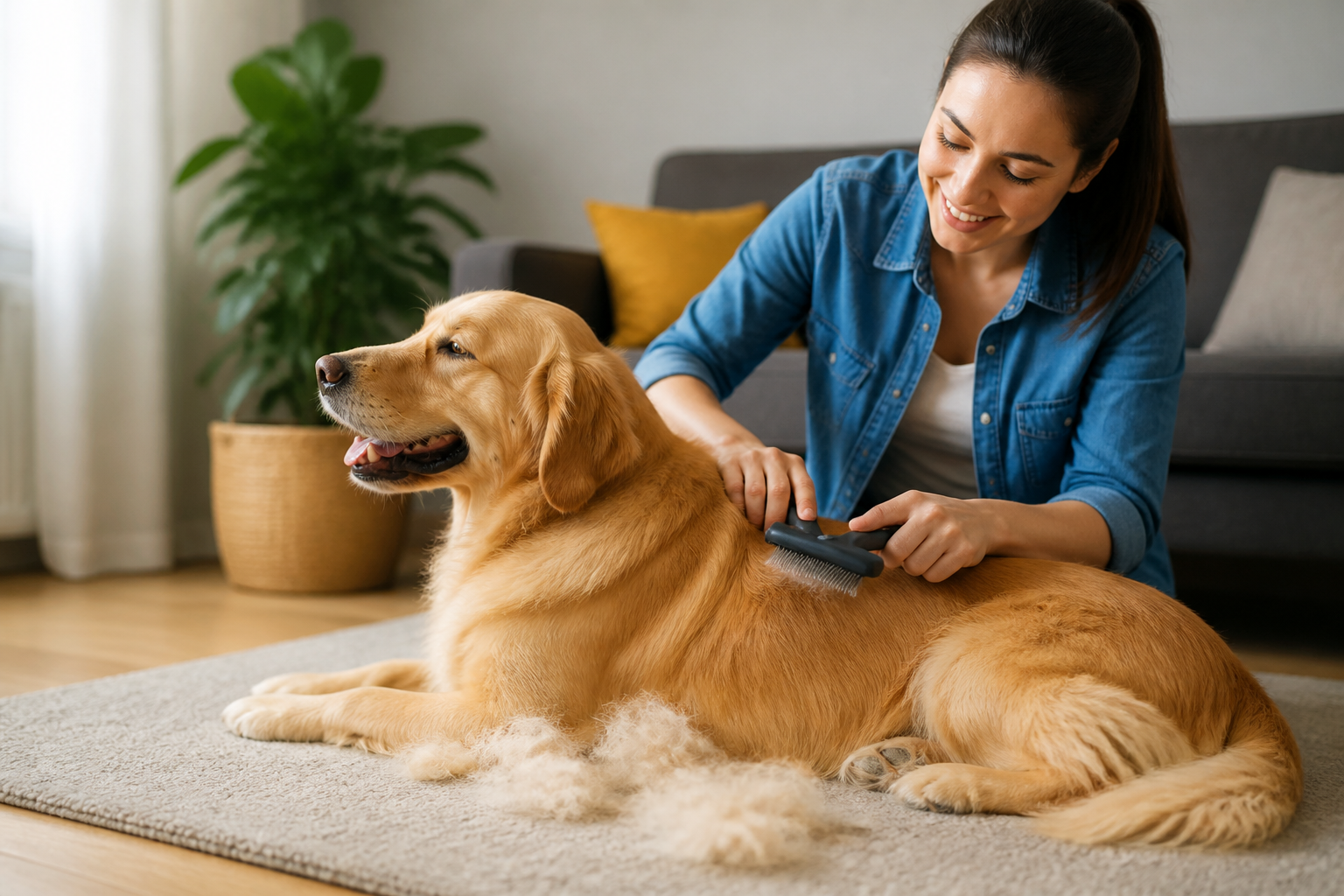
The short answer is yes. Brushing is the most effective tool in your arsenal for managing hair around the house. It does not stop the biological process of hair growth and loss. Instead, it allows you to control where that hair ends up. By manually removing loose fur with a brush, you catch it before it falls onto your furniture or carpet.
When you brush your dog, you are doing more than just cleaning up. You are also stimulating the skin and distributing natural oils across the hair shaft. These oils keep the coat healthy and help the skin stay hydrated. Healthy skin holds onto hair longer. Dry, flaky skin can lead to premature hair loss and even more mess for you to clean up.
Quick Answer: Brushing helps with shedding by manually removing loose and dead hair before it falls off the dog. It also distributes natural skin oils that keep the coat healthy and reduce excessive breakage.
Brushing also allows you to inspect your dog for other issues. While you are working through their fur, you might notice skin irritations, lumps, or parasites like fleas and ticks. Dealing with these issues early can prevent the type of skin damage that leads to excessive shedding. It is a proactive way to maintain their overall wellness while keeping your home tidy. Explore our dog grooming supplies to find tools for your routine.
Understanding the Canine Hair Cycle
Every dog sheds to some degree. Even breeds labeled as non-shedding actually lose a small amount of hair. To understand how brushing helps, it is useful to know how hair grows. Every follicle goes through three specific phases.
The first phase is the anagen phase, which is the active growth period. The second is the catagen phase, where the hair stops growing and the sheath attaches to the hair. Finally, there is the telogen phase. This is the resting phase where the hair is essentially dead but still sitting in the follicle.
Brushing primarily targets hair in the telogen phase. Without intervention, these dead hairs eventually fall out on their own. By using a grooming tool, you pull these resting hairs out of the follicle early. This clears the way for new, healthy hair to begin the anagen phase again. This cycle happens year-round, but it accelerates during specific times of the year. For another look at seasonal coat changes, read our guide to Australian Shepherd shedding.
Choosing the Right Tools for Your Dog's Coat Type
Not all brushes are created equal. Using the wrong tool can be ineffective or even uncomfortable for your dog. You need to match the grooming equipment to the specific length and texture of your dog's fur.
Short and Smooth Coats
Dogs like Labradors, Boxers, and Beagles have short hair that can be surprisingly difficult to manage. Their hairs are often stiff and "needle-like," meaning they weave themselves into fabric. For these dogs, a rubber grooming mitt or a curry brush is ideal. The rubber teeth create friction that pulls loose hair away from the skin. It also provides a massage that most dogs find very relaxing.
Double Coats
Breeds like Huskies, Golden Retrievers, and German Shepherds have a soft undercoat and a tougher outer coat. They "blow" their coats twice a year. During these times, a standard brush will not reach the deep layers where the bulk of the shedding happens. You need an undercoat rake. These tools have long, rounded pins that reach through the top layer to pull out the fuzzy undercoat before it mats. You can compare options in our dog brushes and combs collection.
Long or Wire Coats
For dogs with long, flowing hair or wiry textures, a slicker brush is the standard choice. These have fine wire bristles that are slightly angled. They are excellent for removing tangles and capturing loose fur in the mid-layers of the coat. If your dog has very long hair, follow up with a metal finishing comb to ensure you have reached all the way to the skin. Dogs with textured coats may also benefit from this curly-hair grooming guide.
Key Takeaway: Using a tool specifically designed for your dog's coat type ensures you remove the maximum amount of dead hair without irritating the skin.
The Professional Secret: The Blowout Technique
If you have ever taken your dog to a professional groomer, you might notice they come home shedding significantly less for several weeks. This is usually due to the blowout technique. Groomers use high-velocity dryers to force loose hair out of the coat after a bath.
You can replicate some of this at home. Start by brushing your dog thoroughly to remove the biggest clumps of fur. Then, give them a bath using a deshedding shampoo. These formulas often contain ingredients like omega fatty acids or aloe that help "release" the hair from the follicle during the wash.
After the bath, use a pet-specific blow dryer. Do not use a human hair dryer, as these get too hot and can burn a dog's sensitive skin. The airflow from a pet dryer pushes the remaining loose hair out. It is best to do this outside or in a garage, as the hair will fly everywhere. Once the dog is dry, give them one final brush. This multi-step process can reduce shedding by up to 80 percent for several weeks.
How Often Should You Brush Your Dog?
Consistency is more important than duration. Brushing for five minutes every day is much more effective than brushing for an hour once a month. For most dogs, a quick daily session is the gold standard. It keeps the hair at bay and makes the task feel like a normal part of the day rather than a stressful event.
If daily brushing is not possible, aim for at least three times a week. During the spring and fall, when many dogs experience seasonal shedding, you will likely need to increase the frequency. You can tell it is time to brush when you start seeing "tumbleweeds" on the floor or if you see tufts of fur sticking out from your dog's coat.
Step 1: Gather your supplies. / Have your specific brush, a grooming spray, and some treats ready before you start.
Step 2: Apply a conditioning spray. / A light mist helps prevent hair breakage and makes the brush glide through tangles more easily.
Step 3: Brush in the direction of growth. / Start at the head and work your way back to the tail, using gentle strokes.
Step 4: Check high-friction areas. / Pay extra attention to the armpits, behind the ears, and the base of the tail where mats often form.
Step 5: Reward your dog. / Give them a treat and praise to ensure they associate grooming with a positive experience.
The Connection Between Nutrition and Shedding
What goes into your dog is just as important as what you brush off them. A dog's coat is a direct reflection of their internal health. If they are not getting the right nutrients, their hair follicles will be weak. This leads to excessive shedding and a dull, brittle coat.
High-quality proteins are the building blocks of hair. Since hair is made mostly of protein, a diet lacking in this area will cause the body to prioritize internal organs over coat health. Look for foods that list a specific meat as the first ingredient. We carry several premium brands at BaxterBoo, such as Orijen, Acana, and Farmina, that focus on biologically appropriate nutrition. Browse our dog food selection when reviewing nutrition options.
Healthy fats are the other piece of the puzzle. Omega-3 and Omega-6 fatty acids are essential for maintaining the skin's moisture barrier. When the skin is hydrated, the follicles are stronger. You can often find these in fish oil supplements or in specialized "skin and coat" dog foods.
Bottom line: A nutrient-dense diet rich in protein and healthy fats reduces shedding by strengthening the hair from the inside out.
For more ideas about nutritional support, explore our pet supplement guide.
When Shedding Indicates a Medical Problem
While shedding is normal, there is a point where it becomes a medical concern. If you notice your dog is losing hair in patches or if their skin looks red and inflamed, it is time to look deeper.
Excessive hair loss can be caused by several underlying issues:
- Allergies: Food or environmental allergies often manifest as skin irritation and hair loss.
- Parasites: Fleas, ticks, and mites cause itching, which leads to scratching and fur loss.
- Hormonal imbalances: Conditions like hypothyroidism or Cushing's disease can cause the coat to thin significantly.
- Stress: Major life changes can trigger a physical reaction in dogs, including "stress shedding."
- Infections: Bacterial or fungal infections on the skin can kill off hair follicles in specific areas.
If the shedding is accompanied by a change in appetite, lethargy, or constant scratching, a trip to the vet is necessary. They can perform skin scrapings or blood tests to find the root cause.
Vet Tip: If your dog develops bald spots, symmetrical hair loss, or visible skin sores, consult your veterinarian immediately. These symptoms usually indicate an underlying health issue rather than normal seasonal shedding.
Managing Shedding Through the BaxterBoo Pharmacy
For dogs with chronic skin conditions or allergies that cause excessive shedding, standard grooming might not be enough. Sometimes, a veterinarian will prescribe specific medications or therapeutic diets to manage the issue. This is where our pharmacy can help.
Through our partnership with Pet's Choice, we offer a full range of FDA-approved medications. This includes allergy treatments, flea and tick preventives, and prescription-strength shampoos. If your vet prescribes a specific diet, such as Farmina Vet Life, you can have it delivered right to your door. Managing a health-related shedding issue is much easier when you have a reliable source for the supplies your vet recommends.
Common Mistakes That Increase Shedding
Sometimes, our attempts to help can actually make the problem worse. One of the most common mistakes is over-bathing. While a clean dog sheds less in the short term, washing them too often strips away the natural oils they need for skin health. This leads to dry skin and, ironically, more shedding. Most dogs only need a bath every four to six weeks.
Another mistake is using the wrong brush. A metal de-shedding rake used too aggressively on a short-haired dog can cause "brush burn." This is a painful skin irritation that can lead to infections. Always use light pressure and let the tool do the work. If you see the skin turning pink, you are pressing too hard.
Finally, never shave a double-coated dog to stop shedding. It might seem like a good idea in the summer, but it actually destroys their ability to regulate their temperature. The undercoat often grows back faster than the guard hairs, leading to a matted, patchy coat that sheds even worse than before. Brushing is the only safe way to manage a heavy undercoat.
Creating a Shedding Management Plan
Managing hair in a multi-pet household requires a system. You cannot just wait for the hair to pile up. A proactive plan keeps the mess under control and keeps your dogs comfortable.
- Daily: Quick 5-minute brush with a rubber mitt or slicker brush.
- Weekly: Deep grooming session with an undercoat rake if applicable.
- Monthly: A thorough bath with a deshedding shampoo and a high-velocity blowout.
- Quarterly: A visit to a professional groomer for a "full service" deshedding treatment.
By following this schedule, you break the cycle of "peak shedding" and maintain a more consistent level of cleanliness. It also ensures that your dog's skin is always getting the stimulation it needs to stay healthy.
The Role of Hydration and Environment
Environment plays a surprising role in how much a dog sheds. Dogs that spend most of their time in climate-controlled homes may shed consistently all year long because their bodies do not get the environmental cues that seasons are changing. This is often called "indoor shedding."
Keeping your home at a consistent, comfortable temperature can help, but hydration is even more important. A dehydrated dog will have dry, brittle hair that breaks and falls out easily. Ensure your dog always has access to fresh, clean water. During the winter, when indoor air is very dry, using a humidifier can help keep their skin from drying out, which in turn helps keep their fur in the follicles.
Summary of Best Practices
Reducing the amount of hair in your home is a marathon, not a sprint. You will never stop a dog from shedding entirely, as it is a vital biological function. However, you can significantly reduce the impact on your daily life.
- Identify the coat type and use the correct tool.
- Establish a short, daily brushing routine.
- Feed a high-quality diet with added fish oils.
- Use a pet-specific dryer after baths to blow out the undercoat.
- Consult a vet if shedding is accompanied by skin irritation or bald spots.
By staying consistent, you can spend less time with the vacuum and more time enjoying your pet.
Conclusion
Brushing is the single most effective way to manage your dog's shedding and maintain their skin health. While it requires a bit of daily effort, the reward is a cleaner home and a more comfortable pet. Remember that shedding is often a window into your dog's overall wellness. If you provide good nutrition, stay on top of grooming, and use the right tools from BaxterBoo, you can keep the fur under control. For those managing more complex skin issues, our pharmacy partnership with Pet's Choice is a great resource for prescription needs.
- Brush daily to capture hair at the source.
- Use coat-specific tools like undercoat rakes or rubber mitts.
- Support skin health with Omega-3 supplements and high-quality protein.
- Monitor for skin changes that might require a vet visit.
Key Takeaway: Regular brushing doesn't just clean your house; it supports your dog's natural hair growth cycle and serves as an essential health check.
To make your grooming routine even easier, consider our Autoship programme. You can have your favorite deshedding shampoos, brushes, and supplements delivered on a schedule so you never run out.
FAQ
Does brushing my dog every day hurt their skin?
If you use the correct tool and gentle pressure, daily brushing is very beneficial and does not hurt. It stimulates blood flow and distributes natural oils that protect the skin. However, if you see redness or if your dog flinches, you may be using too much pressure or the wrong type of brush for their coat.
Can I stop my dog from shedding completely?
No, it is impossible to stop a dog from shedding entirely because it is a natural part of their hair growth cycle. All dogs, even "hypoallergenic" breeds, lose some hair as old strands die and new ones grow in. Brushing simply allows you to manage where that hair ends up so it does not cover your home.
Why is my dog shedding so much more in the spring?
Most dogs experience a "coat blow" in the spring as they lose their heavy winter undercoat to prepare for warmer weather. This is a biological response to the changing length of daylight and rising temperatures. During this time, you may need to increase brushing to once or twice a day to keep up with the volume of fur.
Should I use a human hair dryer on my dog after a bath?
You should avoid using human hair dryers because they generally operate at much higher temperatures than pet-specific dryers. A dog's skin is thinner and more sensitive than human skin, making them prone to accidental burns. If you must use one, keep it on the "cool" or "no heat" setting and move it constantly.






