
 Save 15% on your 1st Autoship learn more

 Email us
 Live Chat
 FAQs
FAQs





Introduction
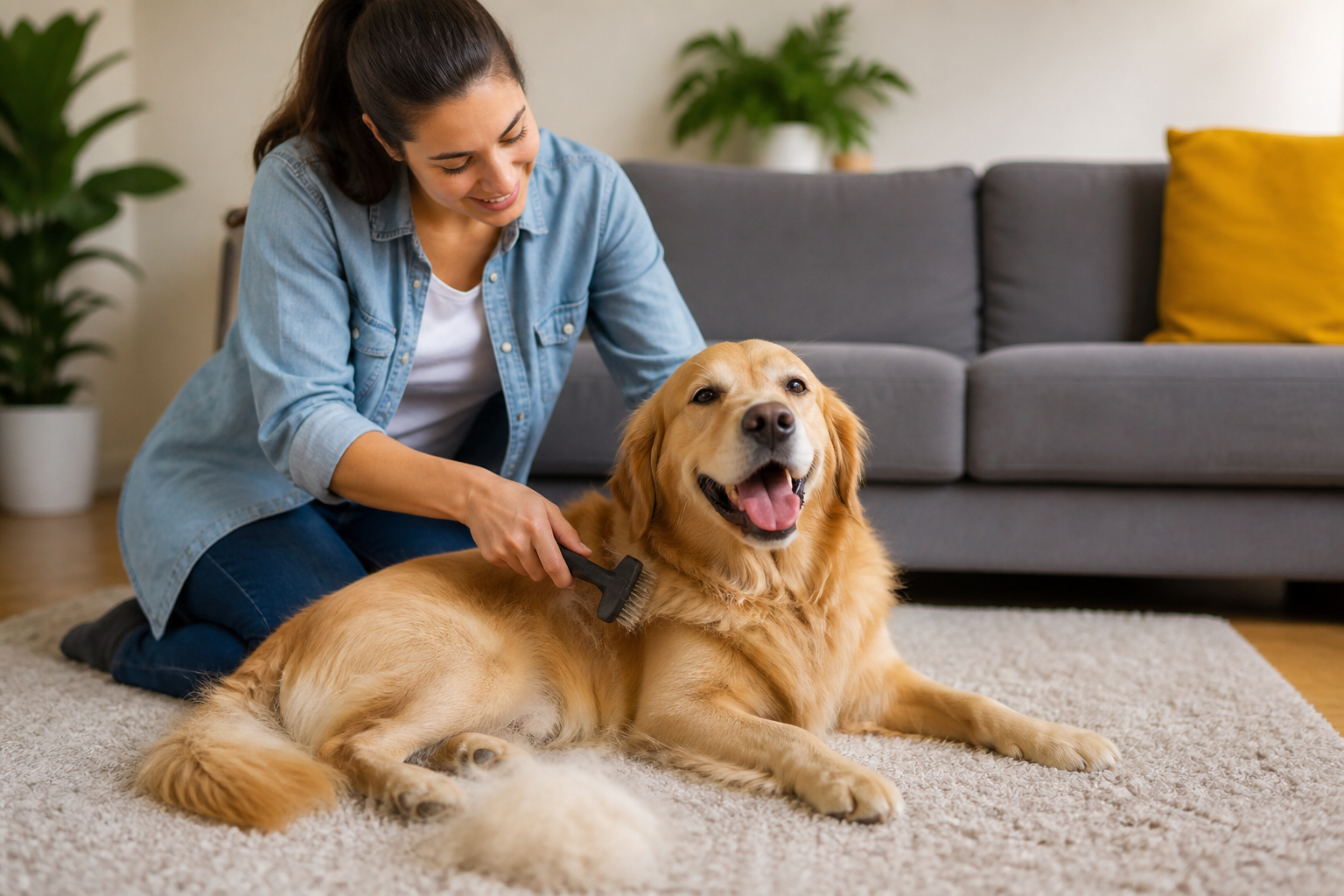
It is a familiar sight for many dog owners. You just finished vacuuming the living room. You put the machine away and turn around. There, right in the middle of the rug, is a fresh tumbleweed of fur. It seems to come out of nowhere. Dealing with constant hair on your clothes and furniture is one of the most common challenges of living with a dog. At BaxterBoo, we hear from owners every day who love their pets but want a way to manage the mess. You might wonder if picking up a brush once a day actually makes a difference.
The answer is a definite yes. Brushing is one of the most effective ways to control the amount of hair in your home. This post will explain how brushing works to stop shedding. We will look at the best tools for different coat types. We will also explore how nutrition and professional care play a part. Regular grooming does more than just clean your floors. It keeps your dog comfortable and healthy too.
Quick Answer: Brushing reduces shedding by removing loose and dead hair before it falls off the dog. It also distributes natural skin oils that keep the coat healthy and prevent breakage.
How Brushing Affects the Shedding Process
To understand why brushing works, you have to understand how hair grows. Every dog goes through a natural cycle of hair growth and loss. This cycle has four main stages. The first stage is growth. The second stage is the resting phase. The third stage is when the hair begins to detach. The final stage is when the hair falls out. This is what we call shedding.
When you brush your dog, you are intervening in the final stage. You are manually removing the hair that is already loose but still stuck in the coat. If you do not remove it, that hair eventually falls onto your carpet. By brushing, you catch the fur on the bristles of the tool instead.
Brushing also helps the skin. It stimulates blood flow to the surface. This brings nutrients to the hair follicles. Healthy follicles hold onto hair longer. This can actually slow down the rate of shedding for some dogs. It also spreads sebum, which is a natural oil, across the hair shaft. This oil acts as a barrier. It prevents the hair from becoming brittle and snapping off early.
Choosing the Right Tool for the Job
Not all brushes are the same. Using the wrong tool can be ineffective. It might even hurt your dog if the bristles are too sharp for their skin. You need to match the tool to your dog's specific coat type. We carry a wide variety of options in our dog grooming collection to suit every breed.
| Brush Type | Best For | Purpose |
|---|---|---|
| Bristle Brush | Short, smooth coats | Removes surface debris and adds shine. |
| Slicker Brush | Long or curly coats | Removes tangles and catches loose undercoat hair. |
| Rubber Mitt | All short-haired breeds | Massages the skin and pulls away dead hair. |
| Undercoat Rake | Double-coated breeds | Reaches through the top layer to pull out loose downy fur. |
| Shedding Blade | Short to medium thick coats | Drags across the surface to pull off large amounts of loose fur. |
The Slicker Brush for Long Hair
A slicker brush has fine, short wires close together on a flat surface. These wires are slightly angled. They are excellent for dogs with long or curly hair. They can get through the top layer of fur to catch the loose hair underneath. If you have a Golden Retriever or a Poodle mix, this is often the best choice.
The Undercoat Rake for Double Coats
Some dogs have two layers of fur. This includes breeds like Huskies, Labs, and Shepherds. The undercoat is the soft, fuzzy layer that keeps them warm. This is usually the part that sheds the most. An undercoat rake has long pins that reach deep into the fur. It pulls out the dead undercoat without damaging the top coat.
For additional options, explore our dog brushes and combs for tools designed for different coat types.
Key Takeaway: Using a tool specifically designed for your dog's coat type is the only way to effectively reduce shedding. A surface brush will not help a dog with a thick undercoat.
The Proper Technique for Brushing
Brushing is more than just a quick swipe over the back. To really reduce the hair in your house, you need a routine. Start by making sure your dog is relaxed. You want this to be a positive experience for both of you.
Step 1: Inspect the skin. / Check for any bumps, scratches, or parasites like fleas.
Step 2: Brush in the direction of growth. / Start at the head and work your way back. Use long, gentle strokes.
Step 3: Reach the skin. / Ensure the brush is actually touching the skin, not just sliding over the top of the fur.
Step 4: Use a shedding tool. / If your dog has a thick coat, follow up with a rake or shedding blade to catch the deep hair.
Step 5: Reward your pet. / Give them a treat or praise so they look forward to the next session.
How often should you do this? For most dogs, a thorough brushing two to three times a week is enough. If you have a heavy shedder, daily brushing is better. During the spring and fall, many dogs "blow" their coats. This is a period of intense shedding. You might need to brush twice a day during these weeks.
For more coat-care ideas, read about how Australian Shepherds shed and how grooming can help.
The Role of Nutrition in Coat Health
Brushing handles the hair that has already died. However, what your dog eats determines how much hair dies in the first place. A dog with a poor diet will have a dry, brittle coat. This leads to more breakage and more shedding.
High quality dog food is essential. Look for foods that include Omega-3 and Omega-6 fatty acids. These are healthy fats that nourish the skin. They make the hair follicles stronger. When the follicles are healthy, the hair stays in the growth phase longer. This naturally reduces the volume of fur falling out.
Water is also important. Dehydration makes the skin lose its elasticity. This causes hair to fall out more easily. Make sure your dog always has access to fresh, clean water. If your dog has very dry skin despite a good diet, you might consider a supplement. We offer many supplements in our dog skin and coat care category that support skin and coat health.
Vet Tip: If your dog is shedding in patches or has red, itchy skin, see a veterinarian. Excessive shedding can sometimes be a sign of a medical issue like allergies, a thyroid problem, or skin infections.
When Brushing Isn't Enough: Health Factors
Sometimes, no matter how much you brush, the shedding continues at a high rate. This could be due to external factors. Parasites are a major cause of shedding. Fleas and ticks irritate the skin. This causes the dog to scratch and bite at themselves. This physical trauma pulls out hair and damages the coat.
You can browse the flea and tick collection when looking for products that address common external irritants.
Stress can also lead to "stress shedding." You might notice this when you take your dog to the vet or a groomer. They suddenly seem to release a cloud of fur. This is a physical reaction to adrenaline. If your dog is constantly stressed at home, they may shed more than usual.
Hormonal changes are another factor. Female dogs may shed more after a heat cycle or after having puppies. Older dogs may shed more as their metabolism slows down. In these cases, regular brushing is still helpful. However, you should work with your vet to address the underlying cause.
Utilizing the BaxterBoo Pharmacy
For many health-related shedding issues, professional treatments are necessary. If your dog has a skin infection or a severe allergy, simple brushing will not fix the root of the problem. Our pet pharmacy offers FDA-approved medications through our partnership with Pet's Choice.
You can find prescription flea and tick preventives that stop the irritation causing the shedding. We also carry prescription diets specifically formulated for skin sensitivities. These foods are designed to bolster the skin barrier. Because we work with a licensed pharmacy, you can trust that you are getting the same quality medications you would find at a local clinic. We make it easy to have these essential items delivered right to your door.
Bottom line: Brushing is a physical solution for a physical problem, but internal health is the foundation of a healthy coat.
Bathing and Its Impact on Shedding
Bathing is another tool in your shed-fighting kit. A warm bath helps loosen the dead hair that is still attached to the dog. It softens the skin and makes it easier for the brush to pull the fur away. However, you must be careful about how often you bathe them.
Washing a dog too frequently can strip away the natural oils. This leads to dry skin and, ironically, more shedding. For most dogs, once a month is a good balance. Always use a shampoo made specifically for dogs. Human shampoos have a different pH balance and can be too harsh.
We recommend brushing your dog thoroughly before the bath. This removes the bulk of the loose hair so it does not clog your drain. Once the dog is dry, brush them again. The water and shampoo will have loosened even more fur that is now ready to come off.
Using a Deshedding Shampoo
There are special shampoos designed to help with shedding. These often contain ingredients like oatmeal or aloe vera to soothe the skin. They may also include extra proteins to strengthen the hair. These can be very effective when used as part of a regular grooming routine.
For another perspective on dry skin and coat care, explore this guide to winter supplements for dogs.
Environmental Factors in Your Home
The environment inside your house can also affect your dog's coat. During the winter, indoor heating can make the air very dry. This dries out your dog's skin just like it dries out yours. Consider using a humidifier in the rooms where your dog spends the most time.
Light also plays a role. A dog's body uses the amount of sunlight it receives to determine when to grow a new coat. Dogs that live mostly indoors can sometimes have "confused" shedding cycles. They may shed a medium amount all year long rather than having two big sheds a year. Consistent brushing is even more important for these indoor pets.
Professional Grooming vs. Home Care
You do not have to do everything yourself. Professional groomers have tools that many owners do not have at home. High-velocity dryers are a great example. These powerful dryers blow the water off the dog's coat. They also blow out a massive amount of loose undercoat that a brush might miss.
A professional can also perform a "blow out" during the peak shedding season. This can save you weeks of vacuuming. However, home care is still necessary between appointments. A groomer can get the coat clean and clear, but the hair starts dying and loosening again the next day. Think of home brushing as daily maintenance and professional grooming as a deep clean.
Checklist for Starting a Brushing Routine
If you are ready to get the shedding under control, follow these steps to get started:
- Identify your dog's coat type (short, long, double, or curly).
- Select the correct tool from a trusted retailer like BaxterBoo.
- Find a quiet, well-lit spot to groom your dog.
- Start with short sessions of five minutes to get your dog used to the feeling.
- Check the skin for any signs of redness or irritation during the process.
- Set a recurring reminder on your phone so you do not forget the weekly sessions.
For repeat-purchase grooming and healthcare items, consider our Autoship programme.
Managing the Hair in Your Home
Even with perfect brushing, there will still be some hair. It is part of the joy of owning a dog. To keep your home clean, try these practical tips:
- Use washable furniture covers to protect your sofa.
- Keep a lint roller by the front door for your clothes.
- Vacuum high-traffic areas daily.
- Change your home's air filters regularly, as they catch airborne dander and fur.
Brushing is a bonding activity. Many dogs grow to love the feeling. It is a time when they have your full attention. It is also a time for you to check them for any health changes. By spending ten minutes a day with a brush, you are investing in your dog's comfort and your home's cleanliness.
Summary of Shedding Management
Brushing is the most direct way to reduce the amount of fur your dog leaves behind. It removes the hair at the source before it can fall onto your floors. By choosing the right tool and keeping a consistent schedule, you can make a huge difference in the cleanliness of your home. Remember that nutrition and overall health are just as important as the brush itself.
FAQ
Does brushing my dog every day hurt their skin?
If you use the correct brush and a gentle hand, daily brushing should not hurt. In fact, most dogs find it quite relaxing. However, if you use a sharp tool like a shedding blade with too much pressure, you could cause "brush burn" or irritation. Always watch your dog's reaction and check the skin for redness.
Can I stop my dog from shedding completely?
No, it is not possible to stop shedding entirely. Shedding is a natural and necessary biological process. It allows old, damaged hair to fall out so new, healthy hair can grow in. Some breeds shed less than others, but every dog with hair will lose some of it over time. Brushing is about management, not elimination.
Why does my dog shed more in the spring?
Many dogs have a double coat that thickens in the winter to provide insulation. When the weather warms up in the spring, they no longer need that extra layer. Their body responds to the increase in daylight by releasing the heavy undercoat. This is often called "blowing the coat" and results in a large amount of shedding over a few weeks.
Will shaving my dog stop the shedding?
Shaving a dog does not stop the shedding process. The hair will still fall out, but the individual hairs will just be shorter. For double-coated breeds, shaving can actually be harmful. It can damage the coat's ability to regulate the dog's temperature and protect them from the sun. It is much better to use an undercoat rake to remove the loose fur naturally.
Bottom line: Consistent brushing is the best way to keep your home clean and your dog's coat in peak condition.






