
 Save 15% on your 1st Autoship learn more

 Email us
 Live Chat
 FAQs
FAQs





Introduction
You might notice it while playing tug or when your dog gives you a big, enthusiastic lick. That distinct, slightly metallic or sour smell of dog breath often signals that plaque is starting to build up. Many owners reach for a natural solution and wonder if a simple bone can do the work of a toothbrush. At BaxterBoo, we hear this question frequently from people who want to keep those pearly whites shining without the struggle of a daily brushing routine. This post explores the reality of how bones affect oral hygiene, the serious safety risks involved, and which alternatives actually work. We will look at the difference between cleaning plaque and removing tartar so you can make the best choice for your dog.
Quick Answer: Chewing bones can help reduce plaque through the mechanical action of scraping against the teeth. However, bones cannot remove hardened tartar and carry significant risks like broken teeth or internal blockages.
The Mechanical Action of Chewing
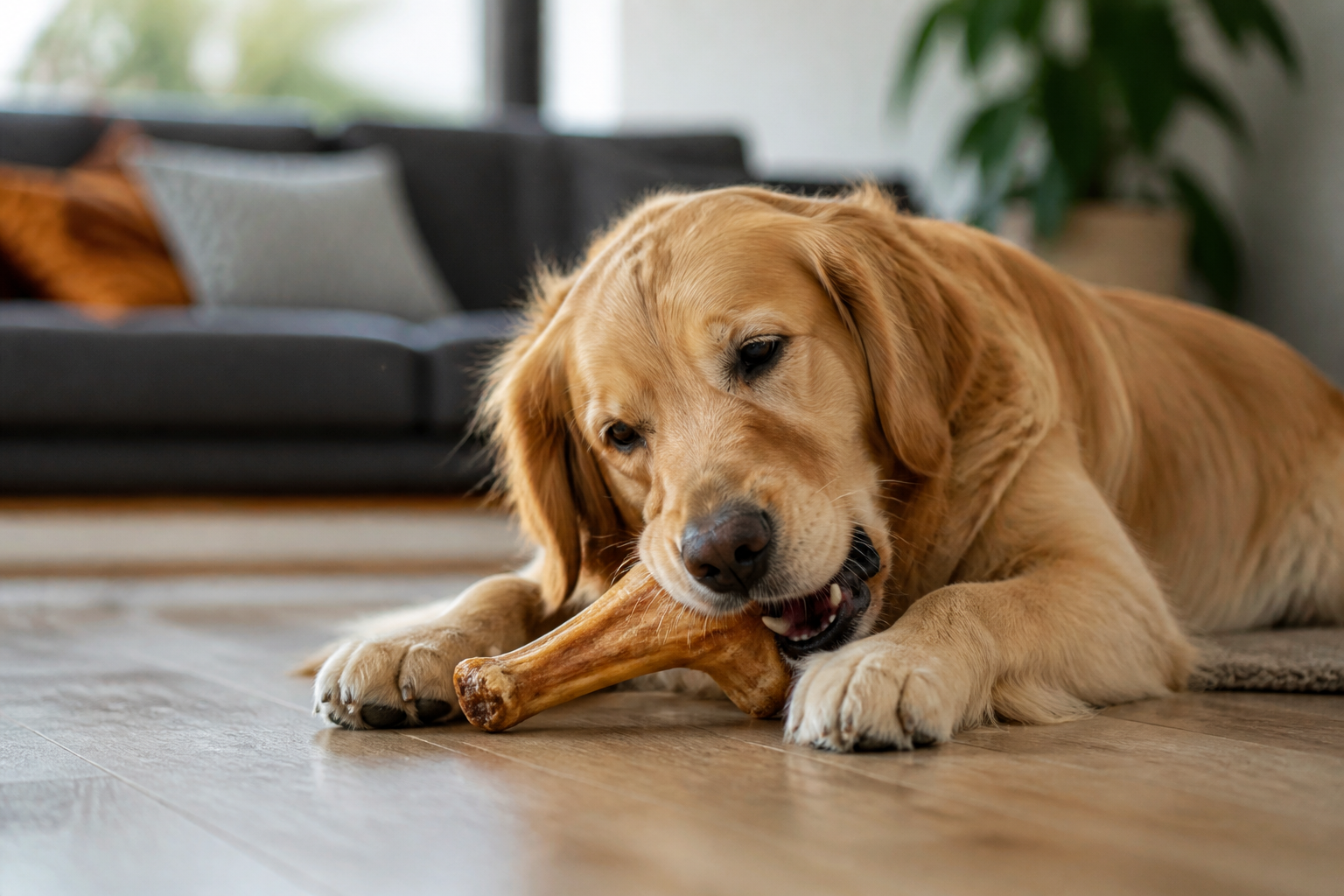
The idea that bones clean teeth comes from the physical friction created during a chew session. As your dog gnaws on a bone, their teeth sink into the material or scrape along the surface. This rubbing action helps to physically lift away soft plaque and food particles that have accumulated since their last meal.
Think of it like a natural scouring pad. When a dog works on a bone for twenty or thirty minutes, they are essentially performing a slow, manual cleaning of the tooth surfaces. This is most effective on the large cheek teeth and the canines, which do the bulk of the heavy lifting during chewing.
However, this mechanical action only works on what is currently soft. Plaque is a sticky film of bacteria that forms on the teeth within hours of eating. If it is not removed, it mineralizes into tartar, also known as calculus, within just a few days. Once tartar has formed, a bone is no longer enough to fix the problem.
Key Takeaway: Chewing provides a physical "scrubbing" that can prevent new plaque from hardening, but it is not a cure for existing dental disease.
Plaque vs. Tartar: Knowing the Difference
It is important to understand what bones can and cannot do for oral health. Plaque is the soft, invisible or pale yellow film that you can easily wipe away with a finger or a brush. Bones are relatively good at disrupting this film before it causes trouble.
Tartar is a different story. Tartar is the hard, brown or tan substance that looks like concrete at the gum line. It is incredibly tough and bonds strongly to the tooth enamel. If a dog tries to chew a hard bone to remove tartar, the tartar rarely just flakes off. Instead, the pressure required to break through that "concrete" often leads to the tooth itself breaking first.
If your dog already has significant tartar buildup, a bone is not the answer. In fact, gnawing on hard objects when the gums are already inflamed from tartar can cause bleeding and pain. At this stage, the only safe way to clean the teeth is through a professional veterinary cleaning under anesthesia. For more guidance on warning signs, read our guide to recognizing bad teeth in dogs.
The Dangers of Cooked Bones
If you take away only one piece of advice from this guide, let it be this: never give your dog a cooked bone. Whether it is a leftover rib bone from dinner or a boiled marrow bone, the cooking process changes the molecular structure of the bone.
Raw bones have a certain amount of flexibility and moisture. When they are heated, they become brittle and dry. This makes them prone to splintering into sharp, needle-like shards. These shards can:
- Puncture the roof of the mouth or the tongue.
- Get stuck in the throat or esophagus.
- Pierce the lining of the stomach or intestines.
- Cause life-threatening internal infections like peritonitis.
Even "smoked" bones found in some pet stores can carry these same risks. If the bone has been processed with high heat, it is no longer safe for a dog to consume. Stick to items specifically designed for safe chewing or consult your vet about raw options.
Vet Tip: If your dog accidentally consumes a cooked bone, watch for signs of distress like gagging, vomiting, or a painful abdomen. Contact your veterinarian immediately, as internal punctures are a medical emergency.
The Risk of Fractured Teeth
Many owners assume that because a bone is "natural," it must be safe for a dog’s teeth. However, many bones are significantly harder than a dog's tooth enamel. The most common dental injury we see in heavy chewers is a "slab fracture." This happens when a dog bites down on a hard object and a piece of their large upper premolar flakes off.
This is extremely painful because it often exposes the sensitive pulp and nerves inside the tooth. It usually requires an expensive extraction or a root canal. To avoid this, you can use the "thumbnail test." If you cannot make a small dent in the chew toy or bone with your thumbnail, it is likely too hard for your dog to chew safely.
Common items that are too hard for most dogs include:
- Large beef leg bones (femurs).
- Deer or elk antlers.
- Cow hooves.
- Hard plastic or heavy nylon chews.
- Large knuckles from bison or cattle.
Recreational vs. Edible Bones
When discussing dental health, it helps to categorize bones into two types: recreational and edible.
Recreational Bones
These are large, hard bones that are meant to be gnawed on but not swallowed. A prime example is a large beef marrow bone. While they provide great mental stimulation and some plaque scraping, they are the primary culprits for cracked teeth. They are also often filled with fatty marrow that can cause stomach upset or even pancreatitis in sensitive dogs.
Edible Bones
These are softer bones that a dog can safely crunch up and swallow, such as raw chicken necks, duck wings, or turkey necks. Because these are soft, they do not carry the same risk of breaking teeth. However, because they are soft, they also do not provide as much "scrubbing" action as a firmer chew. They are better seen as a nutritional supplement rather than a dental tool.
Animal-Specific Bone Safety
Different types of animals provide different levels of risk for a chewing dog.
- Beef: Generally the hardest bones. Use extreme caution with leg bones, as they are designed to support the weight of a thousand-pound animal and are very dense.
- Poultry: Raw chicken and turkey bones are soft and flexible. They are safe when raw but highly dangerous when cooked.
- Pork: Often very fatty. Pork bones can also splinter more easily than beef, making them a risky choice for aggressive chewers.
- Lamb and Goat: These are often a middle ground. They are harder than poultry but less dense than beef, making them a popular choice for medium-sized dogs.
Marrow, Fat, and Digestive Health
Beyond the teeth, the "filling" of a bone can impact your dog's health. Marrow is a concentrated source of fat. While dogs love the taste, eating a large amount of raw marrow can lead to a bout of diarrhea or vomiting. For dogs with a history of pancreatitis, the fat content in a marrow bone can trigger a dangerous flare-up.
If you choose to give a marrow-filled bone, consider scooping out most of the marrow first. You can replace it with a lower-fat option like plain canned pumpkin or a small amount of non-fat Greek yogurt and freeze it. This provides the same long-lasting chewing experience without the risk of a digestive disaster.
Safer Alternatives for Clean Teeth
Since real bones come with a list of "dos and don'ts," many owners prefer safer alternatives. We carry a wide range of products at BaxterBoo that provide the same mechanical cleaning without the risk of splintering. Browse our dental and breath care collection to compare options.
Rubber Chew Toys Toys from brands like Kong are designed to be durable yet flexible. They give slightly when the dog bites down, which protects the enamel. The textured surfaces on many rubber toys help massage the gums and scrape away plaque.
Dental Chews Products like Greenies or Cosequin dental treats are formulated to be firm enough to clean teeth but soft enough to be fully digested. Look for products with the VOHC (Veterinary Oral Health Council) seal of approval. This seal means the product has been scientifically tested and proven to reduce plaque or tartar by at least ten percent. You can also explore our dental dog treats for chew-based alternatives.
Enzymatic Toothpastes While not a chew, using an enzymatic toothpaste is the gold standard. These pastes contain enzymes that break down the bacterial film on the teeth even if you can only get a little bit onto the tooth surface.
Bottom line: While bones offer some cleaning benefits, rubber toys and VOHC-approved dental treats provide a much higher margin of safety.
For additional ideas, see our roundup of the best dental chews for dogs.
Using Our Pharmacy for Dental Health
Sometimes, a chew toy is not enough. If your dog is prone to chronic dental issues or has been diagnosed with periodontal disease, your vet might recommend specific prescription diets or oral rinses. These products are formulated with minerals that prevent plaque from hardening into tartar.
Our pet pharmacy offers a convenient way to get professional-grade supplies. Through our partnership with Pet's Choice, we provide FDA-approved medications and prescription dental diets that are often more effective than over-the-counter treats. If your vet has prescribed a specific oral health regimen, you can manage those needs through our pharmacy services just as easily as your dog's flea and tick preventives.
How to Introduce a New Chew Safely
If you decide to give your dog a bone or a new dental chew, do not just drop it on the floor and walk away. Follow these steps to ensure a safe experience:
Step 1: Choose the right size. / The chew should always be larger than your dog's mouth. If it is small enough to be swallowed whole, it is a major choking and obstruction hazard.
Step 2: Supervise the entire session. / Watch how your dog interacts with the item. If they are a "gulping" chewer who tries to swallow large chunks, remove the item immediately.
Step 3: Set a time limit. / Limit chewing sessions to 15 or 20 minutes. This prevents excessive wear on the teeth and keeps the gums from becoming overly irritated.
Step 4: Check the item afterward. / Inspect the chew for sharp edges or blood. If you see blood on the bone, it means the gums are irritated or a tooth is injured, and you should stop using that specific type of chew.
- Always have fresh water available, as chewing is thirsty work.
- Throw away any bone that has become small enough to swallow.
- Wash your hands and the floor after a raw bone session to prevent the spread of bacteria.
For more general guidance about introducing chews, read our safety guide to rawhide-free dog chews.
Monitoring Your Dog's Dental Progress
Cleaning your dog's teeth is an ongoing process. You should aim to check their mouth at least once a week. Lift the lips and look at the back molars. If you see redness along the gum line or notice a worsening smell, it is time for a professional checkup.
A healthy mouth should have pink gums (not red or white) and teeth that are mostly white. A little bit of wear is normal as a dog ages, but sudden chips or dark spots on the teeth are signs of trouble. Remember that dental health is directly linked to heart and kidney health in dogs. Bacteria from the mouth can enter the bloodstream through diseased gums and cause issues in other organs.
For a broader at-home routine, review these pet dental care tips.
Conclusion
While chewing bones can help clean dogs teeth by scraping away soft plaque, they are far from a perfect solution. The risks of fractured teeth, internal punctures from splinters, and digestive upset mean that bones must be used with extreme caution and constant supervision. For many families, the safety and consistency of VOHC-approved dental chews or durable rubber toys make much more sense. We invite you to explore our full dental care collection to find a solution that fits your dog's chewing style and your safety concerns. Whether you choose a high-tech toy or a simple dental treat, the most important step is staying consistent with your dog's oral hygiene.
Key Takeaway: Mechanical cleaning through chewing is a great supplement to dental care, but it cannot replace professional veterinary cleanings or the safety of specially designed dental treats.
FAQ
Can bones remove existing tartar from a dog's teeth?
No, bones are generally not strong enough to remove hardened tartar once it has bonded to the tooth enamel. Attempting to use hard bones to "crunch" off tartar often results in a fractured tooth rather than clean teeth. Tartar removal requires professional scaling by a veterinarian.
What are the safest types of bones for dogs to chew?
Raw, non-weight-bearing bones from medium-sized animals like lamb or goat are often considered the safest natural option. However, for many dogs, "synthetic" bones made of durable, non-toxic rubber are a much safer choice because they do not splinter and are less likely to cause tooth fractures.
How often should I let my dog chew on a bone for dental health?
If your dog is a safe chewer, two to three sessions per week for about 15 to 20 minutes each is usually enough to provide some plaque-scraping benefits. Always supervise these sessions and remove the bone if your dog starts trying to break off and swallow large pieces.
Are there any dogs that should never have bones?
Dogs with existing dental disease, broken teeth, or sensitive stomachs should avoid real bones. Brachycephalic (flat-faced) breeds may also have a higher risk of choking due to the shape of their mouths and throats. Always consult your vet before introducing bones if your dog has a history of pancreatitis or digestive issues.






