
 Save 15% on your 1st Autoship learn more

 Email us
 Live Chat
 FAQs
FAQs





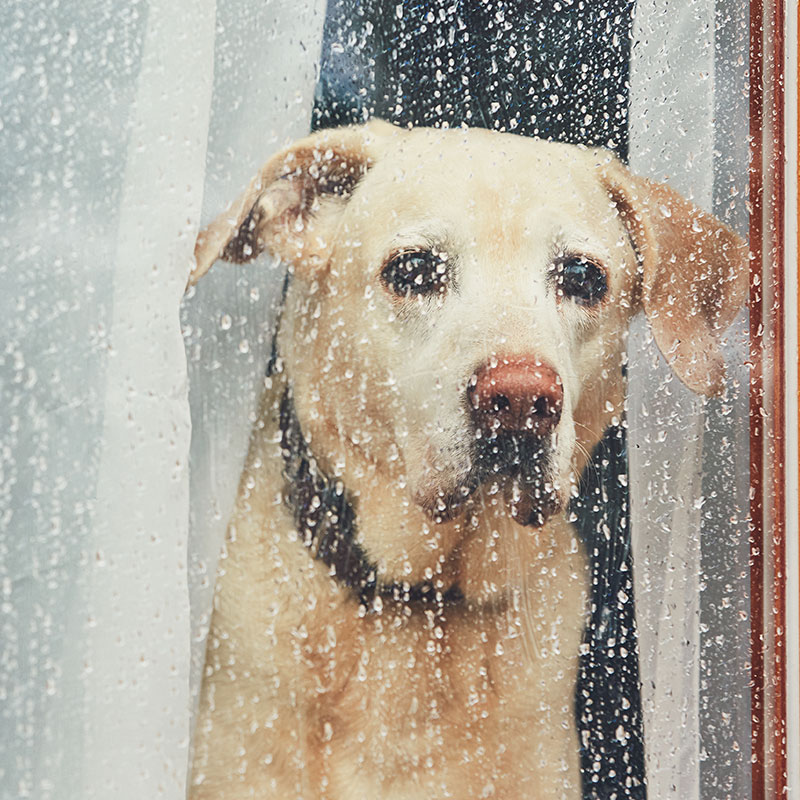
A lot of pet owners suffer from depression or Seasonal Affective Disorder during the darker winter months, and there's plenty of reason to believe that these conditions affect dogs as well. You may have noticed that your dog is less active and tends to sleep more during the winter than during sunnier months. The lethargic moods and a tendency toward laziness, even in friendly, active dogs, gives many owners reason to believe that their furry friends are displaying some signs of depression.
Seasonal Hormone Changes
You don't have to rely on personal beliefs in this situation, however. There's real science behind these assertions. Dogs, like humans, have a hormone called melatonin that affects the pineal gland and circadian rhythm. Basically, melatonin production affects how you sleep and affects your ability to feel happiness. When it's dark outside during the winter months, your melatonin production changes. This is true for your dogs as well.
Serotonin, another hormone, enhances moods and is also affected by changes in the length of days. As serotonin levels change, your dog may be more inclined to eat and may want to eat more than during warmer months.
Responses to Owners' Moods
Melatonin production isn't the only factor at play. Dogs often reflect their owners' moods. If you tend to decrease your level of activity, your dog may also become more lethargic. If you are reluctant to take your dogs for walks, they may get bored and begin to misbehave. Cats and dogs definitely respond to their owners' moods. A study completed and published recently shows that dogs recognize the moods of their owners based on abstract mental representations.
Natural Animal Adaptations
Some people believe that dogs' activity levels decrease during the winter in the same way that other animals' activity levels drop off. Bears, for example, hibernate during the cold months. It may be that dogs are also storing their energy and building up fat reserves to survive the winter. The tendencies to lay around and sleep more may be a natural response triggered by the weather.
Other Possible Factors
Although there are many reasons to believe that dogs' emotions are affected by seasonal changes, it's also possible that animals are experiencing other health problems. For example, if your dog is suddenly unhappy about taking walks, schedule an appointment with your veterinarian to rule out a paw injury or arthritis, for example.
Physical Symptoms to Seasonal Changes
There really hasn't been a lot of research in the area of pets and SAD, but there have been some studies suggesting that certain breeds are more susceptible to seasonal changes than others. For example, Airedale Terriers, Doberman Pinschers, and Bulldogs are more likely to experience Seasonal Flank Alopecia than other breeds. This physical hair loss condition is the result of less sunlight; when these dogs get more sunlight, the pineal gland is triggered, and hair regrows.
Give Your Dog Plenty of Exercise
Whether you subscribe to the idea that pets get depressed or not, there are some things you can do to overcome the subdued personality and lack of energy. Naturally, one of the best methods of helping your dog feel better during the winter is to continue taking consistent daily walks. Dogs explore using many of their senses; this is why you see them sniffing things so much. When possible, allow your dog to lead the way in walks to provide a boost in mental and physical health.
Provide Mental Stimulation
Many dogs need mental stimulation as well as physical exercise. You can provide this by taking walks along new routes, playing games of hide and seek, and offering your dog a complex toy, such as a food puzzle . Social interactions are also good ways to help dogs experience mental and physical stimulation. Getting outside to experience new sights and smells is good for people and for pets. It provides an opportunity to breathe fresh air, enjoy nature, and improve circulation. Your dogs are probably much more willing to go outside to play than you are, so motivate yourself with appropriate clothing and think of some fun activities to participate in.
Give Access to Sunlight
Some pet owners have used white lights, or sun lights, to stimulate the sunnier experiences of warm weather. This technique hasn't been effective on its own for improving dog well-being, but it may be a useful tool when used in conjunction with exercise and play. While artificial lighting may or may not boost your pet's mood, providing access to sunlight can certainly make an improvement.
Open the Windows
Open up the curtains when the sun is high to allow more light into your pet's pupils. This positively affects the natural brain chemistry. Of course, a walk in the sun or some outside play on a snowy day is also a great idea. If you are gone for most of the day, put a sitting spot near a window, so your dog can watch the world going on outside.
Play Together
Interacting with your dog is another very effective way to boost moods and overcome SAD tendencies. Don't just plug into your phone when you take your dog for a walk, talk to and enjoy your time together. If you have toys for your pets, play with them as well. A good ten minutes of wrestling on the floor is a great way to get your heart rate up while boosting your dog's mood. You should find that playtime together, inside and outside, is a powerful way to keep your own mood up as well as your dog's.
Should You Give Your Dog Supplements?
Most experts agree that it can be dangerous to treat your pet with supplements such as the ones you may use to treat your own mood changes. Instead of trying to medicate your dog with over-the-counter supplements, talk about appropriate diet and vitamins during the winter months.
If you've noticed that your dog is likely to eat more, sleep more, avoid exercise, and generally get grumpier during the winter, you may want to try using some of these "treatment methods" for improvements. It shouldn't take more than a couple of days to turn around those depressive habits and recover the happy, playful personality you're used to seeing.






