
 Save 15% on your 1st Autoship learn more

 Email us
 Live Chat
 FAQs
FAQs





Introduction
We have all been there. You reach for the doggy toothbrush and suddenly your dog has vanished under the sofa or developed a sudden interest in a spot on the far side of the yard. While daily brushing is the gold standard for canine oral health, the reality is that many dogs simply will not tolerate it. If your dog treats a toothbrush like a sworn enemy, you do not have to give up on their dental hygiene entirely. At BaxterBoo, we have helped pet owners find practical solutions for their furry friends since 2006.
This article covers effective alternatives to brushing, from mechanical chews and water additives to prescription diets and dental toys. You will learn how to build a routine that actually sticks, even if a toothbrush never enters the picture. While these methods are not a total replacement for professional care, they provide essential daily support for your dog's gums and teeth.
Quick Answer: You can keep a dog's teeth clean without brushing by using a combination of dental chews, water additives, and textured chew toys. These tools work by mechanically scraping away plaque or using enzymes to break down bacteria before it hardens into tartar.
Why Dental Care Matters Beyond Bad Breath
It is easy to think of dental care as a way to fix "dog breath," but the stakes are much higher than just a smelly greeting. Plaque is a sticky film of bacteria that begins forming on the teeth just hours after a meal. If it is not disrupted, it reacts with minerals in your dog's saliva and hardens into tartar within 48 hours. Once tartar forms, it creates a rough surface that attracts even more bacteria, eventually leading to gingivitis and periodontal disease.
When bacteria sit along the gumline, they can eventually enter the bloodstream. This can lead to serious issues with the heart, liver, and kidneys. Because dogs are experts at hiding pain, many owners do not realize their pet has a dental problem until it is quite advanced. A proactive approach using no-brush methods helps keep these bacteria in check and keeps your dog comfortable as they age.
Vet Tip: If you notice red, swollen gums, bleeding, or if your dog is dropping food while eating, schedule a visit with your veterinarian. These are often signs of painful dental disease that requires a professional assessment rather than at-home maintenance.
For additional guidance on warning signs, read about common signs of dental disease in dogs.
The Power of Mechanical Cleaning with Dental Chews
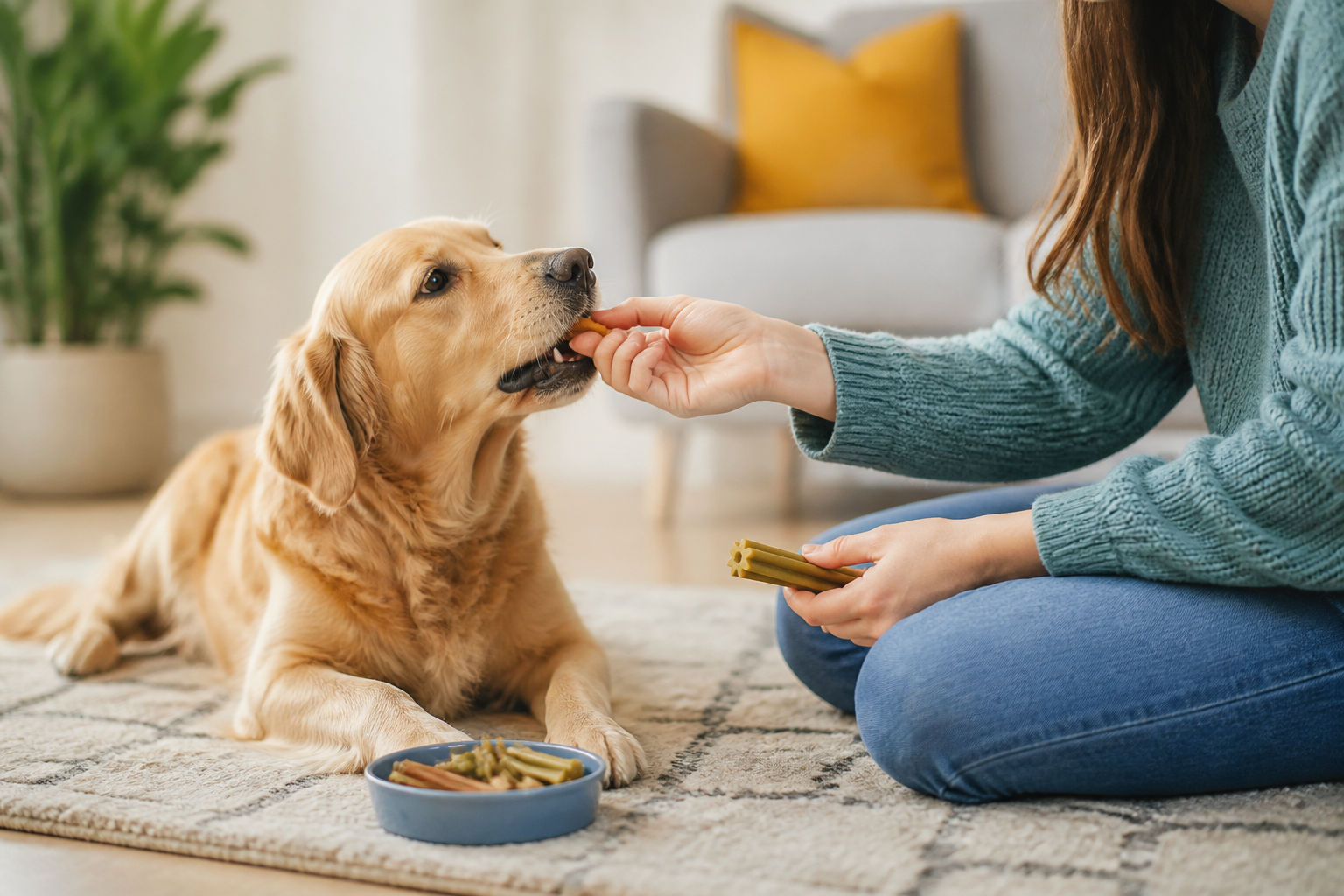
Dental chews and treats are perhaps the most popular alternative to brushing because dogs view them as a reward rather than a chore. These treats are specifically designed with a texture that is firm yet flexible. As your dog bites down, the chew allows the tooth to sink in, scraping plaque away from the surface of the tooth and the gumline.
Brands like Greenies are famous for this mechanical action. They are shaped with ridges and bristles that act like a gentle scrubber. When choosing a chew, size is the most important factor. If a chew is too small, your dog might swallow it in two gulps, which provides zero dental benefit. It needs to be large enough to force your dog to spend several minutes gnawing.
We also recommend looking for chews that carry the Veterinary Oral Health Council (VOHC) seal. This seal indicates that the product has been tested and proven to reduce plaque or tartar by a specific percentage.
How to Introduce Dental Chews Safely
Step 1: Select the correct size based on your dog's weight.
Step 2: Supervise your dog the first few times they have a new chew to ensure they are actually chewing and not trying to gulp large pieces.
Step 3: Factor the calories of the dental chew into your dog's daily meal plan to prevent unwanted weight gain.
Key Takeaway: For a dental chew to work, your dog must actively gnaw on it. The mechanical friction of the "chewing" is what actually cleans the teeth.
For more ideas, explore dental chews for dogs.
Using Water Additives for Passive Protection
If your dog is a picky eater or has a sensitive stomach that does not handle treats well, water additives are an excellent choice. These are liquid solutions that you pour directly into your dog's water bowl. They are typically odorless and tasteless, so most dogs do not even know they are there.
These additives work using enzymes or safe antibacterial agents that disrupt the biofilm on the teeth. While they do not provide the mechanical scrubbing that a chew does, they are very effective at reducing the overall bacterial load in the mouth. This helps keep breath fresh and slows down the rate at which plaque can mineralize into tartar.
For dogs with more significant needs, our dog dental and breath care collection carries various oral rinses and specialized treatments. Through our partnership with Pet's Choice, we provide access to FDA-approved medications and professional-grade dental aids that your vet might recommend for ongoing health management.
Prescription Dental Diets and Nutrition
The food your dog eats every day can be a powerful tool in your dental care arsenal. Standard kibble is often small and brittle, shattering as soon as a dog bites it. This does very little to clean the teeth. However, specialized dental diets, such as those from Royal Canin or Farmina Vet Life, are engineered differently.
The kibble in these diets is much larger and has a specific fiber matrix. Instead of crumbling, the kibble stays intact as the tooth penetrates it, wiping the tooth surface clean. Some of these diets also include polyphosphates, which bind to the calcium in saliva to prevent it from turning plaque into hard tartar.
Many of these specialized diets are prescription-only. If your veterinarian recommends a specific dental food, you can easily fulfill that through our pharmacy. Using our Autoship program for these heavy bags of food not only saves you money on your first order but also ensures you never run out of the nutrition your dog needs.
Bottom line: Prescription dental diets turn every meal into a cleaning session by using large, fibrous kibble that scrubs teeth as the dog eats.
Interactive Toys for Natural Plaque Removal
Playtime can double as a dental cleaning session if you choose the right gear. Many rubber toys are designed with nubs, ridges, and grooves specifically for this purpose. The Kong brand is a classic example. While a smooth ball might just bounce around, a textured rubber toy provides resistance and friction against the teeth.
For a boost, you can apply a small amount of dog-safe enzymatic toothpaste into the grooves of a rubber toy. As your dog chews and licks the toy to get the flavor, they are effectively applying the toothpaste to their own teeth and gums. This is a great way to get the benefits of toothpaste without the struggle of a brush.
Cotton rope toys can also act like a form of canine floss. As the dog's teeth sink into the fibers, the rope gently rubs against the sides of the teeth. However, always inspect rope toys for fraying and replace them if your dog starts to swallow the strings, as this can cause digestive blockages.
Safe Materials for Dental Play
- Natural rubber with textured ridges
- Soft, flexible dental sticks from RC Pets
- Non-abrasive tennis balls (standard tennis ball fuzz can actually wear down tooth enamel over time)
- Sturdy cotton ropes for supervised play
For puppy-specific chewing guidance, see what to give teething puppies to chew on.
Natural Alternatives and Household Helpers
You might already have some dental aids in your refrigerator. Certain crunchy fruits and vegetables can provide a mild mechanical cleaning effect. Raw carrots and apple slices (without seeds or the core) are firm enough to provide some scraping action as your dog chews. These are also very low in calories, making them a great option for dogs watching their weight.
While these natural options are healthy, they should be viewed as a supplement rather than a primary cleaning method. They do not contain the enzymes or tartar-control ingredients found in professional dental products.
Note: Never give your dog cooked bones or very hard items like antlers or cow hooves. These are often harder than the tooth enamel itself and are a leading cause of fractured teeth in dogs.
Comparing No-Brush Methods
| Method | Ease of Use | Primary Benefit | Best For |
|---|---|---|---|
| Dental Chews | Very Easy | Mechanical Scraping | Food-motivated dogs |
| Water Additives | Easiest | Bacterial Control | Picky dogs or sensitive stomachs |
| Prescription Diet | Moderate | Daily Maintenance | Dogs prone to fast tartar buildup |
| Textured Toys | Easy | Physical Friction | Active chewers |
| Dental Wipes | Moderate | Direct Contact | Calm dogs who allow mouth handling |
For broader advice on building a routine, read the top pet dental care tips.
Monitoring Your Dog's Progress at Home
Since you are not brushing, it is even more important to perform a weekly "flip the lip" check. This allows you to see how well your no-brush routine is working and helps you spot trouble early.
- Gently lift your dog's upper lip to look at the large molars in the back.
- Check for any yellow or brown buildup near the gumline.
- Look for redness or a thin red line where the tooth meets the gum.
- Sniff your dog's breath; while it will never smell like roses, it should not smell rotten or metallic.
If you are using several of these methods and still see significant buildup, it may be time to consult your vet. Some dogs are genetically predisposed to dental issues, much like some humans are. For these pets, even the best home care might need to be supplemented with more frequent professional cleanings.
How the BaxterBoo Pharmacy Supports Your Routine
We know that managing a pet's health can sometimes feel overwhelming, especially when dealing with chronic conditions like periodontal disease. Our pharmacy is designed to make this easier. By partnering with Pet's Choice, we offer a wide range of prescription dental diets and FDA-approved medications that go beyond what you find on a standard retail shelf.
If your vet has prescribed a specific rinse, antibiotic for a gum infection, or a therapeutic food like Royal Canin Dental, you can manage it all through our site. This integration of pharmacy and specialty retail means you can get your dog's favorite Kong toy, their Greenies treats, and their prescription food all in one delivery.
Key Takeaway: Combining retail solutions with professional pharmacy products provides a complete circle of care for your dog’s dental health.
Setting Up Your No-Brush Schedule
The secret to success with no-brush cleaning is variety and consistency. One method alone might not be enough, but a combination creates a multi-layered defense. Here is a sample routine that many of our customers find successful:
- Daily: Add a dental additive to their fresh water bowl every morning.
- Daily: Feed a dental-specific kibble or a prescription diet for their main meals.
- Three times a week: Give one appropriately sized dental chew, such as a Greenie or a Redbarn chew.
- Ongoing: Keep a variety of textured rubber toys available for independent play.
- Weekly: Perform a quick visual check of the teeth and gums.
By rotating these methods, you keep your dog interested and ensure that plaque is being attacked from multiple angles. This approach is much less stressful for both you and your dog, making it far more likely that you will stick with it for the long haul.
Quality Without Compromise at BaxterBoo
Maintaining your dog's health should not be a struggle. We pride ourselves on carrying over 500 trusted brands, ensuring that every product we stock is something we would feel confident giving to our own pets. Whether you are browsing our warehouse in Vernon Hills or ordering online for home delivery, you are getting the expertise of a team that truly knows pets.
When you shop with us, you can also take advantage of our MVP Rewards program. You can earn up to 5% back on your purchases, which adds up quickly when you are buying routine items like dental chews and food. For the best value, our Autoship program offers savings on your first order and grants you free MVP Gold membership, making it the most convenient way to keep your dog's dental routine on track.
Bottom line: A consistent routine using high-quality dental alternatives is significantly better than an occasional, stressful attempt at brushing.
FAQ
Are dental chews enough to replace brushing entirely?
While dental chews are very effective at reducing plaque through mechanical action, they are best used as part of a broader strategy. Combining chews with water additives and regular veterinary checkups provides a more thorough level of care than chews alone. For dogs who absolutely will not allow brushing, this multi-pronged approach is the next best thing.
How do I know if a dental toy is too hard for my dog?
A good rule of thumb is the "fingernail test." If you press your fingernail into the toy and it does not give at all, it might be too hard and could risk fracturing a tooth. Look for toys made of natural rubber or flexible materials that have some "give" when the dog bites down.
Can water additives change the taste of my dog's water?
Most high-quality water additives are formulated to be tasteless and odorless to ensure dogs continue to drink their normal amount of water. If you have a very sensitive dog, start with a smaller dose than recommended and gradually work your way up to the full amount over a week to let them get used to it.
When should I start a dental routine for my puppy?
You should start as soon as your puppy has their adult teeth, usually around six months of age. While puppies have temporary teeth, getting them used to having their mouth handled and enjoying dental chews early on sets them up for a lifetime of good oral health. Early introduction makes them much more accepting of these routines as they grow.






