Save 15% on your 1st Autoship learn more

 Email us
 Live Chat
 FAQs
FAQs





Introduction
You are relaxing on the sofa with your cat. As you stroke their back, you notice a dusting of white flakes on their glossy fur. It looks like a light sprinkle of salt or flour. This is a common moment for many cat owners. You might wonder if you are not brushing them enough or if their skin is too dry. While a few flakes are normal, a sudden increase in dandruff often signals that your cat needs a little extra help with their skin health.
At BaxterBoo, we see this often. We want to help you understand why these flakes appear and how to clear them up. This post covers the common causes of feline skin flakes and practical home remedies. We also look at when it is time to call the veterinarian for a prescription solution. Managing your cat's skin health is about more than just looks. It is about keeping them comfortable and itch-free.
Understanding Feline Dandruff
Cat dandruff is officially known as "scale" or "scurf" by many professionals. It happens when the outer layer of skin cells sheds faster than usual. All cats shed skin. Usually, they groom these cells away before you ever see them. When you see visible white flakes, it means the shedding process is out of balance. This can happen for many reasons. Sometimes the skin is too dry. Other times, it is too oily.
You might also hear the term "dander." It is important to know that dandruff and dander are not the same thing. Dander consists of microscopic skin cells that all healthy cats shed. You cannot see dander with the naked eye. It is the protein in this dander that often triggers human allergies. Dandruff is much larger. You can see it resting on the fur or your furniture.
Quick Answer: Cat dandruff is the visible buildup of dead skin cells on a cat's coat. It is often caused by dry air, poor grooming habits, or nutritional gaps. Most cases can be managed with better hydration, regular brushing, and skin-supporting supplements.
Dandruff vs. Flea Dirt
Before you look for a remedy, make sure you are looking at dandruff. Some owners mistake flea dirt for dandruff. Flea dirt is actually flea waste. It looks like small specks of black pepper. If you see black or dark brown flecks, your cat likely has parasites. You can test this by placing the flecks on a wet white paper towel. If they turn red, it is flea dirt.
White flakes are almost always dandruff. However, fleas can cause dandruff. The irritation from flea bites makes the skin inflamed and flaky. If you see white flakes and black specks, you are likely dealing with a flea infestation that has dried out the skin.
Why Your Cat Has Flaky Skin
Identifying the cause is the first step toward a remedy. Your cat’s environment and physical health both play a role. If you live in a climate with cold winters, the air inside your home might be the culprit. Central heating strips moisture from the air. This dries out your cat's skin.
Physical limitations are another common cause. Cats are meticulous groomers. If they stop grooming, skin cells and oils build up. This often happens in older cats. Arthritis can make it painful for them to reach their back or tail. Obesity is also a major factor. Overweight cats often cannot reach certain spots. This leads to a patch of thick dandruff near the base of the spine.
The Role of Nutrition
What your cat eats shows up on their skin. A diet low in essential fatty acids often leads to a dull, flaky coat. Cats need specific fats like Omega-3 and Omega-6 to maintain their skin's moisture barrier. If their food is poor quality, their skin will be the first thing to suffer.
Dehydration also contributes to flakes. Cats have a low thirst drive. Many are in a state of mild dehydration if they only eat dry kibble. This lacks the moisture their bodies need to keep skin supple. Switching to wet food or adding a water fountain can make a massive difference.
Key Takeaway: Dandruff is a symptom, not a disease. Focus on finding the root cause. This might be environmental dryness, a lack of grooming, or a diet that needs more healthy fats.
Practical Cat Dandruff Remedies
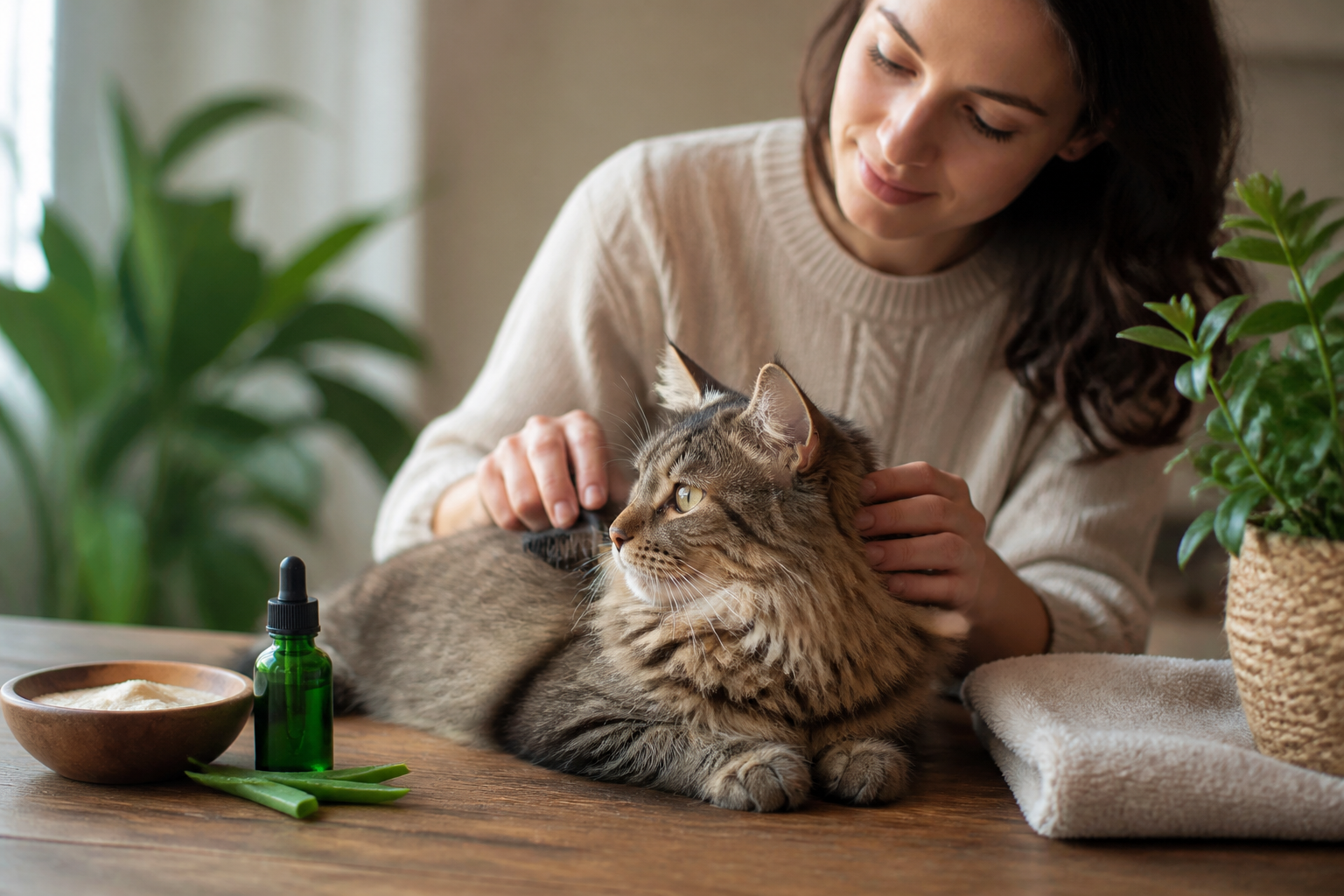
Most cases of mild dandruff respond well to home care. You do not always need a medicated solution. Simple changes to your daily routine can restore the shine to your cat's coat. For additional skin and coat support, explore our cat skin and coat health collection.
Step 1: Establish a Brushing Routine
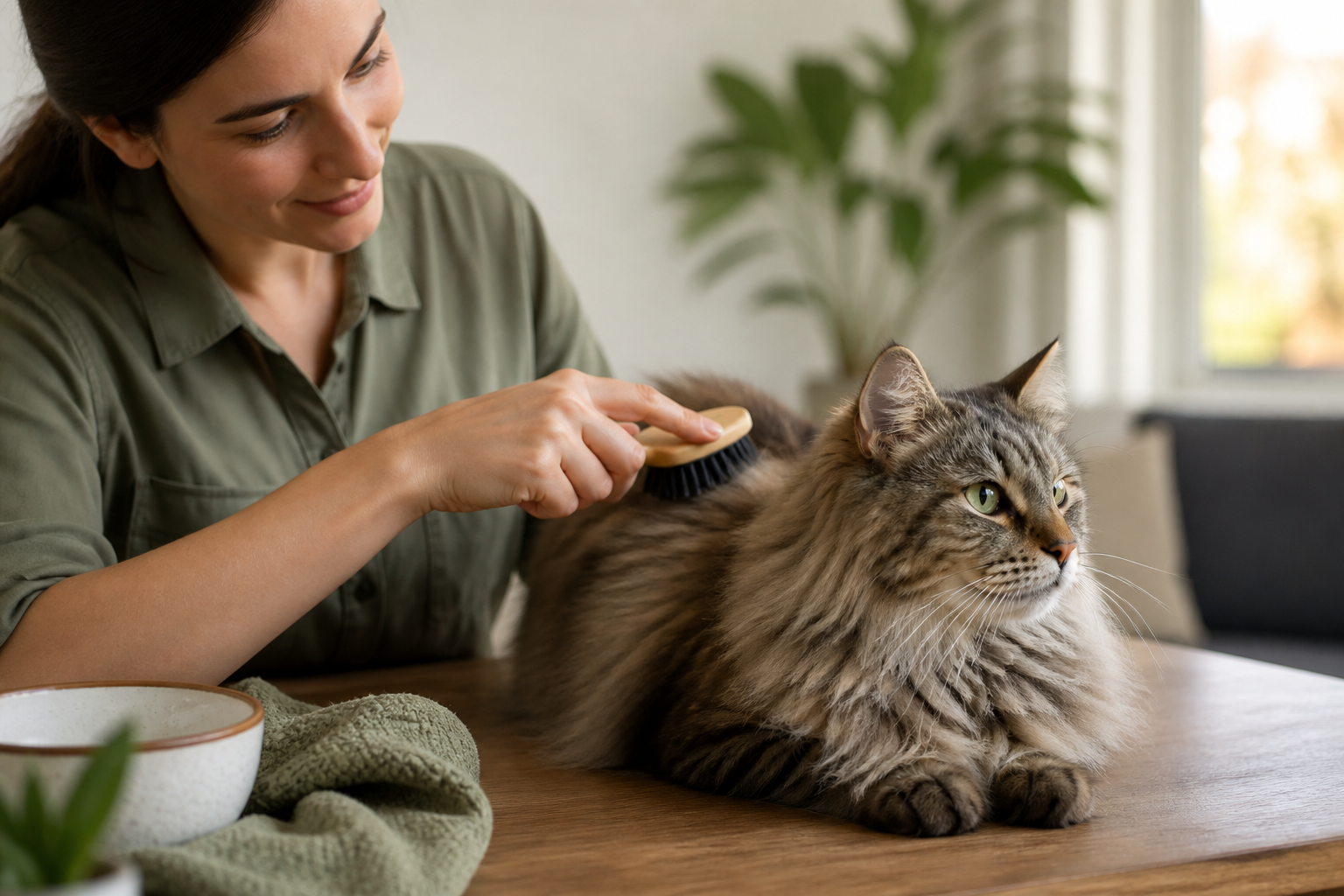
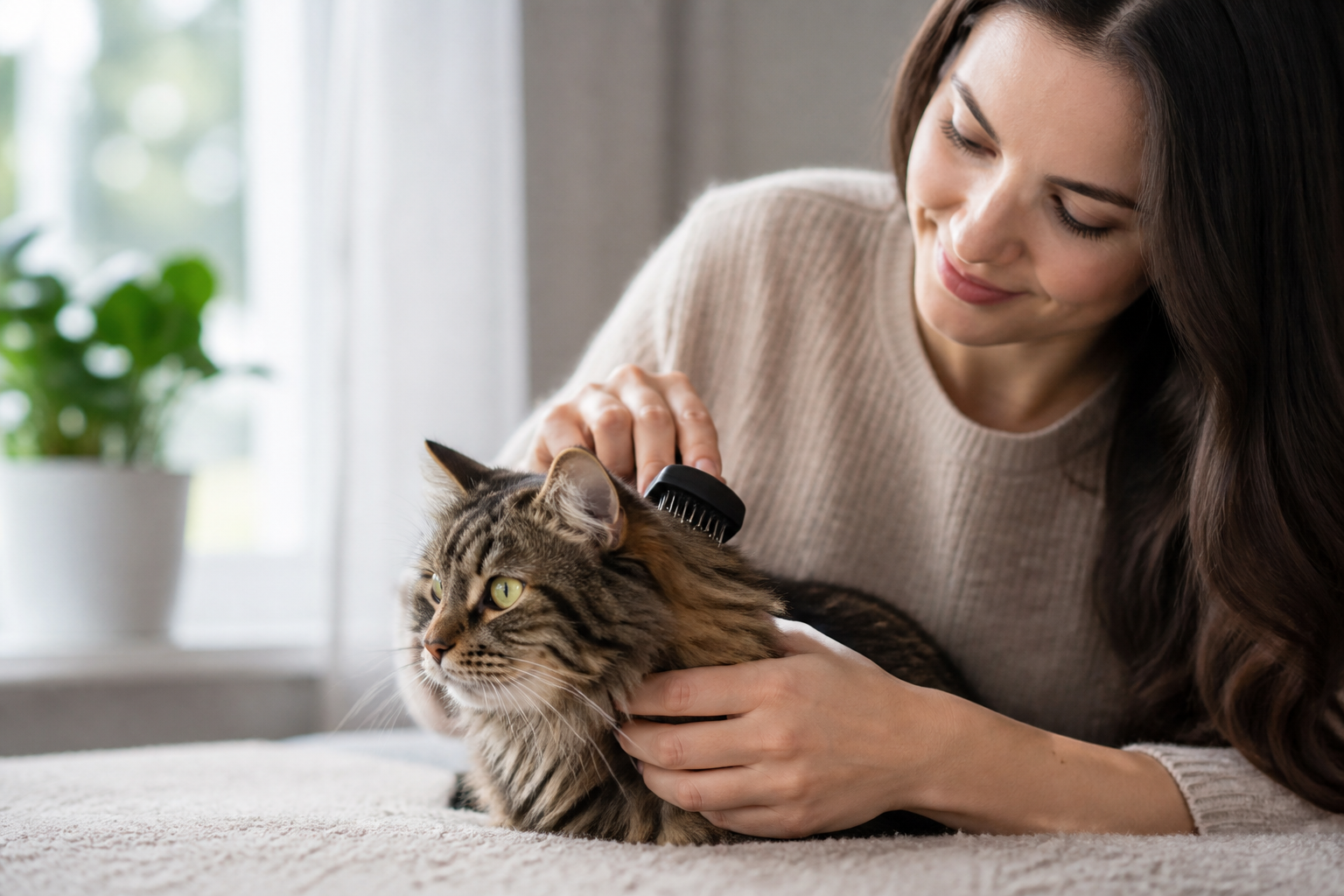
Brushing is the most effective way to clear away existing flakes. It does more than just clean the fur. Brushing stimulates the skin. This encourages the production of natural oils. It also spreads those oils across the hair shaft.
- Choose a soft bristle brush for short-haired cats.
- Use a slicker brush or undercoat tool for long-haired cats.
- Brush in the direction of hair growth.
- Focus on the lower back and base of the tail where flakes collect.
- Aim for five minutes of brushing at least three times a week.
Regular grooming sessions allow you to check for other skin issues. You can look for redness, bumps, or signs of fleas while you work. Our cat grooming supplies can help you build a consistent routine.
Step 2: Improve Ambient Humidity
If your skin feels dry in the winter, your cat’s skin does too. Adding moisture back into your home is a simple remedy. A humidifier in the room where your cat spends the most time can help. This prevents the skin from losing moisture to the dry indoor air.
You should also keep your cat away from direct heat sources. Many cats love to sleep right next to a vent or a radiator. This direct, dry heat can scorch their skin and cause localized dandruff. Encourage them to use a bed that is a few feet away from the heater instead.
Step 3: Hydration and Diet Changes
Water is essential for skin elasticity. If your cat is a "kibble addict," try to introduce wet food. Brands like Tiki Cat, Fussie Cat, and Weruva offer high-moisture options that cats love. Even replacing one meal a day with wet food can help.
You can also try these tips to increase water intake:
- Use a stainless steel or ceramic water fountain.
- Add a splash of tuna water with no added salt to their bowl.
- Keep water bowls away from litter boxes to encourage drinking.
- Place multiple water stations throughout the house.
Vet Tip: If your cat has sudden, heavy dandruff along with weight loss or increased thirst, see a veterinarian. These can be signs of underlying issues like diabetes or hyperthyroidism. A vet can run blood work to rule out these conditions.
Supplements for Skin Health
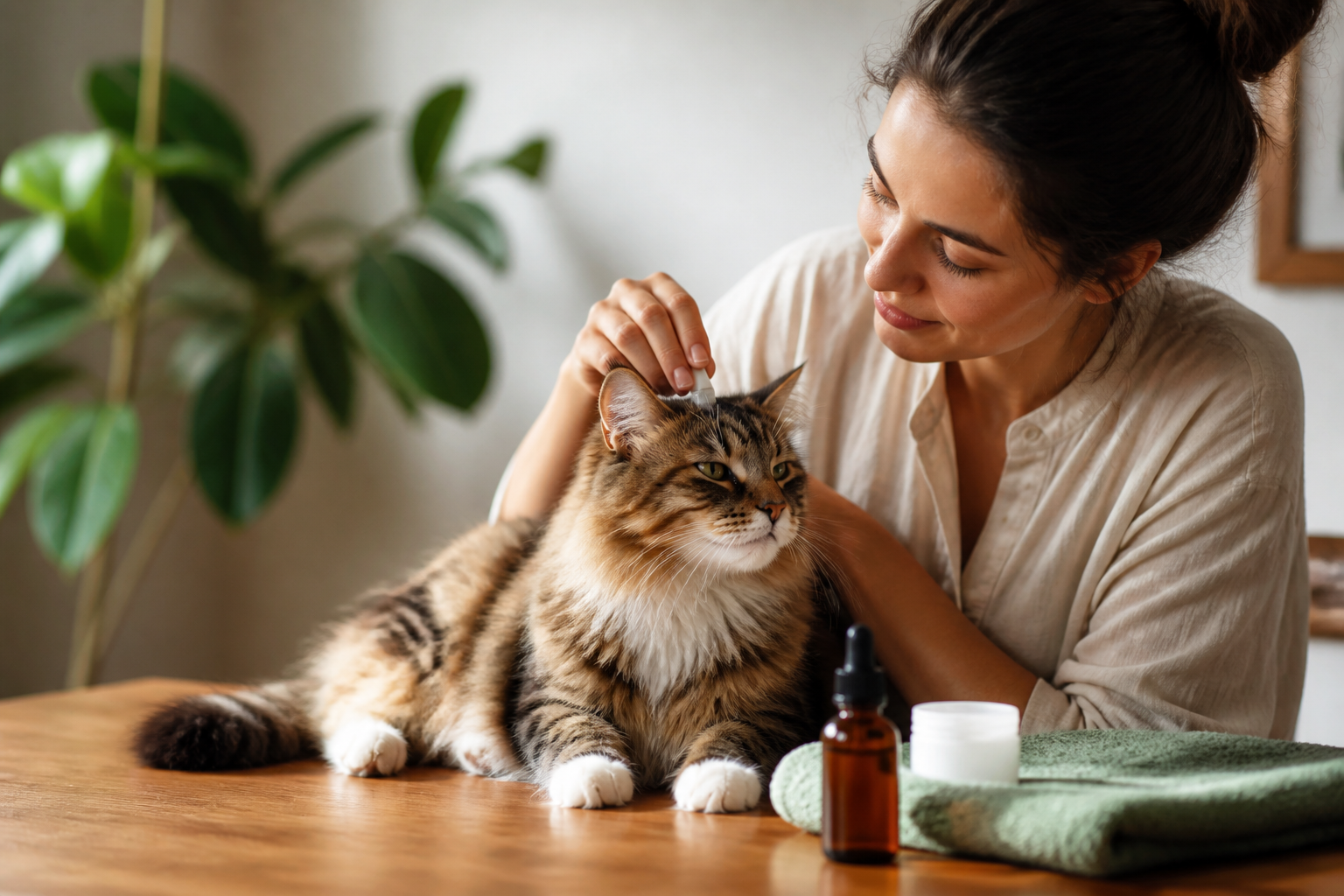
Sometimes, a good diet still needs a boost. Skin supplements are a great way to target dandruff from the inside out. Look for products containing fish oil or plant-based omegas. Brands like Zesty Paws and Honest Paws make supplements specifically for skin and coat health.
You can browse our selection of Zesty Paws products when looking for options that fit into your cat’s routine.
Omega-3 fatty acids are the most important. They help reduce inflammation in the skin. This calms the redness that often accompanies dandruff. It also helps the skin retain moisture. You can find these in liquid pumps that go right on top of their food. Most cats enjoy the fishy taste.
Key Takeaway: Supplements take time to work. You might not see a change in the first week. Give it at least 30 days to see a visible improvement in your cat's coat quality.
Baths and Topical Treatments
Most cats do not need regular baths. In fact, bathing too often can make dandruff worse. Soap can strip away the natural oils your cat needs. However, if your cat is very greasy or has a heavy buildup of flakes, a gentle bath might help.
Always use a shampoo formulated specifically for cats. Human shampoos have the wrong pH balance. This can cause severe irritation. Look for "soap-free" or "moisturizing" formulas. Ingredients like oatmeal or aloe vera are excellent for soothing dry skin.
If your cat hates water, consider waterless shampoo or grooming wipes. These allow you to clean the fur and moisturize the skin without the stress of a tub. Simply wipe the cat down in the direction of the fur. This removes loose flakes and leaves a conditioning layer behind.
For more feline grooming guidance, read how gentle grooming supports your cat’s overall care.
When the Pharmacy Is the Best Step
Some cases of dandruff require professional help. If home remedies do not work after a few weeks, there may be a medical issue. Parasites like Cheyletiella mites are often called "walking dandruff." These mites are tiny and white. They look like moving flakes. You cannot treat these with standard brushing.
Our cat pharmacy offers medications that may be available with a prescription from your veterinarian. We partner with Pet's Choice to provide prescription flea, tick, and mite treatments. If your vet diagnoses a parasitic infection, you can get the necessary medication through us.
Prescription Diets
Sometimes dandruff is a sign of a food allergy. Your vet might recommend a limited ingredient diet or a prescription skin support food. Brands like Royal Canin and Farmina Vet Life offer specialized formulas. These are designed to support the skin barrier in cats with chronic sensitivities.
Our pharmacy also carries these prescription diets. If your vet provides a script for a skin-focused food, we can help you get it delivered to your door. This is often necessary for cats who do not respond to over-the-counter changes.
Weight Management for Better Grooming
As mentioned earlier, obesity often prevents cats from grooming properly. If your cat is overweight, the dandruff will keep coming back until they lose weight. A weight management plan is a vital part of the remedy.
You can find weight management foods from brands like NutriSource or Open Farm. If the weight issue is severe, your vet might prescribe a therapeutic weight loss diet. Managing your cat's weight helps them reach those tricky spots on their back. It also reduces the strain on their joints, making grooming much easier.
Managing Walking Dandruff and Other Parasites
Walking dandruff is a specific condition caused by the Cheyletiella mite. It is highly contagious. It can spread to other pets in the house and even to humans. If you see flakes that seem to move, do not wait. This requires a specific antiparasitic treatment.
Regular flea and tick prevention is the best way to stop this before it starts. Even indoor cats can get mites or fleas. A neighbor's pet or a guest can bring them in. Our cat flea and tick collection includes products for maintaining a regular prevention routine.
For more information about prevention options, read our guide to flea and tick prevention products.
Vet Tip: Never use dog flea products on a cat. Many dog treatments contain permethrin. This is highly toxic to cats and can be fatal. Always double-check the label to ensure the product is safe for felines.
A Routine for Success
Clearing up cat dandruff is about consistency. You cannot brush them once and expect the flakes to disappear forever. You need a weekly plan to keep their skin in top shape.
- Monday: Five minutes of brushing and a quick check for redness.
- Wednesday: Add fish oil supplement to their dinner.
- Friday: Brush again and check their water fountain filter.
- Sunday: Use a grooming wipe for a deep clean and check their weight.
This simple routine helps you stay ahead of the flakes. It also builds a stronger bond with your cat. Most cats eventually grow to love the extra attention of a grooming session.
Value and Rewards for Cat Owners
We know that keeping up with supplements and high-quality food can add up. At BaxterBoo, we want to make it easier for you to provide the best care. Our MVP Rewards programme allows you to earn points on every purchase. You can use these points to save on future orders of skin supplements or grooming tools.
If you find a food or supplement that works well, consider our Autoship programme. This ensures you never run out of the remedies your cat needs. You also get a discount on your first Autoship order. It is a great way to stay consistent with your cat's skin care routine without having to remember to reorder.
Conclusion
Cat dandruff is usually a manageable issue that starts with simple home care. By improving their diet, increasing hydration, and establishing a regular brushing routine, you can help your cat feel much more comfortable. Most flakes will clear up once you address the environmental or nutritional gaps.
If the dandruff persists or you see signs of mites, your veterinarian is your best resource. They can provide a diagnosis and a prescription if needed. We are here to support that journey through our pharmacy and our wide selection of skin-supporting products. Whether it is a new brush or a specialized diet, taking action now will lead to a happier, flake-free cat.
Bottom line: Consistent grooming and high-quality nutrition are the best ways to keep your cat's skin healthy and dandruff at bay.
FAQ
Can I use human dandruff shampoo on my cat?
No. You should never use human shampoo on a cat. Human skin has a different pH level than cat skin. Human products often contain ingredients that are toxic if the cat licks their fur. Always use a shampoo specifically designed for felines.
How long does it take for cat dandruff to go away?
It usually takes two to four weeks to see a significant change. Skin cells take time to regenerate. If you are using supplements or a new diet, you need to give the body time to incorporate those nutrients. Consistency with brushing will show more immediate results in removing existing flakes.
Is cat dandruff contagious to humans?
Standard dandruff caused by dry skin or poor grooming is not contagious. However, "walking dandruff" caused by Cheyletiella mites can move to humans. This can cause an itchy rash on your skin. If you suspect your cat has mites, handle them with care and see a vet immediately.
Why does my cat only have dandruff at the base of their tail?
This is the most common spot for dandruff because it is the hardest place for a cat to reach. If a cat is older, overweight, or has arthritis, they cannot groom this area effectively. This leads to a buildup of old skin and oils. Regular brushing in this specific spot is usually required.