Save 15% on your 1st Autoship learn more

 Email us
 Live Chat
 FAQs
FAQs





Introduction
You are relaxing on the sofa when your cat jumps up for a cuddle. As you stroke their back, you notice a dusting of white flakes across their fur. It looks like a miniature snowfall. This is a common sight for many cat owners, but it often signals that your feline friend needs a little extra help with their skin health. While humans deal with dandruff frequently, a flaky coat on a cat usually means there is an underlying issue that needs attention. Whether it is a seasonal change, a grooming struggle, or a medical condition, finding the right approach to care is essential.
At BaxterBoo, we have helped pet parents manage skin and coat concerns since 2006. We know that choosing a cat shampoo for dandruff can feel overwhelming with so many options on the shelf. This post covers why these flakes appear, how to choose the best shampoo, and when it is time to call the veterinarian. Our goal is to help you restore your cat's coat to its natural, glossy shine.
Quick Answer: Cat dandruff is often caused by dry air, poor grooming, or underlying health issues like allergies and parasites. Using a pH-balanced cat shampoo designed for sensitive skin can help. If the flaking is severe or accompanied by sores, a vet visit is necessary to rule out medical conditions.
Understanding Feline Dandruff
Dandruff in cats consists of dead skin cells that have clumped together and shed from the body. While every animal sheds some skin cells, visible flakes are not normal. It is important to distinguish between dander and dandruff. Dander is microscopic and exists on all cats. Dandruff is the larger, visible white flake that stays trapped in the fur or falls onto your furniture.
The appearance of these flakes can tell you a lot about your cat's health. If the skin feels oily and the flakes are yellowish, your cat may have seborrhea oleosa. If the skin is very dry and the flakes are white and dusty, it is likely seborrhea sicca. Identifying which type your cat has will help you choose the right product.
Flaky skin is often most visible along the base of the tail and the lower back. These are the areas where cats often struggle to groom themselves effectively. If you see these flakes, look closely at the skin underneath. Redness, thinning hair, or small scabs are signs that the issue is more than just a bit of dry skin.
The Importance of pH Balance
Many people reach for human dandruff shampoo when they see flakes on their cat. This is a mistake that can lead to significant skin irritation. Human skin has an acidic pH, usually ranging from 4.5 to 6.2. Cat skin is much more neutral, typically sitting between 6.0 and 7.0.
When you use a human product on a cat, you disrupt the acid mantle. This is the thin, protective layer on the surface of the skin. A disrupted acid mantle leaves the skin vulnerable to bacteria, fungi, and parasites. It also strips away the natural oils that keep the coat hydrated.
A quality cat shampoo for dandruff is formulated specifically for this neutral pH. It cleanses without stripping and uses ingredients that soothe the feline epidermis. Always look for products labeled specifically for cats. Avoid products labeled "for dogs and cats" unless they clearly state they are pH-balanced for both.
Types of Cat Shampoo for Dandruff
Not every shampoo works the same way. The right choice depends on the severity of the flaking and the underlying cause. We carry a wide selection of brands like Burt's Bees and Earthbath that offer different solutions for various needs.
| Shampoo Type | Best For | Key Ingredients |
|---|---|---|
| Moisturizing | Mild dry skin and seasonal flaking | Oatmeal, Aloe Vera, Vitamin E |
| Medicated | Seborrhea and fungal issues | Salicylic Acid, Sulfur, Benzoyl Peroxide |
| Waterless | Cats who hate baths or senior cats | Apple cider vinegar, coconut-based cleansers |
| Hypoallergenic | Cats with sensitive skin or allergies | Fragrance-free, dye-free formulas |
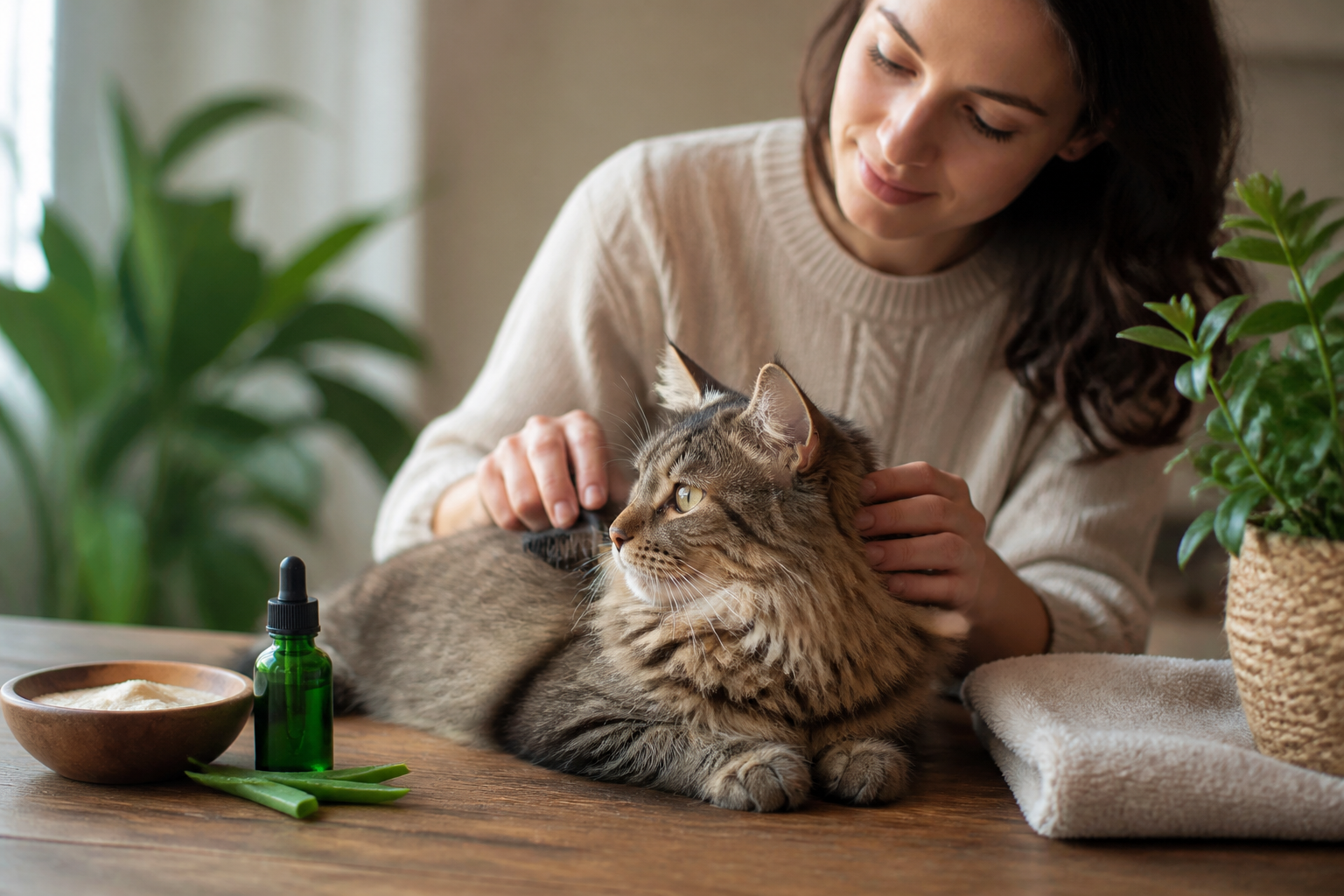
Moisturizing shampoos are the first line of defense for simple dry skin. They work by drawing moisture into the skin and sealing it there. Medicated options are more powerful. They help break down the "glue" that holds dead skin cells together, allowing them to wash away more easily. Waterless foams are great for spot treatments or for cats who experience extreme stress during a traditional bath. Explore our cat grooming collection to compare shampoos, brushes, wipes, and other grooming supplies.
Key Takeaway: Always prioritize a cat-specific formula over human products. Using the wrong pH can worsen dandruff and lead to secondary infections.
Common Causes of Flaky Skin
If you want to stop the flakes for good, you must identify the cause. Shampoo treats the symptom, but the root issue might be environmental or internal.
Environmental Factors
Dry air is a major culprit, especially during the winter months when the heater is running. Low humidity pulls moisture from your cat's skin. This leads to itching and flaking. Adding a humidifier to your home can make a significant difference for both you and your pet.
Nutritional Deficiencies
A dull, flaky coat is often a sign of a diet lacking in essential fatty acids. Omega-3 and Omega-6 fatty acids are vital for skin health. If the diet is low quality, the skin is usually the first place you will see signs of trouble. Premium foods like those from Farmina or Royal Canin are formulated to support skin health from the inside out. You can also browse our skin and coat cat food selection when reviewing your cat's nutritional routine.
Mobility and Grooming Issues
Cats are usually excellent at grooming themselves. However, if a cat is overweight or has arthritis, they cannot reach certain spots. The lower back and the base of the tail are common trouble zones. Dead skin and loose hair build up in these areas, eventually falling off as dandruff.
Parasites and Infections
External parasites like fleas or "walking dandruff" mites (Cheyletiella) can cause intense itching and flaking. Fungal infections like ringworm also cause scaly, flaky patches. If you suspect parasites, you may need a prescription treatment.
Vet Tip: If your cat is losing hair in patches or has open sores alongside the dandruff, consult your veterinarian immediately. These are signs of a more serious medical condition that requires professional diagnosis.
When to Use Medicated Shampoo
Sometimes a standard grooming shampoo is not enough. Medicated shampoos are designed to treat specific skin conditions. These products often contain ingredients like salicylic acid or benzoyl peroxide. These components help degrease the skin and slow down the rate at which skin cells die and flake off.
When using a medicated shampoo, the application process is different. You cannot simply lather and rinse. Most medicated products require a "contact time" of five to ten minutes. This allows the active ingredients to penetrate the skin and work effectively.
If your vet suspects a chronic condition like seborrhea, they may suggest a specific prescription-strength wash. Our pharmacy carries FDA-approved medications and prescription pet foods through our partnership with Pet's Choice. This can be a vital resource for managing long-term skin health issues that do not respond to over-the-counter shampoos. Browse our cat healthcare selection when looking for additional care supplies.
Step-by-Step Guide to Bathing Your Cat
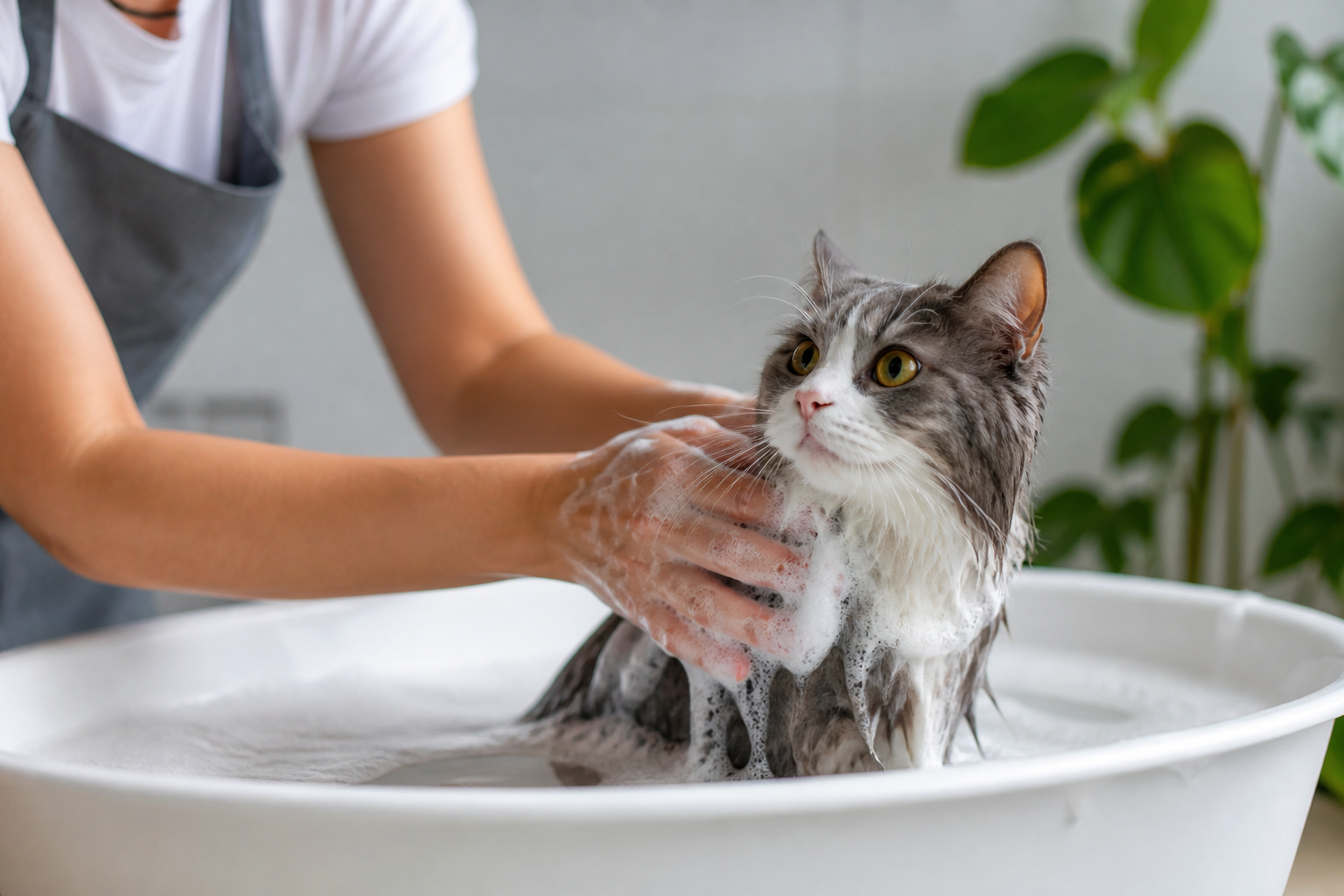
Bathing a cat is rarely a simple task. However, if your cat has a medical need for a dandruff bath, a calm approach is necessary.
Step 1: Brush thoroughly. / Remove as much loose hair and existing dandruff as possible before the skin gets wet. This allows the shampoo to reach the skin.
Step 2: Prepare the space. / Place a rubber mat or a towel in the bottom of the sink or tub. This gives your cat a sense of security and prevents slipping.
Step 3: Use lukewarm water. / Water that is too hot can further irritate dry skin. Keep the pressure low and avoid spraying the face or ears directly.
Step 4: Lather and wait. / Gently massage the cat shampoo for dandruff into the coat. If it is a medicated product, follow the label instructions for how long to let it sit.
Step 5: Rinse twice. / Leftover soap residue is a major cause of skin irritation and itching. Ensure the water runs completely clear before finishing.
Step 6: Dry carefully. / Blot the cat with a warm towel. Avoid using a hair dryer unless it has a cool setting, as heat will dry out the skin even further.
For cats that cannot tolerate a traditional bath, Vet's Best Dry Clean Waterless Cat Bath offers a waterless option for quick grooming sessions.
Key Takeaway: Proper rinsing is just as important as the shampoo itself. Any soap left behind will cause the cat to itch, creating more flakes.
Brushing and Routine Maintenance
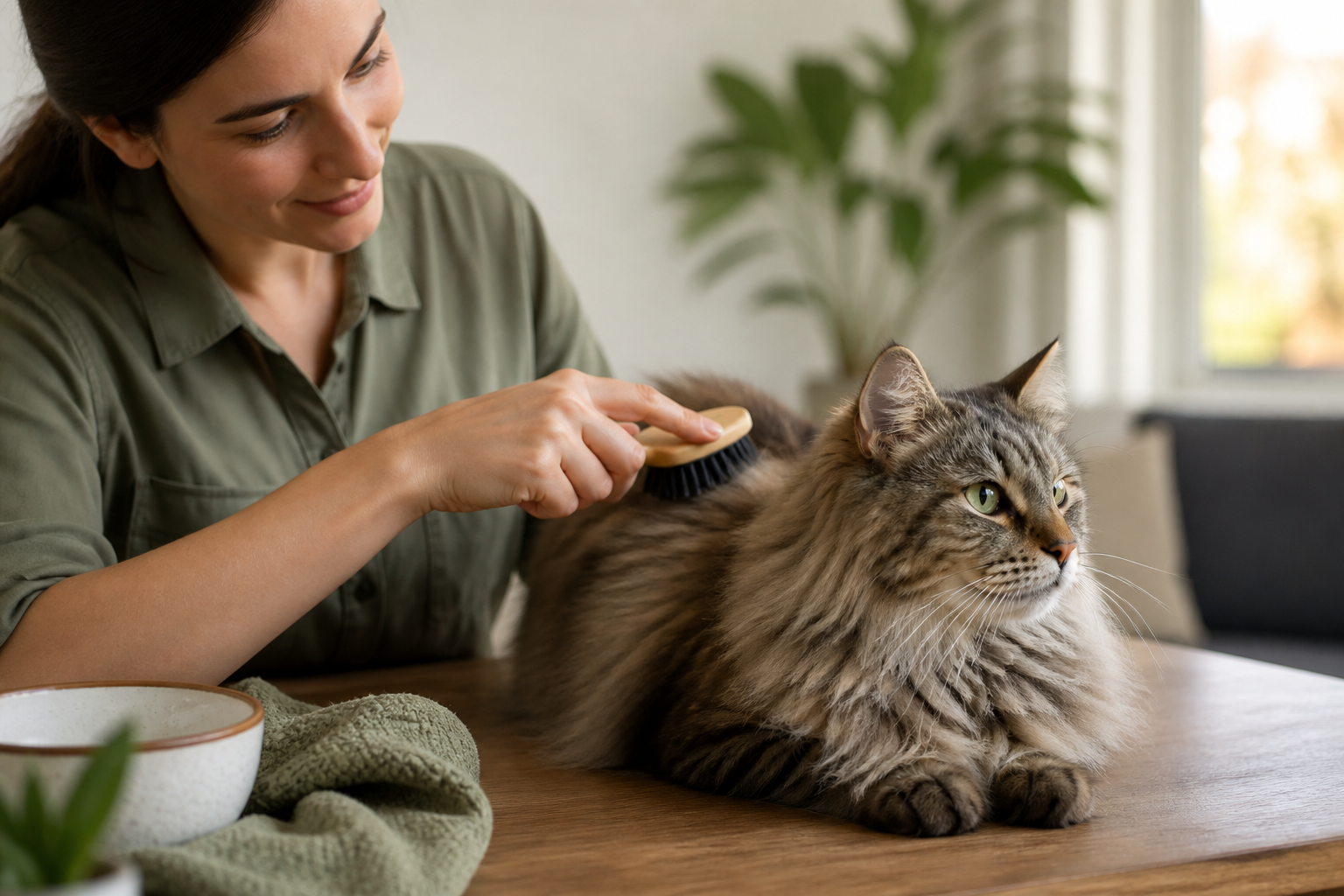
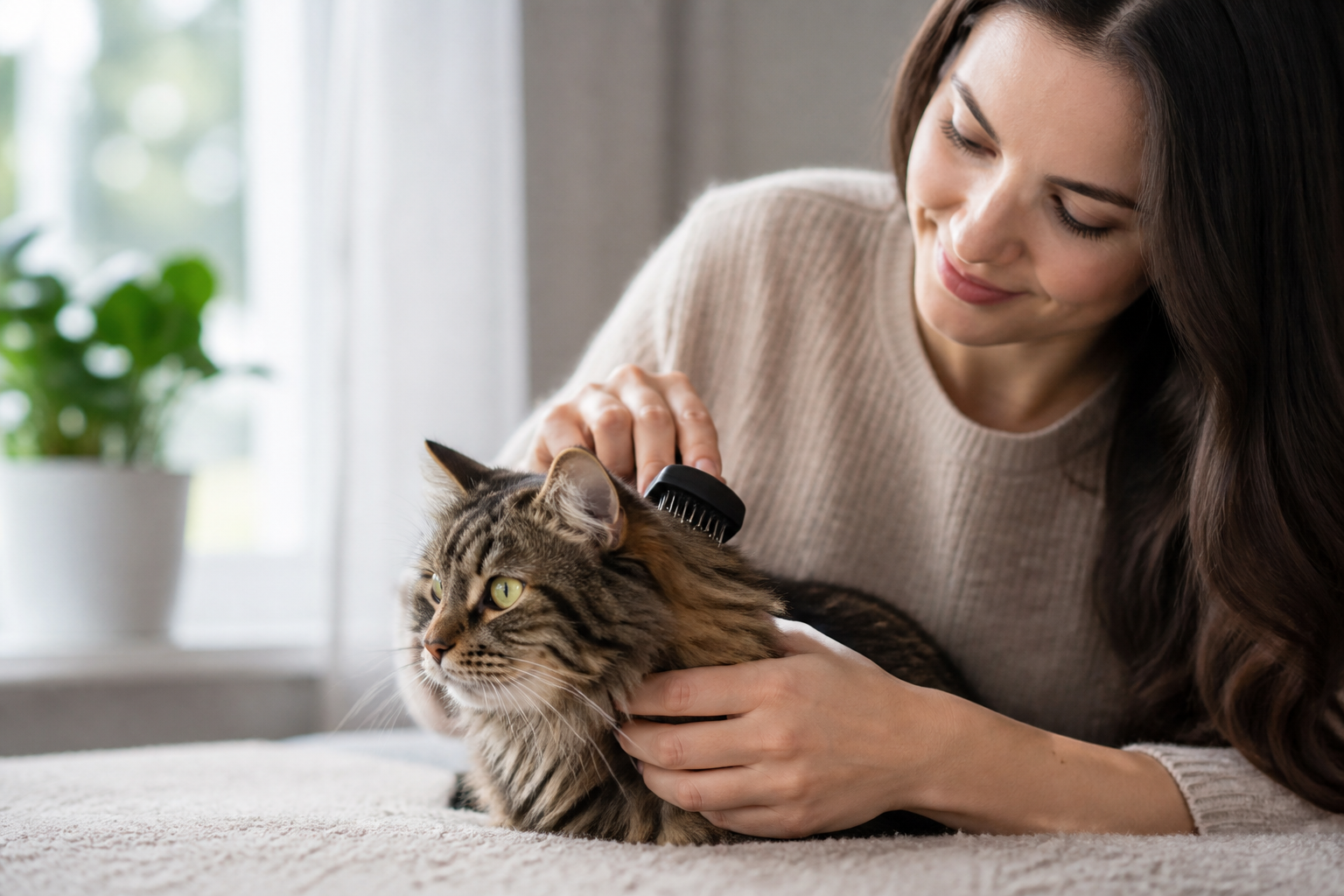
Bathing should not be the only tool in your kit. Regular brushing is the most effective way to prevent dandruff in the first place. Brushing distributes the natural oils from the skin across the hair shaft. This keeps the skin moisturized and the fur shiny.
For short-haired cats, a soft slicker brush or a rubber grooming mitt works well. For long-haired cats, you may need a stainless steel comb to reach the undercoat. Brushing also removes the dead skin cells before they have a chance to clump together into visible flakes. For more feline grooming guidance, read why cats need their whiskers.
If your cat is older or overweight, they may need daily help. Focus on the areas they cannot reach. This simple habit can reduce the need for stressful baths and keep the coat in top condition. You can earn points on grooming tools through our MVP Rewards program, making it easier to keep the right supplies on hand.
The Role of Nutrition and Supplements
What goes into your cat is just as important as what you put on their skin. High-quality protein and healthy fats are the building blocks of a healthy coat. If your cat’s dandruff persists despite regular bathing and brushing, it might be time to look at their bowl.
We carry brands like Stella and Chewy's and The Honest Kitchen that focus on whole-food ingredients. Many owners find that adding a fish oil supplement provides the extra boost their cat needs. Omega-3 fatty acids reduce inflammation in the skin and help maintain the moisture barrier. Pet Honesty Skin & Coat Health Cat Supplement is one option to discuss with your veterinarian.
For cats with severe food allergies that manifest as skin issues, a prescription diet may be required. These diets often use hydrolyzed proteins that the immune system does not recognize as a threat. You can manage these ongoing needs easily with our Autoship program. This ensures you never run out of the specific food or supplements your cat needs to stay flake-free.
Environmental Management
The environment plays a larger role in skin health than most people realize. In addition to using a humidifier, pay attention to where your cat sleeps. If they spend all day curled up next to a heating vent, their skin will dry out rapidly.
Wash your cat's bedding regularly with a mild, scent-free detergent. Dust and allergens trapped in the bedding can irritate the skin and lead to scratching. If your cat has a flea allergy, even one bite can trigger a massive breakout of dandruff and itching. Using a consistent preventive like Frontline or NexGard is a crucial part of skin management.
Bottom line: Combining the right cat shampoo for dandruff with environmental changes and proper nutrition is the most effective way to achieve long-term results.
FAQ
Is it normal for cats to have a little bit of dandruff?
A tiny amount of flaking can happen during seasonal changes when a cat sheds their undercoat. However, visible white flakes are usually a sign that the skin is too dry or the cat is not grooming properly. If the dandruff is constant or covers a large area, it is best to investigate the cause.
Can I use oatmeal shampoo for human babies on my cat?
While baby shampoo is gentle, it is still formulated for human pH levels. It is much safer to use an oatmeal shampoo specifically designed for cats. These products ensure the pH balance remains stable while providing the soothing benefits of colloidal oatmeal.
How often should I bathe my cat for dandruff?
Most cats do not need frequent baths. For simple dandruff, one bath every 4 to 6 weeks is usually enough. If you are using a medicated shampoo for a specific condition, follow the schedule provided by your veterinarian, as over-washing can lead to further dryness.
Why does my senior cat suddenly have so much dandruff?
Senior cats often develop dandruff because of decreased mobility or arthritis. They simply cannot reach their back to groom effectively. It can also be a sign of underlying health issues like kidney disease or hyperthyroidism, so a senior wellness check with your vet is recommended.
Conclusion
Managing cat dandruff requires a thoughtful combination of the right products and a consistent routine. While the white flakes can be frustrating, most cases respond well to a high-quality cat shampoo for dandruff and improved grooming habits. Remember to always use pH-balanced formulas and to look for soothing ingredients like aloe and oatmeal. If the skin issues are persistent or appear painful, your veterinarian is your best resource for a professional diagnosis.
At BaxterBoo, we are committed to providing the experts' choice in pet care. Whether you need a gentle moisturizing wash, a high-protein diet from Orijen or Acana, or prescription support through our pharmacy, we are here to help. Start by reviewing our cat grooming supplies or talk to your vet about a prescription plan through our Pet's Choice partnership. Keeping your cat comfortable and flake-free is a journey we are happy to take with you.