
 Save 15% on your 1st Autoship learn more

 Email us
 Live Chat
 FAQs
FAQs





Introduction
You lean in for a happy morning nuzzle only to be met with a cloud of breath that smells like a dumpster in July. We have all been there. While "dog breath" is often laughed off as a quirky pet trait, it is usually the first sign of plaque and bacteria buildup. At BaxterBoo, we know that keeping your dog's mouth healthy is about more than just fresh kisses. It is a critical part of their long term wellness that helps prevent pain and systemic health issues. This guide covers practical ways to manage oral hygiene through brushing, dental treats, and additives. You will learn how to build a sustainable routine that fits your schedule and keeps your dog comfortable. Proper at-home care is a three-part strategy involving mechanical cleaning, chemical prevention, and regular veterinary checkups.
Why Dog Dental Health Matters
Most dogs show some sign of periodontal disease by the time they reach three years old. This happens because plaque, a sticky film of bacteria, constantly forms on the teeth. If it is not removed through brushing or chewing, it reacts with minerals in the saliva to become tartar. Tartar is a hard, brown substance that binds to the enamel and can only be removed by a veterinarian using professional tools.
When bacteria sit under the gumline, they cause inflammation. This leads to gingivitis and, eventually, the loss of bone and tissue that holds the teeth in place. Beyond the mouth, these bacteria can enter the bloodstream. Veterinary experts have linked chronic oral infections to damage in the heart, liver, and kidneys. Maintaining a clean mouth is one of the most effective ways to help your dog live a longer life.
Vet Tip: If your dog has bleeding gums, loose teeth, or a sudden change in eating habits, skip the at-home cleaning and head to the vet. These are signs of advanced dental disease that require professional intervention and potentially prescription medication from our pet pharmacy.
The Gold Standard: Brushing Their Teeth
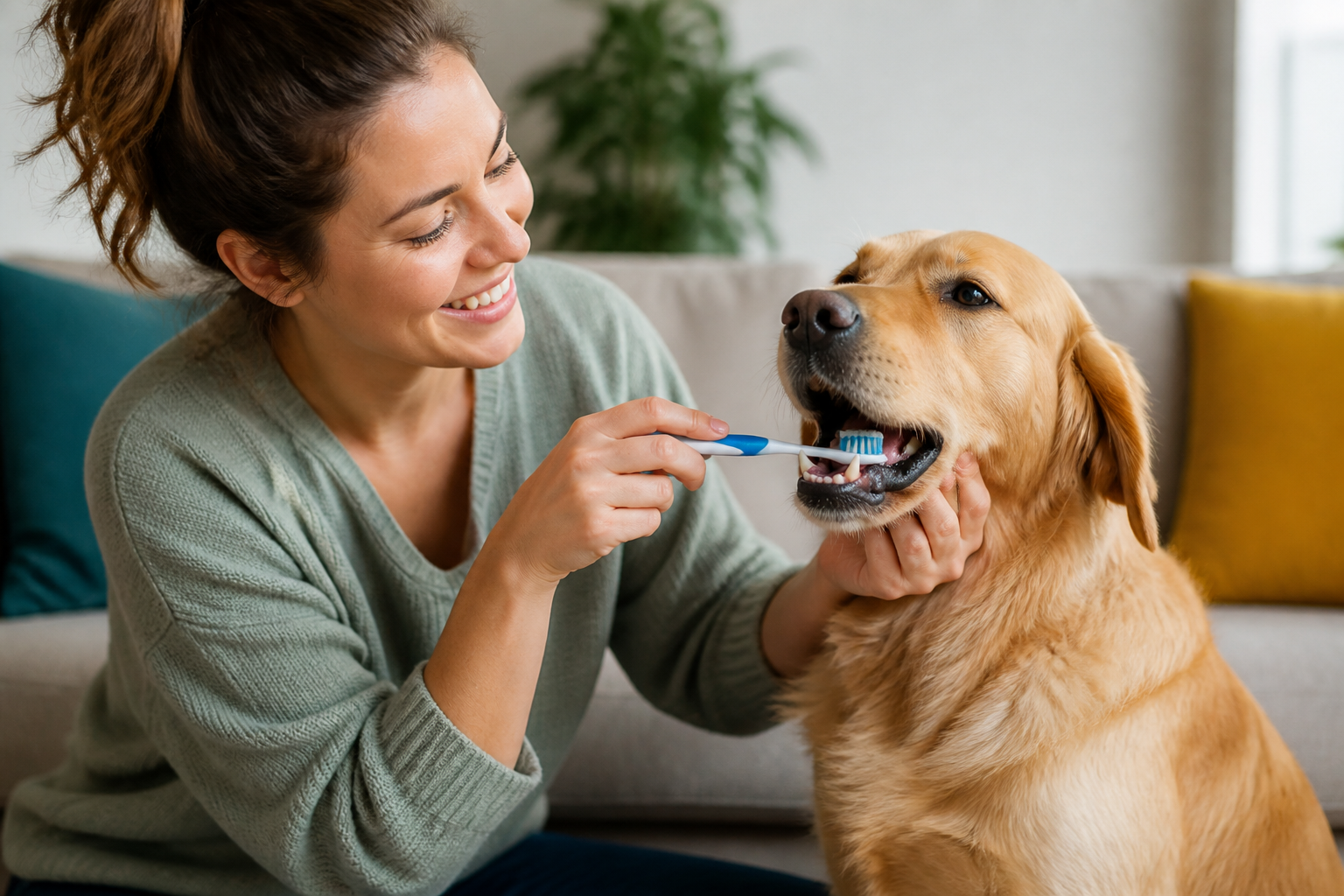
Brushing is the most effective way to remove plaque before it hardens. You do not need to spend twenty minutes on this task. A quick session focusing on the outside of the teeth is usually enough. The goal is to disrupt the biofilm before it becomes a problem.
Choosing Your Supplies
Never use human toothpaste on a dog. Human formulas contain fluoride and often xylitol, both of which are toxic to pets. Dog-specific toothpaste comes in flavors like poultry, beef, or peanut butter to make the experience more like a treat.
For the brush, you have two main options:
- A handled brush: These look like human toothbrushes but often have angled heads to reach the back molars.
- A finger brush: These are small silicone sleeves that fit over your pointer finger. They provide better control and are often less intimidating for puppies or small breeds.
For an all-in-one option, consider the OxyFresh Pet Dental Kit, which includes toothpaste, a water additive, and finger brushes.
The Step-By-Step Process
Step 1: Introduce the taste. Let your dog lick a small amount of pet toothpaste off your finger. This builds a positive association with the flavor.
Step 2: Get them used to touch. Gently lift your dog's lip and rub your finger along their gums. Do this for a few days without the brush.
Step 3: Start brushing the front. Apply a small dab of paste to the brush. Angle the bristles at 45 degrees toward the gumline. Use small, circular motions on the front canines.
Step 4: Move to the back. Most plaque accumulates on the large premolars and molars in the back of the mouth. Focus your energy on the outside of these teeth, as the tongue naturally cleans the inside surfaces.
Step 5: Reward and repeat. Give your dog a high-value treat or a favorite toy immediately after you finish. This reinforces that brushing leads to good things.
For additional brushing guidance, read these pet dental care tips.
Bottom line: Brushing even two or three times a week makes a massive difference in preventing tartar buildup.
Using Dental Chews and Treats
For days when brushing is not possible, dental chews are a fantastic supplement. These products work through mechanical scraping. As the dog bites down, the texture of the chew rubs against the tooth surface to wipe away soft plaque.
You can explore our dog dental and breath care collection for chews, toothpaste, water additives, and other oral-care products.
At BaxterBoo, we recommend looking for the Veterinary Oral Health Council (VOHC) seal on packaging. This seal confirms the product has been tested and proven to reduce plaque or tartar by a specific percentage. Popular brands like Greenies and certain RedBarn products offer these benefits.
When choosing a chew, size matters. If a treat is too small, your dog might swallow it whole, which defeats the purpose and poses a choking hazard. If it is too large, they may lose interest or consume too many calories. Always supervise your dog while they are working on a chew to ensure they do not try to gulp down large pieces.
For more ideas, browse dental chews for dogs.
What to Avoid
Be careful with extremely hard items. Natural bones, antlers, and nylon toys can be harder than the tooth enamel itself. These often cause "slab fractures," where a piece of the tooth breaks off, exposing the painful nerve inside. If you cannot indent the item with your thumbnail, it is likely too hard for your dog's teeth.
Key Takeaway: Dental chews are a helpful tool for mechanical cleaning, but they work best when used alongside regular brushing, not as a total replacement.
Water Additives and Dental Powders
If your dog is highly resistant to having their mouth handled, water additives and powders offer a "hands-off" approach. These products use enzymes or natural minerals to kill the bacteria that cause bad breath and plaque.
How Water Additives Work
You simply add a measured amount of the liquid to your dog's water bowl each day. These are usually tasteless and odorless. As the dog drinks, the solution coats the mouth and helps break down the sticky biofilm on the teeth. This is particularly helpful for households with multiple dogs sharing a water bowl.
The OxyFresh Pet Dental Water Additive offers a simple brushless option for daily routines.
Dental Powders
Powders are sprinkled directly onto your dog's food. Brands like Zesty Paws or VetriScience offer formulations that use probiotics and enzymes. These work systemically and topically to change the chemistry of the mouth, making it harder for plaque to stick to the teeth.
For another perspective on hands-off care, read about dog dental warning signs and care options.
Note: While these products are great at freshening breath and slowing plaque, they cannot remove tartar that is already stuck to the teeth.
Prescription Dental Diets
For dogs with a history of rapid tartar buildup, your veterinarian might suggest a specific dental diet. These are not your standard kibble. Brands like Royal Canin Vet Life or Purina Pro Plan Veterinary Diets manufacture kibble with a specific fiber matrix.
Instead of crumbling immediately when bitten, the kibble holds its shape long enough for the tooth to sink into it. This provides a deep scrub all the way to the gumline. These diets often contain calcium-sequestering agents that prevent minerals in the saliva from turning plaque into tartar.
Because these are therapeutic foods, they require a prescription. Our pharmacy at BaxterBoo can help with prescription orders. You can have these specialized diets delivered right to your door, making it easy to manage your pet's chronic dental needs.
Quick Answer: At-home dog dental care works by combining mechanical scraping from brushing and chews with chemical bacterial control from additives and specialized diets.
Special Considerations for Small Breeds
Small dogs and "flat-faced" breeds like Pugs or Yorkies are much more prone to dental disease. Their teeth are often crowded together in a smaller jaw, which creates many tiny nooks where food and bacteria get trapped.
If you own a small breed, dental care is not optional. You may need to brush their teeth daily and start professional cleanings earlier in their life compared to a large breed dog. Because their jawbones are thinner, untreated dental infections can actually lead to jaw fractures.
| Method | Effort Level | Effectiveness | Best For |
|---|---|---|---|
| Brushing | High | Excellent | All dogs, especially those prone to decay |
| Dental Chews | Low | Good | Dogs that love to chew and need a treat |
| Water Additives | Very Low | Moderate | Picky dogs or multi-pet homes |
| Prescription Diet | Low | High | Dogs with chronic dental issues |
Signs You Need a Professional Cleaning
Even with the best at-home routine, most dogs will eventually need a professional cleaning. This is similar to how humans brush every day but still go to the dentist twice a year. A veterinary cleaning is performed under general anesthesia. This allows the vet to clean under the gumline where the real damage happens. It also allows them to take X-rays to see if the roots are healthy.
Watch for these red flags:
- Extreme halitosis (bad breath) that lingers after brushing.
- Visible brown or orange crust near the gums.
- Gums that look red, swollen, or bleed when touched.
- Pawing at the mouth or face.
- Dropping kibble while eating or refusing dry food entirely.
If you notice these signs, your dog may be in pain. A professional cleaning can reset their oral health, making your at-home efforts much more effective moving forward.
For more information about warning signs, review this guide to hidden dental problems in dogs.
Creating a Sustainable Routine
The secret to success is consistency. Do not try to do everything at once. Start by introducing a dental chew once a day. Once that is a habit, try to brush their teeth just on the weekends. Gradually increase the frequency as you and your dog become more comfortable with the process.
We suggest keeping your dental supplies in a visible spot, like next to their leash or food bin. This serves as a physical reminder to take care of those teeth. You can also sign up for our Autoship program to ensure you never run out of toothpaste, brushes, or VOHC-approved treats. This saves you money and keeps your dog's health on track without any extra thought.
Key Takeaway: A successful dental routine is one you can actually stick to. Combine one mechanical method like brushing with one passive method like a water additive for the best results.
Conclusion
Getting your dog's teeth clean at home is a vital part of being a proactive pet owner. By combining regular brushing with effective tools like dental chews and water additives, you can significantly reduce the risk of painful infections and expensive surgeries. Remember that every dog is different. Some may take to brushing immediately, while others might require the extra help of a prescription diet or dental powder. Our team at BaxterBoo is here to help you find the right combination of products to keep your dog's smile bright.
Check out our full collection of dental care products or consult with our pet pharmacy if your vet has recommended a prescription oral health diet.
FAQ
Can I use a human toothbrush on my dog?
You can use a soft-bristled human toothbrush, but it may be difficult to reach the back of a dog's mouth. A child-sized toothbrush often works better for small to medium dogs because the head is smaller. However, never use human toothpaste, as ingredients like xylitol and fluoride are toxic to dogs.
How often do I really need to brush my dog's teeth?
Ideally, you should brush your dog's teeth every day to prevent plaque from hardening into tartar. If daily brushing is not realistic for your schedule, aim for at least three times a week. Brushing less than once a week provides very little benefit because plaque hardens into tartar within 48 to 72 hours.
My dog hates the toothbrush. What should I do?
If your dog resists the brush, start with dental wipes or a silicone finger brush, which are often less intimidating. You can also rely more heavily on dental treats and water additives while slowly desensitizing them to the brush. Using a flavored toothpaste that they enjoy can also turn the session into a positive experience.
Are "anesthesia-free" dental cleanings a good alternative?
Anesthesia-free cleanings are generally not recommended by veterinarians because they are purely cosmetic. They only remove the tartar you can see on the surface of the tooth. They do not allow for cleaning under the gumline or a full examination of the mouth, which is where most dental disease actually occurs.






