
 Save 15% on your 1st Autoship learn more

 Email us
 Live Chat
 FAQs





Introduction
You are relaxing on the couch with your cat when you notice a dusting of white specks across their fur. It looks like a light dusting of snow, but these flakes are actually a sign that your cat is dealing with dandruff. At BaxterBoo, we know how frustrating it can be to see your pet’s once-glossy coat looking dull and flaky. This condition is quite common, and while it is often a simple matter of dry skin, it can sometimes point to deeper health needs. We will cover the best ways to manage these flakes, from diet changes to grooming habits. Our goal is to help you understand why those flakes are appearing and how to restore your cat's skin to its natural, healthy state.
Understanding the Difference Between Dandruff and Dander
It is easy to confuse cat dander with cat dandruff, but they are not the same thing. Every cat produces dander. These are microscopic skin cells that shed naturally as part of the body's renewal process. Because they are so small, you usually cannot see them with the naked eye. Dander is what often triggers allergies in humans, but it is a perfectly normal part of a healthy cat’s life.
Dandruff is different because the flakes are large enough to see. When skin cells die and clump together, they form the white or gray scales you notice on the fur. Unlike dander, visible dandruff is usually a sign that something is slightly off with your cat’s skin health or their ability to clean themselves.
Quick Answer: Cat dandruff consists of visible white flakes caused by dry or oily skin. It differs from dander, which is microscopic and a normal part of skin shedding. Treatments involve improving hydration, adjusting nutrition, and increasing regular brushing.
Cat Skin & Coat Care













Common Causes of Flaky Skin in Cats
Before you can choose the right treatment, you need to know why the flakes are appearing. Several factors contribute to skin irritation.
Environmental Factors and Humidity
Low humidity is one of the most frequent causes of dry skin. This is especially true during the winter months in the United States. When the heater runs constantly, it pulls moisture out of the air and out of your cat’s skin. If your cat spends most of their time indoors, they are at the mercy of your home’s climate.
Weight and Mobility Issues
If your cat is carrying extra weight, they might have a hard time reaching certain spots. You will often see dandruff accumulate at the base of the tail or along the lower back. This happens because the cat cannot physically reach those areas to groom them. Arthritis in senior cats causes similar issues. If it hurts to twist and reach, the grooming routine suffers, and dead skin cells begin to build up.
Nutritional Deficiencies
Skin health starts from the inside. If a cat’s diet is low in essential fatty acids, their skin may become brittle and prone to flaking. Cats require specific nutrients like Omega-3 and Omega-6 to maintain their moisture barrier. Without these, the skin loses water and becomes dry.
Parasites and Infections
Fleas, mites, and lice can cause significant skin irritation. Some mites, known as Cheyletiella, are even nicknamed walking dandruff because they look like moving white specks. Fungal infections like ringworm can also cause scaling and hair loss.
Vet Tip: If your cat is losing hair in patches or has red, raw skin along with dandruff, schedule a visit with your veterinarian. These can be signs of a fungal infection or a parasitic infestation that requires medical treatment.
Top Treatments for Cat Dandruff
Treating dandruff usually requires a multi-layered approach. You want to address the immediate flakes while also fixing the underlying cause.
Improved Grooming and Brushing
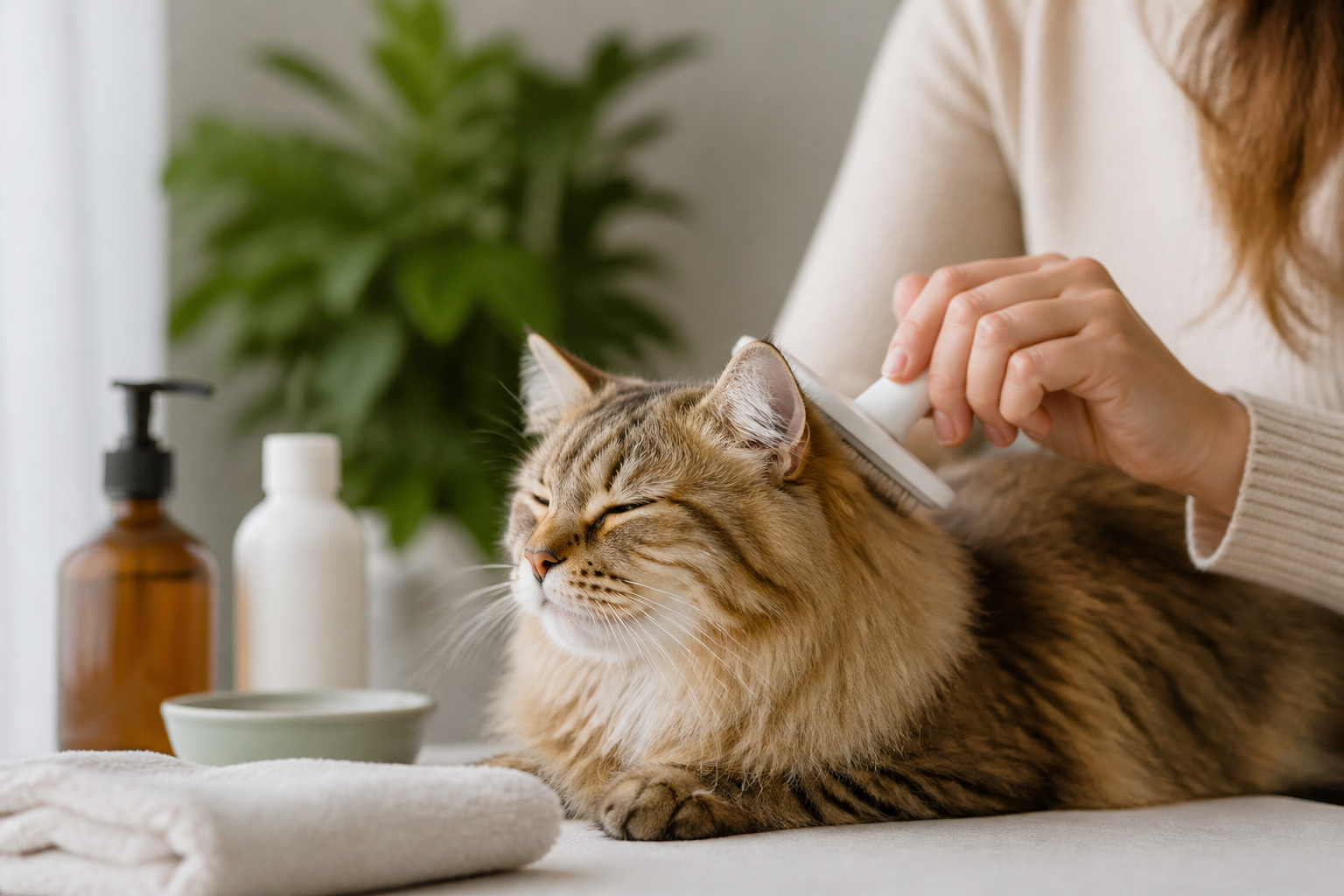
Regular brushing is the simplest and most effective way to manage mild dandruff. Brushing does more than just pull away dead hair. It stimulates the skin and helps distribute natural oils across the entire coat. For short-haired cats, a weekly session is usually enough. For long-haired breeds, you may need to brush them daily. Explore our cat grooming supplies for brushes, combs, and other coat-care tools.
Hydration and Diet Adjustments
Hydration is a major factor in skin health. Many cats do not drink enough water, especially if they eat a diet of strictly dry kibble. Transitioning to a diet that includes wet food can significantly increase their daily moisture intake. Brands like Tiki Cat or Fussie Cat offer high-moisture options that appeal to even the pickiest eaters.
Essential Fatty Acid Supplements
If your cat’s food is not providing enough healthy fats, supplements can bridge the gap. Look for products containing salmon oil or other fish oils. Brands like Zesty Paws and Honest Paws make supplements specifically formulated for skin and coat health. These fats help strengthen the skin’s natural barrier, which keeps moisture in and irritants out.
Adding Moisture to the Home
Using a humidifier in the rooms where your cat spends the most time can prevent their skin from drying out during the winter. Aim for a humidity level between 40 and 50 percent. This benefit extends to humans too, making the environment more comfortable for everyone in the household.
Key Takeaway: Effective dandruff treatment involves a combination of mechanical removal through brushing and internal support through better hydration and essential fatty acids.
Choosing the Right Products
When you are browsing the aisles at BaxterBoo, you will find several categories of products that can help. It is important to choose items that match your cat’s specific needs.
| Product Type | Benefit for Dandruff | Recommended Use |
|---|---|---|
| Slicker Brushes | Removes loose fur and dead skin cells. | Use 2–3 times per week for most cats. |
| Omega-3 Oil | Supports the skin barrier from the inside. | Add to wet food daily. |
| Moisturizing Shampoo | Soothes dry skin and washes away flakes. | Use only as needed, about once a month. |
| Water Fountains | Encourages more frequent drinking. | Keep clean and filled with fresh water. |
Specialized Diets and Weight Management
For some cats, the problem is not just dry skin but a lack of ability to reach the skin. Obesity is a medical concern that affects grooming. If your cat is overweight, we carry specialized weight management foods from trusted brands like Farmina Vet Life and Royal Canin. These diets help your cat reach a healthy weight safely, which in turn allows them to return to their normal grooming habits. Browse our cat food category to compare formulas for different nutritional needs.
Our pharmacy also offers prescription diets through our partnership with Pet's Choice. If your veterinarian determines that your cat’s dandruff is a symptom of a larger issue like kidney disease or a food allergy, a prescription diet may be the most effective treatment. These formulas are specifically designed to manage internal health while supporting external coat quality.
Bottom line: Weight management is a vital part of skin care for overweight cats because it restores their ability to groom themselves properly.
When to Use Medicated Shampoos
Bathing a cat is not always an easy task, and it is not always necessary for dandruff. However, if the skin is particularly oily or if there is a fungal component, a medicated shampoo may be helpful. You should only use shampoos specifically formulated for cats. Human dandruff shampoos are often toxic to felines and can make the problem much worse.
If your vet recommends a medicated wash, look for ingredients like salicylic acid or sulfur, which help break down the scales. For simple dry skin, look for soothing ingredients like oatmeal or aloe vera. Always follow the instructions on the bottle regarding how long the suds should sit on the skin before rinsing. Cat-safe grooming options, including oatmeal and aloe products, are available in our cat grooming collection.
Step 1: Prepare the area. / Place a non-slip mat in the sink or tub and have towels ready.
Step 2: Use lukewarm water. / Wet the cat thoroughly but avoid the face and ears.
Step 3: Lather gently. / Massage the shampoo into the coat, reaching down to the skin.
Step 4: Rinse completely. / Ensure no soap residue is left behind, as this can cause further irritation.
Parasite Prevention and the Pharmacy
Sometimes the flakes you see are actually the result of skin damage from fleas or mites. Even indoor cats can get fleas. They can hitch a ride on your clothes or enter through window screens. A monthly preventative is the best defense against these pests.
At BaxterBoo, we offer a wide range of flea and tick protection. Our cat pharmacy provides access to FDA-approved preventatives, including options that require a prescription from your vet. By working with Pet's Choice, we make it easy to get the professional-grade treatments your cat needs to stay pest-free. Keeping your cat on a regular schedule for these medications prevents the itchy, inflamed skin that leads to dandruff.
Home Care Checklist for Flaky Skin
To stay on top of your cat’s skin health, follow these steps:
- Brush your cat at least twice a week to distribute natural skin oils.
- Check your cat’s weight regularly to ensure they can groom themselves.
- Provide a mix of wet and dry food to keep hydration levels high.
- Monitor for signs of fleas or redness on the skin.
- Maintain a monthly schedule for flea and tick preventatives.
Addressing Stress and Behavioral Causes
Believe it or not, stress can affect a cat’s skin. When cats are anxious, they may over-groom or stop grooming entirely. Both behaviors lead to coat issues. If your home has recently gone through a big change, like a move or a new pet, your cat’s dandruff might be a physical reaction to that stress.
Using calming pheromones or providing extra vertical space can help lower stress levels. Brands like Jackson Galaxy offer tools designed to improve the home environment for cats. A happy cat is more likely to keep up with their self-care routine, leading to a healthier coat.
When to Call the Vet
While most cases of cat dandruff are easy to manage at home, some symptoms require professional help. If you notice any of the following, please consult your veterinarian:
- Extreme itching or biting at the skin.
- Large patches of hair loss.
- Oozing sores or red, inflamed bumps.
- A sudden change in appetite or litter box habits.
- A dull, greasy coat that does not improve with brushing.
Your vet can perform skin scrapings or blood tests to rule out conditions like hyperthyroidism or diabetes. These metabolic disorders can change the way a cat's skin functions, leading to chronic dryness. Once the underlying disease is managed, the dandruff often clears up on its own.
The Role of the BaxterBoo Pharmacy
Managing chronic health conditions often requires ongoing medication. Our pharmacy is a helpful resource for pet owners managing these long-term needs. Through our partnership with Pet's Choice, we provide a reliable way to get prescription medications and therapeutic diets delivered to your door. This is especially useful for senior cats with arthritis who need pain management to stay mobile and keep grooming.
Whether it is a prescription flea treatment or a specialized kidney diet, having access to a pharmacy ensures you have the right tools to care for your pet. We believe that health care should be practical and accessible for every pet owner.
Key Takeaway: For persistent skin issues caused by underlying health problems, the BaxterBoo pharmacy provides a convenient way to access professional-grade treatments and prescription diets.
Conclusion
Cat dandruff is usually a manageable condition that responds well to simple changes in your routine. By focusing on regular brushing, high-quality nutrition, and proper hydration, you can help your cat maintain a coat that is soft and flake-free. Remember to keep an eye out for signs that the problem might be more than skin-deep. We are here to support you with everything from grooming tools to the specialized medications available in our cat pharmacy. Taking a proactive approach to your cat's skin care will keep them comfortable and purring for years to come.
Bottom line: A combination of consistent grooming and proper internal nutrition is the most effective way to eliminate cat dandruff.
FAQ
Can I use human dandruff shampoo on my cat?
No, you should never use human dandruff shampoo on a cat. Many of these products contain ingredients that are toxic to felines if licked off the fur. Furthermore, the pH balance of human skin is different from cat skin, and using our products can cause severe irritation or chemical burns.
Is cat dandruff the same as walking dandruff?
No, regular dandruff is just dead skin cells. Walking dandruff is a nickname for a specific type of mite called Cheyletiella. These mites are highly contagious and require medical treatment from a veterinarian, whereas regular dandruff can usually be managed with grooming and diet changes.
How often should I brush my cat to stop dandruff?
For most cats, brushing two to three times a week is sufficient to remove dead skin and distribute natural oils. If your cat has long hair or is a senior who cannot groom well, you might need to move to a daily brushing schedule. Consistent brushing is one of the best ways to prevent flakes from building up.
Does wet food really help with dry skin?
Yes, wet food is a great way to increase your cat's overall moisture intake. Many cats live in a state of mild dehydration because they do not have a high natural thirst drive. Increasing the water in your diet helps keep your cat's skin hydrated from the inside out, which reduces flaking.






- Site & Contents BaxterBoo.com. BaxterBoo is located in the United States.
- Privacy & Security
- Terms of Use
- Accessibility Statement
