Save 15% on your 1st Autoship learn more

 Email us
 Live Chat
 FAQs
FAQs





Why Dog Steps for Bed Are Essential for Your Pet's Health
When you buy dog steps for bed, you're investing in more than convenience—you're protecting your dog's joints and preventing serious injuries. Here's what you need to know:
Quick Buying Guide:
- For small dogs (under 25 lbs): 3-4 foam or plastic steps with non-slip treads ($30-$50)
- For senior or arthritic dogs: Wide ramps with gentle inclines instead of steps ($50-$100+)
- For medium to large dogs: Sturdy wooden steps with 200+ lb capacity ($100-$150)
- Key features to prioritize: Non-slip surface, appropriate height, washable covers, stable base
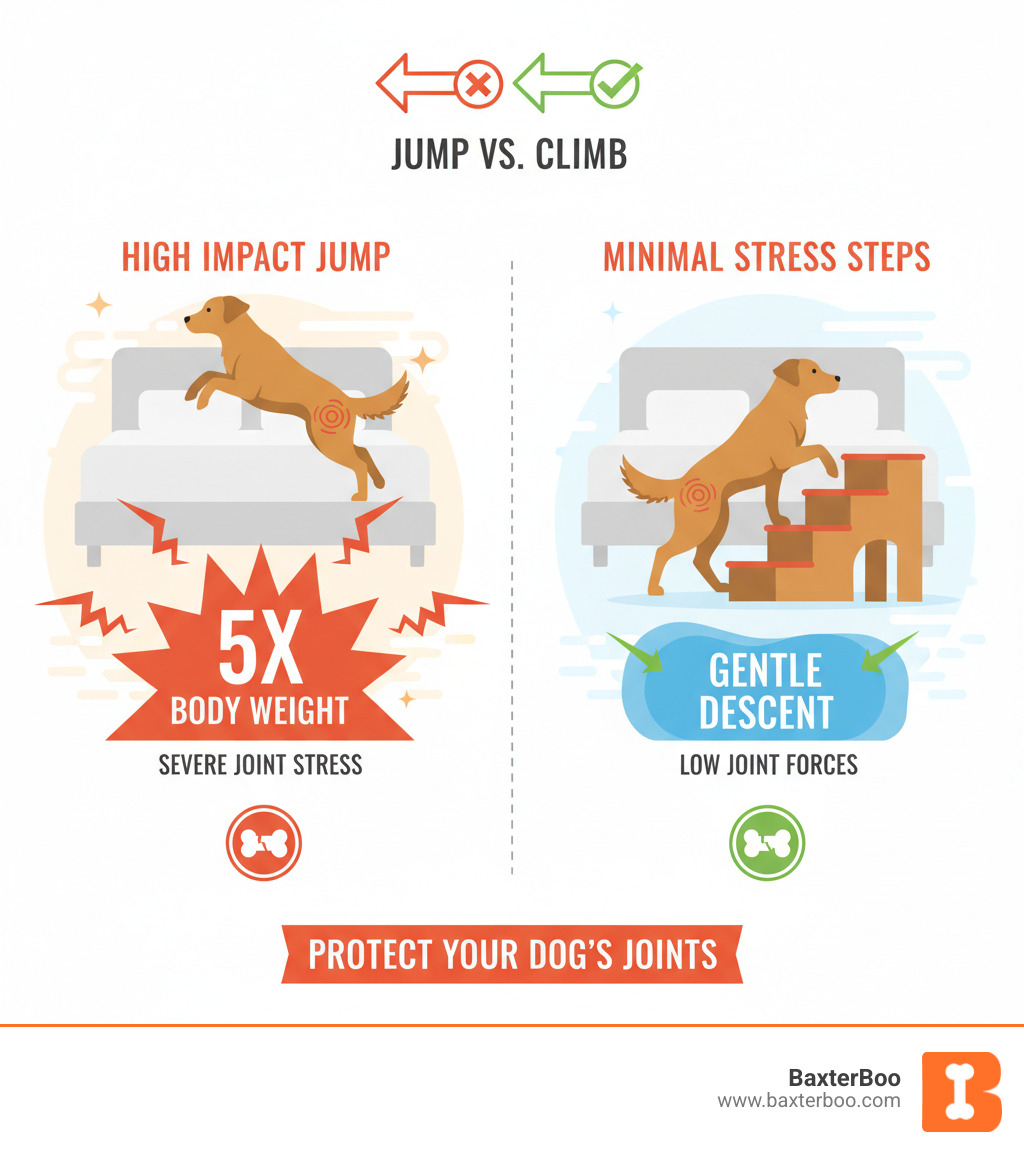
Does your furry friend struggle to climb onto the couch or a tall bed? Many pet parents watch their dogs leap onto furniture without realizing the hidden damage happening to their joints. Each time your dog jumps down, their joints absorb impact forces up to five times their body weight. For a 20-pound dog, that's 100 pounds of pressure on their knees and hips. Over time, this repeated stress can lead to arthritis, hip dysplasia, and in breeds like Dachshunds, devastating conditions like Intervertebral Disc Disease (IVDD).
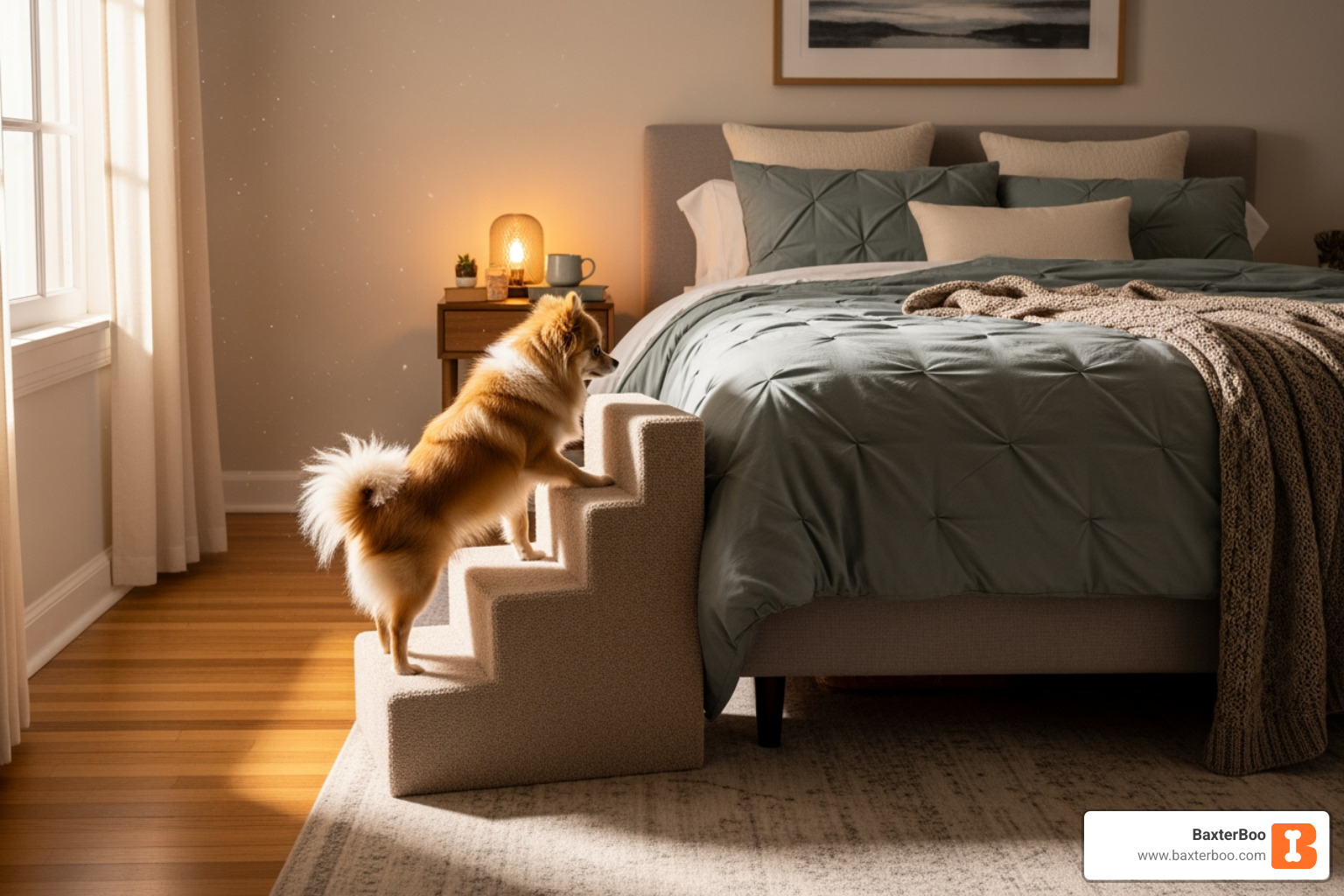
Dog steps offer a simple solution. They transform a risky leap into a gentle climb, protecting your pup's joints while giving them the independence to snuggle with you whenever they want.
This guide will walk you through choosing between steps and ramps, finding the perfect fit for your dog and furniture, and selecting the right solution for any breed, from a senior Saint Bernard to a spunky Chihuahua.
Why Your Dog Needs a Boost: The Health Benefits of Bed Steps
Think about how your knees feel after jumping off a high surface. That's what your dog experiences each time they leap from your bed or couch. When you buy dog steps for bed, you're making a choice that protects your furry friend's body from unnecessary wear and tear, potentially adding years of comfortable mobility to their life.
Protecting Joints Before Problems Start
Every jump sends shockwaves through your dog's joints, wearing down the protective cartilage. Dog steps eliminate this jarring impact, allowing for a gentle, controlled descent that keeps their hips, knees, and spine properly aligned. This protection is important for all dogs, but it's critical for certain breeds and life stages.
Special Support for At-Risk Breeds
Some dogs are built in a way that makes jumping especially dangerous. Dachshunds, Corgis, and Basset Hounds, with their long backs and short legs, are prone to Intervertebral Disc Disease (IVDD), a painful spinal condition that can cause paralysis. Steps provide the gentle climb needed to keep their spines safe. Similarly, French Bulldogs and other compact breeds can find jumping exhausting and risky. Even large breeds like German Shepherds and Golden Retrievers, which are prone to hip dysplasia, benefit from the early introduction of steps to preserve long-term joint health. To learn more about these conditions, see intervertebral disc disease and canine hip dysplasia.
Support for Arthritis, Aging, and Recovery
If your senior dog hesitates before jumping or whimpers when they land, their joints are likely painful from arthritis. Steps restore their independence, allowing them to join you for cuddles without pain or needing to be lifted. The gentle incline of steps or a ramp means they can move at their own pace without the explosive force of a jump.
Steps are also essential recovery tools after surgery. Vets universally advise "no jumping" after procedures like ACL repair or spinal operations. Steps allow your dog to safely access their favorite spots while their body heals. For extra support, consider models with side rails or cushioned foam.
The Emotional Benefits Matter Too
When dogs can't reach their favorite people or places, they can lose confidence and become anxious. Steps restore their freedom and routine, which is vital for their emotional wellbeing. Your Chihuahua can climb up whenever they want, and your aging Labrador doesn't have to wait for help. Plus, it saves your back from lifting a heavy dog multiple times a day.
Steps vs. Ramps: Choosing the Right Ascent for Your Pup
So you've decided to buy dog steps for bed—but should you get a ramp instead? Both provide safe access to furniture, but they suit different dogs and situations. Think of steps as a staircase and a ramp as a gentle hill; your dog's health and ability will determine which is easier to climb.
Understanding the Key Differences
Dog steps require your pup to lift their legs for each stair, which demands some coordination and joint flexibility. They are typically more compact and take up less floor space. Dog ramps offer a continuous, gentle slope for walking, eliminating the need to lift legs high. This makes them the lowest-impact option, but they require a longer footprint to achieve a safe, gradual incline.
| Feature | Dog Steps | Dog Ramps |
|---|---|---|
| Space Efficiency | More compact, taking up less floor space | Require more length for a gentle incline |
| Incline Steepness | Series of distinct steps requiring leg lifts | Continuous, gentle slope for walking |
| Best for Agile Dogs | Excellent for healthy, mobile dogs | Can work but may be longer than needed |
| Best for Senior Dogs | Can be challenging for stiff joints | Ideal—easiest on aging bodies |
| Best for Dogs with Joint Pain | Decent if steps are wide and low | Best option—minimal joint stress |
| Breed Considerations | Good for small breeds without joint issues | Essential for long-backed breeds (Dachshunds, Corgis) |
| Furniture Height | Works well for standard bed heights | Better for very high beds requiring gentler angles |
When to Choose Steps vs. Ramps
Steps are often ideal for:
- Young, healthy, and agile dogs who just need a boost.
- Small breeds like Chihuahuas or French Bulldogs who are too short to reach the bed.
- Homes with limited space, as steps have a smaller footprint.
Ramps are the better choice for:
- Senior dogs with stiff joints or weakened muscles.
- Dogs with arthritis, hip dysplasia, or IVDD, as ramps minimize all joint stress.
- Long-backed breeds like Dachshunds and Corgis to protect their spines.
- Dogs recovering from surgery who need the gentlest possible path.
Making Your Decision
The best choice depends on your dog's current and future needs. A young dog may be fine with steps now, but a ramp could be a better long-term investment as they age. At BaxterBoo, we carry both high-quality steps and ramps because we know every dog is unique and deserves a safe way to stay close to you.
The Ultimate Guide to Buy Dog Steps for Bed
Ready to buy dog steps for bed? Finding the perfect set means matching your dog's needs, your furniture's height, and your home's style. This checklist will guide your purchase.
Exploring the Types of Dog Steps
Dog steps come in several materials, each with unique benefits.

- Foam Steps: Soft, lightweight, and supportive, these are perfect for small or senior dogs. Most have removable, washable covers. Note: They often arrive vacuum-packed and need 24-48 hours to expand.
- Plastic Steps: Durable, affordable, and easy to clean. Many are foldable for storage or travel. Look for models with carpeted or rubberized treads for grip.
- Wooden Steps: Sturdy and stylish, these often resemble furniture and are ideal for medium to large dogs due to their high weight capacity and solid construction.
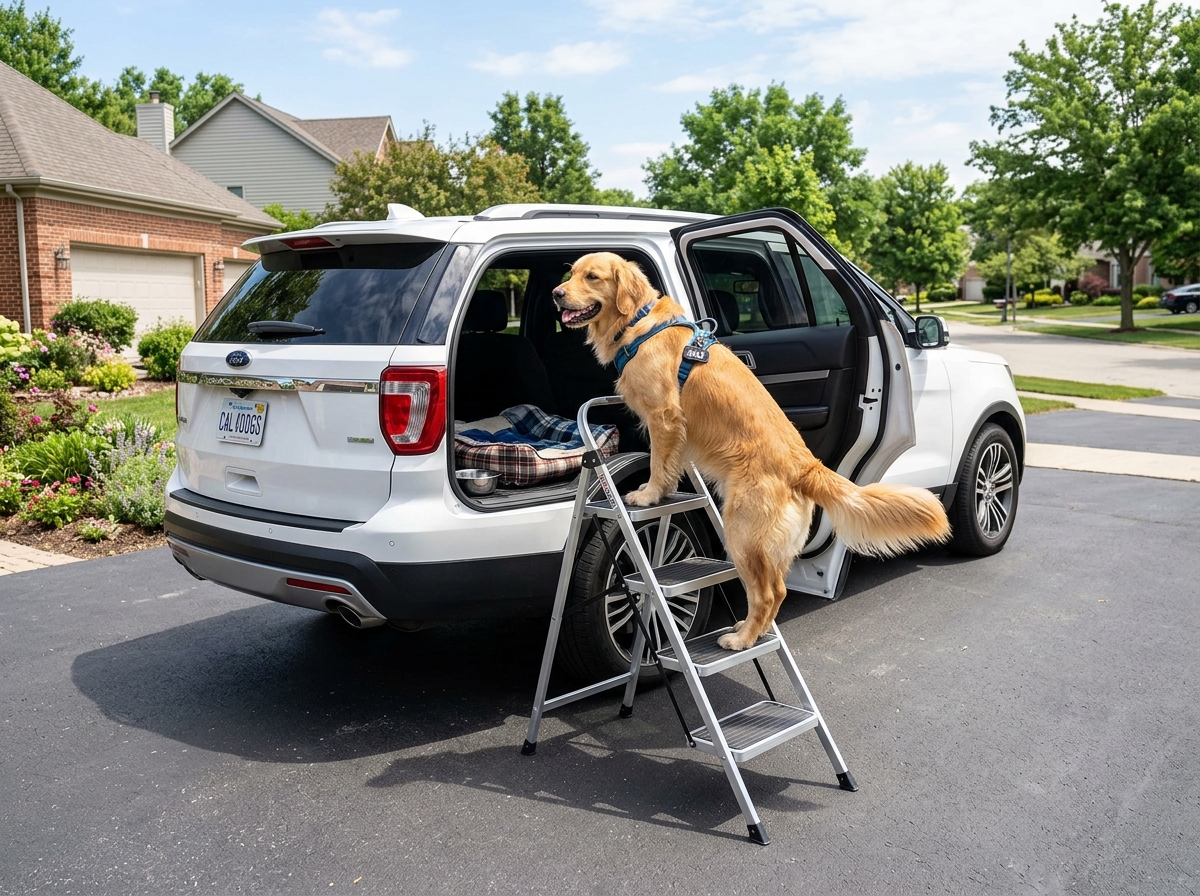
- Foldable Steps: Made of aluminum or plastic, these are highly portable for moving between rooms or taking in the car. Heavy-duty models can support large dogs.
- Steps with Storage: These clever designs feature built-in compartments under the steps for toys, leashes, or other supplies, helping you save space.
Key Features to Look For When You Buy Dog Steps for Bed
Focus on these features to ensure your dog's safety and comfort:
- Non-Slip Surfaces: This is the most important safety feature. Look for carpet treads, rubber grippers, or textured surfaces on each step, plus a non-skid base to prevent sliding on hard floors.
- Step Dimensions: Each step should be low enough for an easy climb and deep enough for your dog's entire paw to fit comfortably.
- Weight Capacity: Always choose steps rated for more than your dog's current weight. Capacities can range from 50 lbs for small dog models to over 200 lbs for larger breeds.
- Stability: The unit should be solid and not wobble. High-density foam, sturdy wood, and well-designed plastic frames all contribute to a stable product. Side rails offer extra security for unsteady dogs.
- Easy Maintenance: Removable, machine-washable covers are a lifesaver for cleaning up dirt and accidents.
- Simple Assembly: Many modern steps feature tool-free, snap-together assembly that takes just minutes.
When you're ready to compare options, see what features are popular with other pet owners in our collection.
How to Measure and Select the Perfect Fit When You Buy Dog Steps for Bed
Getting the measurements right is crucial for safety and ease of use.
- Measure Your Bed's Height: Use a tape measure to find the distance from the floor to the top of your mattress. This is your target height.
- Match the Steps to Your Furniture: The top step should be level with or just slightly below your mattress to create a smooth transition.
- Consider Your Dog's Size: Small dogs need more steps with a shorter rise (e.g., a 4 or 5-step model for a 20-25 inch bed). Larger dogs can often manage fewer, taller steps. As a general rule, 3-step models suit furniture up to 15", 4-steps up to 21", and 5-steps up to 24".
- Verify Weight and Width: Double-check that the weight capacity is sufficient. Wider, deeper steps give dogs more confidence, especially if they are large or have mobility issues.
Price ranges vary, with basic foam steps starting under $30 and premium wooden or heavy-duty models ranging from $50 to over $100. The price typically reflects material quality, durability, and features.
Training Your Pup to Use Their New Steps
Teaching your dog to use their new stairs is all about making it a positive, rewarding experience. With a little patience and plenty of treats, most dogs quickly learn to love their newfound independence.
A Step-by-Step Training Guide
-
Introduce in a Neutral Space: First, set the steps up in an open area away from the bed. Let your dog sniff and investigate the new object without any pressure.
-
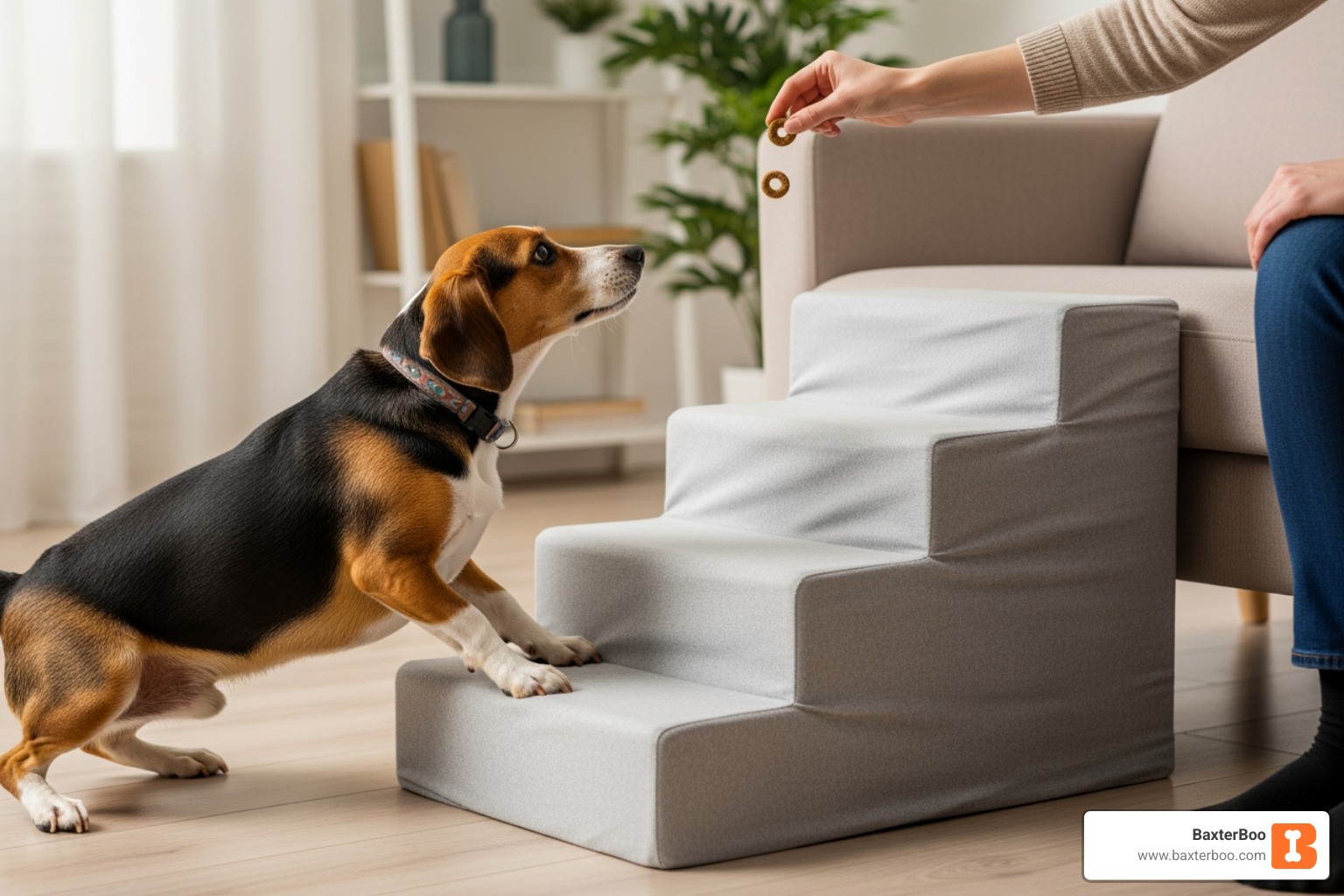
Lure with Treats: Use a high-value treat to encourage your dog. Place a treat on the first step and praise them enthusiastically when they take it. Once they are comfortable, place a treat on the next step, and so on, until they reach the top. Go at your dog's pace.
-
Practice Going Down: Going down can be trickier. Repeat the treat-luring process in reverse, rewarding each step down. This is critical for preventing them from jumping off the top.
-
Keep it Short and Fun: Keep training sessions to 5-10 minutes, a few times a day. Always end on a positive note. If your dog gets frustrated, take a break and try again later. The goal is to build a positive association with the steps.
-
Move to the Bed: Once your dog is confident, move the steps to their permanent spot by the bed. You may need to repeat the luring process a few times in the new location.
Patience is Key
Some dogs learn in minutes, while others may take a week or more. Never force your dog onto the steps, as this will create fear and anxiety. Consistency is the most important factor. Gently guide them to the steps every time they want up or down, and soon it will become second nature. You'll have peace of mind knowing their joints are protected with every climb.
Frequently Asked Questions about Dog Steps
When families are deciding whether to buy dog steps for bed, a few common questions always come up. Here are the answers to help you feel confident in your choice.
Are ramps or stairs better for dogs with arthritis?
For dogs with arthritis, hip dysplasia, or significant joint pain, ramps are almost always the better choice. The continuous, gentle slope of a ramp allows a dog to walk up without the painful motion of lifting and bending their legs for each step. While steps are far better than jumping, ramps offer the lowest-impact solution for dogs with sensitive joints.
Can I use dog steps for other furniture besides the bed?
Yes, absolutely! Dog steps are very versatile. You can use them to help your pup get onto the couch, a favorite chair, or even into a car. Lightweight and foldable models are especially convenient for moving from room to room or taking on the go. Just ensure the height of the steps is appropriate for the new piece of furniture and that the steps are placed on a stable, even surface.
How do I make sure the dog steps are safe and won't slip?
Safety is paramount. To ensure the steps are secure, follow these tips:
- Choose a non-slip design: Look for steps with rubber feet or pads on the base and carpeted or textured treads for paw grip.
- Ensure proper placement: Always place the steps on a flat, even surface. Avoid thick rugs that could cause wobbling.
- Add extra grip: On slick floors like hardwood or tile, place a small, non-slip rug underneath the steps for added stability. This simple trick can greatly increase your dog's confidence.
- Keep them clean: Regularly clean the step treads to remove dirt and fur, which can reduce their grip over time. If the cover is washable, clean it often.
Give Your Best Friend the Gift of Accessibility
Your dog's comfort and mobility are precious. When you buy dog steps for bed, you're doing more than just adding furniture to your home—you're making a proactive investment in their health.
You're protecting their joints from the daily strain of jumping, preventing painful injuries, and preserving their quality of life. You're giving a senior dog the dignity of independence and helping at-risk breeds like Dachshunds and Corgis avoid devastating spinal issues. Most importantly, you're ensuring your best friend can safely and confidently reach their favorite cuddle spot.
The joy your dog feels when they can join you on their own terms is priceless. At BaxterBoo, we are committed to your pet's wellness through prevention, comfort, and quality products. We understand that choosing the right solution is key to success.
Consider your dog's size, age, and health, along with your furniture's height and your available space. Prioritize essential features like non-slip surfaces, sturdy construction, and the correct height to ensure your dog feels safe and secure.
Ready to transform your pup's bedtime routine? Explore our curated collection of high-quality dog stairs and ramps and find the perfect solution for your four-legged family member. Your best friend deserves to live comfortably and confidently, and we're here to help make that happen.