
 Save 15% on your 1st Autoship learn more

 Email us
 Live Chat
 FAQs





Introduction
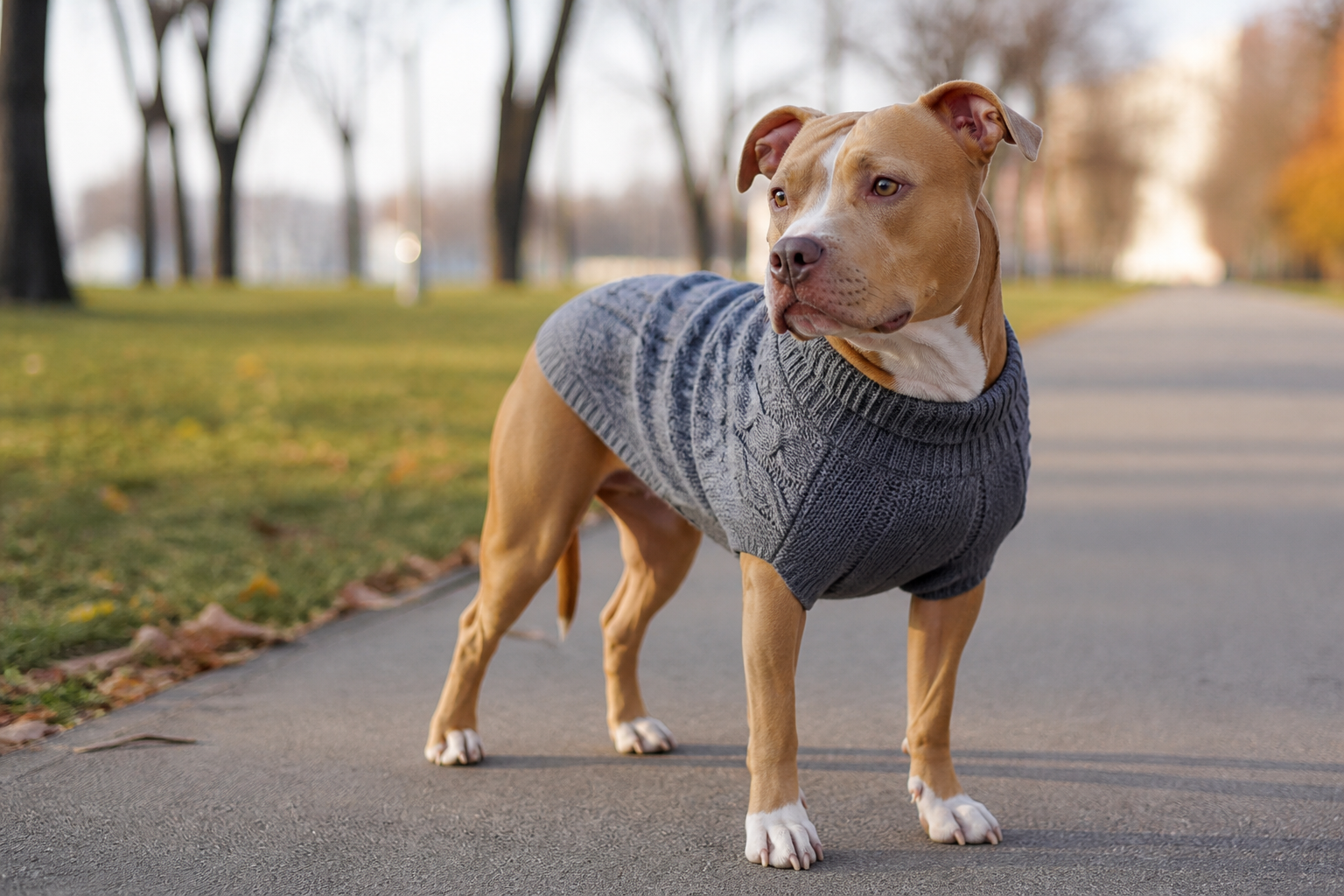
You look at your muscular dog and see a powerhouse of strength. Then the temperature drops below fifty degrees and your Pitbull starts to shiver. Despite their tough appearance, these dogs have very short hair and almost no undercoat. They also tend to have sparse fur on their bellies. This makes them much more sensitive to the cold than other large breeds. Finding a sweater that fits their unique shape is a common struggle for owners. Most standard large dog apparel is too long in the body or too tight across the chest. At BaxterBoo, we understand that a "one size fits all" approach does not work for bully breeds. This post covers how to measure your dog for the right fit and why specific materials matter for their skin. You will learn how to keep your blocky-headed best friend warm and stylish all winter long.
Quick Answer: Pitbulls need sweaters specifically designed for broad chests and thick necks. Look for items with high stretch or "bully breed" cuts to avoid restricted movement. Always prioritize the chest girth measurement over weight or back length when selecting a size.
Why Your Pitbull Needs a Winter Wardrobe
Many people assume a large dog is naturally hardy in cold weather. This is a misconception when it comes to Pitbulls and other short-haired bully breeds. Their single-layer coat provides very little insulation against wind and snow. Unlike a Siberian Husky or a Golden Retriever, a Pitbull lacks a dense undercoat to trap body heat.
Their physical build also contributes to heat loss. Pitbulls often have very little body fat compared to their muscle mass. Muscle does not insulate as well as fat does. You might notice your dog seeking out sunny spots on the floor or trying to burrow under your blankets at night. These are clear signs that they are feeling the chill.
A quality sweater serves as a functional tool for daily comfort. It helps regulate their body temperature during morning walks and evening potty breaks. If your dog is shivering, they are burning extra calories just to stay warm. A sweater reduces this physical stress. It allows them to enjoy their time outside rather than rushing back to the door. Explore our dog sweater collection when comparing styles for cold-weather wear.
Protecting the Sensitive Belly Area
The underside of a Pitbull is often their most vulnerable spot. If you look at your dog’s belly, you will likely see skin rather than thick fur. This area comes into direct contact with cold air and sometimes frozen ground when they sit.
A well-designed sweater should provide coverage for the chest and the upper abdomen. This protects the vital organs from cold shocks. However, it must also have a high-cut belly area for male dogs to ensure they do not soil the fabric during walks. Finding this balance is key to a functional garment.
Dog Sweaters


The Challenge of the Broad Chest
The most frustrating part of shopping for dog sweaters is the "Fat Man in a Little Coat" effect. You find a sweater that matches your dog's weight range, but you cannot get it over their shoulders. If you size up to fit their chest, the sweater is usually six inches too long. It ends up hanging off their back or tripping them up.
Pitbulls have a deep rib cage and wide shoulders that defy standard dog sizing. A sweater that fits a slender Greyhound or a rectangular Labrador will rarely work here. You need a garment that accounts for a "V-shaped" torso. This means a wide front and a tapered waist.
Why Neck Circumference Matters
In addition to the chest, the neck of a Pitbull is often quite thick. Standard sweaters may have narrow neck openings that pull tight against the throat. This is not just uncomfortable. It can also interfere with the fit of their collar or harness.
Look for sweaters with turtleneck designs that have plenty of stretch. Alternatively, look for V-neck or cowl-neck styles. These provide room for those muscular necks without bunching up or causing chafing behind the ears.
Key Takeaway: Always shop by your dog's specific measurements rather than their breed or weight. The chest girth is the most important number for a comfortable fit in any bully breed.
How to Measure Your Pitbull for a Perfect Fit
To get the right size, you need a soft measuring tape and some patience. If you do not have a flexible tape, use a piece of string and then measure the string against a ruler. Do not guess the measurements based on how they look. Even five pounds of weight gain or loss can change how a sweater sits on a deep-chested dog. For more pointers, read our tips for measuring dog clothes.
Step 1: Measure the chest girth.
Find the widest part of your dog's rib cage, which is usually right behind the front legs. Wrap the tape all the way around. Make sure it is snug but not tight.
Step 2: Measure the neck circumference.
Measure around the base of the neck where a collar normally sits. Leave enough room to fit two fingers under the tape.
Step 3: Measure the back length.
Start at the base of the neck and measure to the base of the tail. This tells you how far down their back the sweater will reach.
Step 4: Check the "bully" specific charts.
Many brands we carry, such as RC Pets or Kong, provide detailed sizing charts. Compare your numbers to their specific "Broad Chest" or "Extra Large" categories.
Measurement Checklist
- Use a soft, flexible measuring tape.
- Measure the chest at its widest point.
- Measure the neck base, not the top.
- Keep the dog standing while you measure.
- Write the numbers down to compare with online size guides.
Materials That Work Best for Bully Breeds
The fabric of the sweater determines how much it will stretch and how much heat it will hold. Since Pitbulls have sensitive skin, the material also needs to be soft. Scratchy synthetic fibers can cause redness or rashes on their sparsely furred bellies.
Wool and Wool Blends
Wool is an excellent insulator. It stays warm even if it gets slightly damp from snow or light rain. However, pure wool can be itchy for some dogs. A wool blend often provides the best of both worlds. It offers the warmth of natural fibers with the softness and durability of synthetic materials.
Fleece and Stretchy Knits
Fleece is a favorite for many owners because it is lightweight and very soft. It also has a natural give that allows the dog to run and jump without restriction. Stretchy cable knits are also popular. The "ribbed" texture of a knit sweater allows it to expand across the chest while staying snug around the waist.
Cotton Blends for Indoor Use
If your dog wears a sweater inside the house, cotton is a great choice. It is breathable and prevents the dog from overheating. Cotton is also less likely to cause static electricity. This is a common issue in dry winter homes that can startle or annoy your pet.
| Material Type | Best For | Pros | Cons |
|---|---|---|---|
| Wool Blend | Extreme cold | Superior warmth | May require hand washing |
| Fleece | Daily walks | Soft and stretchy | Can attract pet hair |
| Acrylic Knit | Moderate chill | Very durable | Less breathable than wool |
| Cotton Blend | Indoor wear | Good for sensitive skin | Not warm enough for snow |
Beyond Warmth: Allergies and Skin Protection
Many Pitbulls suffer from environmental allergies. They may react to grass, pollen, or dust. A lightweight sweater or "pitbull pajama" can act as a physical barrier. It prevents allergens from making direct contact with their skin during walks.
If your dog is constantly scratching or has red patches on their chest, a sweater might help. It can also prevent them from over-grooming or licking a specific spot. Of course, skin issues should always be evaluated.
Vet Tip: If your dog has persistent skin redness, itching, or hair loss, consult your veterinarian. These can be signs of underlying allergies or infections that require professional diagnosis and treatment.
Our pharmacy offers a variety of FDA-approved allergy medications and medicated shampoos. Through our partnership with Pet's Choice, we can help you manage your dog's skin health year-round. A sweater is a great tool, but it works best alongside a proper medical plan for allergy relief.
Sweaters for Senior Pitbulls and Joint Health
As dogs age, the cold weather becomes more than just an inconvenience. For senior Pitbulls, a drop in temperature often leads to increased joint stiffness. Cold air can make conditions like arthritis feel much more painful.
Keeping the large muscles of the shoulders and hips warm helps maintain circulation. This can make a significant difference in how your senior dog moves in the morning. A warm sweater acts like a continuous heating pad for their joints.
If your senior dog is struggling to stand or seems slower on cold days, focus on sweaters that are easy to put on. Look for "step-in" styles or those with Velcro closures along the back. This avoids having to lift their legs or pull fabric over their head, which can be stressful for a dog with limited mobility. For more on caring for aging dogs, see our article on mobility solutions for senior dogs.
Supporting Aging Joints
In addition to warmth, senior dogs often need nutritional support. We carry a wide range of joint supplements designed to support cartilage and mobility. For dogs with advanced needs, our pharmacy carries prescription-strength options and specialized diets. Talk to your vet about whether a prescription mobility food or a targeted supplement is right for your senior dog.
Safety Considerations for Dog Sweaters
While sweaters are helpful, they do come with a few safety rules. You should never leave a dog unattended while they are wearing a sweater, especially if they are a "chewer." Some dogs may try to pull the sweater off and end up getting their legs stuck in the armholes. This can lead to panic or injury.
Check for Chafing
Every few hours, check your dog's "armpits" and neck for signs of rubbing. If the sweater is too tight, it can cause painful sores. This is particularly common in Pitbulls because of their wide gait and powerful shoulder movement. If you see redness, the sweater is likely too small or the armholes are positioned incorrectly for your dog's build.
Static and Overheating
Be mindful of the temperature inside your home. If you have the heat turned up, your dog might not need a heavy sweater indoors. Watch for signs of overheating, such as heavy panting or seeking out cold tile floors. If your dog seems restless, take the sweater off for a few hours to let their skin breathe. Our guide to durable dog sweaters also covers checking fit and watching for chafing.
Key Takeaway: A sweater should be a helpful tool, not a source of stress. If your dog freezes or seems miserable when you put it on, try a different style or a more gradual introduction with treats.
Social Benefits of the Pitbull Sweater
There is an unexpected benefit to dressing your Pitbull in a colorful sweater. Unfortunately, these breeds still face a lot of social stigma. A muscular dog can look intimidating to neighbors or people passing by on the street.
A bright, festive sweater can change the way people perceive your dog. It signals that the dog is a cared-for family pet. It often sparks positive conversations and encourages people to ask if they can pet your dog. This can be a great way to advocate for the breed while keeping your pup cozy.
Cleaning and Maintaining the Sweater
Dog sweaters can get dirty quickly. They pick up mud, salt from the sidewalk, and plenty of dog hair. To keep the sweater in good shape, you need to wash it correctly.
Washing Instructions
Always check the care label first. Most synthetic blends and fleeces are machine washable on a gentle cycle. Use a pet-safe, unscented detergent to avoid irritating their skin. For wool sweaters, hand washing in cool water is usually the safest bet to prevent shrinking.
Drying Tips
Avoid high heat in the dryer. High heat can damage the elastic fibers that give the sweater its stretch. This is especially important for the ribbed sections around the chest and neck. Lay the sweater flat to dry to help it maintain its original shape.
Bottom line: Proper care of your dog's sweater ensures it stays stretchy and warm for multiple winter seasons.
How to Introduce a Sweater to Your Dog
Not every dog loves wearing clothes right away. If your Pitbull is skeptical, take it slow. Do not force their head through a narrow opening if they are pulling away. This can create a negative association that makes dressing them a daily struggle. You can also read about how dogs may respond to wearing clothes.
Step 1: Let them sniff the sweater.
Lay the sweater on the floor and put a few high-quality treats on top of it. Let your dog investigate it on their own terms.
Step 2: Practice the head opening.
Hold the neck opening wide and encourage your dog to put their nose through it for a treat. Do not pull it all the way on yet.
Step 3: Short sessions.
Put the sweater on for just five minutes while you engage them in a fun game or offer a long-lasting chew. This helps them forget they are wearing something new.
Step 4: Praise and rewards.
Give them plenty of verbal praise. Once they are comfortable walking around the house, they are ready for their first outdoor excursion in their new gear.
Conclusion
Finding dog sweaters Pitbull breeds can wear comfortably requires a focus on specific proportions. By prioritizing chest girth and looking for stretchy, soft materials, you can protect your dog from the harsh winter elements. Remember that these dogs lack the natural insulation of other breeds, making an extra layer a necessity rather than a fashion choice. Whether you are managing environmental allergies, supporting a senior dog's joints, or just going for a walk, the right fit makes all the difference.
- Measure the chest, neck, and back accurately before buying.
- Choose breathable fabrics like fleece or cotton blends for sensitive skin.
- Monitor your dog for signs of overheating or chafing.
- Use sweaters to protect aging joints and act as an allergy barrier.
Key Takeaway: A well-fitted sweater is an essential health tool for short-haired breeds like Pitbulls, providing warmth, skin protection, and joint support during the colder months.
Our team at BaxterBoo is here to help you find the right gear for your unique dog. We invite you to explore our selection of dog sweaters and cold-weather gear to find the right match for your pup’s build.
FAQ
Do Pitbulls really need to wear sweaters in the winter?
Yes, most Pitbulls benefit from a sweater when temperatures drop below 50 degrees Fahrenheit. Because they have very short, single-layer coats and low body fat, they cannot retain heat as effectively as breeds with undercoats. A sweater helps prevent shivering and keeps their core temperature stable during outdoor activities.
How can I tell if a sweater is too tight on my Pitbull's chest?
You should be able to fit two fingers comfortably between the fabric and your dog's skin at the chest and neck. If the fabric is pulling taut or creating deep folds in the dog's skin, it is too tight. Watch for any changes in their gait or redness in the armpits, as these are common signs of a restrictive fit.
What is the best material for a Pitbull with sensitive skin?
Fleece and high-quality cotton blends are typically the best choices for dogs with sensitive skin or allergies. These materials are soft, breathable, and less likely to cause the itching associated with pure wool or cheap synthetic fibers. Always wash new sweaters before the first wear to remove any manufacturing residues that might cause a reaction.
Should my Pitbull wear a sweater while sleeping inside?
If your home is particularly chilly or your dog constantly tries to burrow under covers, a lightweight cotton sweater or pajamas can be helpful. However, you must ensure the dog does not overheat, especially if they sleep near a heater or under blankets. Monitor them for heavy panting and always remove the sweater if they seem uncomfortable or restless.



- Site & Contents BaxterBoo.com. BaxterBoo is located in the United States.
- Privacy & Security
- Terms of Use
- Accessibility Statement
