Save 15% on your 1st Autoship learn more

 Email us
 Live Chat
 FAQs
FAQs





Introduction
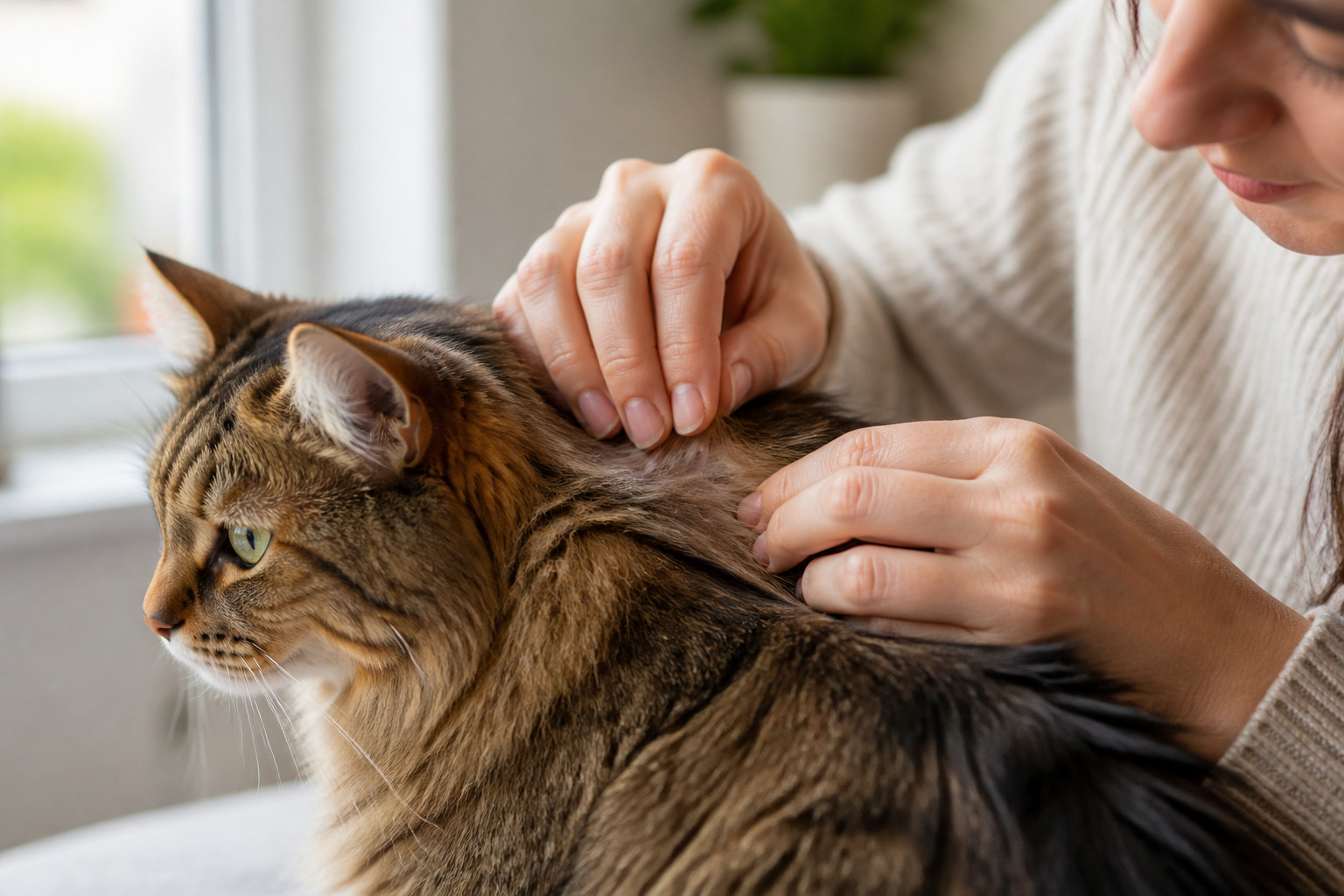
You are brushing your cat when you suddenly notice tiny white specks scattered through their fur. Your mind might jump straight to a flea infestation, but those flakes could just as easily be dry skin. Distinguishing between flea eggs and dandruff is a common challenge for cat owners. Here at BaxterBoo, we know that getting the right answer quickly helps you choose the best care for your pet. This guide covers the physical differences, simple tests you can do at home, and the best ways to treat both conditions. You will learn how to identify these specks and when it is time to call your veterinarian.
The Visual Difference
At a glance, both flea eggs and dandruff look like small white dots. If you look closer, the physical structures are quite different. Flea eggs are uniform and consistent. Every egg will look almost exactly like the others. They are oval in shape and have rounded ends. Many people describe them as looking like tiny, translucent grains of salt or miniature white rice.
Dandruff is far more irregular. These are dead skin cells that have clumped together and flaked off. Because they are organic skin debris, they come in different shapes and sizes. Some might be tiny specks while others are larger, flat flakes. While flea eggs have a 3D, seed-like quality, dandruff is usually flat and thin.
Quick Comparison Table
| Feature | Flea Eggs | Cat Dandruff |
|---|---|---|
| Shape | Oval and uniform | Irregular and flat |
| Color | Pearlescent or off-white | White or grayish |
| Texture | Smooth and hard | Brittle or waxy |
| Stickiness | Not sticky (usually fall off) | Can be caught in fur or oily |
| Size | Constant (0.5 mm) | Varies |
Quick Answer: Flea eggs are uniform, oval, and shaped like tiny grains of salt. Dandruff consists of irregular, flat flakes of dead skin that vary in size and shape.
All About Flea Eggs
Flea eggs are a sign of a larger problem. If you see eggs, there are adult fleas nearby. A single female flea can lay up to 50 eggs per day. These eggs are smooth and designed to fall off the host. This allows them to scatter into your carpets, furniture, and bedding where they can hatch.
Where to Look
You will rarely see flea eggs concentrated in just one spot on a cat for long. Because they are not sticky, they tend to slide off the hair shafts. However, you might spot them in areas where your cat spends a lot of time sleeping. If you see white specks in their favorite cat tree or on their bedding, they are more likely to be eggs than dandruff.
Identifying Flea Dirt
Finding flea eggs usually goes hand in hand with finding flea dirt. Flea dirt is actually the waste produced by adult fleas. It looks like small grains of black pepper or dark soil. This is the most reliable way to confirm a flea problem.
- Look for dark specks near the base of the tail or the neck.
- Place these specks on a wet white paper towel.
- Wait a few minutes.
- If the specks turn reddish-brown, it is flea dirt.
This red color happens because flea dirt is composed of digested blood. Dandruff will never turn red when wet.
Next Steps for Fleas
If you confirm the presence of eggs or dirt, you must act quickly. Fleas multiply at an incredible rate. You will need to treat your cat, any other pets in the home, and the environment itself. Explore our cat flea and tick collection for available prevention and treatment options.
Key Takeaway: Flea eggs are almost always accompanied by flea dirt. If you find black specks that turn red on a wet towel, you are dealing with fleas.
Understanding Cat Dandruff
Cat dandruff is also known as seborrhea. It happens when the skin produces too many skin cells too quickly. While it is often just a sign of dry skin, it can sometimes point to underlying health issues. Unlike flea eggs, dandruff usually stays in the fur because the flakes get caught in the hair or stick to the natural oils on the skin.
Common Causes of Flaky Skin
Dry air is a frequent culprit. During the winter, indoor heating can strip the moisture from your cat's coat. This leads to brittle hair and a flaky scalp. Poor nutrition can also play a role. If a cat is not getting enough omega-3 fatty acids, their skin barrier can weaken. Our cat skin and coat care collection includes products for supporting your cat’s coat and skin.
Grooming and Mobility Issues
Cats are usually excellent at grooming themselves. They use their tongues to remove dead skin and loose hair. If a cat stops grooming, dandruff will build up quickly. This is common in senior cats who have arthritis. If it hurts to reach their lower back, you will see a lot of flakes in that specific area. Obesity also prevents cats from reaching certain spots, leading to a greasy or flaky coat.
Our cat grooming supplies can help you maintain your cat’s coat when they need extra assistance.
Skin Infections and Allergies
Sometimes dandruff is a symptom of an infection. Fungal infections like ringworm or bacterial skin infections can cause the skin to peel. Allergies to food or environmental triggers like dust and pollen can also cause inflammation. This inflammation leads to itching and excessive flaking.
Vet Tip: If your cat has a sudden increase in dandruff along with hair loss or red skin, consult your veterinarian. They can check for underlying conditions like diabetes or hyperthyroidism which sometimes affect coat quality.
Walking Dandruff: A Special Case
There is a specific type of parasite that can trick pet owners. It is called Cheyletiella mites, but it is commonly known as walking dandruff. These mites are large enough to be seen with the naked eye. They are white and look exactly like flakes of skin.
If you stare closely at a patch of "dandruff" and notice the specks are moving, your cat likely has these mites. Walking dandruff is highly contagious between pets. It can also cause itchy red bumps on humans. If you suspect mites, your vet will need to prescribe a specific treatment. Many standard flea preventives available through our pet pharmacy can also help manage these mites.
Step-by-Step Testing
If you are still unsure what those white specks are, try these three simple tests.
Step 1: The Comb Test
Use a fine-tooth flea comb. Run it through your cat's fur, focusing on the base of the tail and the neck.
- If the specks come off easily and look like flat scales, it is likely dandruff.
- If you find uniform, hard ovals or see tiny dark insects moving, it is fleas.
Step 2: The Texture Test
Pick up one of the specks and rub it between your fingers.
- Dandruff will usually crumble or feel like a thin piece of paper.
- Flea eggs are quite sturdy. They feel hard, almost like a tiny grain of sand, and they will not crumble when rubbed.
Step 3: The Light Test
Hold your cat under a bright light or use a flashlight.
- Flea eggs have a slight shine or pearlescent glow. They reflect light because of their smooth surface.
- Dandruff is usually dull and matte. It does not reflect light.
Bottom line: Physical resistance and shape are your best clues; eggs are hard and oval, while dandruff is brittle and irregular.
Treatment and Management
Once you know what you are dealing with, you can start the right treatment plan. Both issues are manageable with the right tools and consistency.
Solving Flea Problems
To get rid of flea eggs, you must break the flea life cycle. This means killing the adults before they can lay more eggs.
- Prescription Medications: Visit our cat pharmacy to find available treatments. Through Pet's Choice, we provide access to medications that require a vet's prescription.
- Deep Cleaning: Vacuum your home daily. Focus on baseboards and under furniture. Wash all pet bedding in hot water.
- Consistency: Flea eggs can hatch weeks after you think the problem is gone. Continue treatment for at least three consecutive months.
For additional prevention ideas, read our guide to flea and tick prevention products.
Managing Dandruff
Improving your cat's skin health often starts with their environment and diet.
- Humidity: Use a humidifier in the rooms where your cat spends the most time. This adds moisture back into the air and the skin.
- Supplements: Adding fish oil or omega fatty acids to their meals can make a big difference. Brands like Cosequin and Zesty Paws offer great skin and coat support.
- Proper Grooming: If your cat cannot groom themselves, you must step in. Use a soft brush daily to distribute natural oils and remove dead skin.
- Medicated Shampoos: For severe flaking, a medicated shampoo can help. Look for ingredients like salicylic acid or colloidal oatmeal. Always use products specifically made for cats, as human shampoos can be toxic to them.
Nutritional Support
A healthy coat starts from the inside. High-quality proteins and fats are essential. If your cat has chronic skin issues, your vet might recommend a prescription diet. Our pharmacy carries many of these specialized foods. You can even set up an Autoship order to ensure you never run out of the specific food your cat needs to stay healthy.
Conclusion
Seeing white specks on your cat can be worrying, but identifying the cause is the first step toward a happy, comfortable pet. Flea eggs are uniform, hard, and usually signal an infestation. Dandruff is irregular, flat, and often relates to skin health or grooming habits. Whether you need a new grooming brush, a skin supplement, or a flea preventive from our pharmacy, we are here to help. Taking care of your cat's coat is a great way to bond and monitor their overall wellness. Keeping up with regular grooming and preventative care ensures your cat stays a healthy part of our BaxterBoo community.
- Perform the wet paper towel test to check for flea dirt.
- Check for "walking" specks that might indicate mites.
- Consult your vet for any persistent skin irritation or hair loss.
- Explore our pharmacy for flea treatments and prescription diets.
Key Takeaway: Early identification of flea eggs prevents a household infestation, while managing dandruff improves your cat's comfort and long-term skin health.
FAQ
Can I get fleas from the eggs on my cat?
You cannot get fleas directly from the eggs, as they must hatch and develop into adults first. However, if there are eggs on your cat, there are adult fleas in your home that may bite you. Fleas prefer animal hosts but will bite humans if they are nearby.
Is cat dandruff contagious to other pets or humans?
Standard dandruff caused by dry skin or poor nutrition is not contagious. However, if the "dandruff" is actually caused by Cheyletiella mites or a fungal infection like ringworm, it can spread to other pets and even to people. Always wash your hands after handling a pet with a flaky coat until you know the cause.
Why does my cat only have dandruff on their lower back?
This is usually a sign that your cat cannot reach that area to groom themselves. It is very common in cats with mobility issues, arthritis, or those who are overweight. Daily brushing in that specific spot can help remove the buildup of flakes and oils.
How long does it take for flea eggs to hatch?
Flea eggs typically hatch within two to ten days depending on the temperature and humidity of your home. In warm, moist environments, they hatch much faster. This is why it is important to vacuum regularly to remove eggs from the carpet before they have a chance to become biting adults.