
 Save 15% on your 1st Autoship learn more

 Email us
 Live Chat
 FAQs
FAQs





Introduction
You are sitting on the couch with your dog when they lean in for a friendly lick. Instead of a sweet moment, you are met with a breath so strong it makes you pull away. This common scenario is often the first sign that a dog needs better dental care. Keeping a dog's mouth clean is about more than just fresh breath. It is a vital part of their overall wellness that can prevent pain and serious health issues later in life.
At BaxterBoo, we know that many pet owners feel overwhelmed by the thought of brushing a dog's teeth. Our team is here to help you navigate the different tools and techniques available. This post covers the most effective ways to maintain oral hygiene, from daily brushing habits to choosing the right dental toys. We want to help you build a routine that keeps your dog's smile bright and their body healthy.
Quick Answer: The best way to clean a dog's teeth is through daily brushing with dog-safe toothpaste combined with mechanical cleaning from dental chews. Regular veterinary exams and professional cleanings are also necessary to reach plaque below the gumline.
The Importance of Canine Dental Hygiene
Dental disease is one of the most common health problems seen in adult dogs. It usually begins with a buildup of plaque. Plaque is a sticky film of bacteria that forms on the teeth shortly after eating. If it is not removed through brushing or chewing, it reacts with minerals in the saliva. This process turns soft plaque into hard tartar, also known as calculus.
Once tartar forms, it cannot be removed with a toothbrush. It creates a rough surface where more plaque can grow. This cycle leads to gingivitis, which is the inflammation of the gums. If the condition progresses, it becomes periodontal disease. This can cause the structures supporting the teeth to break down. Your dog may experience loose teeth, bone loss, and significant pain.
The bacteria in a dog's mouth do not always stay there. They can enter the bloodstream through inflamed gum tissue. Once in the blood, these bacteria can travel to vital organs. This may lead to complications in the heart, liver, and kidneys. Proper dental care is a proactive way to protect your dog’s entire body. For additional guidance, read our tips for recognizing signs of dental problems in dogs.
Step by Step: How to Brush Your Dog's Teeth
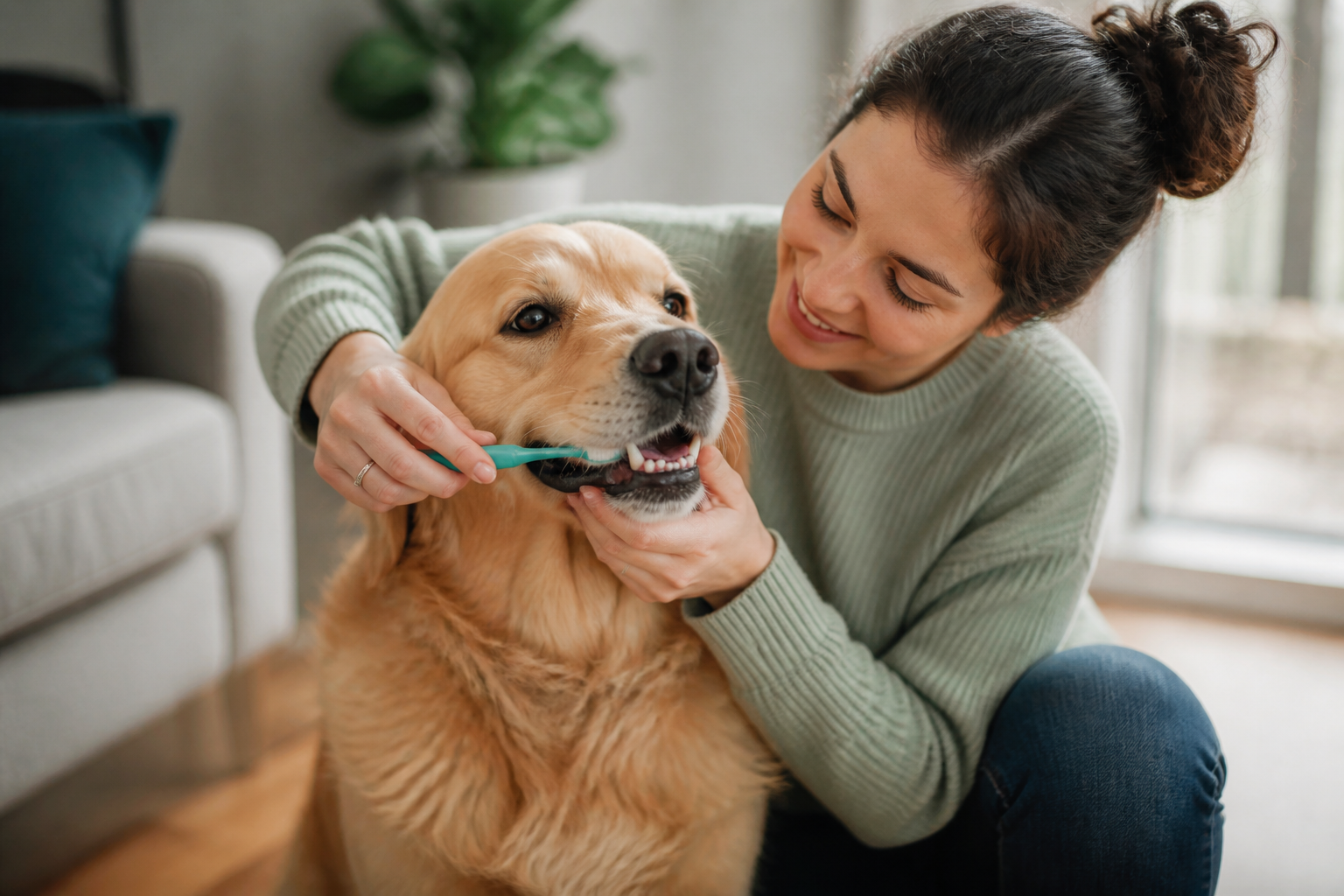
Brushing is the gold standard for dog dental care. It is the only way to effectively remove plaque before it hardens. You do not need to spend twenty minutes on this task. A quick session once a day is enough to make a massive difference.
Step 1: Choose the Right Supplies
Never use human toothpaste for your dog. Human formulas often contain xylitol, which is toxic to dogs. They also contain foaming agents that can upset a dog's stomach. Dog-specific toothpaste comes in flavors like poultry, beef, or peanut butter. You will also need a toothbrush designed for dogs. Finger brushes are great for small dogs or beginners. Larger dogs may benefit from a long-handled brush with angled bristles. You can find our dog dental care supplies to help get started.
Step 2: Introduce the Toothpaste
Start by letting your dog lick a small amount of toothpaste off your finger. This helps them associate the flavor with a positive experience. Do this for a few days without even reaching for the brush.
Step 3: Touch the Teeth and Gums
Gently lift your dog's lip and rub your finger along their teeth. This gets them used to the sensation of someone working in their mouth. Keep these sessions very short and follow up with praise.
Step 4: Introduce the Brush
Put some toothpaste on the brush and let your dog lick it. Then, gently brush a few front teeth. You do not need to open their mouth wide. Just slide the brush under the lip and use a circular motion.
Step 5: Focus on the Outside Surfaces
Most plaque accumulates on the cheek side of the teeth. Focus your efforts there. Gradually work your way toward the back molars. If your dog gets restless, stop and try again the next day. Consistency is more important than perfection in the beginning.
Key Takeaway: Daily brushing is the most effective way to prevent plaque from turning into tartar. Always use dog-specific products to ensure safety and palatability.
Using Dental Chews and Treats
Not every dog will tolerate a toothbrush right away. This is where dental chews become a valuable tool. These treats are designed to be hard or rubbery. As your dog chews, the texture scrapes against the surface of the teeth. This mechanical action helps rub away soft plaque. Explore our dental treats and chews for options suited to different chewing styles.
When choosing a chew, look for the Veterinary Oral Health Council (VOHC) seal. This seal means the product has been tested and proven to reduce plaque or tartar. We carry several trusted brands at BaxterBoo, such as Greenies and RedBarn, that offer these benefits. You can also browse Greenies Original Dental Dog Chews when considering a familiar dental treat.
It is important to match the size of the chew to your dog's weight. A chew that is too small can be swallowed whole, which poses a choking risk. A chew that is too hard can actually fracture a tooth. A good rule of thumb is the "fingernail test." If you cannot leave a small dent in the chew with your thumbnail, it might be too hard for your dog's teeth.
Vet Tip: Always supervise your dog when they are enjoying a dental chew or bone. If they tend to gulp large pieces, it can cause an intestinal blockage. Consult your vet if you are unsure which chew is safest for your dog's specific chewing style.
The Role of Dental Toys and Enrichment
Chewing is a natural behavior for dogs. It helps them relax and provides mental stimulation. It also helps keep their teeth clean. Certain toys are specifically engineered to assist with oral hygiene while your dog plays. This guide to the best dental chews for dogs offers more ideas for incorporating chewing into your routine.
Rubber Toys with Ridges
Brands like Kong create durable rubber toys with deep grooves. You can often fill these grooves with dog-safe peanut butter or dental paste. As the dog licks and chews to get the food out, the rubber ridges scrub the teeth and massage the gums.
Rope Toys
Rope toys act like a giant piece of dental floss. When a dog bites down on the cotton fibers, the strands slide between the teeth. This helps remove debris and plaque from hard-to-reach areas. However, you must monitor rope toys for wear. If your dog starts to swallow the strings, the toy should be replaced immediately.
Nylon Chews
Nylon toys are very durable and often have small nubs or textures. These are great for aggressive chewers. They do not break down quickly, providing a consistent surface for mechanical cleaning. For a durable option, consider the Nylabone Dura Chew Ring Dental Dog Toy.
Bottom line: Interactive toys provide a passive way to clean teeth while satisfying a dog's instinctual need to chew.
Nutrition and Dental Health
The food your dog eats plays a role in their oral health. There is a long-standing belief that dry kibble cleans teeth better than wet food. While kibble does provide some abrasion, most standard dog food is small and brittle. It often crumbles as soon as the dog bites it. This means it does not do much to clean the teeth.
Some brands, like Royal Canin or Farmina Vet Life, offer specific dental diets. These kibbles are usually larger and have a fibrous texture. They are designed not to crumble immediately. Instead, the tooth sinks into the kibble, allowing the fibers to scrub the surface.
Wet food can sometimes be more problematic for dental health because it sticks to the teeth and gums. If your dog primarily eats wet food, you must be even more diligent with brushing. Fresh foods like raw carrots or apple slices can also help. The crunch of a carrot provides a natural scraping action. Just be sure to remove apple seeds and cores before sharing. For more advice, review these pet dental care tips.
Water Additives and Oral Sprays
If you have a senior dog or a pet that is very resistant to handling, water additives can be a helpful supplement. These products are liquids that you pour into your dog's water bowl. They contain enzymes or minerals that help break down the biofilm on the teeth.
Dental sprays work in a similar way. You spray them directly into the dog's mouth or onto their jowls. The ingredients mix with saliva and coat the teeth. While these products are not as effective as brushing, they are a great "add-on" to a dental routine. They are particularly good at freshening breath and reducing the bacterial load in the mouth.
Key Takeaway: Water additives and sprays are excellent supplements for pets that won't allow brushing, but they work best when combined with other cleaning methods.
Recognizing Signs of Dental Problems
Even with a great home routine, issues can still arise. It is important to check your dog's mouth regularly. Early detection of dental disease can save your dog from significant pain and expensive procedures.
Watch for these red flags:
- Extremely foul breath (halitosis)
- Yellow or brown deposits on the teeth near the gumline
- Red, swollen, or bleeding gums
- Loose or missing teeth
- Excessive drooling
- Pawing at the mouth or face
- Dropping food while eating
- Refusing hard kibble or favorite chew toys
If you notice any of these signs, it is time for a veterinary visit. Dental pain can be subtle. Dogs are experts at hiding discomfort, so they may continue to eat even if they have a fractured tooth or an abscess.
Vet Tip: If your dog has a sudden change in eating habits or develops a swelling under their eye, seek veterinary care immediately. This can indicate a tooth root abscess that requires professional treatment and antibiotics.
Professional Dental Care and the Pharmacy
Home care is designed to prevent disease, but it cannot treat existing problems. Most dogs will eventually need a professional dental cleaning. This procedure is performed under general anesthesia by a veterinarian.
Anesthesia is necessary because it allows the vet to clean below the gumline. This is where the most damaging bacteria live. It also allows for a full set of dental X-rays. X-rays are crucial because a large portion of the tooth is hidden beneath the bone. A tooth may look healthy on the surface but have a painful infection at the root.
During a professional cleaning, the vet will scale away all tartar and polish the teeth. If they find teeth that are dead, broken, or severely infected, they may perform an extraction. This removes the source of infection and pain.
Our BaxterBoo pharmacy is a helpful resource for aftercare. We partner with Pet's Choice to provide FDA-approved medications and prescription diets. If your vet prescribes antibiotics for an oral infection or a specialized dental food for long-term management, we can fulfill those needs. Having a pharmacy you can trust makes it easier to manage your dog’s recovery and ongoing health.
Building a Sustainable Routine
The best dental care plan is the one you can actually stick to. You do not have to do everything at once. Start small and build the habit.
- Daily: Brush the teeth and add a dental rinse to the water bowl.
- Weekly: Check the mouth for redness or new tartar buildup.
- Monthly: Replace worn-out dental toys or ropes.
- Yearly: Schedule a wellness exam with your vet to evaluate oral health.
Training your dog to accept dental care takes patience. Use lots of praise and high-value treats. If you make it a positive experience, your dog might even start looking forward to their "peanut butter toothpaste" time.
Bottom line: A combination of daily brushing, mechanical chewing, and professional veterinary oversight is the best way to ensure your dog's teeth stay healthy throughout their life.
Conclusion
Maintaining your dog's dental health is a lifelong commitment that yields huge rewards. By preventing plaque and tartar buildup, you are protecting them from pain and supporting their systemic health. Start with a simple routine of brushing and provide plenty of safe chewing outlets.
We are proud to offer a wide selection of dental care products to support your efforts. Whether you need a starter brushing kit, VOHC-approved chews, or prescription support through our pharmacy, we are here for you. Join the MVP Rewards programme to earn back on your dental care purchases and consider our Autoship programme for your dog's favorite dental treats. Your dog's bright smile and fresh breath will be the best thank-you for your hard work.
FAQ
How often should I actually brush my dog's teeth?
Ideally, you should brush your dog's teeth once every day. Plaque can begin to harden into tartar within 24 to 48 hours, so daily sessions are the most effective way to keep their mouth clean. If daily is not possible, aiming for at least three times a week can still provide significant health benefits.
Can I use a human toothbrush on my dog?
You can use a soft-bristled human toothbrush, especially a child-sized one, but dog-specific brushes are often better. Dog brushes are angled to reach the back molars more easily and come in different shapes, like finger brushes, to suit different comfort levels. The most important thing is to never use human toothpaste, as it contains ingredients that are toxic to dogs.
My dog’s gums bleed a little when I brush. Is this normal?
Minor bleeding can occur if your dog has early-stage gingivitis, much like it does in humans who have not flossed in a while. However, if the bleeding is heavy or the gums look very red and swollen, you should stop brushing and consult your veterinarian. Persistent bleeding is a sign of dental disease that needs professional attention before you continue a home brushing routine.
Are dental chews enough to keep teeth clean without brushing?
While dental chews are a great tool, they are usually not enough on their own. Chews primarily clean the surfaces of the teeth used for grinding, but they may miss the areas near the gumline or the front teeth. Brushing remains the most thorough way to remove plaque from all surfaces of the mouth, so it is best to use chews as a supplement to brushing.






