
 Save 15% on your 1st Autoship learn more

 Email us
 Live Chat
 FAQs
FAQs





Introduction
Finding a dark, discolored tooth or smelling a sudden, sharp odor from your dog's mouth is a stressful moment for any pet owner. You might notice your dog flinching when you touch their muzzle or see them dropping pieces of kibble while eating. These are common signs that dental decay has moved past simple staining and into the territory of rotting teeth. At BaxterBoo, we talk to owners every day who are looking for ways to handle these dental hurdles without causing their pets extra pain. This guide explains what you can realistically do at home to manage your dog's oral health and when a professional is the only safe option. You will learn how to identify decay, the limits of at-home cleaning, and how to build a routine that prevents future rot.
Quick Answer: You cannot safely clean or "fix" a truly rotten tooth at home. Rotting implies the tooth is dead or infected at the root, which requires a veterinarian to perform an extraction or professional cleaning under anesthesia. Home care should focus on preventing decay in healthy teeth through brushing, dental chews, and water additives.
Understanding the Difference Between Stains and Rot
It is easy to confuse heavy tartar with a rotten tooth. Tartar is a hard, yellowish-brown mineral buildup that sits on the surface of the enamel. It feels like concrete and provides a porous surface for more bacteria to grow. While tartar is unsightly and causes bad breath, it is not the same as rot.
Rot, also known as dental caries or advanced periodontal disease, happens when the internal structure of the tooth breaks down. This often looks like a black hole or a greyish translucency in the tooth. When a tooth is rotting, the bacteria have reached the pulp or the root. This causes significant pain that most dogs are very good at hiding.
Signs of True Dental Decay
- A tooth that is loose or wobbly to the touch.
- Visible holes or pits in the enamel surface.
- Gums that are deep red, purple, or bleeding around a specific tooth.
- A persistent, "garbage-like" smell that does not go away after a meal.
- Swelling on the face, especially just below the eye.
Why At-Home Cleaning Is Limited
If a tooth is truly rotten, the infection is inside the tooth or under the gumline. Brushing the surface of a rotten tooth will not reach the infection. In many cases, scrubbing a decayed tooth is incredibly painful for your dog. It can even cause the weakened tooth to fracture. We always recommend a visual inspection first. If the tooth looks structurally damaged, skip the brush and call your vet.
Vet Tip: If your dog stops chewing on one side of their mouth or stops playing with tug toys, they may have a painful, rotten tooth. At-home cleaning cannot resolve an abscess or a dead root. Please consult a veterinarian for an oral exam and X-rays to prevent the infection from spreading to the jawbone or bloodstream.
What You Can Safely Do at Home
While you cannot reverse rot, you can improve the environment of the mouth. This helps the remaining healthy teeth and may slow the progression of mild gingivitis. Cleaning at home is about management and prevention. For additional guidance, read our article about warning signs of bad teeth in dogs.
Mechanical Cleaning with Brushing
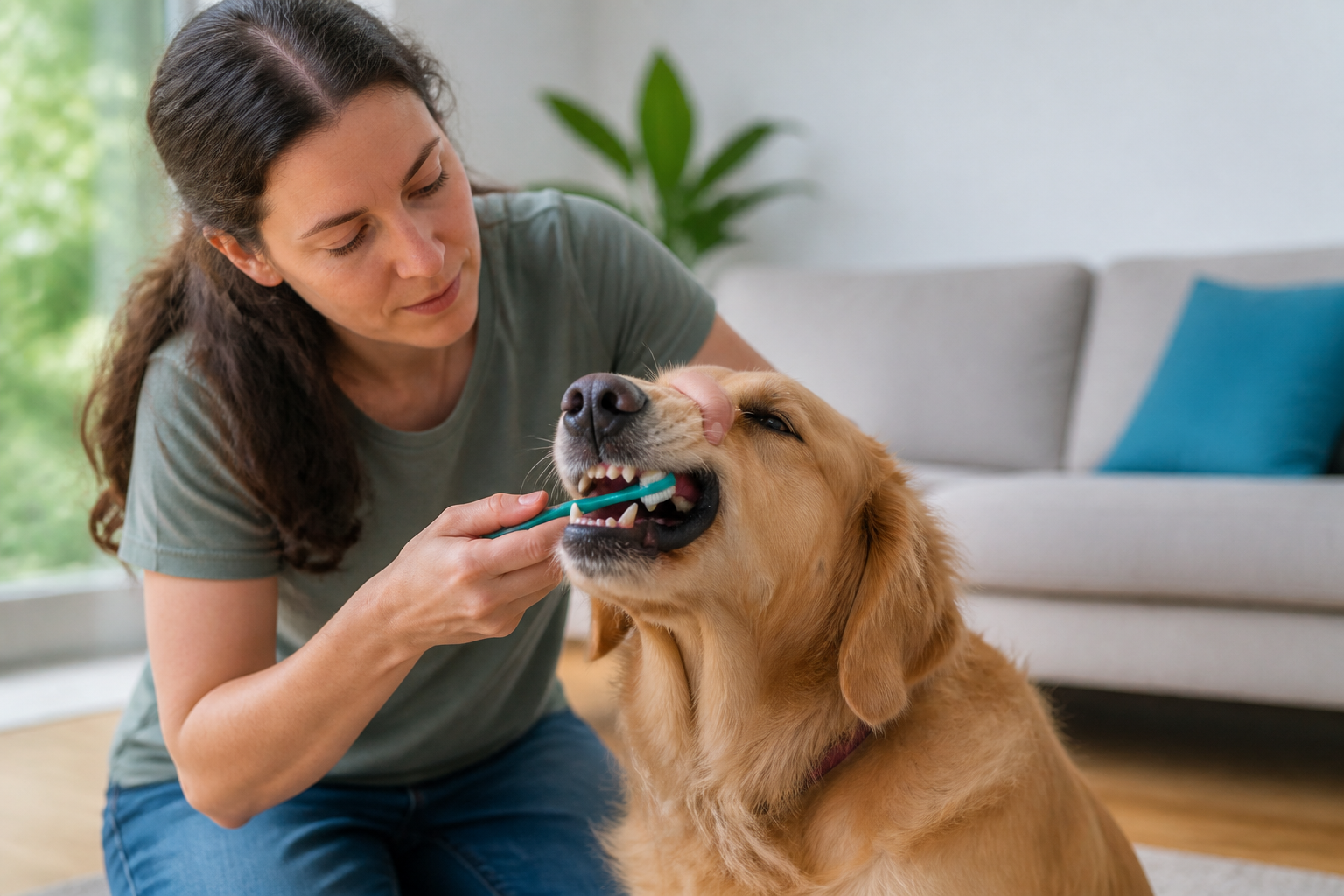
Brushing remains the most effective way to remove plaque before it turns into tartar. You must use a toothpaste specifically formulated for dogs. Human toothpaste contains xylitol or high levels of fluoride, both of which are toxic to pets. Use a soft-bristled brush or a finger brush to gently massage the gumline. You can find brushes and toothpaste in our dog dental care collection.
Using Dental Chews and Toys
Chewing is a natural way for dogs to scrape plaque off their teeth. Brands like Greenies or Kong dental toys are designed with ridges that act like a squeegee against the tooth surface. As the dog chews, the friction helps rub away soft buildup. This is especially helpful for the large carnassial teeth in the back of the mouth where rot often starts. For more ideas, explore our guide to dental chews for dogs.
Water Additives and Gels
If your dog refuses to let you touch their mouth, water additives are a low-stress alternative. These liquids contain enzymes that help break down the biofilm of bacteria on the teeth. You simply add the recommended amount to their water bowl each day. While this will not remove existing rot, it keeps the bacterial load lower.
Key Takeaway: Home dental care is a tool for maintenance and prevention, not a cure for existing decay. Focus your efforts on keeping the healthy teeth clean to avoid the spread of periodontal disease.
Step-By-Step: Starting a Dental Routine
If your dog is not used to having their mouth handled, you must start slowly. Forcing a toothbrush into a dog's mouth can lead to dental anxiety or accidental bites. Follow these steps to build a successful routine. For more practical guidance, see these pet dental care tips.
Step 1: Get them used to mouth handling.
Gently lift your dog's lips for a few seconds each day. Follow this with a high-value treat or praise. Do this for several days until they are comfortable with you touching their gums.
Step 2: Introduce the toothpaste.
Put a small amount of dog-safe toothpaste on your finger. Let them lick it off so they get used to the flavor. Most pet toothpastes come in poultry or beef flavors to make them more appealing.
Step 3: Practice the rubbing motion.
Apply a little toothpaste to a finger brush or a piece of gauze. Rub it gently along the outer surfaces of the front teeth. Keep the session under thirty seconds and reward them immediately.
Step 4: Gradually add the toothbrush.
Once they accept the finger brush, move to a handled toothbrush. Focus on the gumline where the tooth meets the flesh. You do not need to brush the inside of the teeth, as the dog's tongue does a decent job of cleaning those surfaces.
The Role of Nutrition in Dental Health
What your dog eats plays a significant role in how fast plaque accumulates. Many owners believe that all kibble cleans teeth simply because it is crunchy. However, most kibble is too small and brittle to provide real cleaning action. It often shatters before it can scrape the tooth.
Specialized Dental Diets
Some premium brands we carry, like Royal Canin and Farmina, offer specialized diets for oral health. These kibbles are larger and have a specific fiber structure. They are designed to wrap around the tooth before breaking, which provides a mechanical cleaning effect.
Avoiding Sugary Fillers
Bacteria in the mouth thrive on simple carbohydrates and sugars. Review your dog's treats and food for hidden sugars like corn syrup or excessive starches. Switching to high-quality proteins can help change the pH of your dog's saliva, making it less hospitable to rot-causing bacteria.
Supplements for Gum Support
Supplements like Cosequin or specific skin and coat oils can support the overall health of the mucous membranes. Healthy gums are the first line of defense against tooth rot. If the gums are strong and tightly attached to the tooth, it is much harder for bacteria to migrate to the root.
Bottom line: Quality nutrition and mechanical chewing are your best defenses against the bacteria that cause teeth to rot.
When Professional Intervention Is Required
There comes a point where home care is no longer safe or effective. If you are searching for how to clean rotten teeth because the teeth are already black or the breath is unbearable, it is time for a professional dental cleaning. This is a standard procedure, but it must be done under anesthesia. You can also review our dog healthcare products while preparing for your dog's ongoing care.
Why Anesthesia Is Necessary
A veterinarian needs to see what is happening below the gumline. Dogs will not sit still for dental X-rays or for a technician to scrape deep under the gums with sharp metal tools. Anesthesia allows the vet to perform a thorough cleaning without causing the dog stress or pain.
What Happens During a Vet Cleaning
- X-rays: This is the only way to see if the root is abscessed or if the jawbone is thinning.
- Scaling: The vet uses ultrasonic tools to vibrate tartar off the teeth.
- Polishing: Cleaning creates microscopic scratches on the enamel. Polishing smooths these out so bacteria cannot easily reattach.
- Extractions: If a tooth is truly rotten, the vet will remove it to stop the pain and prevent the infection from spreading.
Our Pharmacy Partnership
For dogs with chronic dental issues or those recovering from extractions, your vet may prescribe specific medications or prescription diets. Through our partnership with Pet's Choice, the BaxterBoo pharmacy offers FDA-approved medications and prescription foods like Farmina Vet Life. If your vet recommends a specialized dental recovery plan, we can help you get those supplies delivered to your door.
| Method | Best For | Effort Level |
|---|---|---|
| Brushing | Preventing plaque buildup on healthy teeth | High |
| Dental Chews | Daily maintenance and mental stimulation | Low |
| Water Additives | Dogs who resist mouth handling | Minimal |
| Vet Cleaning | Removing tartar and treating rotten teeth | Professional Only |
Managing the Cost of Dental Care
Dental care can be one of the more expensive aspects of pet ownership. However, ignoring a rotten tooth is always more expensive in the long run. An untreated infection can lead to heart, kidney, or liver issues as bacteria enter the bloodstream.
Preventive Savings
Investing in a ten-dollar toothbrush and a bag of quality dental chews today can save you hundreds in future vet bills. Our Autoship programme makes it easy to keep these essentials in stock. You save on your first order and ensure you never run out of the supplies your dog needs.
MVP Rewards
Every purchase you make at BaxterBoo, from dental toys to high-quality food, earns you points through the MVP Rewards programme. These points can be used to offset the cost of future supplies, making it easier to maintain a high standard of care for your dog's mouth.
FIGO Pet Insurance
Because dental emergencies can be unpredictable, we partner with FIGO Pet Insurance. Having a flexible insurance plan can help cover the costs of unexpected extractions or professional cleanings. This ensures your dog gets the care they need without putting a strain on your budget.
Key Takeaway: Consistency is the most important factor in dental health. A simple, daily routine is far more effective than an occasional deep cleaning attempt.
Common Myths About Dog Dental Care
There is a lot of misinformation about how to handle "dirty" or "rotten" teeth at home. Using the wrong methods can hurt your dog or make the problem worse.
Myth: Hard bones are the best for cleaning.
While some bones can scrape teeth, very hard items like antlers or marrow bones can actually cause "slab fractures." This is when a piece of the tooth flakes off, exposing the sensitive pulp. If a tooth is already weakened by rot, a hard bone will likely break it.
Myth: Dry food is enough to keep teeth clean.
Most dry food is swallowed whole or crumbles instantly. Unless the food is specifically labeled as a dental diet with VOHC (Veterinary Oral Health Council) approval, it is likely doing very little for your dog's teeth.
Myth: You can "pop" tartar off with a metal tool.
Some owners try to use dental picks at home. This is dangerous. If your dog flinches, you could stab their gums or tongue. Furthermore, scraping the teeth leaves behind microscopic grooves that actually help bacteria grow faster. Only a professional should scale a dog's teeth.
Myth: Bad breath is just a "dog thing."
Healthy dogs should not have foul-smelling breath. If the smell is enough to make you turn away, it is a sign of a medical problem. Frequent bad breath is usually the first indicator of the bacterial growth that leads to rotting teeth.
Keeping Your Senior Dog’s Mouth Healthy
Senior dogs are the most likely to suffer from rotting teeth. Years of plaque accumulation can take a toll. However, many owners worry that their senior dog is "too old" for dental work or anesthesia.
Modern veterinary medicine has made anesthesia much safer for seniors through pre-anesthetic bloodwork and careful monitoring. Keeping a senior dog's mouth clean is vital for their quality of life. Constant dental pain can make a senior dog lethargic or irritable. Once the painful teeth are removed or cleaned, many owners report that their senior dog "acts like a puppy again."
At BaxterBoo, we carry several products designed for the sensitive mouths of older dogs. Soft dental chews and enzymatic gels are often easier for seniors to handle than hard, crunchy treats.
Bottom line: Age is not a disease, and senior dogs deserve to live without the constant pain of decaying teeth.
FAQ
How can I tell if my dog's tooth is actually rotten?
A rotten tooth usually shows significant discoloration, appearing dark brown, grey, or black. You may also see visible pits or holes in the enamel and notice your dog avoiding hard food or toys. If the gums around the tooth are swollen or if there is a persistent foul odor, the tooth is likely decayed and needs professional attention.
Can I use baking soda to clean my dog's teeth at home?
While baking soda is not toxic in very small amounts, it has a high alkaline content and a salty taste that most dogs dislike. It can also upset their stomach if swallowed in large quantities. It is much safer and more effective to use a pet-specific toothpaste that contains enzymes designed to break down canine oral bacteria.
What happens if I leave a rotten tooth in my dog's mouth?
Leaving a rotten tooth can lead to chronic pain, local abscesses, and the loss of surrounding healthy teeth. More seriously, the bacteria from a dental infection can enter the bloodstream and cause damage to the heart, kidneys, and liver. Treating the rot early prevents these systemic health issues.
Are there any treats that can help with rotting teeth?
No treat can "cure" a tooth that has already started to rot. However, VOHC-approved dental treats like Greenies or certain Kong rubber toys can help prevent other teeth from reaching that stage. For dogs with existing sensitivity, look for "senior" versions of dental chews which are often softer but still provide some mechanical cleaning.






