
 Save 15% on your 1st Autoship learn more

 Email us
 Live Chat
 FAQs
FAQs





Introduction
You are sitting on the couch and your dog leans in for a friendly lick, but the smell that follows is enough to make you pull away. This familiar moment is often the first sign that a dog needs better oral care. While bad breath is a common complaint, it is usually a symptom of plaque and tartar buildup that can lead to serious health issues. At BaxterBoo, we know that keeping those pearly whites clean is about more than just fresh breath. It is about preventing pain and ensuring your companion lives a long, healthy life. This guide will cover the most effective ways to maintain your dog's mouth, from the daily habit of brushing to the role of dental chews and professional cleanings. You will learn how to build a routine that works for your schedule and your dog's personality.
Quick Answer: The most effective way to clean a dog's teeth is through daily brushing with dog-specific toothpaste. You can supplement this with dental chews, water additives, and professional veterinary cleanings to remove tartar that brushing cannot reach.
Why Dental Hygiene Matters for Dogs
Many owners assume that a dog's mouth is naturally clean or that chewing on sticks is enough to stay healthy. In reality, over 80 percent of dogs show signs of oral disease by the time they are three years old. When food particles and bacteria sit on the teeth, they form a sticky film called plaque. If this plaque is not brushed away, it hardens into tartar within a few days. Tartar is much more difficult to remove and provides a rough surface where even more bacteria can grow.
This bacteria does not just stay in the mouth. It can enter the bloodstream through inflamed gums and travel to major organs. Over time, poor dental health can contribute to issues with the heart, liver, and kidneys. It also causes significant physical discomfort. Dogs are experts at hiding pain, so they might continue to eat even if they have a fractured tooth or a painful infection. Maintaining a clean mouth is one of the best things you can do for their overall wellness.
Key Takeaway: Oral health is a full body concern. Bacteria from the mouth can spread to internal organs, making preventative care a vital part of your dog's long term health plan.
The Gold Standard: Brushing Your Dog's Teeth
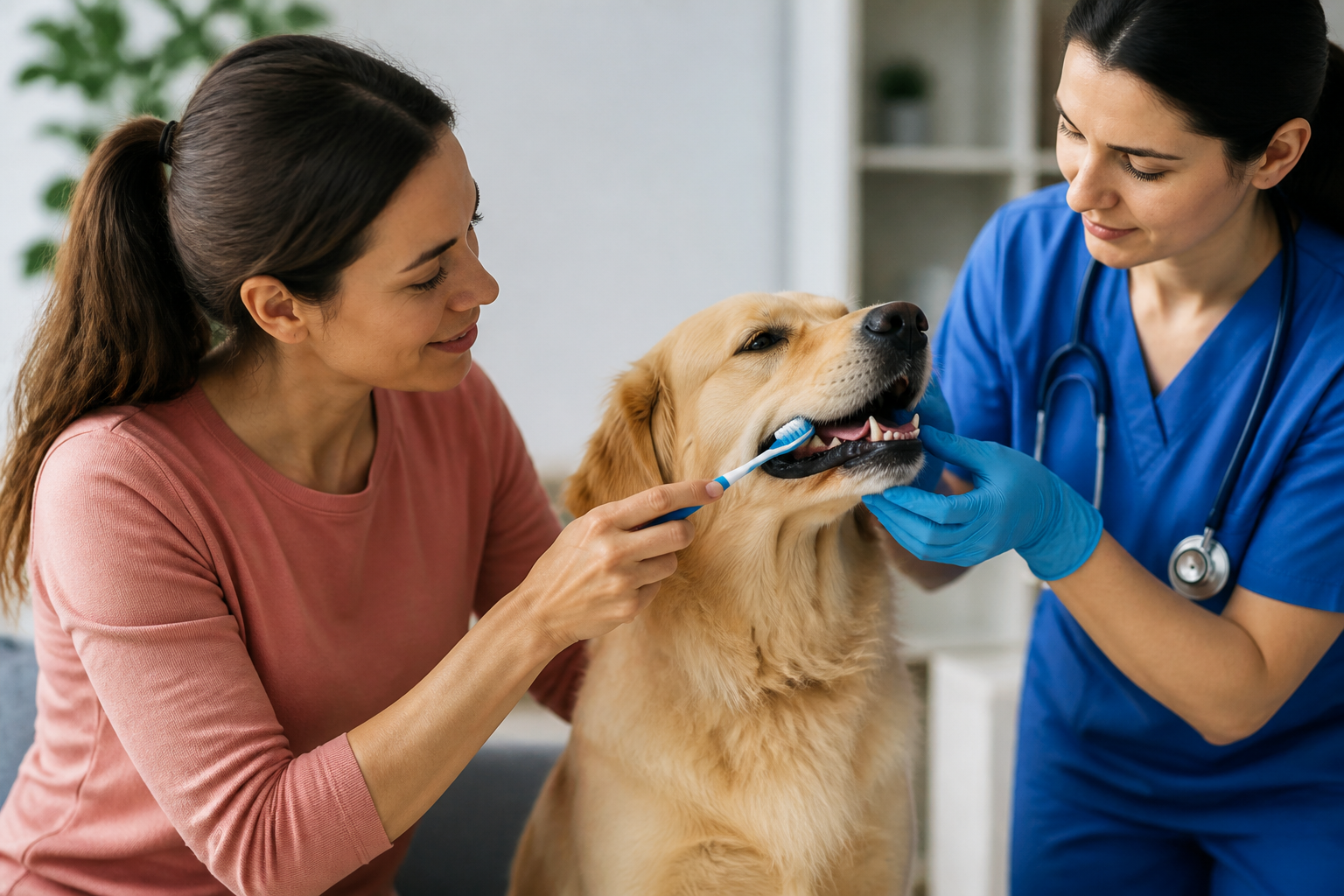
Brushing is the single most effective way to remove plaque before it turns into tartar. While it might seem intimidating at first, most dogs can learn to accept the process if you introduce it slowly. You should aim to brush your dog's teeth every day, just like you do for yourself. If your schedule is packed, even three times a week can make a significant difference in their oral health. For additional guidance, read these pet dental care tips.
Choosing the Right Tools
Never use human toothpaste for your dog. Most human pastes contain fluoride and foaming agents like sodium lauryl sulfate, which can upset a dog's stomach. Some even contain xylitol, an artificial sweetener that is highly toxic to dogs. Instead, look for a toothpaste specifically formulated for pets. These come in flavors like poultry, beef, or peanut butter to make the experience more enjoyable for the animal.
You also need a brush that fits your dog's mouth. A standard human toothbrush is often too large or too stiff. Our dog dental care supplies include toothpaste, dental wipes, water boosters, and other options for building a home routine.
- Finger brushes: These fit over your fingertip and are great for small dogs or beginners.
- Angled toothbrushes: These have long handles and dual heads to reach the back molars easily.
- Puppy brushes: These have very soft bristles for sensitive young gums.
Step-by-Step Training
Step 1: Introduce the taste. / Put a small dab of dog toothpaste on your finger and let your dog lick it off. Do this for a few days until they get excited when they see the tube.
Step 2: Get them used to mouth handling. / Gently lift your dog's lips and rub your finger along their gums. Keep these sessions very short and follow up with a high value treat or praise.
Step 3: Introduce the brush. / Put toothpaste on the brush and let them lick it. Gradually move the brush in small circles against the front teeth, focusing on the area where the tooth meets the gum line.
Step 4: Reach the back teeth. / Once they are comfortable with the front, slowly work your way toward the back molars. This is where most tartar tends to build up.
Vet Tip: If your dog resists brushing, do not force it. Stop the session and try again later with more treats. Forcing the issue can create a negative association that makes future grooming much harder.
Using Dental Chews and Toys
If your dog absolutely refuses to have their teeth brushed, or if you want to add an extra layer of protection, dental chews are a fantastic tool. These products are designed to be abrasive. As your dog chews, the texture of the treat scrubs the surface of the teeth and massages the gums. This mechanical action helps scrape away soft plaque before it can harden. You can compare options in our dog dental treats collection.
We carry a variety of trusted brands like Greenies and Kong at BaxterBoo that focus on dental health. When choosing a chew, look for the Veterinary Oral Health Council (VOHC) seal. This seal indicates that the product has been rigorously tested and proven to reduce plaque or tartar by a specific amount. You can also browse our selection of Greenies products for dental chews and other pet items.
The Hardness Test
It is important to choose chews that are not too hard. Some items, like natural bones, antlers, or hard plastic toys, can actually fracture a dog's teeth. A good rule of thumb is the "fingernail test." If you cannot leave a small dent in the object with your thumbnail, or if it does not bend at all, it might be too hard for your dog's enamel.
Mechanical Action Toys
Toys like the classic Kong or textured rubber bones can also help. When you stuff a toy with a healthy spread, the licking and chewing action stimulates saliva production. Saliva contains natural enzymes that help keep the mouth clean. Some toys are even designed with small rubber nubs or ridges specifically meant to clean the tongue and teeth while the dog plays. Explore dental dog toys for options designed around chewing and play.
Bottom line: Dental chews and toys are effective supplements to brushing, but they should be selected based on safety and proven effectiveness.
Dental Water Additives and Supplements
For busy owners or pets that are difficult to handle, water additives and dental supplements offer a passive way to improve oral hygiene. These products work chemically rather than mechanically. You simply add a specific amount of the liquid to your dog's water bowl or sprinkle a powder over their food.
Most water additives contain enzymes or ingredients like chlorine dioxide that help kill the bacteria responsible for plaque. They also help neutralize the compounds that cause bad breath. While they are not a replacement for brushing, they are excellent for maintaining a cleaner environment in the mouth throughout the day.
Powdered Supplements
Some supplements are derived from specific types of kelp or seaweed. When ingested, these compounds are absorbed into the bloodstream and eventually released back into the mouth through the saliva. These enzymes work to soften existing tartar and prevent new plaque from sticking. Brands like Zesty Paws often include dental support in their wellness lines. Our dog dental breath care selection includes powders and water boosters for daily use.
Key Takeaway: Chemical solutions like additives are a great "hands-off" approach to support oral health, especially for dogs with sensitive mouths.
The Role of Diet and Natural Snacks
There is a common belief that feeding dry kibble is all a dog needs to keep their teeth clean. While the crunch of kibble provides a tiny bit of scraping action, it is rarely enough to prevent dental disease. Most kibble is small enough that dogs swallow it whole or it crumbles immediately upon contact with the tooth.
However, some specialty dental diets, such as those from Royal Canin or Farmina Vet Life, are designed with much larger, fibrous kibble pieces. These are formulated so the tooth sinks into the kibble before it breaks, providing a thorough scrub. If your dog has a history of rapid tartar buildup, your vet might recommend one of these prescription diets.
Natural Abrasives
Certain vegetables can act as natural toothbrushes. Raw carrots and apple slices (without the seeds or core) require a lot of chewing and can help scrub the teeth. They are also low in calories and provide beneficial vitamins. While they should not be your only method of cleaning, they are much better for the teeth than sugary or starchy biscuits.
Vet Tip: Always consult your veterinarian before switching your dog to a prescription dental diet. These diets are specifically balanced and may not be suitable for dogs with other underlying health conditions like kidney or heart issues.
Professional Dental Cleanings and Veterinary Care
Even with the best home routine, most dogs will eventually need a professional cleaning. Just as humans go to the dentist to have tartar scraped away, dogs need a deep clean to reach the areas beneath the gum line. This is where the most damaging bacteria hide.
A professional cleaning at a veterinary clinic is performed under general anesthesia. This is necessary because it allows the vet to perform a full examination of every tooth, take X-rays, and use ultrasonic scalers safely. Without anesthesia, it is impossible to clean the inner surfaces of the teeth or properly evaluate the health of the roots.
When to Schedule a Cleaning
Most vets recommend a dental exam at least once a year. During a routine checkup, your vet will look for redness, swelling, or heavy tartar deposits. If they see signs of periodontal disease, they will suggest a professional cleaning. This procedure usually involves:
- Pre-anesthetic blood work to ensure your dog is healthy enough for the procedure.
- Ultrasonic scaling to remove tartar above and below the gum line.
- Polishing to smooth out the tooth surface and make it harder for bacteria to stick.
- Dental X-rays to check for abscesses or bone loss.
Our pet pharmacy for dogs offers prescription products through our pharmacy services. If your dog requires specialized dental rinses or medications after a procedure, ask your veterinarian whether a prescription treatment is appropriate.
Bottom line: Home care slows down the progression of dental disease, but professional cleanings are the only way to treat established tartar and underlying infections.
Recognizing Signs of Dental Disease
Because dogs are stoic, they often do not show they are in pain until a problem is advanced. It is up to you to monitor their mouth for changes. Early detection can save your dog from losing teeth and save you from expensive surgery bills. For more information, review these warning signs of bad teeth in dogs.
What to Look For
Watch for these common warning signs of oral health issues:
- Persistent bad breath that does not go away after a meal.
- Yellow or brown deposits on the teeth near the gums.
- Red, swollen, or bleeding gums.
- Dropping food while eating or chewing on only one side of the mouth.
- Loss of interest in hard treats or chew toys.
- Excessive drooling or pawing at the face.
If you notice any of these symptoms, schedule a visit with your veterinarian right away. They can determine if your dog has a simple buildup of tartar or a more serious issue like a fractured tooth or an oral tumor.
Vet Tip: If you see a bump on your dog's face just below the eye, it could be a sign of a tooth root abscess. This is a painful infection that requires immediate veterinary attention and likely an extraction of the affected tooth.
Maintaining a Consistent Routine
The key to a healthy mouth is consistency. It is much easier to spend two minutes brushing each day than it is to deal with a severe infection later. Try to pair dental care with something your dog already loves. For example, brush their teeth right before their evening walk or right after their morning grooming session.
We have been helping pet owners find the right gear since 2006, and we know that every dog is different. Some might thrive with a finger brush and poultry paste, while others might do best with a combination of dental chews and water additives. Since dental products are often replenished, our Autoship programme can help make repeat orders part of your routine.
As your dog ages, their dental needs will change. Senior dogs are more prone to gum recession and tooth loss, so they may need softer brushes or more frequent veterinary checkups. By staying proactive, you can ensure your dog stays comfortable and happy throughout their life.
Conclusion
Cleaning your dog's teeth is a fundamental part of responsible pet ownership. While brushing remains the most effective method, a combination of dental chews, additives, and professional veterinary care provides the best defense against periodontal disease. Always use pet-safe products and keep the experience positive with plenty of rewards. If you suspect your dog has dental pain or heavy tartar, consult your veterinarian for a professional assessment. To get started on your home care routine, explore our dog dental care category or visit our pet pharmacy for your prescription pet needs.
Key Takeaway: A multi-pronged approach involving daily brushing, safe chews, and regular vet visits is the best way to ensure your dog's long term oral health.
FAQ
How often should I brush my dog's teeth?
Ideally, you should brush your dog's teeth every day to remove plaque before it hardens into tartar. If daily brushing is not possible, aiming for three to four times a week is still very beneficial. Consistency is more important than the length of each session, so even a quick scrub is better than skipping it entirely.
Can I use human toothpaste on my dog?
No, you should never use human toothpaste on a dog. It contains ingredients like fluoride and sodium lauryl sulfate that can be harmful if swallowed. Many human toothpastes also contain xylitol, which is highly toxic to dogs even in small amounts. Always use a toothpaste specifically formulated for pets.
Do dental chews really work to clean teeth?
Dental chews can be very effective at reducing plaque and tartar through mechanical scraping as the dog chews. For the best results, look for products with the VOHC seal of approval, which means they have been scientifically proven to work. However, chews are best used as a supplement to brushing rather than a total replacement.
Why does my dog need to be under anesthesia for a dental cleaning?
Anesthesia is necessary to ensure the safety and comfort of your dog during a deep cleaning. It allows the veterinarian to clean thoroughly beneath the gum line where most disease occurs and to take accurate X-rays. Without anesthesia, a dog would not remain still enough for a tooth-by-tooth examination, and the sharp scaling tools could cause injury if the dog moves suddenly.






