
 Save 15% on your 1st Autoship learn more

 Email us
 Live Chat
 FAQs
FAQs





Introduction
You lean in for a pup kiss and notice something new. It is a scent that definitely is not fresh air. Most dog owners eventually face the reality of "dog breath," but that odor is often the first sign of a deeper health issue. At BaxterBoo, we know that staying on top of your dog's oral hygiene can feel like a chore, especially if your pet treats a toothbrush like a sworn enemy. However, keeping those pearly whites clean is about more than just a fresh smell. It is about preventing pain, tooth loss, and systemic health problems that can affect the heart and kidneys. This guide covers practical, effective ways to manage your dog's dental care from your own living room. We will explore everything from the gold standard of brushing to high tech alternatives for the most stubborn pets.
Quick Answer: You can clean your dog's teeth at home by brushing with dog-safe enzymatic toothpaste, using VOHC-approved dental chews, or adding dental powders and water additives to their routine. Consistency is the most important factor for preventing plaque from hardening into tartar.
The Reality of Canine Dental Health
Dental disease is one of the most common health problems seen by veterinarians. By the age of three, a huge majority of dogs show some sign of periodontal disease. This process begins with plaque, which is a sticky film of bacteria that forms on the teeth after eating. If you do not remove plaque within 24 to 48 hours, it reacts with minerals in your dog's saliva. This reaction causes the plaque to harden into tartar, also known as calculus.
Tartar is the hard, yellow or brown buildup you see near the gumline. Unlike plaque, you cannot brush tartar away. It requires professional scaling by a veterinarian. This buildup acts as a reservoir for bacteria, which then migrate under the gumline. This leads to inflammation, recessed gums, and eventually bone loss around the tooth roots.
Our team sees the results of neglected dental care every day. It often leads to dogs needing extractions or managing chronic mouth pain. Starting an at-home routine today can significantly slow this process and keep your dog's mouth comfortable for years to come.
For more guidance on warning signs, read how to recognize signs of dental disease in dogs.
Brushing Your Dog's Teeth: A Step-by-Step Guide
Brushing is the absolute best way to disrupt plaque. Nothing else provides the same mechanical scrubbing action. If your dog is not used to it, do not expect to finish the whole mouth on day one. You want this to be a positive experience, not a wrestling match.
Gather Your Supplies
You only need two main items to get started: a dog-specific toothbrush and enzymatic toothpaste. Never use human toothpaste. It contains fluoride and often xylitol, both of which are toxic to dogs. Enzymatic toothpastes for pets are designed to be swallowed and come in flavors like poultry, beef, or peanut butter.
You can find pet-safe toothpaste, toothbrushes, wipes, and other options in our dog dental care collection.
Step 1: The Taste Test
Start by letting your dog lick a small amount of toothpaste off your finger. This introduces the flavor and builds a positive association. Do this for a few days without even showing them the brush.
Step 2: The Finger Rub
Once they like the paste, put a dab on your finger and gently rub it against their front teeth and gums. This gets them used to the sensation of your hand near their mouth. Keep these sessions under 30 seconds.
Step 3: Introduce the Brush
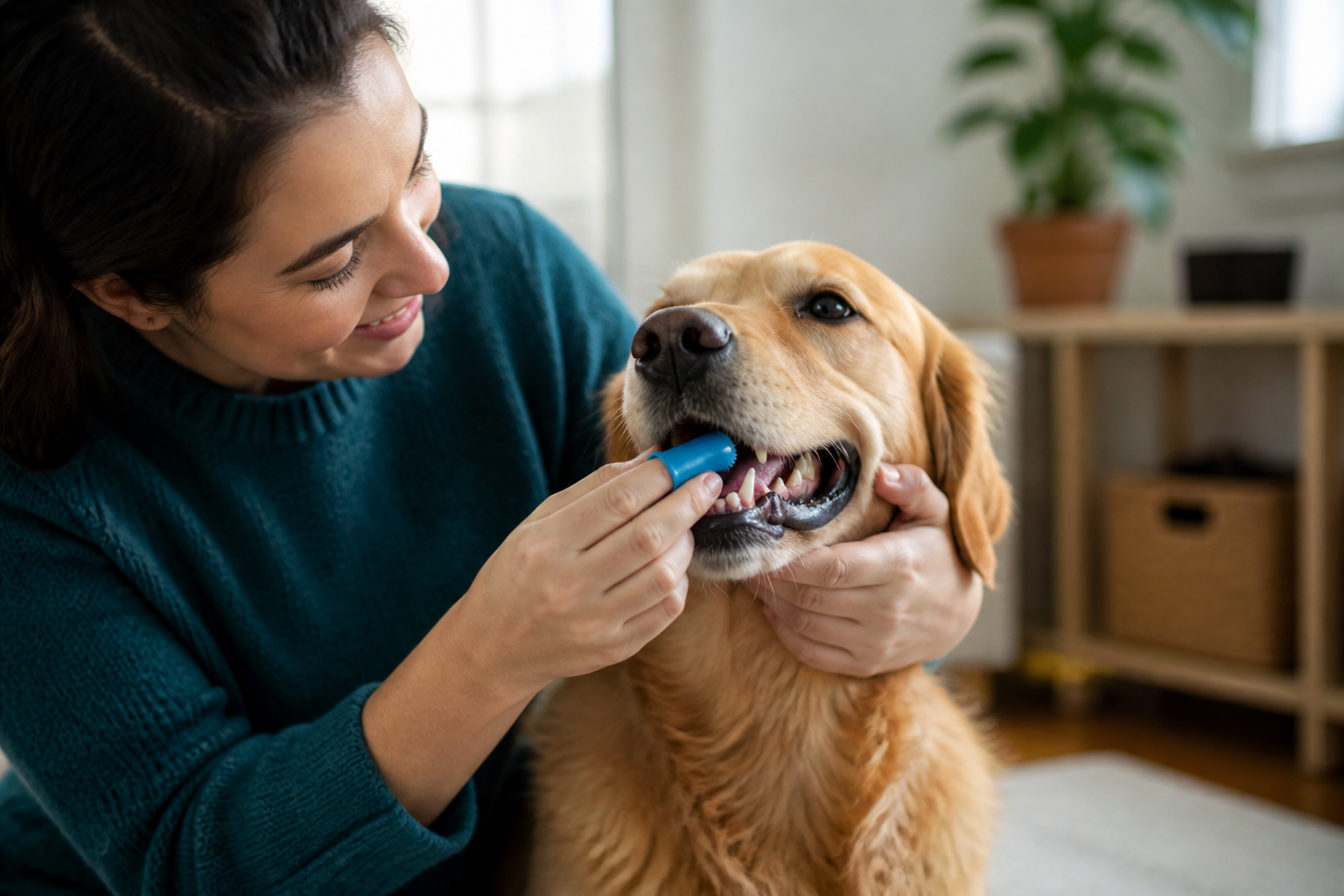
Apply toothpaste to a soft-bristled dog toothbrush or a silicone finger brush. Lift your dog's lip and gently brush the large canine teeth in the front. Use small, circular motions.
Step 4: Reach the Back Molars
The back teeth, especially the upper ones, are where the most tartar accumulates. Gently slide the brush back toward the cheeks. You do not need to open their mouth wide. Most plaque builds on the outside surface of the teeth, so focus your efforts there.
Step 5: Reward and Repeat
Always follow a brushing session with praise or a small, healthy treat. Aim to brush at least three times a week. Daily brushing is the ideal goal, as it prevents plaque from ever having the chance to mineralize.
Vet Tip: If you notice bleeding gums, loose teeth, or if your dog winces when you touch their mouth, stop brushing and call your veterinarian. These are signs of active dental disease that require professional treatment before home care can resume.
For additional brushing advice, see our pet dental care tips.
Alternatives to the Toothbrush
We understand that some dogs will never accept a toothbrush. If your dog gets stressed or aggressive during brushing, do not force it. There are several other tools that can help manage plaque buildup without the struggle.
Dental Chews and Treats
Dental chews are a popular choice because dogs actually enjoy them. These treats work through mechanical abrasion. As your dog chews, the texture of the treat scrapes against the tooth surface. Brands like Greenies or ProDen PlaqueOff Dental Care Bones are specifically designed with shapes that maximize this contact.
When choosing a chew, look for the Veterinary Oral Health Council (VOHC) seal. This seal means the product has been independently tested and proven to reduce plaque or tartar. Be sure to match the size of the chew to your dog's weight. A chew that is too small can be a choking hazard, while one that is too large adds unnecessary calories to their diet.
Browse our dental food and treats category for chews and treats suited to different dogs.
Water Additives and Oral Rinses
Water additives are a passive way to support oral health. These are liquids you add directly to your dog's water bowl. They often contain enzymes or antibacterial agents that help break down plaque and freshen breath throughout the day. While they are not as effective as brushing, they are an excellent supplement for dogs that drink plenty of water.
Dental Powders
Dental powders are often the easiest solution for busy owners. These are typically made from a specific type of kelp, like Ascophyllum nodosum. When your dog eats the powder, the active ingredients are absorbed into the bloodstream and then released into the saliva. This works systemically to soften existing tartar and prevent new plaque from sticking. ProDen PlaqueOff is a leader in this category and is very easy to sprinkle over dry or wet food.
One available option is ProDen PlaqueOff Powder Dog and Cat Teeth Care.
Key Takeaway: At-home dental care is most effective when you use a "multi-modal" approach. Combining a daily dental powder with a few dental chews per week provides both systemic and mechanical cleaning.
Comparison Table of At-Home Cleaning Methods
| Method | Effort Level | Effectiveness | Best For |
|---|---|---|---|
| Brushing | High | Excellent | Cooperative dogs; maximum plaque removal |
| Dental Chews | Low | Good | Dogs with a strong chew drive; rewarding |
| Water Additives | Very Low | Moderate | Picky dogs; supplemental breath freshening |
| Dental Powders | Very Low | Good | Systemic plaque control; easiest to use |
| Dental Wipes | Moderate | Moderate | Dogs that dislike bristles but tolerate handling |
Bottom line: Brushing remains the top choice, but any consistent routine is better than no care at all.
You can compare additional options in our dog dental care category.
Dietary Choices for Better Dental Health
What your dog eats can impact their oral environment. There is a common belief that all dry kibble cleans teeth, but this is not entirely true. Most standard kibble is small and brittle, meaning it shatters instantly when a dog bites it. This provides very little cleaning action.
However, specific dental diets are formulated with larger, fibrous kibble. These pieces do not shatter. Instead, the dog's tooth sinks into the kibble, allowing the fibers to scrub the tooth surface. We carry several brands that offer these specialized formulas.
Some owners also use raw vegetables as healthy dental snacks. Raw carrots or apple slices (without seeds) provide a satisfying crunch and mild abrasion. These are great low-calorie options, though they should not be the only form of dental care you use.
For more ideas, explore our dog treats and dental treats selection.
Recognizing Signs of Dental Disease
It is important to know when home care is no longer enough. Dogs are experts at hiding pain. A dog with a severe toothache might still eat their dinner every day, leading owners to believe everything is fine. You need to be proactive about checking their mouth once a month.
Look for these warning signs:
- Persistent bad breath that smells like rotting food or garbage.
- Visible tartar that looks like hard brown or orange crust near the gums.
- Gums that look bright red, swollen, or bleed when touched.
- Pawing at the face or rubbing the mouth against furniture.
- Dropping food while eating or chewing on only one side of the mouth.
- Excessive drooling, sometimes tinged with blood.
If you see these symptoms, your dog likely has an infection or a painful tooth that home cleaning cannot fix.
Vet Tip: Routine dental exams with your veterinarian are necessary once a year. They can see things behind the teeth or under the gumline that you might miss. If your dog has advanced dental disease, they may need a professional cleaning under anesthesia to restore their health.
Read more about signs of bad teeth in dogs if you are unsure what to watch for.
The Role of Professional Care and the Pharmacy
Sometimes, a dog's dental needs go beyond standard treats and brushing. For pets with chronic gum issues or those prone to rapid tartar buildup, a veterinarian might prescribe a specific therapeutic diet. Through our partnership with Pet's Choice, the BaxterBoo pharmacy offers access to prescription pet foods, including those designed for weight management and oral health.
If your dog requires medication for a dental infection or pain relief after a professional cleaning, our pet pharmacy can help. We carry FDA-approved medications that you can order with a valid prescription from your vet. This hybrid model allows you to get your dog's favorite toys, high-quality food, and necessary medical supplies all in one place.
Managing your dog's health is a lifelong commitment. We provide the tools to make that commitment easier, whether you are looking for a basic toothbrush or a prescription-strength oral health diet.
Conclusion
Cleaning your dog's teeth at home does not have to be a source of stress. By starting slowly and finding a method that fits your dog's personality, you can significantly improve your quality of life. Whether you choose the direct approach of brushing or the convenience of dental powders and chews, consistency is your best friend. Remember to check your dog's mouth regularly and stay in touch with your veterinarian for professional cleanings.
- Start a brushing routine with enzymatic toothpaste.
- Supplement with VOHC-approved dental chews.
- Monitor for signs of gum disease like redness or bad breath.
- Consult your vet for yearly dental exams and professional care.
Bottom line: A healthy mouth leads to a healthy dog, and a little effort today prevents a lot of pain tomorrow.
Check out our full range of dog dental care products to find the right fit for your pup.
FAQ
Can I use baking soda to clean my dog's teeth?
While baking soda is not technically toxic, it is not recommended for cleaning a dog's teeth. It has a very high salt content which can upset your dog's stomach if swallowed, and the taste is often unpleasant for pets. It is much better to use a flavored enzymatic toothpaste specifically formulated for dogs, as these are designed to be safe when swallowed and actually help break down plaque chemically.
How often should I give my dog dental chews?
Most dental chews are designed to be given once a day for maximum effectiveness. However, because these chews contain calories, you should adjust your dog's daily meal portions to prevent weight gain. Always follow the manufacturer's guidelines on the packaging and ensure the chew is appropriate for your dog's size and age.
My dog's gums bleed a little when I brush. Is this normal?
Minor bleeding can happen if your dog has mild gingivitis or if you are using too much pressure. However, it is usually a sign that the gums are inflamed and sensitive. You should mention this to your veterinarian at your next visit. If the bleeding is heavy or if the gums look very red and swollen, stop brushing and seek veterinary advice, as your dog may need a professional cleaning first.
Are bones safe for cleaning my dog's teeth?
Raw bones can provide some dental benefits through chewing, but they come with risks. Hard bones can cause tooth fractures, and cooked bones can splinter and cause internal injuries. Many veterinarians recommend against using real bones for dental health. Instead, look for synthetic dental toys or VOHC-approved chews that provide the same mechanical cleaning action without the risk of breaking a tooth or causing an emergency.






