
 Save 15% on your 1st Autoship learn more

 Email us
 Live Chat
 FAQs
FAQs





Introduction
You are relaxing on the couch when your dog leans in for a greeting. Instead of a sweet moment, you are met with a breath so foul it makes you pull away. This is a common experience for many owners, but that "dog breath" is actually a warning sign. It often means plaque and tartar are building up and could lead to painful infections. At BaxterBoo, we know that keeping up with oral hygiene can feel like a challenge. You might have a pup that flees at the sight of a toothbrush or one that tries to eat the toothpaste. This post explains the best methods for home care and when it is time to call in the professionals. Taking care of those pearly whites is about more than a fresh smell. It is a vital part of your dog's overall wellness and comfort.
Quick Answer: The most effective way to clean your dog's teeth is through daily brushing with a pet-specific toothbrush and toothpaste. You can also use VOHC-approved dental chews, water additives, and dental powders to reduce plaque if your dog resists traditional brushing.
Why Dental Care Is Essential
Dental disease is one of the most common health issues seen by veterinarians today. It is estimated that a majority of dogs show signs of periodontal disease by the time they are three years old. This starts when bacteria and food particles form plaque on the teeth. If it is not removed, it mineralizes into hard tartar within just a few days. Tartar is much harder to remove and provides a home for even more bacteria to grow.
This bacteria does not just stay in the mouth. It can enter the bloodstream through inflamed gums. Once it is in the blood, it can travel to the heart, liver, and kidneys. This can cause long term damage to these vital organs. Keeping the mouth clean is a simple way to protect your dog's heart and internal health.
Signs of Dental Problems
You should regularly check your dog's mouth for changes. Some signs are very obvious, while others require a closer look.
- Persistent bad breath that does not go away
- Yellow or brown buildup on the teeth near the gumline
- Red, swollen, or bleeding gums
- Difficulty eating or dropping food while chewing
- Pawing at the face or mouth
- Loose or missing teeth
For more guidance on recognizing oral health concerns, read about warning signs of bad teeth in dogs.
Key Takeaway: Dental health affects the entire body. Preventing tartar buildup helps protect your dog's heart and kidneys from bacterial infections.
The Gold Standard: Brushing at Home
Brushing is the single best way to keep your dog's teeth clean. Nothing else compares to the mechanical action of bristles scrubbing away plaque. You do not need to spend an hour on it. Just a minute or two every day can make a massive difference.
Choosing the Right Tools
Never use human toothpaste for your dog. Human versions often contain xylitol, which is a sweetener that is highly toxic to dogs. They also contain foaming agents that can upset a dog's stomach. Dog toothpaste comes in flavors like poultry, beef, or peanut butter to make the experience better for them.
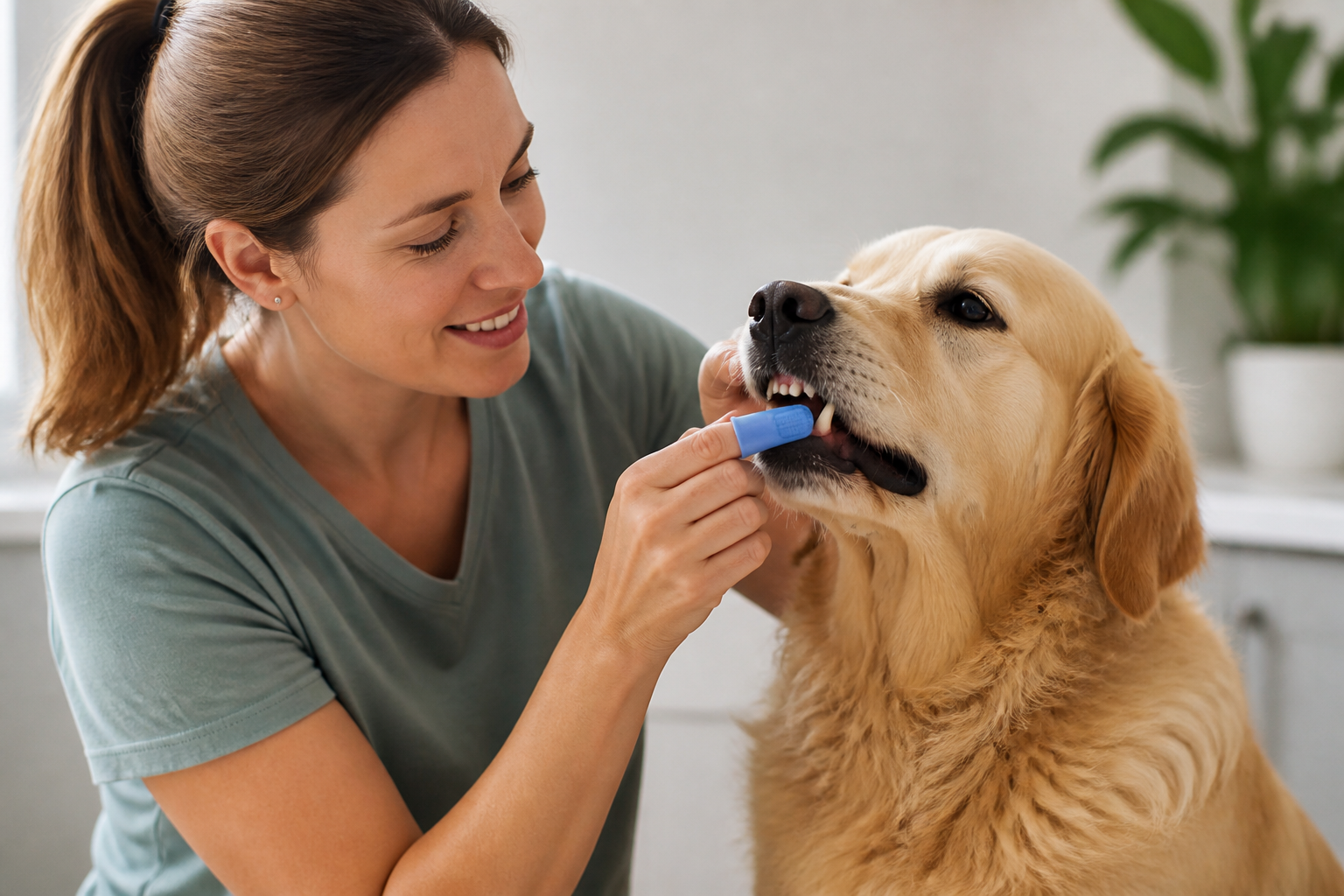
You have a few options for brushes. A standard pet toothbrush has a long handle and angled heads to reach the back molars. A finger brush is a small rubber cap that fits over your index finger. This is often better for puppies or dogs that are nervous about a long plastic stick in their mouth.
For a pet-specific option, consider Nutri-Vet Dog Toothpaste, which is formulated specifically for dogs.
How to Brush Your Dog's Teeth
Step 1: Introduce the taste. Put a small dab of pet toothpaste on your finger and let your dog lick it off. Do this for a few days until they see the paste as a treat.
Step 2: Touch the mouth. Gently lift your dog's lips and rub your finger along their gums. This gets them used to the sensation of you working in their mouth.
Step 3: Introduce the brush. Put toothpaste on the brush and let them lick it. Then, gently brush the front teeth using circular motions.
Step 4: Reach the back. Most plaque builds up on the outside of the upper back molars. Aim for the gumline where the tooth meets the flesh.
Step 5: Reward them. Always end the session with praise or a small healthy treat so they associate brushing with positive things.
For additional brushing guidance, explore these pet dental care tips.
Vet Tip: Be patient during the training process. It can take several weeks for a dog to become comfortable with a full brushing routine. Start with just five seconds and build up the time slowly.
Effective Alternatives to Brushing
We understand that not every dog will tolerate a toothbrush. If your dog becomes aggressive or extremely stressed, you should not force the issue. There are other tools that can help keep plaque under control without the struggle.
Dental Chews and Treats
Dental chews are designed to scrape the teeth as your dog bites down. We carry several brands, like Greenies and Kong, that offer specific textures for this purpose. Look for products that have the Veterinary Oral Health Council seal on the package. This seal means the product has been tested and proven to reduce plaque or tartar.
You can explore our selection of Greenies products for dental chews and other pet care options.
Dental Powders and Water Additives
Dental powders are an easy way to provide care. You simply sprinkle the powder onto your dog's food once a day. Many of these use a specific type of seaweed that works through the saliva to soften tartar. Water additives work in a similar way. You add a small amount to their water bowl, and it helps kill the bacteria that cause bad breath and plaque.
Browse our dog dental and breath care collection for powders, water additives, gels, and other oral care supplies.
Dental Wipes
If your dog will let you touch their mouth but hates a brush, wipes are a great middle ground. These are disposable pads treated with enzymes or cleaning agents. You wrap the wipe around your finger and rub the surfaces of the teeth. They are less invasive than a brush but still provide some mechanical cleaning.
The Role of Diet in Dental Health
What your dog eats can affect how fast plaque builds up. Some owners believe that dry kibble always cleans teeth better than wet food. While the crunch of kibble can provide some scraping action, many dogs swallow kibble whole. This means it provides very little cleaning benefit.
Specific dental diets are different. The kibbles in these foods are usually larger and have a fibrous texture that does not crumble immediately. This forces the dog to chew, which helps scrub the tooth surface. Our pharmacy carries several prescription dental diets through our partnership with Pet's Choice. These are formulated specifically for dogs with a history of heavy tartar or gum disease.
Healthy Snacks for Teeth
Some fresh vegetables can act as natural toothbrushes. Raw carrots or apple slices (without seeds) are firm and crunchy. Chewing on these can help remove loose food particles. They are also low in calories, making them a great choice for dogs watching their weight.
Bottom line: A combination of a healthy diet and daily oral care is the best defense against dental disease.
When to See a Veterinarian
Home care is for prevention. It cannot fix a problem that is already there. If your dog has thick, stony tartar on their teeth, no amount of brushing will remove it. This requires a professional cleaning.
During a professional cleaning, your dog is put under general anesthesia. This allows the vet to clean under the gumline where the most damage happens. They use ultrasonic scalers to remove tartar and then polish the teeth to make it harder for plaque to stick in the future. They can also take x-rays to see if there is any rot or infection in the roots.
Anesthesia-Free Cleaning
You might see services that offer dental cleaning without anesthesia. While this might remove some yellow stains from the surface, it is mostly cosmetic. A dog will not sit still for a deep cleaning under the gums while awake. These services often miss the most important part of the cleaning and can leave your dog at risk for hidden infections.
Support from the Pharmacy
If your veterinarian discovers an infection or advanced gum disease, they may prescribe medications. Our pet pharmacy offers FDA-approved antibiotics and pain relievers to help your dog recover after a dental procedure. You can easily manage these prescriptions through us alongside your regular food and treat orders.
Vet Tip: Schedule a dental checkup at least once a year. Small changes in the mouth are much easier and cheaper to treat when they are caught early.
Long Term Success for Your Dog
Consistency is the secret to a healthy mouth. It is better to brush for thirty seconds every day than to do a deep cleaning once a month. Make it a part of your daily routine, just like going for a walk or filling the food bowl.
If you are just starting out, do not feel discouraged if it is messy at first. Most dogs eventually learn to accept the routine, especially if they enjoy the taste of the toothpaste. For those who remain stubborn, using a combination of dental chews and water additives can still provide significant protection.
- Brush daily if possible
- Use VOHC-approved chews
- Check the gums once a week
- Visit the vet annually
For repeat-purchase dental products, our Autoship programme can help you maintain a consistent routine.
Key Takeaway: A healthy mouth leads to a longer and more comfortable life for your dog. Start small and find the tools that work best for your unique pet.
Conclusion
Cleaning your dog's teeth is an investment in their future health. Whether you use a toothbrush, dental wipes, or specialty chews, the goal is to disrupt plaque before it becomes a problem. Bad breath should never be ignored, as it is often the first sign of a deeper issue. We are here to help you find the right supplies to make this part of pet ownership easier and more effective. From our wide selection of treats to our dedicated pharmacy for prescription needs, we have everything you need to keep those smiles bright.
Check out our dog dental and breath care section today to find the perfect toothbrush and paste for your pup.
FAQ
Can I use human toothpaste on my dog?
No, you should never use human toothpaste for a dog. Many human pastes contain xylitol, which is a sweetener that is highly poisonous to dogs even in small amounts. They also contain foaming agents like sodium lauryl sulfate that can cause stomach upset if swallowed. Always use a paste specifically formulated for pets that is safe to ingest.
How often do I really need to clean my dog's teeth?
Ideally, you should brush your dog's teeth every single day. Plaque begins to turn into hard tartar within 24 to 48 hours, so daily cleaning is the best way to prevent buildup. If daily brushing is not possible, try to aim for at least three times a week and supplement with dental chews or water additives.
My dog hates the toothbrush. What should I do?
If your dog refuses a brush, start by using a dental wipe or a piece of gauze wrapped around your finger. This is often less intimidating for them. You can also rely on dental powders and VOHC-approved chews that clean the teeth while they eat or play. The most important thing is to find a method that you can perform consistently without causing your dog stress.
Why does my dog still have bad breath after I brush?
If your dog's breath remains foul despite regular brushing, there may be an underlying issue like a tooth infection or gum disease. It can also be a sign of internal health problems related to the kidneys or digestive system. In these cases, it is important to schedule a visit with your veterinarian for a full physical exam and a professional dental assessment.






