
 Save 15% on your 1st Autoship learn more

 Email us
 Live Chat
 FAQs
FAQs





Introduction
You lean in for a happy morning nuzzle, but your dog's breath tells a different story. That sharp, funky odor is more than just a nuisance. It is often the first sign that plaque and bacteria are moving in. Many owners notice yellow buildup near the gumline and wonder how to handle it without a stressful or expensive vet visit. At BaxterBoo, we know that keeping those pearly whites clean is a daily commitment that starts in your kitchen or bathroom. While a professional veterinary cleaning is the only way to reach under the gums, there are several effective ways to provide a thorough cleaning at home. This guide covers the best tools, techniques, and dietary choices to keep your dog’s mouth healthy. We will help you build a routine that prevents heavy tartar and protects your pet's long-term wellness.
Quick Answer: To deep clean your dog's teeth at home, use an enzymatic toothpaste and a dog-specific toothbrush daily. Supplement this with VOHC-approved dental chews, water additives, and textured chew toys to mechanically scrub away plaque before it hardens into tartar.
The Reality of At-Home Dental Care
It is important to understand what "deep cleaning" means in a home setting. In a veterinary office, a deep clean involves scaling the teeth while the dog is under anesthesia. This allows the vet to clean the space between the tooth and the gum where most bacteria hide. At home, your goal is different. You are focused on removing plaque before it mineralizes into tartar.
Plaque is a soft, sticky film of bacteria that forms on the teeth after eating. If you do not remove it within 24 to 48 hours, it hardens into tartar, also known as calculus. Once tartar forms, you cannot simply brush it away. It requires professional tools to remove.
Plaque Versus Tartar
Plaque is the enemy you can defeat at home. It is invisible at first but eventually feels fuzzy on the teeth. Tartar is the hard, brown or yellow substance you see cemented to the base of the tooth. By focusing on daily plaque removal, you stop the cycle that leads to gum disease and tooth loss. Consistent home care can significantly reduce how often your dog needs a professional cleaning.
Key Takeaway: Home dental care is about prevention and maintenance. Removing plaque daily stops the formation of hard tartar that requires veterinary intervention.
Essential Tools for Home Cleaning
You cannot use your own bathroom supplies for your dog. Human toothpaste contains ingredients like xylitol or high levels of fluoride that are toxic to pets. Dogs also do not know how to spit, so they swallow everything you put in their mouths. You need a kit designed specifically for canine anatomy and safety. Explore our dog dental care collection for pet-specific brushes, toothpaste, chews, and oral-care products.
Toothbrushes for Every Breed
The type of brush you choose depends on your dog’s size and temperament.
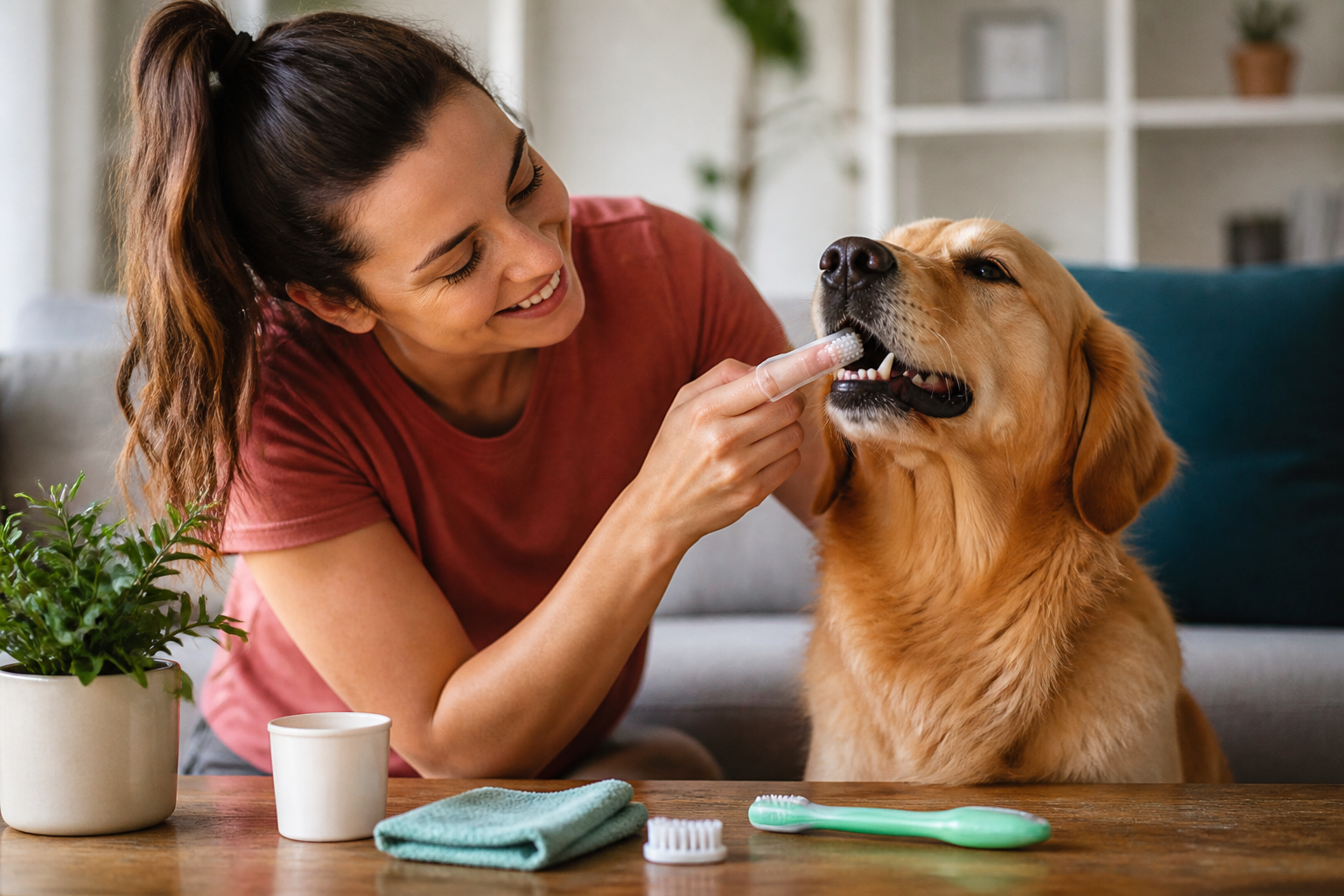
- Finger Brushes: These are small rubber or silicone caps that fit over your fingertip. They are excellent for puppies or dogs who are nervous about long objects in their mouths. They provide great control and allow you to feel exactly where you are brushing.
- Double-Headed Brushes: These have long handles and two sets of bristles. They are designed to clean the inside and outside of the tooth at the same time. These are great for larger dogs with wide jaws.
- Soft Bristle Child Brushes: If you are in a pinch, a very soft toothbrush made for human toddlers can work. However, the angled heads on dog-specific brushes are usually better for reaching the back molars.
Dog-Safe Toothpaste
Enzymatic toothpastes are the most effective choice. These contain enzymes that help break down food particles and bacteria even if you do not scrub every single surface perfectly. Most dog toothpastes come in flavors like poultry, beef, or peanut butter. This turns the cleaning session into a treat rather than a chore. A Virbac C.E.T. enzymatic toothpaste is one option designed for dogs and cats.
Vet Tip: Always check the ingredient label for xylitol, a common sweetener in human products that is lethal to dogs. Stick to brands specifically formulated for pets. If you notice your dog has red, swollen, or bleeding gums, consult your vet before starting a vigorous brushing routine.
How to Brush Your Dog’s Teeth: A Step-by-Step Guide
Brushing is the gold standard for home dental care. If your dog is not used to it, you must move slowly to build trust. Forcing a brush into a dog's mouth will only make them hide the next time they see the supplies. For more guidance, read these pet dental care tips.
Step 1: Get them comfortable with touch. / Spend a few days just lifting your dog's lips and touching their teeth with your finger. Do this when they are calm and relaxed.
Step 2: Introduce the flavor. / Put a small dab of dog toothpaste on your finger. Let your dog lick it off. You want them to associate the paste with a positive experience.
Step 3: Test the texture. / Rub your finger with a little toothpaste along their front teeth and gums. This gets them used to the sensation of something moving against their teeth.
Step 4: Use the brush. / Apply toothpaste to the brush. Angle the bristles at a 45-degree angle toward the gumline. Move in small circular motions. Focus on the outside of the teeth, as this is where most plaque builds up.
Step 5: Focus on the back. / Most dogs collect the most tartar on their upper back molars. Make sure to reach all the way back, even if you can only do it for a few seconds at a time.
Step 6: Reward and praise. / Always end the session with a favorite toy or a healthy dental treat. This reinforces that brushing leads to good things.
Bottom line: Brushing for even 30 seconds a day is more effective than a long session once a month.
Alternatives When Brushing is Difficult
Some dogs simply will not tolerate a toothbrush. If you have a rescue dog with mouth sensitivity or a particularly stubborn pet, you can still improve their oral health using other methods. Combining several of these alternatives can provide a comprehensive cleaning effect. You can also review warning signs of hidden dental problems before choosing an at-home approach.
Dental Chews and Treats
Not all treats are created equal. Look for products that carry the Veterinary Oral Health Council (VOHC) seal of approval. These products have been tested to prove they actually reduce plaque and tartar. Browse our dental dog treats for chewable options.
- Mechanical Action: As your dog chews, the texture of the treat scrapes against the tooth surface.
- Chemical Barriers: Some treats contain ingredients like hexametaphosphate, which helps prevent plaque from hardening into tartar.
- Frequency: Most dental treats are designed to be given once a day. Be sure to account for these calories in your dog's daily diet to avoid weight gain.
Water Additives and Oral Rinses
Water additives are the easiest way to fight bacteria. You simply add a capful to your dog's water bowl every time you refill it. These products work like mouthwash. They contain enzymes or antiseptic ingredients that kill the bacteria responsible for bad breath and plaque. This is a great "passive" cleaning method for busy owners. OxyFresh Pet Dental Water Additive is one brushless option.
Dental Toys for Active Chewers
Toys made of durable rubber or nylon with ridges and nubs are excellent for dental health. As your dog plays, the toy rubs against the teeth. You can even smear a little enzymatic toothpaste into the grooves of a rubber Kong toy to increase the cleaning power. This encourages your dog to "brush" their own teeth while they chew.
Note: Avoid bones, antlers, or heavy nylon toys that are too hard. A good rule of thumb is the "fingernail test." If you cannot indent the toy with your thumbnail, it is likely hard enough to fracture a tooth.
Supporting Oral Health Through Nutrition
What your dog eats every day plays a massive role in their dental health. While food alone cannot replace brushing, it can either contribute to the problem or help solve it.
Dry Kibble and Dental Diets
There is a common myth that all dry kibble cleans teeth because it is crunchy. However, most kibble is small and shatters easily, providing very little cleaning action. Specific dental diets are different. They use larger kibble pieces with a fibrous texture that does not shatter. The tooth sinks into the kibble, which gently scrubs the surface before the piece breaks.
Our pharmacy carries prescription dental diets through our partnership with Pet's Choice for dogs who require specialized care. These foods are often recommended for breeds prone to dental issues, such as Pugs, Yorkies, or Chihuahuas. If your vet suggests a therapeutic diet, you can easily manage your orders through our website.
Ingredients to Watch For
When choosing food and treats, look for high-quality proteins and avoid excessive starches or sugars. Bacteria thrive on sugar. Feeding a clean diet with brands like Farmina, Royal Canin, or Open Farm ensures your dog gets the nutrients they need without fueling oral bacteria.
- Vitamins and Minerals: Ensure the food has adequate calcium and phosphorus for strong teeth.
- Probiotics: Some oral-specific probiotics can help balance the bacteria in the mouth, reducing the "bad" bacteria that cause decay.
Key Takeaway: Nutrition is the foundation of oral health. Using a specific dental diet or high-quality kibble helps reduce the bacterial load in the mouth.
Knowing When to Call the Veterinarian
Home cleaning has its limits. If your dog already has advanced dental disease, brushing might be painful and could even push bacteria into the bloodstream. It is vital to recognize when a professional is needed.
- Extreme Bad Breath: If the smell is overwhelming or "rotting," it usually indicates an infection.
- Difficulty Eating: If your dog drops food, tilts their head while chewing, or stops eating hard kibble, they may have a painful tooth.
- Bleeding Gums: While a tiny bit of pink on a toothbrush can happen at first, consistent bleeding is a sign of gingivitis.
- Loose or Broken Teeth: These are entry points for bacteria and require immediate veterinary attention.
Your veterinarian can perform dental X-rays to see what is happening beneath the gumline. This is a critical part of a deep clean that cannot be done at home. After a professional cleaning, your home routine will be much more effective because you are starting with a clean slate.
Vet Tip: Schedule a dental checkup at least once a year. Small breeds may need checks every six months because their teeth are crowded, which traps more food and bacteria.
Maintaining a Routine for Longevity
The secret to a successful home cleaning routine is consistency. It is better to do a quick, imperfect job every day than a "perfect" job once a month.
- Set a Time: Brush your dog's teeth at the same time every day, such as right before bed or after their evening walk.
- Track Progress: Use a calendar to mark off days you brushed. This helps you stay accountable.
- Combine Methods: Use brushing as the primary tool, but add a water additive and a daily dental chew for extra protection.
- Use Autoship: Never run out of your dental supplies. You can set up recurring deliveries for toothpaste, treats, and dental diets through our Autoship programme to save time and money. Plus, our Autoship program includes a free MVP Gold membership for even more benefits.
When you invest in your dog's dental health now, you are preventing systemic health issues later. Bacteria from infected gums can travel through the bloodstream and damage the heart, liver, and kidneys. A clean mouth is truly a gateway to a longer, healthier life.
Conclusion
Deep cleaning your dog's teeth at home is a multi-step process that combines brushing, smart tool selection, and the right diet. While you cannot replace the thoroughness of a veterinary cleaning, your daily efforts keep plaque at bay and prevent painful tartar buildup. Start slow, stay positive, and choose high-quality products that your dog enjoys. We invite you to explore our selection of dental care products to find the perfect fit for your pup. Whether you need a starter kit for a new puppy or a prescription diet for a senior dog, we have the expert-curated options to keep your dog's smile bright.
- Choose an enzymatic toothpaste and the right style of brush.
- Incorporate VOHC-approved chews for mechanical cleaning.
- Monitor your dog's mouth for signs of infection or pain.
- Support oral health with a balanced, high-quality diet.
Bottom line: Daily brushing is the most effective way to protect your dog's health and save on future veterinary costs.
FAQ
Can I use baking soda to clean my dog's teeth at home?
While baking soda is not toxic in small amounts, it has a very high salt content that can upset a dog's stomach if swallowed. It also has a taste that most dogs find unpleasant, which may make them resist future brushing sessions. It is much better to use an enzymatic dog toothpaste that is flavored to appeal to their palate and safe to ingest.
How often do I really need to brush my dog's teeth?
Ideally, you should brush your dog's teeth every single day. Plaque can start to harden into tartar in as little as 24 to 48 hours. If a daily routine is not possible, aim for at least three times a week to significantly reduce the risk of gum disease. Consistency is more important than the length of each individual brushing session.
Are dental wipes as good as brushing for dogs?
Dental wipes are a great middle-ground option for dogs who will not tolerate a brush. They allow you to manually rub away plaque from the surface of the teeth and the gumline. However, they cannot reach the nooks and crannies between teeth as well as bristles can. Wipes are best used as a supplement or a starting point for dogs who are learning to accept mouth handling.
Why does my dog's breath still smell bad after brushing?
If your dog's breath remains foul after a week of consistent brushing, there may be an underlying issue. Persistent bad breath often indicates that tartar has already formed under the gumline or that there is an infected tooth or an internal health problem. In these cases, you should schedule a visit with your veterinarian for a full oral examination and professional cleaning.






