
 Save 15% on your 1st Autoship learn more

 Email us
 Live Chat
 FAQs
FAQs





Introduction
You are leaning in for a celebratory face lick from your dog when a wave of sour breath stops you in your tracks. While "dog breath" is often treated as a joke, persistent odors are frequently the first sign of plaque and tartar buildup. At BaxterBoo, we have helped thousands of pet parents navigate oral care since 2006 because we know that a clean mouth is about much more than fresh breath. It is a critical component of your dog's overall longevity and comfort. This guide covers everything from the mechanics of brushing to the role of specialized diets and professional care. We will explain how to build a routine that fits your lifestyle while ensuring your dog stays healthy. Proper dental hygiene requires a mix of daily habits, the right tools, and veterinary support.
The Importance of Canine Dental Hygiene
Dental health is one of the most overlooked aspects of pet care. By the age of three, the majority of dogs show some signs of periodontal disease. This process begins when bacteria and food particles form plaque on the teeth. If it is not removed within hours, it hardens into tartar. Tartar is porous and provides the perfect home for even more bacteria to thrive.
The real danger is not the visible brown staining on the tooth surface. The problem lies under the gum line. When bacteria invade the space between the tooth and the gum, they can enter the bloodstream. This systemic spread of bacteria is linked to issues in the heart, liver, and kidneys. Maintaining a clean mouth is not just about a bright smile. It is a way to protect your dog's vital organs.
Small breeds and flat-faced dogs like Pugs or Chihuahuas are especially prone to dental issues. Their teeth are often crowded together, which creates small pockets where food gets trapped. For these dogs, daily intervention is almost always necessary to prevent early tooth loss.
Key Takeaway: Dental disease is a progressive condition that starts with plaque but can lead to serious systemic health issues affecting the heart and kidneys.
Brushing Your Dog's Teeth: The Gold Standard
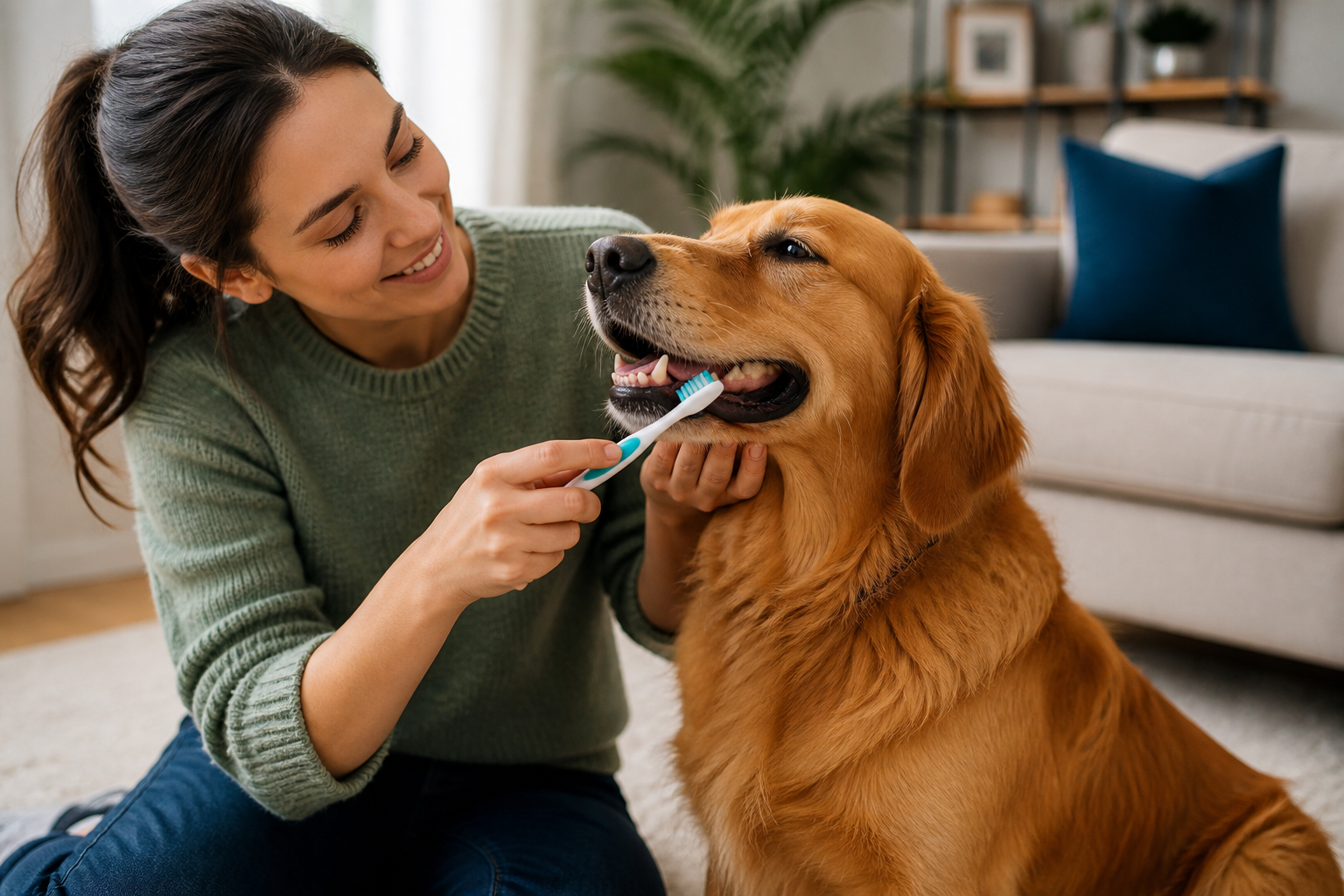
Brushing is the most effective way to clean a dog's teeth at home. It provides a mechanical action that physically breaks up plaque before it can calcify into tartar. While it might seem daunting, most dogs can learn to enjoy the process if you introduce it slowly.
You must never use human toothpaste for your dog. Our toothpaste contains foaming agents like sodium lauryl sulfate and sweeteners like Xylitol which are toxic to dogs. Canine toothpaste is designed to be swallowed and comes in flavors like poultry, beef, or peanut butter. This makes the experience feel like a treat rather than a chore.
A Step-by-Step Introduction to Brushing
Step 1: Introduce the flavor. / Put a small amount of dog-specific enzymatic toothpaste on your finger and let your dog lick it off. Do this for several days until they get excited when they see the tube.
Step 2: Get them used to the touch. / While they lick the paste, gently rub your finger along their gums and teeth. This desensitizes them to the sensation of having their mouth handled.
Step 3: Introduce the brush. / Apply the paste to a soft-bristled pet toothbrush or a finger brush. Allow them to lick the paste off the bristles so they associate the brush with a positive reward.
Step 4: Start the circular motion. / Lift the lip and brush the large canine teeth and the flat cheek teeth in the back. You do not need to worry about the inside surfaces of the teeth as much, as the tongue does a decent job of cleaning those areas.
Step 5: Keep sessions short. / Aim for 30 to 60 seconds of brushing. Finish with a high-value treat or praise to ensure they look forward to the next session.
Vet Tip: If you notice bleeding gums or if your dog winces during brushing, stop immediately and consult your veterinarian. These can be signs of advanced gingivitis or a fractured tooth that requires professional attention.
For more guidance on building a consistent routine, read our tips for introducing dental care and brushing gradually.
Choosing the Right Dental Tools
The market is full of gadgets, but you only need a few high-quality items to be successful. At BaxterBoo, we carry a variety of brushes and pastes because we know every dog has different preferences. You can explore our dog dental care collection to find tools for your routine.
Toothbrushes vs. Finger Brushes
A standard pet toothbrush has a long, angled handle. This design helps you reach the very back molars without putting your hand too far into the dog's mouth. These are best for medium to large dogs who are already comfortable with the brushing process.
Finger brushes are small silicone caps that fit over your pointer finger. They have soft nubby bristles on one side. These are excellent for puppies or small dogs. They give you more tactile control, allowing you to feel exactly where you are cleaning. However, use caution with finger brushes if your dog is prone to nipping.
Enzymatic Toothpaste
Many quality toothpastes contain enzymes. These ingredients continue to work even after you stop brushing. They help break down the protein structures that allow plaque to stick to the enamel. Brands like Zesty Paws often include supportive ingredients that promote a healthy oral microbiome.
Bottom line: The best tool is the one you will actually use every day, whether that is a traditional brush or a silicone finger sleeve.
Beyond the Brush: Dental Chews and Treats
Not every dog will tolerate a toothbrush. For those pets, dental chews and treats offer a secondary way to manage plaque. These products work through mechanical abrasion. As the dog chews, the texture of the treat scrapes against the tooth surface.
When selecting a chew, look for the Veterinary Oral Health Council (VOHC) seal. This seal indicates that the product has been scientifically tested and proven to reduce plaque or tartar by a specific percentage. Greenies and certain RedBarn products are popular choices that meet high standards for safety and efficacy. Browse our dental treats for dogs to compare options by size, flavor, and health feature.
How to Use Chews Safely
It is important to remember that dental treats add calories to your dog's daily intake. You should adjust their meal portions accordingly to prevent weight gain. Additionally, always supervise your dog while they are enjoying a chew. If a dog swallows a large piece of a hard chew, it can cause an intestinal blockage or a choking hazard.
Avoid extremely hard items like natural bones, antlers, or nylon bones. These are often harder than the tooth enamel itself. We frequently see dogs with "slab fractures," which occur when the dog bites down on a hard object and a piece of the tooth shears off. If a chew does not have some "give" or flexibility, it might be too hard for your dog’s teeth.
- Select chews appropriate for your dog's size.
- Monitor for any signs of gastrointestinal upset.
- Use treats as a supplement to, not a replacement for, brushing.
For additional ideas, see our guide to the best dental chews for dogs.
Dental Diets and the Role of Nutrition
What your dog eats every day has a significant impact on their oral health. There is a common belief that all dry kibble cleans teeth, but this is not entirely accurate. Most standard kibble is small and brittle. It shatters as soon as the dog bites it, providing very little cleaning action.
Specific dental diets are formulated differently. The kibble pieces are usually larger and have a fibrous texture. Instead of shattering, the tooth sinks into the kibble, which wipes the surface of the tooth. Some of these diets also include polyphosphates, which coat the teeth and prevent minerals in the saliva from turning plaque into hard tartar.
Prescription Diets and the Pharmacy
For dogs with significant dental history, your veterinarian might recommend a prescription dental food. We provide access to these specialized formulas through our pharmacy. Brands like Royal Canin and Farmina Vet Life offer targeted nutrition for oral health that requires a veterinary authorization. This ensures that the diet is appropriate for your dog's specific health profile.
Key Takeaway: While standard kibble offers minimal cleaning, specialized dental diets use specific textures and minerals to actively reduce tartar formation.
Water Additives and Dental Wipes
If brushing is a battle, water additives and wipes offer a low-stress alternative. Water additives are tasteless, odorless liquids that you mix into your dog’s daily water bowl. They often contain enzymes or ingredients like chlorine dioxide that help kill the bacteria responsible for bad breath and plaque.
Dental wipes are pre-moistened pads that you wrap around your finger. They are textured to help pull away film from the teeth. These are particularly useful for senior dogs who may have sensitive gums or for pets who are frightened by the sight of a toothbrush. While wipes cannot reach the deep crevices between teeth as well as bristles can, they are much better than doing nothing at all.
Transitioning to New Methods
Step 1: Start with wipes. / Use a wipe once a day to get your dog used to you touching their mouth.
Step 2: Add a water additive. / Introduce the additive to their water at a low concentration to ensure they continue to drink plenty of fluids.
Step 3: Combine methods. / Use wipes in the morning and a dental chew in the evening for a multi-layered approach.
Quick Answer: You can clean a dog's teeth using a combination of enzymatic brushing, VOHC-approved dental chews, and specialized dental diets. For dogs that resist brushing, water additives and dental wipes provide a helpful secondary level of plaque control.
Our article on recognizing warning signs of dental disease can help you know when at-home care is not enough.
Recognizing Signs of Dental Disease
Even with the best at-home care, you must stay vigilant for signs of trouble. Dogs are experts at hiding pain. A dog with a severe toothache may still eat their dinner, simply because their survival instinct is so strong. You need to look for subtle behavioral changes.
Common Warning Signs
- Halitosis: Very foul breath that smells like rot or ammonia.
- Difficulty Eating: Dropping food, chewing on one side of the mouth, or crying out while eating.
- Excessive Drooling: Especially if the saliva is tinged with blood.
- Paw at the Face: Your dog may rub their muzzle against the carpet or paw at their mouth frequently.
- Visible Buildup: Yellow or brown crust near the gum line.
- Swollen Face: A bump under the eye can often be a sign of a tooth root abscess.
If you notice any of these signs, it is time for a professional evaluation. At-home cleaning is a preventive measure, but it cannot cure an existing infection or fix a loose tooth.
Professional Cleanings and Veterinary Care
A professional veterinary cleaning is the only way to remove tartar from beneath the gum line. During this procedure, your dog is placed under general anesthesia. This allows the vet to perform a full exam, take dental X-rays, and use ultrasonic scalers to clean every surface of every tooth safely.
Many owners are nervous about anesthesia. However, modern veterinary medicine is very safe. Your vet will perform blood work beforehand to ensure your dog's organs can handle the medication. The risks of untreated dental infections often far outweigh the risks of a controlled anesthetic procedure.
Ongoing Support and Medications
After a professional cleaning, your vet might prescribe antibiotics or oral rinses to help the gums heal. Our pharmacy carries a full range of FDA-approved medications and prescription rinses. Having these medications delivered to your door makes it easier to follow through with the post-cleaning care plan your vet provides. We also offer various supplements that support oral health and general wellness as your dog recovers.
Enrichment and Toys for Oral Health
Toys are not just for fun; they are functional tools for oral hygiene. Rubber toys with ridges or "nubs" are designed to massage the gums and scrape the teeth as the dog plays. Kong toys are a classic example of durable rubber that provides enough resistance to help clean teeth without being hard enough to cause fractures.
Rope toys can also act like dental floss. As the dog's teeth sink into the cotton fibers, the rope gently wipes away plaque. However, you must inspect rope toys regularly. If your dog starts to shred and swallow the fibers, the toy should be replaced to avoid digestive issues.
Bottom line: Providing a variety of safe, textured toys encourages natural chewing behavior that supports healthy gums and cleaner teeth.
Summary of At-Home Dental Care
Maintaining your dog's teeth is a lifelong commitment that pays off in lower vet bills and a happier pet. By combining mechanical cleaning, nutritional support, and regular observation, you can stay ahead of dental disease. We are proud to be a part of your pet care team, offering the brands and expertise you need to keep those pearly whites shining.
- Brush at least three times a week, though daily is best.
- Use only dog-safe, enzymatic toothpaste.
- Supplement with VOHC-approved treats and toys.
- Schedule an annual dental checkup with your veterinarian.
At BaxterBoo, we believe that informed pet parents provide the best care. Whether you are looking for your first finger brush or need to fill a prescription for a dental diet through our pharmacy, we are here to support your journey. You can also take advantage of our Autoship programme to ensure you never run out of your dog's favorite dental chews, all while earning points through the MVP Rewards programme.
FAQ
Can I use baking soda to clean my dog's teeth?
No, you should avoid using baking soda to clean your dog's teeth. Baking soda has a very high alkaline content that can upset your dog's stomach and digestive balance if swallowed. It also lacks the appealing flavors and enzymatic cleaning power found in dedicated pet toothpastes.
How often should I professionally clean my dog's teeth?
Most veterinarians recommend a professional dental exam and cleaning once every 6 to 12 months. The exact frequency depends on your dog's breed, age, and how effectively you are able to brush their teeth at home. Smaller breeds often require more frequent professional cleanings than larger breeds.
What should I do if my dog's breath still smells after brushing?
Persistent bad breath despite regular brushing is usually a sign of an underlying issue like a deep infection, a rotted tooth, or even internal health problems. You should schedule a visit with your veterinarian for a thorough oral exam. They may need to take X-rays to see what is happening beneath the gum line.
Are dental wipes as effective as brushing?
Dental wipes are a great alternative for dogs that will not tolerate a brush, but they are not quite as effective. Wipes can clean the flat surfaces of the teeth but struggle to reach the nooks and crannies between teeth and the deep gum line. Brushing remains the gold standard for mechanical plaque removal at home.






