
 Save 15% on your 1st Autoship learn more

 Email us
 Live Chat
 FAQs
FAQs





Introduction
You might notice a distinct, unpleasant odor when your dog leans in for a lick. That "dog breath" is often the first sign that oral hygiene needs attention. When you drop your pup off for a haircut, you might see an add-on service for dental care. It is natural to wonder how do dog groomers clean dogs teeth and if that service replaces a trip to the vet. At BaxterBoo, we believe that understanding the difference between cosmetic brushing and medical cleaning is vital for your pet's long-term health. This guide explains what happens during a grooming appointment, the risks of certain dental services, and how to maintain a healthy smile at home. We want to help you navigate the world of canine dental care with confidence and clarity.
Quick Answer: Most dog groomers provide basic teeth brushing using a toothbrush and pet-safe toothpaste to freshen breath and remove surface plaque. However, they cannot perform deep cleaning, scaling, or work below the gum line, as these procedures require anesthesia and a licensed veterinarian.
The Reality of Teeth Brushing at the Groomer
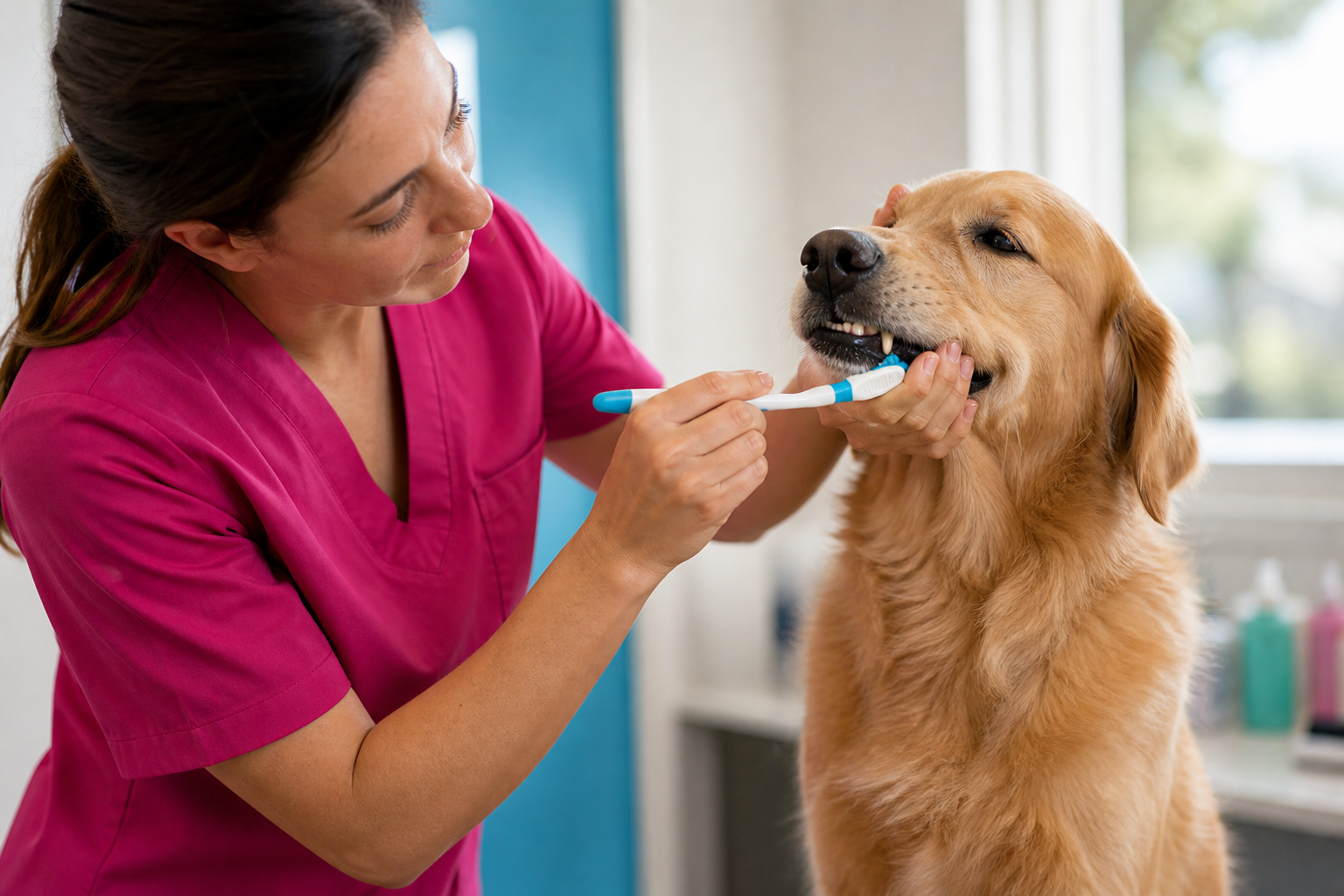
When a groomer offers to clean your dog's teeth, they are almost always referring to a basic brushing. This process is very similar to how you brush your own teeth. They use a soft-bristled brush or a rubber finger brush along with a flavored paste. Most dogs enjoy the taste of poultry or beef-flavored toothpaste, which makes the process easier for the professional.
The groomer will gently lift the dog's lips and brush the outer surfaces of the teeth. They focus on the molars and canines where plaque tends to build up the most. This service is usually a quick add-on that takes about five to ten minutes. It is a great way to freshen breath and remove soft plaque that has accumulated recently.
However, brushing alone cannot remove tartar. Tartar is plaque that has mineralized and hardened onto the enamel. Once plaque turns into tartar, a simple toothbrush will not budge it. If your dog already has significant yellow or brown buildup, a groomer’s brush will only clean the surface of that hard shell. It will not reach the actual tooth or the sensitive areas where bacteria hide.
The Dangers of Anesthesia-Free Scaling
Some grooming facilities or specialized "dental clinics" offer anesthesia-free scaling. This is a much more invasive procedure than simple brushing. During this service, a person uses metal hand tools to scrape tartar off the teeth while the dog is fully awake. While this might sound like a safer or cheaper alternative to a vet visit, it carries significant risks.
First, scraping a dog's teeth while they are awake is stressful and potentially painful. If the dog moves suddenly, the sharp metal tool can easily slip. This can lead to deep cuts on the gums or the tongue. Furthermore, scaling only removes the visible tartar. It does nothing for the bacteria living under the gum line, which is where the real damage occurs.
Second, hand scaling leaves microscopic scratches on the tooth enamel. In a veterinary setting, the teeth are polished after scaling to smooth out these grooves. Without polishing, those tiny scratches act like Velcro for new bacteria. This often causes tartar to build up even faster than it did before.
Vet Tip: If a service provider offers to scrape your dog's teeth without anesthesia, proceed with extreme caution. Genuine dental health requires cleaning beneath the gum line, which is only safe and effective when performed by a veterinarian under controlled sedation.
For additional guidance on the risks and limitations of anesthesia-free procedures, read our guide to warning signs of bad teeth in dogs.
Why the Gum Line Is the Most Important Area
When we talk about dental disease, we are really talking about what is happening where the tooth meets the gum. About 60 percent of a dog's tooth is hidden beneath the gum line. This dark, moist environment is the perfect breeding ground for harmful bacteria. When bacteria stay under the gums, they cause inflammation known as gingivitis.
If left untreated, this inflammation turns into periodontal disease. This can lead to the destruction of the bone and tissues that hold the teeth in place. A groomer cannot see or reach this area. By only cleaning the visible part of the tooth, a groomer might give you a false sense of security. The teeth might look white and shiny, but the roots could be rotting underneath.
Key Takeaway: Cosmetic cleaning at a groomer only addresses the "above-ground" portion of the tooth. Real dental health depends on managing the bacteria and infection hiding beneath the gums.
What Happens During a Veterinary Dental Cleaning
A professional veterinary dental cleaning is a medical procedure, not a grooming service. Because it requires the dog to be completely still, general anesthesia is necessary. This allows the vet to do a thorough job without causing the dog any pain or distress.
The process typically involves several steps:
- An initial exam to check for loose teeth or oral tumors.
- Digital X-rays to see the health of the roots and jawbone.
- Ultrasonic scaling to vibrate away tartar from the teeth and under the gums.
- Probing the gum pockets to check for signs of attachment loss.
- Polishing the enamel to create a smooth, bacteria-resistant surface.
If your vet finds an infected or broken tooth, they can perform an extraction or prescribe medication right then. This is why we encourage pet owners to view the vet as the primary source for dental health. Our pharmacy carries a wide range of FDA-approved medications through our partnership with Pet's Choice. If your vet prescribes antibiotics or specialized pain relief after a dental procedure, we can help you get those essential supplies delivered to your door.
Home Care: Your Role Between Appointments
While groomers can help and vets can treat, the most important part of dental care happens in your kitchen or bathroom. Daily brushing at home is the gold standard for preventing dental disease. It might feel like a chore at first, but most dogs can learn to accept it.
Start by letting your dog lick some pet-safe toothpaste off your finger. Never use human toothpaste, as it often contains xylitol, which is toxic to dogs. Once they like the taste, move to a finger brush. Focus on the outside of the teeth, as the tongue usually helps keep the inside surfaces cleaner.
In addition to brushing, you can use dental chews and water additives. Brands like Greenies or Cosequin offer products designed to support oral and joint health. These treats are formulated to mechanically scrape away plaque as the dog chews. While they are not a replacement for brushing, they are a helpful tool in your overall strategy. Explore our dog dental care collection for brushes, toothpaste, chews, and oral-care products.
For more ideas, see our pet dental care tips.
Step-by-Step: Introducing Your Dog to Brushing
Step 1: Choose the right time. / Pick a moment when your dog is calm and relaxed, such as after a long walk. Step 2: Taste test the paste. / Let your dog lick a small amount of poultry or beef-flavored pet toothpaste to create a positive association. Step 3: Test the touch. / Gently rub your finger along their gums to get them used to the sensation of someone touching their mouth. Step 4: Introduce the brush. / Use a soft-bristled dog brush at a 45-degree angle and move in small circles along the gum line. Step 5: Reward and praise. / Always end the session with a high-value treat or a favorite game to make it an experience they look forward to.
Identifying the Signs of Dental Disease
It is helpful to know when your dog's mouth has moved past the point where a groomer can help. If you notice any of the following symptoms, it is time to skip the grooming add-on and call your veterinarian.
- Extremely foul breath that does not improve after brushing.
- Red, swollen, or bleeding gums.
- Difficulty eating or dropping food while chewing.
- Pawing at the mouth or face.
- Loose or missing teeth.
- Discolored brown or yellow crust on the teeth.
- Excessive drooling, sometimes tinged with blood.
These signs often indicate pain. Dogs are very good at hiding discomfort, so they may continue to eat even with a severe toothache. A vet can provide a proper diagnosis and treatment plan to get your dog back to feeling their best.
Learn more about the warning signs of dental disease in dogs.
How BaxterBoo Supports Your Dog's Dental Journey
At BaxterBoo, we have been helping pet owners find the right supplies since 2006. We understand that keeping up with dental care can be overwhelming. That is why we curate a selection of over 500 trusted brands to ensure you have access to high-quality brushes, pastes, and treats.
If your dog has a chronic condition that requires a prescription diet or ongoing medication, our pharmacy is a primary resource. Through our partnership with Pet's Choice, we offer FDA-approved medications that help manage infections or inflammation related to dental health. You can easily manage these recurring needs through our Autoship program. This ensures you never run out of the supplies your dog needs while saving you money on every order.
We also offer the MVP Rewards program, where you can earn up to 5% back on your purchases. This makes it easier to invest in premium dental water additives or high-quality chews like Greenies. Whether you are a new puppy owner or caring for a senior dog, we are here to provide the expertise and products you need.
Bottom line: Use the groomer for breath-freshening brushing, but rely on your veterinarian for medical cleaning and diagnosis.
Nutrition and Its Impact on Oral Health
What your dog eats plays a role in how fast plaque accumulates. Many people believe that dry kibble is better for teeth because the crunching action scrapes the teeth. While some specialized dental diets are designed to do this, most standard kibble crumbles too quickly to provide much benefit.
If your dog is prone to rapid tartar buildup, your vet might recommend a prescription dental diet. These kibbles are often larger and have a specific fibrous texture that does not shatter. Instead, the tooth sinks into the kibble, allowing the fibers to scrub the surface. We carry many of these specialized brands and can fulfill prescription food orders through our pharmacy partnership.
It is also important to be careful with the types of toys and bones you provide. Hard objects like cow hooves, antlers, or rocks can actually fracture a dog's teeth. If a toy is too hard for you to indent with your thumbnail, it might be too hard for your dog's teeth. Stick to rubber toys or approved dental chews to keep the enamel safe.
For additional options between brushings, browse our dental food and treats.
The Cost of Neglect vs. Prevention
It is tempting to save money by opting for a groomer's cleaning instead of a veterinary procedure. However, the long-term costs of neglecting oral health are much higher. Untreated dental disease can lead to systemic health issues. Bacteria from the mouth can enter the bloodstream and travel to the heart, liver, and kidneys.
This can result in serious conditions like endocarditis or chronic kidney disease. A professional cleaning every year or two might seem expensive, but it is far cheaper than treating organ failure or performing multiple emergency tooth extractions. Prevention is always the kindest and most cost-effective path.
By combining regular vet visits with home brushing and the occasional grooming refresh, you are giving your dog the best chance at a long, healthy life. We are proud to be a part of that journey by providing the tools and knowledge you need to succeed.
Read our article about dental chews for dogs for more ideas to support your dog's routine.
Conclusion
Understanding how do dog groomers clean dogs teeth helps you make better choices for your pet. While a groomer can provide a quick brush and a minty scent, they cannot treat the underlying causes of dental disease. True oral health starts with daily care at home and regular professional cleanings from your veterinarian. We invite you to explore our dog dental care products at BaxterBoo. From finger brushes to prescription diets and FDA-approved medications in our pharmacy, we have everything you need to keep your dog's smile bright. Join our MVP Rewards program today to start earning on your pet's wellness essentials.
FAQ
Is it worth paying a groomer to brush my dog's teeth?
If your dog is already at the groomer and they offer a low-cost brushing service, it can be a helpful supplement to your routine. It is especially useful for owners who struggle to brush at home. However, it is a cosmetic service for breath freshening and does not replace the need for professional veterinary cleanings.
Can a groomer remove heavy tartar from my dog's teeth?
No, a groomer should not attempt to remove heavy, hardened tartar. This process, known as scaling, requires sharp metal tools and should only be done by a vet under anesthesia. Attempting to scale teeth on an awake dog can cause pain, gum injury, and permanent damage to the tooth enamel.
How often should I have my dog's teeth professionally cleaned?
Most veterinarians recommend a professional dental cleaning once a year, though some breeds may need it more frequently. Small dogs and certain breeds like Greyhounds or Pugs are more prone to dental issues and might require checkups every six months. Your vet will assess the level of tartar and gum inflammation during your regular wellness visits.
What is the difference between brushing and a dental cleaning?
Brushing is a preventative maintenance step that removes soft plaque from the surface of the teeth. A professional dental cleaning is a medical procedure that involves scaling away hard tartar, cleaning under the gum line, and taking X-rays to check for hidden disease. Brushing keeps teeth healthy, but cleaning treats established issues.






