
 Save 15% on your 1st Autoship learn more

 Email us
 Live Chat
 FAQs
FAQs





Introduction
You are sitting on the couch when your dog leans in for a friendly lick, and the smell hits you immediately. It is not just "dog breath" anymore. It is something sharper and more unpleasant. This is the moment many owners realize that while dogs have their own ways of maintaining oral hygiene, they cannot do the job alone. Unlike humans, dogs do not have the manual dexterity to pick up a toothbrush. They rely on instinctive behaviors to keep their mouths functional. At BaxterBoo, we see thousands of pet parents looking for ways to support their dog's dental health without the stress of a daily struggle. This post covers how dogs naturally manage their teeth, why those methods often fall short for domestic pets, and the best ways you can step in to prevent dental disease. Understanding the balance between natural chewing and modern care is the key to a healthy smile.
How Dogs Clean Their Teeth Naturally
In the wild, the ancestors of our modern dogs had a very specific way of keeping their teeth clean. They did not have flavored toothpaste or dental wipes. Instead, they relied on the mechanical action of their diet. Wild canines ate whole prey, which included fur, skin, and tough connective tissue. As they chewed through these materials, the fibers acted like a natural floss. This abrasive action scraped away the soft film of bacteria known as plaque before it had a chance to harden into tartar.
Domestic dogs still have these same instincts. If you give a dog a toy or a stick, their first move is usually to settle down and gnaw on it using their back molars. This is a self-cleaning behavior. The saliva in a dog’s mouth also plays a minor role. It contains enzymes that help break down food particles and some antibacterial properties. However, a dog's saliva is much more alkaline than human saliva. While this protects them from some types of cavities, it actually encourages plaque to mineralize into tartar much faster.
Domestic diets have also changed the way dogs clean their teeth. Most pets eat kibble or wet food that does not provide the same scouring action as a wild diet. While some people believe that dry kibble cleans teeth, most dogs swallow their pieces whole or only crack them once. This means there is very little contact between the food and the surface of the tooth. Without that friction, plaque begins to accumulate within hours of a meal. You can explore our dog dental care category for products designed to support an at-home routine.
Quick Answer: Dogs primarily clean their teeth through the mechanical action of chewing on abrasive objects, which scrapes away soft plaque. While their saliva has some antibacterial properties, it is not enough to prevent tartar buildup, so they require manual brushing and professional care.
The Evolution of Canine Dental Health
The shift from wild hunters to household companions has had a massive impact on canine oral health. Our dogs now live much longer than their ancestors did. In the wild, a dog might only live five or six years. In a modern home, they can live twice that long or more. This means their teeth have to last for a much longer period.
Evolution has not quite caught up with the domestic lifestyle. This is especially true for certain breeds. Smaller dogs and flat-faced breeds like Pugs or Chihuahuas often have crowded mouths. Their teeth are packed closely together, which creates tiny pockets where food and bacteria get trapped. These dogs cannot clean their own teeth through chewing because their jaw alignment does not allow for efficient scraping.
We also have to consider the ingredients in modern dog food. Many commercial diets are higher in carbohydrates than what a wild canine would eat. These sugars feed the bacteria in the mouth. This leads to a faster buildup of the sticky film that eventually turns into brown, hard tartar. Once plaque turns into tartar, no amount of natural chewing or saliva can remove it. At that point, it is bonded to the tooth and requires professional intervention.
Why Chewing Is Not a Complete Solution
Many owners rely on bones or hard toys as the primary way their dogs clean their teeth. While chewing is a vital part of oral health, it has significant limitations. Dogs mostly use their back teeth to chew. This means their premolars and molars get a good scrubbing, but the front teeth often get ignored. The incisors and canines are usually the first places where we see plaque and gum redness.
There is also a risk associated with very hard chewing. We often talk to owners whose dogs have fractured a tooth on a rock, a heavy bone, or a synthetic chew that was too hard. A fractured tooth is incredibly painful and can lead to an abscess. If the tooth is broken, the sensitive pulp is exposed to bacteria. This can lead to an infection that travels into the jawbone.
Key Takeaway: Chewing provides essential mechanical cleaning for the back teeth, but it often misses the front of the mouth and carries a risk of dental fractures if the material is too hard.
To safely use chewing as a cleaning method, follow these rules:
- Choose toys that have some "give" or flexibility.
- Avoid real bones that have been cooked, as they can splinter.
- Supervise your dog whenever they are working on a long-term chew.
- Check the toy for blood, which could indicate the material is too abrasive for their gums.
Brushing Is the Gold Standard
If you want to know the single most effective way to clean a dog's teeth, the answer is brushing. It is the only way to effectively remove plaque from the gum line before it hardens. Ideally, you should brush your dog's teeth every single day. If that is not possible, three times a week is the minimum needed to make a real difference in their health. For additional ideas, read the top pet dental care tips.
You must never use human toothpaste for this task. Human toothpaste contains fluoride and detergents like Xylitol or sodium lauryl sulfate. These are toxic to dogs when swallowed. Since dogs do not know how to spit, they will ingest everything you put in their mouth. Dog-specific toothpaste is formulated to be swallowed safely. It also comes in flavors like poultry, beef, or peanut butter to make the experience more enjoyable for the pet.
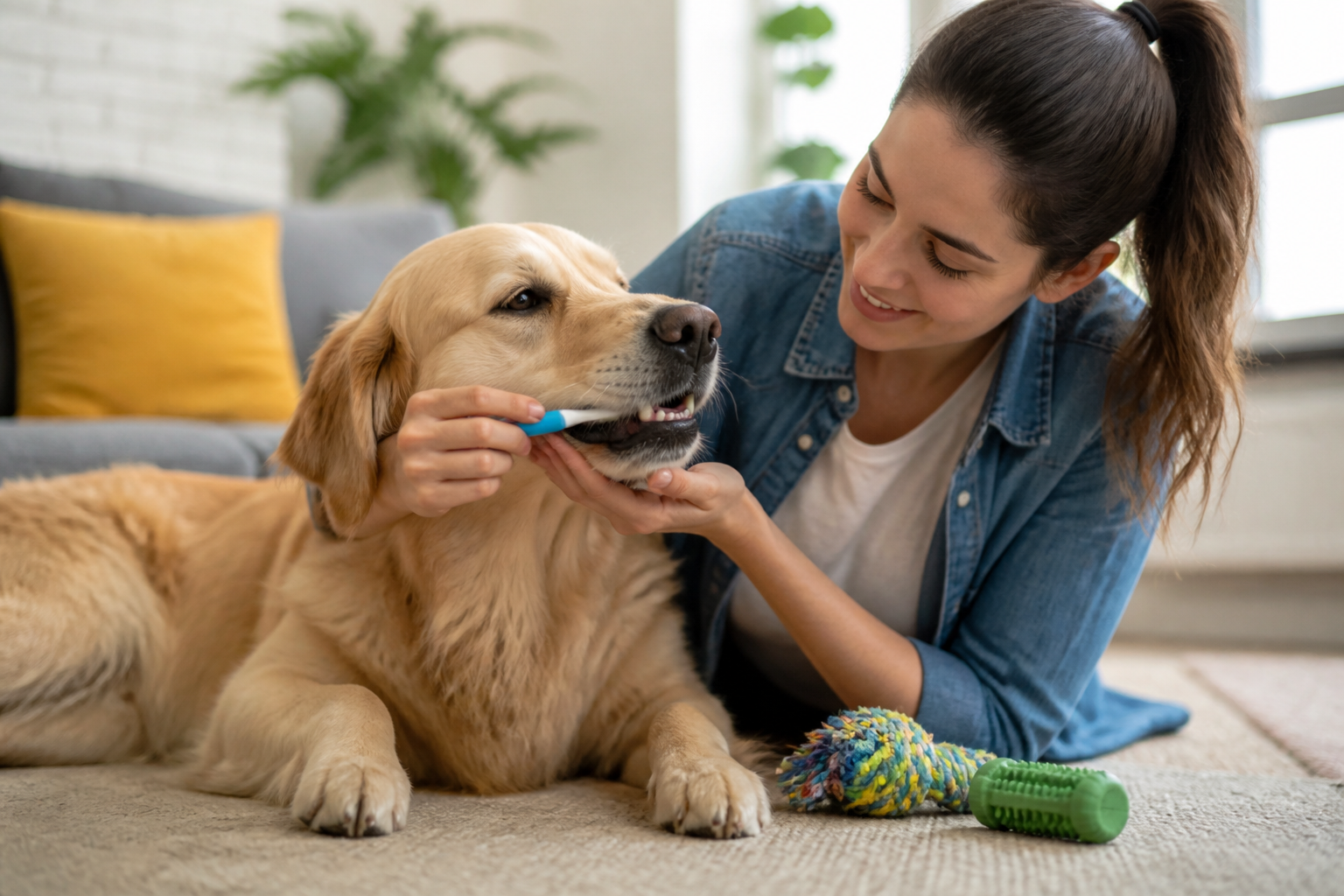
The type of brush you use also matters. Some people prefer a long-handled brush that can reach the very back of the mouth. Others find that a finger brush, which slips over your fingertip, gives them more control and is less intimidating for the dog. The goal is to reach the outer surfaces of the teeth. Most dogs do not get much tartar on the tongue-side of their teeth, so focusing on the outside is usually enough.
A Step-By-Step Guide to Brushing
Many owners give up on brushing because the dog resists. The secret is to move slowly and keep the sessions positive. Do not try to brush the whole mouth on the first day.
Step 1: The Taste Test
Put a small amount of dog-safe toothpaste on your finger and let your dog lick it off. We want them to associate the flavor with a treat. Do this for two or three days until they get excited when they see the tube.
Step 2: The Gum Massage
Once they like the paste, put a little on your finger and gently rub it against their front teeth and gums. Keep this session under thirty seconds. Follow it up with praise or a small training treat.
Step 3: Introducing the Brush
Let them sniff the brush with some paste on it. Gently lift the lip and swipe the brush across the large canine teeth in the front. If they stay calm, do one or two more teeth and then stop.
Step 4: The Full Clean
Gradually work your way toward the back of the mouth. Use small circular motions at the gum line. You do not need to pry the mouth open. Usually, you can reach the back teeth just by sliding the brush inside the cheek. Our dog dental health products include toothpaste, brushes, wipes, and other oral-care options.
Vet Tip: If your dog has red gums or bad breath, schedule a dental exam before starting a brushing routine. Brushing over an active infection can be very painful and may cause your pet to fear the process.
Dental Chews and Their Effectiveness
When brushing is not an option, dental chews are the next best thing. Products like Greenies are designed with a specific texture that allows the dog's teeth to sink into the chew. As the tooth enters the material, the fibers scrape away the plaque. This is a much more controlled way to provide the mechanical cleaning that dogs used to get from wild diets. Browse our dental chews and treats to compare options for different dogs.
Not all chews are created equal. We recommend looking for the VOHC (Veterinary Oral Health Council) seal of approval on the packaging. This seal means the product has been through rigorous testing to prove it actually reduces plaque and tartar. These chews often contain ingredients that help freshen breath and slow down the mineralization of plaque.
It is important to remember that dental chews add calories to your dog's diet. If you give one every day, you may need to slightly reduce their meal portions to prevent weight gain. Always choose the correct size for your dog. A chew that is too small can be swallowed whole, which poses a choking hazard and provides zero dental benefits. For more ideas, see these dental chews for dogs.
Water Additives and Dental Wipes
For dogs that absolutely will not tolerate a brush or are on a restricted diet that prevents treats, there are other options. Water additives are tasteless liquids you add to your pet's drinking bowl. They contain enzymes and minerals that help break down the biofilm of bacteria in the mouth. This keeps the breath fresher and makes the plaque easier to remove through other methods.
Dental wipes are another practical tool. These are pre-moistened pads that you wrap around your finger. They are less bulky than a toothbrush and can be less scary for sensitive dogs. While they cannot reach deep into the crevices between teeth, they are excellent at removing the film from the flat surfaces of the teeth. They are a great "middle ground" for maintaining hygiene between professional cleanings.
The Role of Specialty Diets
Diet plays a massive role in how dogs clean their teeth. Some dogs are prone to rapid tartar buildup due to genetics or health conditions. In these cases, a veterinarian might recommend a prescription dental diet. Brands like Royal Canin and Farmina Vet Life offer specialized kibble designed specifically for oral health.
These kibbles are typically much larger than standard dog food. They have a specific internal structure that does not shatter when the dog bites it. Instead, the tooth sinks into the kibble, providing a scrubbing effect on the way through. Some of these diets also contain polyphosphates. These are minerals that bind to the calcium in the saliva, preventing it from turning plaque into hard tartar. Our dental supplements provide additional options for discussing with your veterinarian.
Our pharmacy at BaxterBoo offers these prescription diets through our partnership with Pet's Choice. If your vet determines that your dog needs a medical-grade dental food, we can help you manage those recurring orders easily. Prescription diets are often a long-term commitment, but they can significantly reduce the frequency of professional cleanings.
Identifying Dental Disease in Your Dog
Even with the best home care, many dogs will eventually develop some form of dental disease. It is estimated that 80 percent of dogs have signs of periodontal disease by age three. Because dogs are stoic, they rarely show pain by crying or whining. Instead, you have to look for subtle physical changes.
Common signs of dental issues include:
- Persistent bad breath (halitosis)
- Red, swollen, or bleeding gums
- Yellow or brown crust near the gum line
- Dropping food while eating
- Pawing at the mouth or face
- Excessive drooling, sometimes tinged with blood
If you notice any of these signs, a trip to the veterinarian is necessary. Dental disease is not just about the teeth. The mouth is highly vascular, meaning it has a lot of blood vessels. When the gums are infected, bacteria can enter the bloodstream and travel to the heart, liver, and kidneys. This can cause long-term organ damage and shorten your dog’s lifespan. For more warning signs, read how to recognize bad teeth in dogs.
Professional Veterinary Cleanings
There is a big difference between a "teeth cleaning" you might see advertised at a grooming salon and a professional veterinary cleaning. Groomers often perform what is called "anesthesia-free dental cleaning." This involves scraping the visible tartar off the teeth while the dog is awake. While this makes the teeth look whiter, it does not address the bacteria under the gum line. It can also be stressful for the dog and leaves microscopic scratches on the enamel that actually allow plaque to stick more easily in the future.
A professional cleaning at a veterinary clinic is performed under general anesthesia. This allows the vet to do several critical things:
- Full Examination: They can check every single tooth and the back of the throat for tumors or lesions.
- Subgingival Scaling: This is the most important part. They use ultrasonic tools to remove bacteria from under the gums, where the real damage happens.
- Digital X-rays: Vets use X-rays to see the roots of the teeth. Often, a tooth looks healthy on the surface but has a painful abscess hidden underneath the bone.
- Polishing: After scaling, the teeth are polished to smooth out the enamel and slow down future plaque buildup.
Key Takeaway: Professional cleanings under anesthesia are the only way to treat disease below the gum line and identify hidden pain through dental X-rays.
Managing Dental Health as Your Dog Ages
As dogs enter their senior years, their dental needs change. Older dogs may have receding gums, which exposes the sensitive roots of the teeth. They may also develop systemic issues like kidney disease that can make their breath smell worse. During this life stage, routine checks are even more important.
If your senior dog has already lost several teeth, they may need to transition to softer foods or smaller kibble. However, do not assume that because a dog is old, they cannot have a professional cleaning. Modern anesthesia is very safe, and vets perform pre-anesthetic blood work to ensure your pet's heart and organs are healthy enough for the procedure. Keeping an old dog's mouth pain-free is one of the best ways to improve their quality of life.
How BaxterBoo Supports Your Journey
At BaxterBoo, we believe that dental care should be an integrated part of your dog's daily routine, not a chore you dread. We carry over 500 trusted brands to help you find the right combination of tools for your specific pet. Whether you need a Kong toy for durable chewing or specialized toothpaste from a brand you trust, we curate our selection to ensure quality.
For pets with chronic dental issues or those needing prescription support, our pharmacy partnership provides access to FDA-approved medications and therapeutic diets. We understand that managing a pet's health can be expensive, which is why we offer programs like MVP Rewards and our Frequent Buyer Program. These help you save money while providing the highest level of care. If you are looking for a long-term solution, our Autoship programme ensures you never run out of the dental chews or food your dog relies on.
Summary of At-Home Care
Maintaining your dog's teeth is a multi-layered process. It starts with their natural instincts and ends with your consistent intervention. By combining different methods, you create a "safety net" for their oral health.
- Daily: Brush with dog-safe toothpaste if possible.
- Daily: Provide one VOHC-approved dental chew.
- Weekly: Check the mouth for redness, swelling, or new odors.
- Annually: Schedule a veterinary exam to see if a professional cleaning is needed.
Bottom line: While dogs try to clean their own teeth by chewing, they need human help through brushing, dental treats, and regular veterinary checkups to avoid painful disease.
FAQ
Can I use a human toothbrush on my dog?
Yes, you can use a human toothbrush as long as it has soft bristles. A child-sized toothbrush is often the perfect size for most dogs and allows you to reach the back molars more easily than a large adult brush. However, you must still use dog-specific toothpaste, as human toothpaste is toxic to pets.
Why does my dog's breath smell so bad even though they chew on bones?
Bad breath is usually caused by bacteria living under the gum line or on the back of the tongue, which chewing cannot reach. If the breath is consistently foul, it often indicates an infection or periodontal disease that requires a professional cleaning by a veterinarian.
How often should I give my dog dental chews?
Most dental chews are designed to be given once per day to be effective at reducing plaque. Always check the packaging for specific feeding instructions and ensure you are choosing the correct size for your dog's weight to prevent choking and ensure the mechanical cleaning action works properly.
Are there any natural foods that help clean a dog's teeth?
Crunchy vegetables like raw carrots or apple slices can provide some very minor mechanical cleaning as the dog chews. However, these are not a substitute for brushing or veterinary-approved dental products, as they do not contain the enzymes or specific textures needed to break down tartar.






