
 Save 15% on your 1st Autoship learn more

 Email us
 Live Chat
 FAQs
FAQs





Introduction
Lean in for a slobbery kiss from your dog. If the breath that meets you smells like a fish market, you are not alone. Many pet owners notice that "dog breath" is a common part of life, but it often signals a need for better oral hygiene. At BaxterBoo, we know that keeping those pearly whites clean is about more than just a fresh smell. It is about preventing long term health issues like gum disease and tooth loss. This post covers the most effective natural ways to maintain your dog's dental health without a stressful daily battle. We will look at dietary changes, safe chewing options, and simple home remedies. A natural approach to dental care can help your dog stay healthy and comfortable for years.
Quick Answer: You can clean your dog's teeth naturally by using mechanical tools like dental toys and raw bones. Adding seaweed supplements to their food and brushing with coconut oil also helps break down plaque. These methods work best when combined with regular veterinary checkups.
Understanding Plaque and Tartar
Plaque is a sticky film that forms on teeth after eating. It contains bacteria that can harm the gums if it stays in place. If you do not remove plaque, it reacts with minerals in your dog's saliva. This process turns soft plaque into hard tartar, also known as dental calculus. Tartar is much harder to remove and usually requires a professional cleaning.
Natural cleaning methods focus on removing plaque before it hardens. You can do this through mechanical scraping or by using natural enzymes. Bacteria in the mouth do not just stay there. They can enter the bloodstream and affect the heart, liver, and kidneys. This is why a clean mouth is vital for overall wellness.
Key Takeaway: Plaque turns into hard tartar in less than 24 hours. Daily natural intervention is the best way to prevent permanent buildup and protect internal organs.
Brushing With Coconut Oil
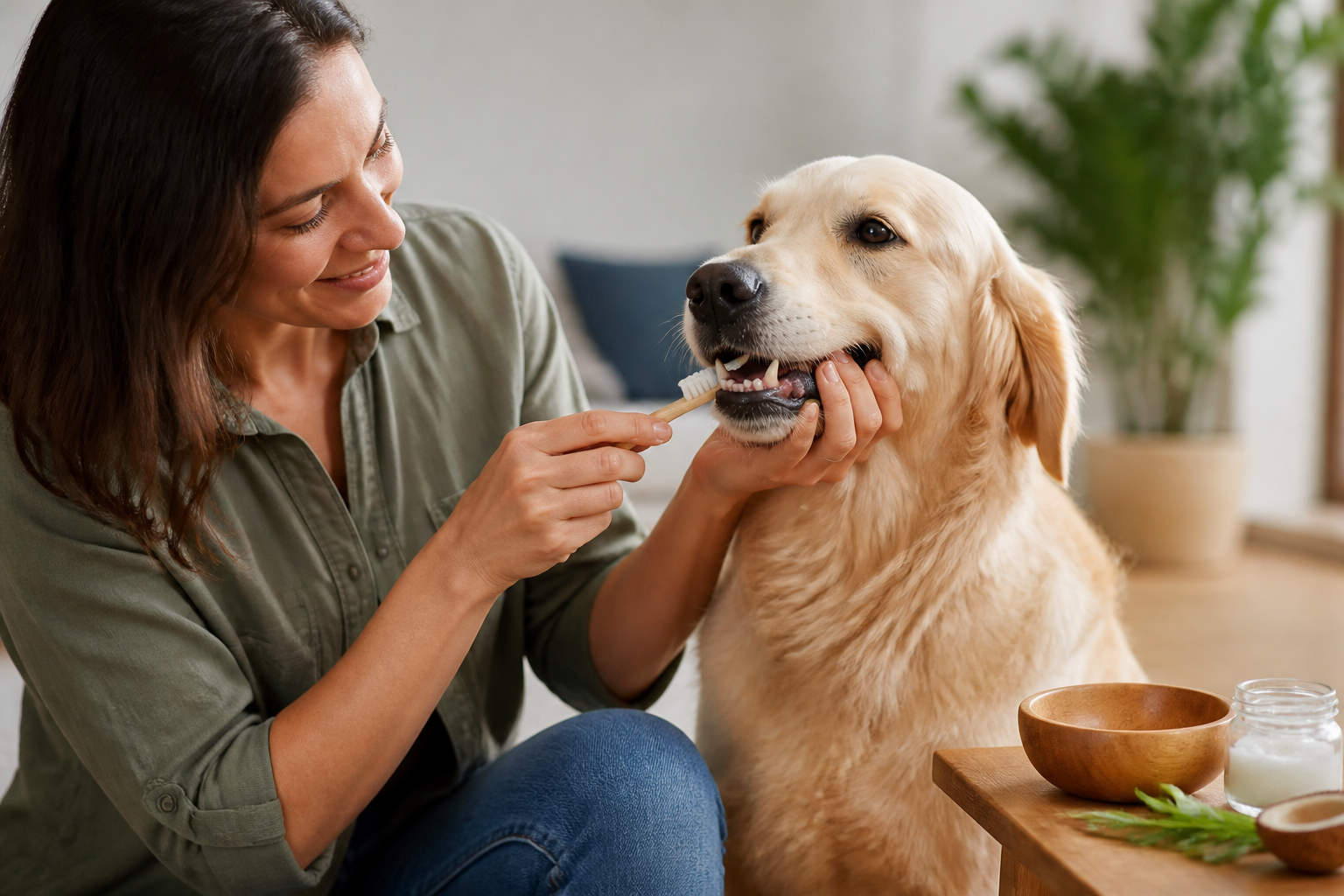
Brushing is the most effective way to clean teeth, but many dogs hate the taste of pet toothpaste. Coconut oil is a fantastic natural alternative that most dogs find delicious. It contains lauric acid, which has natural antibacterial and antifungal properties. This helps kill the bacteria that cause plaque and bad breath.
To start, use a small amount of organic, unrefined coconut oil. You can use a soft-bristled dog toothbrush or a piece of clean gauze wrapped around your finger. The goal is to gently scrub the surface of the teeth and the gum line. Because dogs love the taste, they are often much more willing to let you work in their mouth. You can also explore our dog dental care category for brushes, toothpaste, wipes, and other oral-care products.
Step 1: Introduce the oil / Let your dog lick a small amount of coconut oil off your finger to get them used to the taste.
Step 2: Apply to the teeth / Rub the oil onto the teeth and gums using your finger or a soft brush.
Step 3: Use circular motions / Focus on the back molars where plaque tends to hide.
Step 4: Reward the behavior / Give your dog praise so they associate the cleaning with a positive experience.
The Power of Raw Vegetables and Fruits
Certain crunchy vegetables act like a natural toothbrush. When a dog chews on a hard, fibrous vegetable, the mechanical action scrapes away food particles and plaque. Carrots are one of the most popular choices for this. They are high in fiber and require a lot of chewing, which stimulates saliva production.
Celery is another great option. It is very fibrous and can help clean the spaces between teeth. Apples are also helpful, as long as you remove the seeds and the core. The skin of the apple provides a mild abrasive action. Always cut these treats into safe, manageable pieces to prevent choking.
- Raw carrots (whole or large chunks)
- Slices of celery
- Apple slices (no seeds)
- Green beans (frozen or fresh)
Vet Tip: While vegetables help clean teeth, they should only make up about ten percent of your dog's daily calories. If your dog has a history of sensitive stomach issues, introduce new vegetables slowly and consult your veterinarian.
Using Seaweed and Kelp Supplements
Seaweed is a rising star in the world of natural pet health. Certain types of brown seaweed, like Ascophyllum nodosum, contain natural enzymes that work through the saliva. When your dog eats a seaweed supplement, the compounds enter the bloodstream and come out in the spit. These enzymes actually soften existing tartar and prevent new plaque from sticking.
You can find supplements such as ProDen PlaqueOff Powder Dog and Cat Teeth Care in powder form at BaxterBoo. You simply sprinkle the recommended amount onto your dog's regular meals. Most dogs do not notice the taste, making it an easy way to treat pets that refuse brushing. It may take several weeks to see a difference, but the results are often impressive.
Key Takeaway: Seaweed supplements change the chemistry of the saliva to help dissolve plaque naturally over time.
Safe Chewing Options for Dental Health
Dogs have a natural urge to chew. We can use this instinct to keep their mouths clean. Mechanical cleaning happens when a dog gnaws on something that is hard enough to scrape the teeth but soft enough not to break them. Dental toys with ridges or nubs are designed specifically for this purpose.
Raw bones are a traditional natural remedy. Unlike cooked bones, raw bones are soft and flexible. They do not splinter easily. As the dog gnaws on the bone, the bone fibers act like dental floss between the teeth. However, you must choose the right size bone for your dog. A bone that is too small can be a choking hazard. For additional ideas, see our guide to dental chews for dogs.
- Select bones that are larger than your dog's mouth.
- Supervise all chewing sessions to ensure safety.
- Avoid "weight bearing" bones from large animals like cows, as these can be too hard.
- Replace toys or bones once they become small enough to swallow.
Natural Water Additives and Powders
If your dog will not tolerate brushing or chewing, water additives are a low-stress option. Many natural water additives use fruit enzymes or plant extracts to freshen breath and kill bacteria. You simply add a capful to their water bowl every time you refill it. Synergy Labs Dental Fresh Water Additive Dog Original Formula is one option designed for easy use in a dog's drinking water.
Similarly, dental powders can be mixed into wet or dry food. These powders often contain probiotics. Probiotics help balance the bacteria in the mouth. By encouraging "good" bacteria to grow, you leave less room for the "bad" bacteria that cause decay and odor. We carry several brands of these natural additives that are easy to integrate into your daily routine.
The Importance of a Quality Diet
What your dog eats every day has a massive impact on their oral health. There is a common belief that dry kibble cleans teeth better than wet food. While the crunch helps a little, most kibble is too small to provide real cleaning. It often shatters before it can scrape the tooth.
Some specialized dental diets are formulated with larger, fibrous kibble that does not shatter. This forces the dog to chew more. Additionally, diets that are high in processed carbohydrates can actually contribute to plaque. Bacteria thrive on the sugars found in starches. Feeding a high-protein diet with minimal fillers can help keep the mouth cleaner naturally. For more dental-care ideas, read these pet dental care tips.
Bottom line: A diet low in starches and high in natural fibers reduces the fuel available for plaque-causing bacteria.
Recognizing Serious Dental Issues
Natural cleaning is great for maintenance, but it cannot fix everything. You should regularly check your dog's mouth for signs of trouble. If you see very red gums, bleeding, or broken teeth, it is time for a professional visit. Some dogs also have genetic predispositions to dental disease. Small breeds like Pugs or Chihuahuas often have crowded teeth that trap food easily.
If your dog is pawing at their mouth or dropping food, they might be in pain. Natural remedies should not replace a visit to the vet if an infection is present. Our pharmacy carries FDA-approved medications and prescription pet foods through our partnership with Pet's Choice. These can be vital for managing chronic conditions like gingivitis or advanced periodontal disease. This guide to warning signs of bad teeth can help you recognize when professional care may be needed.
Vet Tip: Schedule a professional dental exam at least once a year. Your vet can see things under the gum line that are invisible to the naked eye, even if the teeth look white.
Creating a Dental Routine
Consistency is the secret to success. A single raw carrot once a month will not do much. You need to combine different methods to see a real change. A good routine might include a seaweed supplement daily, a raw carrot every other day, and a weekly "brushing" with coconut oil.
Step 1: Start small / Pick one method, like a water additive, and use it for a week.
Step 2: Add mechanical cleaning / Introduce a dental toy or raw bone for supervised chewing.
Step 3: Monitor the breath / If the smell improves, your routine is working.
Step 4: Scale up / Add a weekly cleaning with coconut oil and a gauze pad for a deeper clean.
Cleaning the Gums with Dental Wipes
Dental wipes are a middle ground between brushing and doing nothing. You can buy natural wipes pre-soaked in solutions like baking soda or herbal extracts. Alternatively, you can make your own by soaking a soft cloth in a mixture of water and a tiny bit of salt or coconut oil. For a ready-to-use option, consider Pure and Natural Pet Dental Solutions Plaque & Tartar Removing Wipes.
Gently rub the wipe over the teeth and along the gum line. This helps lift away the soft biofilm before it hardens. Wipes are often less intimidating for dogs than a bulky toothbrush. They give you more control and allow you to feel the teeth as you clean them.
The Role of Enrichment Toys
Toys are not just for fun. Many enrichment toys are designed to hold treats or pastes. You can fill a rubber toy with coconut oil or a natural dental paste. As your dog licks and chews to get the treat out, their teeth are being cleaned. This turns a chore into a rewarding game.
Look for toys made from natural rubber with deep grooves. These grooves reach into the crevices of the teeth. At BaxterBoo, we recommend rotating toys to keep your dog interested. This ensures they spend plenty of time chewing every day, which is the best natural defense against tartar.
Managing Senior Dog Dental Needs
As dogs age, their teeth can become more brittle. Natural cleaning for seniors requires a gentler touch. A very hard bone that was fine for a two year old might cause a fracture in a ten year old. For senior dogs, focus more on supplements and soft wipes rather than heavy chewing.
Senior dogs are also more prone to systemic issues from mouth bacteria. Keeping their gums healthy is a top priority for their heart health. If your senior dog has lost teeth, they can still benefit from water additives and soft mechanical cleaning of their remaining teeth. Dental routines should be adapted over time, and these dog dental care tips offer additional guidance for different life stages.
Key Takeaway: Adjust the hardness of chews as your dog ages to prevent painful tooth fractures.
Conclusion
Keeping your dog's teeth clean does not have to be a chore that you both dread. By using natural tools like coconut oil, crunchy vegetables, and seaweed supplements, you can maintain a healthy mouth with minimal stress. These methods work together to scrape away plaque and change the oral environment for the better. Remember that home care is a partner to professional care. Regular checkups ensure that your natural efforts are working effectively.
- Use coconut oil for a tasty, antibacterial brushing experience.
- Offer raw carrots and celery for natural mechanical cleaning.
- Add seaweed supplements to meals to soften tartar.
- Supervise chewing with safe, size-appropriate toys and raw bones.
To support your dog's journey to better health, explore our dog dental care category or visit our pharmacy for specialized care. Signing up for our Autoship programme can also help you stay consistent with the supplements and treats your dog needs to keep their smile bright.
FAQ
Is human toothpaste safe for dogs?
No, you should never use human toothpaste for your dog. Many human brands contain xylitol, which is a sweetener that is highly toxic to dogs even in small amounts. Additionally, the foaming agents in human toothpaste can upset a dog's stomach since they cannot spit it out.
Can I use baking soda to clean my dog's teeth?
Baking soda can be used occasionally as a mild abrasive to help remove stains and plaque. However, it has a high salt content and a taste that many dogs dislike. It is generally better to use coconut oil or a specially formulated pet toothpaste for regular cleaning.
How often should I clean my dog's teeth naturally?
For the best results, you should provide some form of dental care every day. This could be as simple as adding a supplement to their food or giving them a crunchy carrot. Brushing with coconut oil or using dental wipes is most effective when done at least three times a week.
Are antlers safe for a dog's teeth?
Antlers are very popular because they last a long time, but they are extremely hard. Many veterinarians warn that antlers can cause "slab fractures" where a piece of the tooth breaks off. A good rule is that if you cannot make an indentation in the item with your fingernail, it may be too hard for safe chewing.






