
 Save 15% on your 1st Autoship learn more

 Email us
 Live Chat
 FAQs





Introduction
You are relaxing on the sofa with your cat when you notice a dusting of white flakes across their back. At first, you might think it is just a bit of dust or lint. When you look closer, you realize your cat has dandruff. This is a common sight for many pet owners. It is often the first sign that something in your cat's environment or health needs a little extra attention. At BaxterBoo, we know that a glossy, flake-free coat is a hallmark of a healthy cat. This guide covers why these flakes appear and how you can help your cat get back to their sleek self. We will look at grooming habits, dietary needs, and when it is time to consult your veterinarian. Understanding the root cause is the first step toward clear skin and a happy cat.
Understanding Feline Dandruff
It is important to distinguish between normal skin shedding and actual dandruff. All cats shed microscopic skin cells. This is called dander. Dander is a normal part of being a mammal. You usually cannot see it with the naked eye. Dandruff is different because the flakes are large enough to be visible. These flakes are clumps of dead skin cells that have come loose all at once.
Dandruff is not a disease by itself. It is a symptom. It tells you that the skin is either too dry, too oily, or irritated. In many cases, the flakes appear along the lower back and near the base of the tail. This is because that area is harder for some cats to reach during their daily grooming routine.
Quick Answer: To get rid of cat dandruff, you must identify the underlying cause, which is often dry air, poor grooming, or a lack of omega-3 fatty acids. Regular brushing, adding moisture to the air with a humidifier, and improving their diet are the most effective home remedies.
Cat Skin & Coat Care












Common Causes of Flaky Skin
Many factors can trigger a breakout of flakes. Some are simple environmental issues, while others are related to how the cat’s body is functioning.
Environmental Dryness
Low humidity is one of the most frequent causes of dry skin in cats. This is especially true during the winter months when heaters are running. Forced air heat strips the moisture from the environment and your cat's skin. If you notice the flakes appearing only when the weather turns cold, the air in your home is likely the culprit.
Grooming Challenges
Cats are famous for their cleanliness. They spend a large portion of their day grooming. If a cat stops grooming effectively, dead skin and natural oils build up. This leads to visible flakes and a dull coat.
Several things can stop a cat from grooming:
- Obesity: If a cat is too heavy, they cannot reach their back or hindquarters.
- Arthritis: Older cats with joint pain find it difficult to twist and reach certain spots.
- Dental Pain: If a cat's mouth hurts, they will stop using their tongue to clean themselves.
Nutritional Deficiencies
The skin is the largest organ in a cat's body. It requires a lot of nutrients to stay healthy. If a cat's diet is low in essential fatty acids, the skin barrier becomes weak. This allows moisture to escape, leading to dryness and flaking. High-quality proteins are also necessary for hair and skin growth.
Parasites and Infections
Sometimes what looks like simple dandruff is actually a sign of uninvited guests. Fleas can cause skin irritation that leads to flaking. There is also a specific mite called Cheyletiella. This is often called walking dandruff because the mites are white and move under the fur, making it look like the dandruff is alive. Ringworm, which is a fungal infection, can also cause localized crusting and flakes.
Vet Tip: If you see your cat's dandruff moving or if your cat is itching intensely, schedule a visit with your veterinarian. They can perform a skin scraping to check for mites or fungal infections that require prescription treatment from a pharmacy.
How to Get Rid of Dandruff at Home
Once you have ruled out serious medical issues with your vet, you can start a routine to clear up the flakes. Consistency is the key to seeing results.
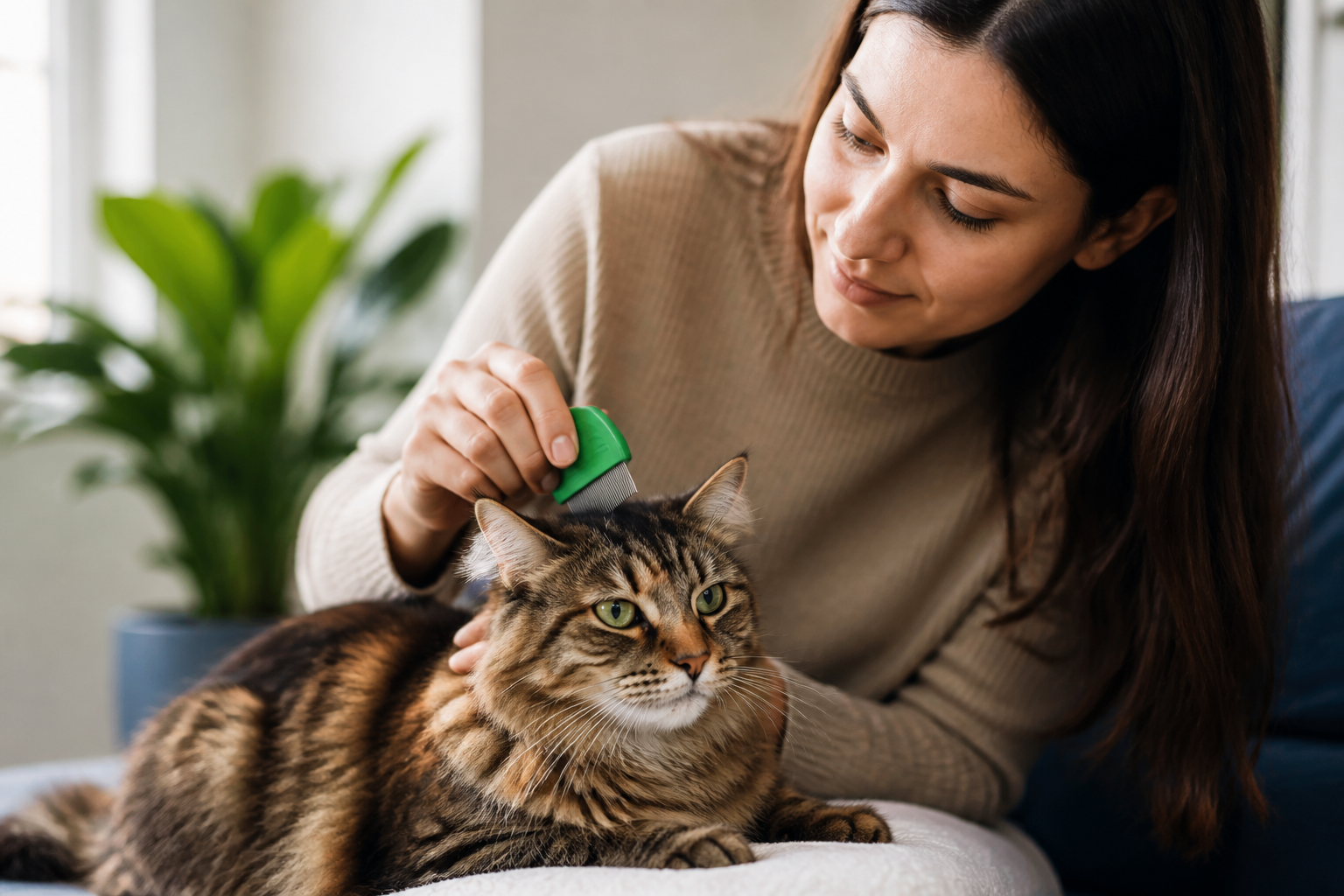
Step 1: Establish a Brushing Routine
Brushing is the most direct way to remove existing flakes. It also helps the skin in the long run. When you brush your cat, you distribute their natural oils across the entire coat. These oils act as a natural moisturizer.
- Use a soft slicker brush or a rubber grooming tool.
- Brush in the direction of hair growth.
- Focus on the lower back and base of the tail where flakes accumulate.
- Keep sessions short and positive with treats.
You can find brushes, combs, and other tools in our cat grooming collection.
Step 2: Manage Your Home Environment
If dry air is the problem, a humidifier can make a world of difference. Place a small humidifier in the room where your cat spends the most time. This adds moisture back into their skin and respiratory system. You should also ensure your cat is drinking enough water. Fresh, clean water helps keep the skin hydrated from the inside out.
Step 3: Use Conditioning Wipes
Most cats do not enjoy baths. In fact, bathing a cat too often can strip away beneficial oils and make dandruff worse. Instead of a full bath, use cat-specific grooming wipes. These wipes are designed to lift away flakes and dander without soaking the skin. Look for wipes that contain soothing ingredients like aloe or oatmeal.
Key Takeaway: Regular grooming and environmental moisture are your primary tools for managing mild dandruff. Avoid frequent baths, as they often dry out feline skin further.
Improving Skin Health Through Nutrition
What goes into your cat's bowl shows up on their skin. We carry many brands at BaxterBoo that focus on high-quality ingredients to support coat health. Brands like Stella and Chewy's or Open Farm often include the nutrients cats need for a shiny coat.
Essential Fatty Acids
Omega-3 and Omega-6 fatty acids are vital. They help maintain the lipid barrier of the skin. This barrier keeps moisture in and irritants out. You can find these in fish-based foods or as separate supplements. Salmon oil is a popular choice that many cats find delicious.
High-Quality Protein
Hair is made mostly of protein. If a cat does not get enough high-quality animal protein, their body will prioritize internal organs over their fur. This results in a brittle, flaky coat. Look for foods where a specific meat, like chicken or turkey, is the first ingredient. Brands like Ziwi Peak or Acana provide the dense protein levels that support healthy skin.
Hydration and Wet Food
Cats have a low thirst drive. In the wild, they get most of their water from their prey. Many domestic cats living on dry kibble are slightly dehydrated. This chronic dehydration often manifests as dry, flaky skin. Adding wet food to their diet is an easy way to boost their water intake. Brands like Tiki Cat or Fussie Cat offer high-moisture options that cats love.
For a moisture-rich option, consider Wellness Healthy Indulgence wet cat food.
When to See the Veterinarian
While many cases of dandruff are minor, some require professional help. If the skin beneath the flakes is red, raw, or bleeding, your cat needs a medical exam. You should also look for signs of systemic illness.
Contact your vet if you notice:
- Excessive itching or biting at the skin.
- Bald spots or thinning fur.
- A sudden change in appetite or thirst.
- Lethargy or hiding behavior.
- A foul odor coming from the skin.
Your veterinarian might discover an underlying condition like hyperthyroidism or diabetes. These conditions change how a cat’s body processes nutrients and can cause skin changes. In these cases, treating the disease will clear up the dandruff.
Through our partnership with Pet's Choice, the BaxterBoo pharmacy offers a wide range of FDA-approved medications. If your vet prescribes a medicated shampoo or a specific treatment for parasites, our cat pharmacy can help you get exactly what you need. We also carry prescription diets from brands like Royal Canin and Farmina Vet Life for cats managing chronic conditions.
Vet Tip: Never use human dandruff shampoos on your cat. These products often contain ingredients like zinc pyrithione or selenium sulfide, which can be toxic if your cat licks their fur after a bath. Always use products specifically formulated for felines.
Weight Management and Mobility
As mentioned earlier, many cats have dandruff simply because they cannot reach the area to clean it. This is very common in overweight cats. If your cat has a "thick" middle, they lose the flexibility needed to groom their lower back.
Helping your cat lose weight is a long-term solution for dandruff. This involves calorie control and increased play. We offer various toys and enrichment tools to get your cat moving. If your cat is a senior and struggles with mobility due to stiff joints, supplements like Cosequin can support joint health. When a cat feels more flexible, they are more likely to return to their normal grooming habits.
Bottom line: A cat that can easily reach all parts of their body will have significantly less dandruff than a cat with mobility or weight issues.
Preventative Care and Maintenance
Once you get the flakes under control, you want to keep them away. Prevention is much easier than treatment. A few simple habits can keep your cat’s skin healthy year-round.
Monthly Parasite Prevention
Fleas and mites are a major source of skin distress. Using a monthly preventative is the best way to keep these pests away. We carry trusted brands like Frontline and NexGard through our pharmacy. Keeping your cat on a consistent schedule prevents the cycles of itching and flaking that parasites cause.
For additional guidance, read our article on flea and tick prevention products.
Regular Health Checks
Senior cats should see the vet twice a year, while younger cats should go once a year. These checkups can catch issues like dental disease or early-stage kidney problems before they affect your cat's skin.
Consistent Diet
Avoid frequent, sudden changes in food. This can stress a cat's system and lead to digestive issues or skin flares. If you find a high-quality food that works for your cat, stick with it. You can use our Autoship programme to ensure you never run out of their favorite meals. This also saves you money on every order and keeps your cat on a steady nutritional path.
Seasonal Adjustments
Be proactive when the seasons change. If you know your cat gets dry skin every winter, start using the humidifier and adding a bit of salmon oil to their food before the flakes appear. This proactive approach keeps the skin barrier strong during the toughest months.
Choosing the Right Grooming Tools
The type of brush you use matters. A tool that is too harsh can scratch the skin and cause more flaking. A tool that is too soft will not remove the dead hair and skin effectively.
- Slicker Brushes: These have fine wire bristles. They are excellent for removing loose undercoat and dander. Use a light touch to avoid irritating the skin.
- Rubber Curry Brushes: These are great for short-haired cats. The rubber "teeth" massage the skin and stimulate oil production. Brands like Kong make popular versions of these.
- Comb Attachments: If your cat has long hair, a wide-toothed comb is necessary to prevent mats. Mats trap dander and moisture against the skin, which can lead to infections.
Every cat has different preferences. Some love the feeling of being brushed, while others are more hesitant. Introduce grooming slowly and use plenty of praise.
Key Takeaway: Matching the grooming tool to your cat's coat type ensures that you are effectively removing dandruff without causing discomfort or skin damage.
Summary of Solutions
Managing cat dandruff is a multi-step process. You must look at the environment, the bowl, and the cat's physical ability to groom. While it can be a nuisance, most cases resolve with simple changes at home.
- Increase humidity in dry months.
- Brush your cat daily to distribute natural oils.
- Add omega fatty acids to their diet for skin support.
- Monitor weight and joint health to ensure they can groom themselves.
- Use a pharmacy-approved flea preventative.
- Consult a vet for any red or irritated skin.
Our goal at BaxterBoo is to provide the products and knowledge you need to keep your pets thriving. Whether you are looking for a new grooming tool or need to fill a prescription through our pharmacy, we are here to help. You can also join the MVP Rewards programme to earn points on every purchase you make for your cat's skin health.
Bottom line: Feline dandruff is usually a manageable sign of dry skin or poor grooming that responds well to improved nutrition and consistent coat care.
FAQ
Is cat dandruff the same as flea eggs?
No, cat dandruff and flea eggs are very different. Dandruff looks like flat, irregular white flakes that often stick to the hair. Flea eggs are tiny, smooth, and oval, resembling small grains of salt. If you also see "flea dirt," which looks like black pepper specks, your cat likely has fleas rather than just dry skin.
Can I use human lotion on my cat's dry skin?
You should never use human lotions or moisturizers on your cat. Many of these products contain perfumes, dyes, and chemicals that are toxic to cats if ingested during grooming. If your cat needs topical moisture, use a product specifically formulated for felines or consult your vet for a safe recommendation.
Does my cat need a bath to get rid of dandruff?
Most cats do not need a bath to clear up dandruff. In fact, soap and water can strip away the natural oils that protect a cat's skin, making the flaking worse. Brushing and using waterless grooming wipes are usually much more effective and less stressful for your cat than a traditional bath.
Can a change in diet cause dandruff?
Yes, a change in diet can lead to skin changes. If the new food is lower in essential fatty acids or high-quality protein, you might see flakes within a few weeks. Always transition to a new food slowly over seven to ten days to allow your cat's system to adjust and maintain their skin health.






- Site & Contents BaxterBoo.com. BaxterBoo is located in the United States.
- Privacy & Security
- Terms of Use
- Accessibility Statement
