
 Save 15% on your 1st Autoship learn more

 Email us
 Live Chat
 FAQs
FAQs





Introduction
If you have ever tried to wrestle your dog into a headlock just to brush their molars, you are not alone. Most pet owners find dental hygiene to be one of the most stressful parts of dog care. You might find yourself wondering how wolves and wild dogs manage to keep their teeth from rotting away without a toothbrush in sight. It seems like a miracle that wild canines maintain their pearly whites while our domestic friends struggle with plaque and bad breath by age three.
At BaxterBoo, we spend a lot of time looking at the biological needs of pets to help owners make better choices. In this post, we will explore the diet and habits of wild canines to see what we can learn from them. We will look at how wild dogs use bones, raw protein, and natural behaviors to keep their mouths healthy. You will learn how to apply these ancestral lessons to your own dog's routine to support their oral health.
The Power of the Ancestral Diet
The biggest difference between a wild dog and a domestic pet is what they eat. Wild canines are opportunistic carnivores that consume a diet almost entirely free of processed carbohydrates. In the wild, there is no corn, soy, or refined sugar. These ingredients are the primary fuel for the bacteria that cause tooth decay and gum disease.
When a wolf or wild dog eats, they are consuming raw meat, organs, and bones. This diet does not leave behind a sticky residue like many modern kibbles or soft treats. Most commercial dog foods are high in starches. These starches break down into simple sugars the moment they hit the saliva. This creates a film known as biofilm. This film eventually hardens into tartar. Wild dogs avoid this chemical process because their food simply does not contain the necessary sugars to feed those bacteria.
Key Takeaway: Wild dogs maintain better oral health primarily because their diet lacks the processed sugars and starches found in many modern pet foods.
Mechanical Action: Nature's Toothbrush
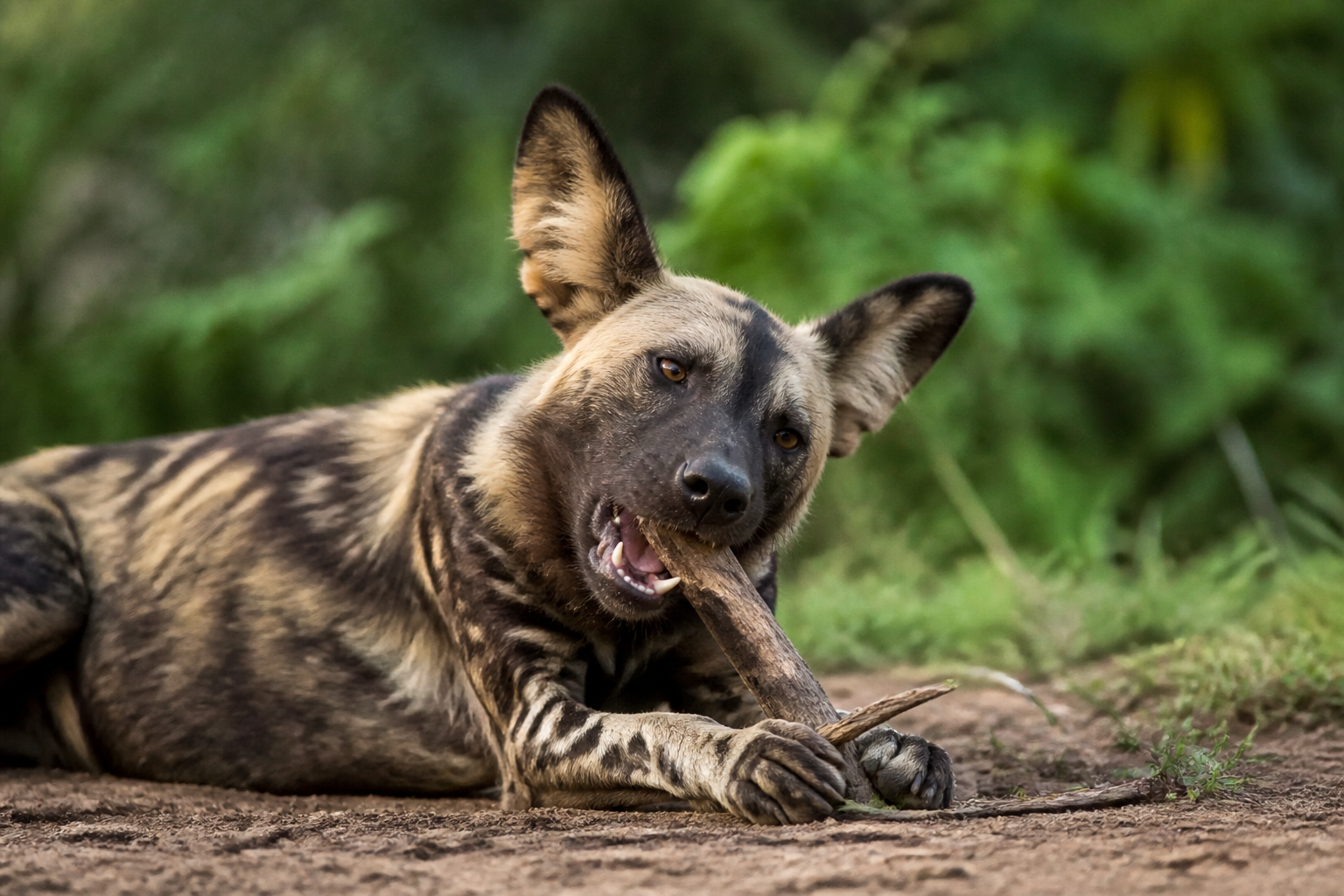
Wild dogs do not have the luxury of a dental professional. Instead, they rely on mechanical action. When a wild canine kills its prey, it has to work for every bite. They use their incisors to strip meat from bone. They use their premolars and molars to crush through hard material.
This process is highly abrasive. As the dog chews on bones and tough connective tissue, the material physically scrapes against the surface of the teeth. This acts exactly like a toothbrush. It rubs away plaque before it has the chance to mineralize into tartar. They also chew on the hide and fur of their prey. This fibrous material acts like natural dental floss, sliding between the teeth to remove trapped bits of meat.
The Role of Raw Bones
Bones are perhaps the most important tool in the wild dog's dental kit. Raw bones are hard enough to scrape the teeth but flexible enough not to shatter easily under normal pressure. As a dog gnaws on a large marrow bone, the bone fibers and the act of gnawing provide a deep clean.
- Incisors: Used for delicate scraping and nibbling on bones.
- Canines: Used for gripping and tearing, which cleans the sides of the teeth.
- Carnassials: The large back teeth used for crushing, which receive the most scrubbing from bone contact.
Vet Tip: Not all bones are safe for domestic dogs. Never give your dog cooked bones as they can splinter and cause internal injury. Always supervise your dog when they are chewing on raw bones or hard treats.
For additional guidance about choosing chews, explore our article on rawhide-free dog chews.
Biological Differences: Saliva and PH
The chemistry of a dog's mouth is naturally designed to fight bacteria. Canines have saliva that is more alkaline than human saliva. This high pH level helps to neutralize the acids produced by bacteria. Acid is what destroys tooth enamel. By keeping the mouth in an alkaline state, wild dogs protect their enamel from erosion.
Wild dog saliva also contains specific enzymes that help break down food particles and inhibit bacterial growth. While domestic dogs share this biology, the constant presence of sugar and starch in modern diets often overwhelms these natural defenses. When the mouth is constantly acidic due to carbohydrate consumption, the saliva cannot keep up.
Why Wild Dogs Avoid Cavities
It is rare to find a wild dog with a cavity. Cavities are a result of sugar-consuming bacteria producing acid that eats holes in the teeth. Since wild dogs do not eat sugar, they do not get traditional cavities. Most of their dental issues come from physical trauma.
A wild dog might break a tooth while fighting or trying to crack an exceptionally hard bone. In the wild, a broken tooth can lead to an infection. However, the widespread decay and "rot" we see in domestic pets is almost non-existent in wild populations. Their dental problems are usually mechanical rather than chemical.
The Reality of Lifespan in the Wild
We should also be honest about the lifespan of wild animals. A wolf in the wild often only lives to be six or eight years old. Domestic dogs often live twice that long. Many wild dogs simply do not live long enough to experience the late-stage periodontal disease that plagues senior domestic dogs.
Domestic pets need more help because we expect their teeth to last for fifteen years or more. While nature does a great job for a five-year-old wolf, it might not be enough for a fourteen-year-old senior dog. This is why we must combine ancestral wisdom with modern veterinary care.
Bottom line: Wild dogs have fewer dental issues due to their diet, but domestic dogs live longer and require more proactive care to keep their teeth healthy into old age.
For more ideas about building a routine, read these pet dental care tips.
Translating Wild Habits to Domestic Care
You do not have to hunt for your dog's dinner to give them the benefits of a wild diet. You can incorporate "wild" elements into their daily routine to help keep their teeth clean. This starts with choosing the right types of chews and food.
At BaxterBoo, we carry a wide variety of products that mimic the mechanical action found in the wild. Brands like Stella and Chewy's or Vital Essentials offer freeze-dried and raw options that provide natural enzymes. You can also look for high-quality raw bones from brands like RedBarn to give your dog that natural scraping action.
Explore our dog food selection when comparing food options for your dog's routine.
Choosing the Right Dental Chews
Not all dental chews are created equal. Some are just "edible toothbrushes" that are actually full of starch and sugar. Look for chews that are firm and require a lot of work to break down.
- Rawhide Alternatives: Look for collagen sticks or beef trachea. These provide a fibrous texture that mimics connective tissue.
- Rubber Toys: Products like the Kong Classic can be stuffed with healthy fats like plain yogurt or peanut butter. The act of licking and chewing helps stimulate saliva.
- Natural Antlers: These are very hard and provide excellent scraping action for aggressive chewers.
- Dental Specific Diets: Some brands like Royal Canin or Farmina Vet Life offer kibble specifically designed with a fiber matrix that does not crumble immediately. This forces the dog to chew more.
Browse our dog dental care category for dental chews, water additives, and other oral-care supplies.
Avoiding the "Sticky" Trap
One of the biggest mistakes pet owners make is giving soft, sticky treats as rewards. Many training treats are held together by molasses or syrup. These stick to the teeth and stay there for hours. If you want to keep your dog's teeth clean, switch to crunchy or dried treats.
Dried lung, heart, or liver treats are excellent alternatives. They provide the protein your dog craves without the sticky residue. You can also use crunchy vegetables. Many dogs love carrots or slices of apple. These are high in fiber and low in sugar, providing a natural cleaning effect as the dog crunches through them.
See more options in our dental and breath care collection.
For more ideas about alternatives to traditional chews, read about rawhide-free dog chew options.
When Nature Isn't Enough: Professional Care
Even with the best diet and the best chews, domestic dogs still face challenges that wild dogs do not. Genetics play a huge role in dental health. Small breeds like Chihuahuas or Yorkies often have crowded mouths. This creates tiny gaps where food can hide, making them much more prone to gum disease than larger dogs.
If your dog already has significant tartar buildup, a chew bone will not fix it. Tartar is as hard as concrete. At that point, your dog needs a professional cleaning from a veterinarian. They have the tools to scale the teeth and clean under the gum line where the real damage happens.
Vet Tip: If your dog has very bad breath, it is usually a sign of infection under the gum line. Do not try to solve this with treats alone. Consult your veterinarian for a dental exam to rule out painful abscesses or tooth loss.
Learn more about recognizing oral-health concerns in this guide to warning signs of bad teeth in dogs.
Supporting Oral Health Through Our Pharmacy
Sometimes, a dog's dental health requires medical intervention. Chronic mouth infections or severe gingivitis can affect a dog's heart and kidneys. When a vet prescribes a specific treatment plan, we are here to help you manage it.
We offer a specialized pharmacy for prescription needs. This allows you to fill prescriptions for FDA-approved dental medications, including antibiotics for mouth infections or medicated oral rinses. Our pharmacy also carries prescription dental diets that are formulated to manage plaque at a clinical level. Getting these medications delivered to your door makes it much easier to stay on top of your dog's health needs.
Visit our dog pharmacy when your veterinarian prescribes medication for your dog.
Routine Dental Maintenance Checklist
If you want to stay ahead of the vet bills, follow this simple routine:
- Daily: Use a water additive or a quick oral spray to reduce bacteria.
- Weekly: Provide at least two long-lasting chews, such as a marrow bone or a collagen stick.
- Monthly: Check your dog's gums. They should be pink, not red or bleeding.
- Yearly: Schedule a professional dental check-up with your vet.
For repeat-purchase supplies, consider our Autoship programme.
Conclusion
Wild dogs keep their teeth clean through a combination of a sugar-free diet and the mechanical action of chewing on whole prey. While our pets live in a different environment, we can still use these natural principles to protect their smiles. By focusing on high-quality proteins, providing appropriate raw bones, and avoiding hidden sugars in treats, you can significantly reduce plaque buildup.
Remember that domestic dogs live longer lives than their wild cousins. This means they need a little extra help from us to ensure their teeth stay functional for a lifetime. Whether you are looking for natural chews, dental toys, or prescription support, we have the tools you need. Browse our dog dental care supplies or visit our pet pharmacy for prescription needs.
FAQ
Do wild dogs ever get tooth decay?
Wild dogs rarely get traditional cavities because their diet is almost entirely free of sugar and starch. Most of their dental problems are the result of physical injuries, such as a tooth breaking while hunting or chewing on a very hard bone. Because they do not consume processed carbohydrates, the bacteria that cause rot do not have a food source.
Are raw bones safe for my dog's teeth?
Raw bones are generally safe and are nature's way of cleaning canine teeth. However, you should avoid cooked bones because they become brittle and can splinter, causing damage to the mouth or digestive tract. Always choose a bone that is appropriate for your dog's size and chewing style to prevent them from breaking a tooth on a bone that is too hard.
Can I just give my dog "dental treats" instead of brushing?
Dental treats can be a helpful part of a hygiene routine, but they are rarely enough on their own. Many treats are consumed too quickly to provide real mechanical cleaning. For the best results, combine high-quality chews with regular veterinary check-ups and manual brushing if your dog will allow it.
Why do small dogs have more dental problems than wild dogs?
Small dogs often have the same number of teeth as large wild dogs but in a much smaller mouth. This crowding creates many small spaces where food and bacteria can become trapped. Additionally, many small breeds have different jaw structures that do not provide the same self-cleaning mechanical action as the long snouts of wolves or wild dogs.






