
 Save 15% on your 1st Autoship learn more

 Email us
 Live Chat
 FAQs
FAQs





Introduction
You lean in for a morning cuddle with your dog, but instead of a sweet greeting, you are met with a wave of surprisingly foul breath. Most owners assume "dog breath" is just a natural part of owning a pet. In reality, persistent bad breath is often the first sign of dental disease. At BaxterBoo, we have spent years helping pet parents navigate the essentials of daily care, and we know that oral health is frequently the most overlooked part of a dog's routine. This guide covers everything from choosing the right enzymatic toothpaste to handling a dog that refuses a toothbrush. We will walk you through practical techniques to manage plaque and tartar from your own living room. Proper home care can lead to fewer expensive veterinary cleanings and a much happier, healthier life for your dog.
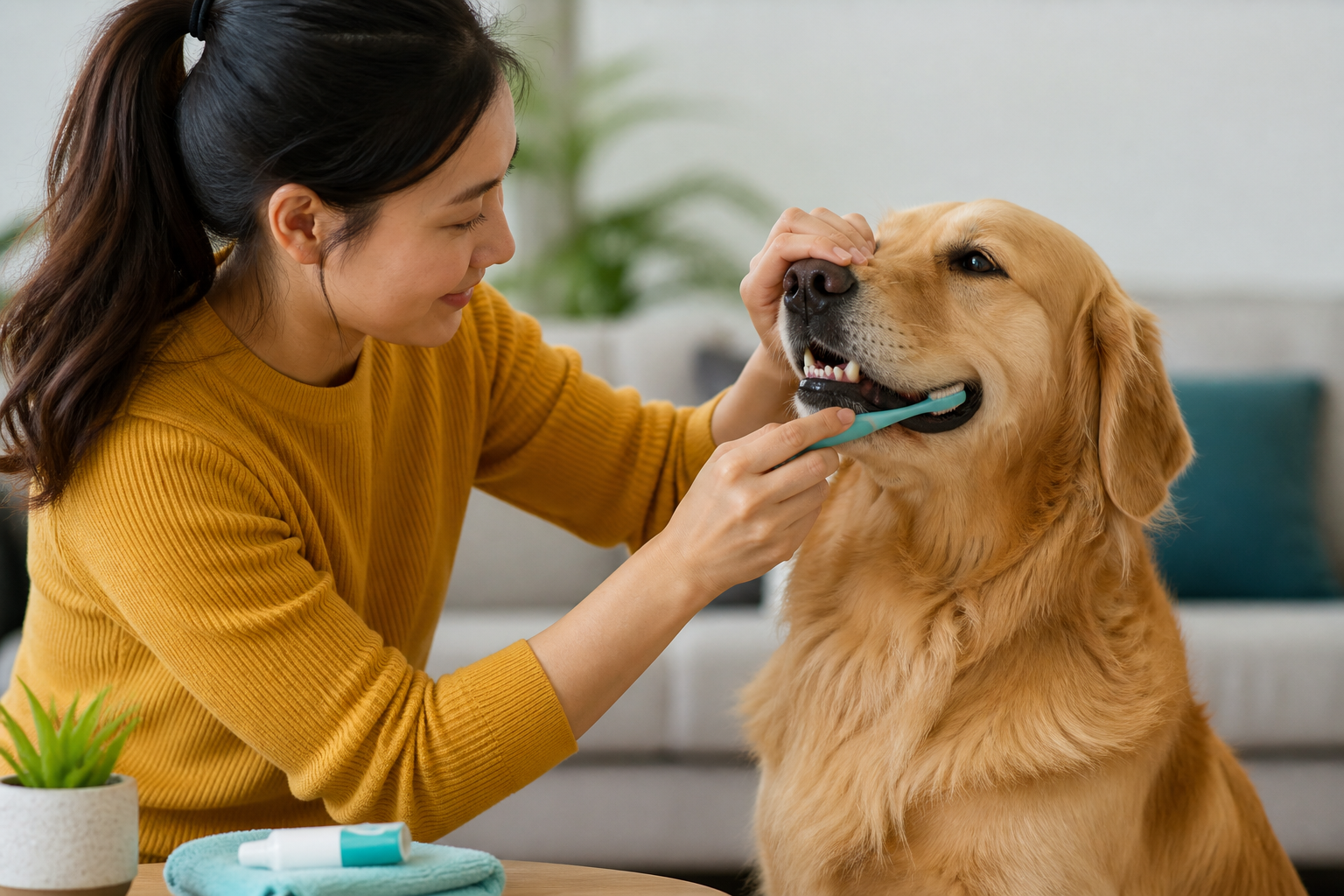
Quick Answer: Cleaning a dog's teeth at home requires using a dog-specific toothbrush and enzymatic toothpaste. Use gentle, circular motions along the gumline for about two minutes daily. If brushing is not possible, dental wipes, water additives, and VOHC-approved dental chews serve as helpful alternatives.
Why Dental Care Is Vital for Your Dog
Many owners do not realize that dental health affects the entire body. When bacteria grow in a dog's mouth, they do not just stay on the teeth. These bacteria can enter the bloodstream through inflamed gums. Once in the blood, they can travel to the heart, kidneys, and liver, causing serious long-term damage. This is why a clean mouth is about much more than just fresh breath.
Plaque is a sticky film that forms on teeth within hours after eating. If it is not brushed away, it mixes with minerals in the saliva and hardens into tartar, also known as calculus. Tartar is very hard and cannot be removed with a toothbrush. Once tartar forms, it provides a rough surface where even more plaque can grow. This cycle leads to gingivitis and eventually periodontal disease, which causes bone loss and tooth decay.
Preventing this cycle is much easier than treating it. A professional cleaning at the vet often requires anesthesia and can be quite expensive. By focusing on at-home care, you are protecting your dog from unnecessary pain. You are also keeping your long-term pet care costs down.
Key Takeaway: Oral bacteria can travel from the mouth to vital organs like the heart and kidneys. Consistent at-home cleaning is a primary pillar of overall canine wellness.
Essential Tools for At-Home Cleaning
You cannot simply grab a spare toothbrush and some Crest from your bathroom. Human dental products are not designed for dogs. Most human toothpastes contain xylitol, which is a sweetener that is highly toxic to dogs. They also contain fluoride, which can be harmful if swallowed. Since dogs cannot rinse and spit, you must use products specifically formulated for them.
Selecting the Right Toothbrush
The best brush for your dog depends on their size and their comfort level with having your hands in their mouth. For more options, browse our dog dental care collection.
- Finger Brushes: These are small, rubbery caps that fit over your index finger. They are excellent for puppies or dogs that are nervous about long-handled objects. They give you a better "feel" for where you are in the mouth.
- Dual-Headed Brushes: These have a long handle and two sets of bristles. They are designed to clean the inside and outside of the teeth at the same time. These are efficient for larger dogs with big teeth.
- Small-Headed Brushes: If you have a toy breed like a Yorkie or a Chihuahua, a standard dog brush will be too big. A child-sized soft toothbrush or a specific small-breed pet brush is necessary to reach the back molars.
Enzymatic Toothpaste
Dog toothpaste comes in flavors like poultry, beef, or peanut butter to make the experience more enjoyable. Virbac C.E.T. Enzymatic Pet Toothpaste for Dogs and Cats - Poultry is one dog-safe option formulated specifically for pets. The "enzymatic" part is what does the heavy lifting. These enzymes help break down food particles and plaque even if you cannot reach every single nook and cranny.
| Tool Type | Best For | Benefit |
|---|---|---|
| Finger Brush | Small dogs and beginners | High control and less intimidating |
| Long-Handled Brush | Large dogs | Reaches back molars easily |
| Enzymatic Paste | All dogs | Breaks down plaque chemically |
| Dental Wipes | Dogs that hate brushes | Quick and easy surface cleaning |
| Water Additives | Picky dogs | Effortless daily bacteria control |
A Step-By-Step Guide to Brushing
Brushing a dog's teeth is a skill that takes practice for both you and your pet. Do not expect to do a full, two-minute cleaning on the first day. The goal is to build a positive association so the dog does not run away when they see the toothbrush. For additional guidance, read our tips for building a pet dental care routine.
Step 1: Get them used to your touch. / Spend a few days just lifting your dog's lips and touching their teeth with your finger. Give them a small treat afterward so they associate mouth handling with rewards.
Step 2: Introduce the toothpaste. / Put a small amount of flavored toothpaste on your finger and let the dog lick it off. Most dogs love the taste, which makes the brush much more enticing.
Step 3: Try the brush. / Apply toothpaste to the brush. Lift the side of the lip and gently rub the large canine teeth in the front. Stop before the dog gets annoyed and offer praise.
Step 4: Use circular motions. / Once they are comfortable, move to the back molars. Use small, circular motions and focus on the gumline. This is where the most plaque accumulates.
Step 5: Focus on the outside. / Most plaque builds up on the cheek side of the teeth. Do not worry too much about the inside surfaces near the tongue. A dog's tongue actually does a decent job of keeping those surfaces cleaner.
Vet Tip: If your dog's gums bleed slightly during the first few sessions, do not panic. This is often a sign of mild gingivitis. However, if the bleeding is heavy or the gums look bright red and swollen, stop brushing and consult your veterinarian.
Training a Reluctant Dog
Not every dog will sit still for a dental session. If you have a rescue dog or an older pet who has never had their teeth cleaned, they might be fearful. Patience is the most important tool in your kit. Never force the mouth open or pin the dog down, as this creates a negative association that is hard to break.
Try "smearing" the toothpaste on a textured dental toy first. This allows the dog to get used to the flavor and the abrasive feeling in a low-stress way. You can also try brushing at a time when the dog is naturally tired, such as after a long walk.
If your dog is truly resistant to a brush, do not give up on oral hygiene entirely. Switch to dental wipes. These are textured pads that you wrap around your finger. They do not clean as deeply as bristles, but they are far better than doing nothing. They allow you to wipe away the daily film of plaque before it can harden.
Alternatives to Brushing
While brushing is the gold standard, we understand that life is busy. Sometimes you need supplemental tools to help keep the mouth clean between brushings. Our collection at BaxterBoo includes various options that work alongside a brushing routine.
Dental Chews and Treats
Not all treats are created equal. Look for the VOHC (Veterinary Oral Health Council) seal on the packaging. This seal means the product has been tested and proven to reduce plaque or tartar. These chews work through mechanical action. As the dog bites down, the texture of the chew scrapes against the tooth surface. You can compare options in our dental chews and treats collection. For more ideas, explore our guide to dental chews for dogs.
Water Additives and Oral Rinses
These are liquid solutions you add to your dog's water bowl. Synergy Labs Dental Fresh Water Additive Dog Original Formula is one option designed for a dog's daily dental routine. This is an excellent option for multi-dog households where brushing every single pet every day is a challenge.
Specific Dental Diets
Some dogs are prone to rapid tartar buildup due to their genetics or the shape of their mouth. In these cases, a veterinarian might recommend a prescription dental diet. These kibbles are usually larger and have a specific fiber matrix that does not crumble immediately. This forces the dog to chew, providing a scrubbing effect. Many of these prescription diets can be found through our pharmacy partnership with Pet's Choice.
Key Takeaway: Chews and additives are excellent supplements, but they should not be the only method of dental care you use.
Recognizing the Signs of Dental Disease
Even with the best home care, problems can still arise. It is important to perform a "mini-exam" of your dog's mouth at least once a month. You are looking for changes in the color of the teeth, the health of the gums, and the smell of the breath. For a closer look at warning signs, read our guide to recognizing bad teeth in dogs.
- Halitosis: Extremely foul breath that goes beyond just "stinky."
- Discoloration: Yellow or brown crust near the gumline (tartar).
- Gingivitis: A thin red line along the gums or general swelling.
- Behavioral Changes: Pawing at the mouth, dropping food while eating, or refusing hard kibble.
- Loose Teeth: Any movement in the teeth is a sign of advanced periodontal disease.
If you notice these signs, it is time for a professional evaluation. At-home brushing cannot fix a tooth that is already infected or loose. In fact, brushing an infected tooth can be very painful for your dog.
Vet Tip: Persistent bad breath can sometimes indicate internal issues like kidney disease or diabetes. If your dog's breath smells like ammonia or has a sweet, fruity scent, schedule a vet visit immediately for a full checkup.
The Role of Professional Veterinary Cleanings
Home care is like brushing and flossing for humans. Professional cleanings are like going to the dentist. Even if you brush every day, your dog will likely still need a professional cleaning at some point in their life.
Veterinary cleanings are done under general anesthesia for several reasons. It allows the vet to clean deep under the gumline where the most damage occurs. It also allows for dental X-rays, which are the only way to see if the roots of the teeth are healthy. Finally, it ensures the dog is not stressed or in pain during the procedure.
If your vet discovers advanced disease, they may prescribe medications. Our pet pharmacy offers FDA-approved medications and prescription pet foods to manage chronic oral health issues. Through our partnership with Pet's Choice, you can have these essential health supplies delivered right to your door. This is especially helpful for senior pets who may need ongoing support for their teeth and gums.
Bottom line: At-home care slows down the progression of disease, but it does not replace the need for periodic professional exams and cleanings.
Maintaining a Consistent Routine
The biggest challenge in dog dental care is consistency. It is better to brush for thirty seconds every day than to do a ten-minute deep clean once a month. Plaque hardens into tartar quickly, so frequency is your best weapon.
Keep your dog's toothbrush and paste near their leash or their food bin. This serves as a visual reminder. If you use our Autoship program for your dog's food or dental treats, you will never run out of the supplies you need. This helps you stay on track with their wellness routine without having to think about it.
Remember to reward your dog after every session. Whether it is a favorite toy or a small, healthy treat, the goal is to make dental time something they look forward to. Over time, many dogs will actually come running when they see the toothbrush because they know a reward is coming.
Key Takeaway: Link dental care to an existing habit, like a walk or dinner time, to make it a permanent part of your daily life.
Conclusion
Cleaning your dog's teeth at home is one of the most impactful things you can do for their longevity. It prevents pain, protects vital organs, and keeps their breath fresh for those close-up snuggles. Start slowly with the right enzymatic toothpaste and a soft brush. If your dog resists, pivot to wipes or water additives while you work on training. Always keep an eye out for signs of gum disease and consult your veterinarian for regular professional exams. By combining diligent home care with professional support, you are giving your dog the best chance at a healthy, comfortable life.
- Use dog-safe enzymatic toothpaste, never human paste.
- Aim for daily brushing, focusing on the gumline.
- Supplement with VOHC-approved chews and water additives.
- Watch for red gums, foul odors, or difficulty eating.
Ready to start your dog's dental routine? Explore our full range of dental care supplies or visit our pet pharmacy for professional health needs.
FAQ
Can I use baking soda to clean my dog's teeth?
While baking soda is not toxic in small amounts, it has a very high salt content that can upset a dog's stomach if swallowed. It also has a bitter taste that most dogs dislike, which can make them fight the brushing process. It is much better to use a flavored, enzymatic toothpaste that is specifically formulated for pets. These pastes are safer for their digestive system and more effective at breaking down plaque.
How often should I actually brush my dog's teeth?
Ideally, you should brush your dog's teeth every single day. Plaque can begin to mineralize into hard tartar in as little as 24 to 48 hours. If daily brushing is not realistic for your schedule, aim for at least three times a week. Brushing less than once a week provides very little benefit, as the plaque will have already hardened into tartar that bristles cannot remove.
My dog hates the toothbrush, what should I do?
If your dog is terrified of the brush, stop using it immediately to avoid a permanent fear response. Switch to using a soft cloth or dental wipes wrapped around your finger. You can also try "dental sponges" which are softer and less intimidating. Focus on rewarding the dog for just letting you touch their mouth, and slowly reintroduce the brush over several weeks once they are more comfortable.
Are dental bones and chews enough on their own?
Dental chews are a great supplement, but they are rarely enough to maintain perfect oral health on their own. Most dogs chew primarily with their back teeth, meaning the front incisors and canines do not get the same scrubbing action. Additionally, some dogs gulp treats too quickly for the mechanical scraping to work. Think of chews as a "helper" to be used alongside regular brushing or wiping.






