
 Save 15% on your 1st Autoship learn more

 Email us
 Live Chat
 FAQs
FAQs





Introduction
You are relaxing on the couch when your dog leans in for a friendly nuzzle, but the smell of their breath stops you in your tracks. While "dog breath" is a common joke among pet owners, persistent foul odors are often the first sign of dental disease. Many of us at BaxterBoo have faced that same moment of realization. We know that maintaining your pet's oral health can feel like a daunting chore, especially if your dog is not a fan of having their paws or face handled. However, keeping those pearly whites clean is one of the most effective ways to extend your dog's life and prevent painful infections. This post covers the essential tools you need, a step-by-step brushing method, and smart alternatives for dogs who simply will not tolerate a toothbrush. Learning the best ways to care for your dog’s mouth at home will save you money on vet bills and keep your pup wagging for years to come.
Why Home Dental Care is Non-Negotiable
It is a startling statistic: by the age of three, nearly 80 percent of dogs show signs of some form of oral disease. This happens because bacteria and food particles quickly form a sticky film called plaque. If that plaque is not brushed away, it mixes with minerals in your dog's saliva and hardens into tartar within 48 to 72 hours. Once tartar forms, it creates a rough surface that attracts even more bacteria. This cycle eventually leads to periodontal disease, which causes gum recession, tooth loss, and significant pain.
The danger of poor oral hygiene goes beyond the mouth. Bacteria from infected gums can enter the bloodstream. From there, it can travel to major organs, including the heart, liver, and kidneys. This systemic inflammation can cause long-term damage and shorten your dog's lifespan. By cleaning your dog's teeth at home, you are not just freshening their breath. You are protecting their vital organs.
Consistency is the most important factor in any dental routine. While a professional cleaning at the vet is necessary for deep scaling, your daily efforts at home prevent the rapid buildup that causes disease in the first place. Think of it as the difference between daily brushing for yourself and a twice-yearly visit to the dentist. You cannot have one without the other and expect healthy results. For additional guidance on warning signs, read our post about recognizing bad teeth in dogs.
Vet Tip: If you notice your dog has excessively red gums, loose teeth, or is dropping food while eating, schedule a veterinary exam immediately. These are signs of advanced dental disease that requires professional intervention before you start a home brushing routine.
Gathering Your Dental Supplies
Before you begin, you need the right tools for the job. Never use human toothpaste on your dog. Most human toothpastes contain fluoride and detergents like sodium lauryl sulfate, which can upset a dog's stomach. Many also contain xylitol, a sweetener that is highly toxic to dogs even in small amounts. Instead, choose a dog-specific toothpaste. These come in flavors dogs actually enjoy, such as poultry, beef, or peanut butter, making the experience feel more like a treat than a medical procedure.
You also have several options for the brush itself. A standard dog toothbrush often has a long, angled handle to help you reach the back molars. Some even have dual heads to clean the top and bottom of the teeth simultaneously. If your dog is small or nervous, a finger brush might be a better fit. These are small rubber caps with soft bristles that slip over your pointer finger. They allow for more precision and can feel less intimidating to a sensitive pet.
If you are caught without a specific dog brush, a soft-bristled child's toothbrush is a safe and effective substitute. The key is to ensure the bristles are soft enough to avoid irritating the gums while still being firm enough to sweep away plaque. You can also explore our dog dental care selection for toothpaste, brushes, wipes, and other oral-care supplies.
- Dog-safe enzymatic toothpaste
- Angled dog toothbrush or soft child’s brush
- Finger brush for small mouths or beginners
- High-value rewards or treats
- A quiet, well-lit space for the session
Key Takeaway: Always use enzymatic toothpaste designed specifically for pets. These formulas continue working to break down plaque even after you stop brushing, and they are safe for your dog to swallow.
How Do You Clean Your Dog's Teeth at Home? A Step-by-Step Guide
The goal is to make dental care a positive part of your dog's day. If you rush the process or force your dog into a headlock, they will learn to hide the moment they see the toothbrush. Take it slow and be patient.
Step 1: Get Your Dog Comfortable with Touch
Start when your dog is calm and relaxed, perhaps after a long walk or a meal. Sit on the floor with them so you are not looming over them. Gently lift their lip and rub your finger along their gums and teeth. Do this for just a few seconds and then give them a treat. Repeat this over several days until your dog is completely comfortable with you touching their mouth.
Step 2: Introduce the Toothpaste
Once they accept the touch, let them lick a small amount of the dog toothpaste off your finger. Since these pastes are flavored like treats, most dogs will be happy to taste it. This creates a positive association with the supplies. You want them to think the toothpaste is a delicious reward rather than a cleaning agent.
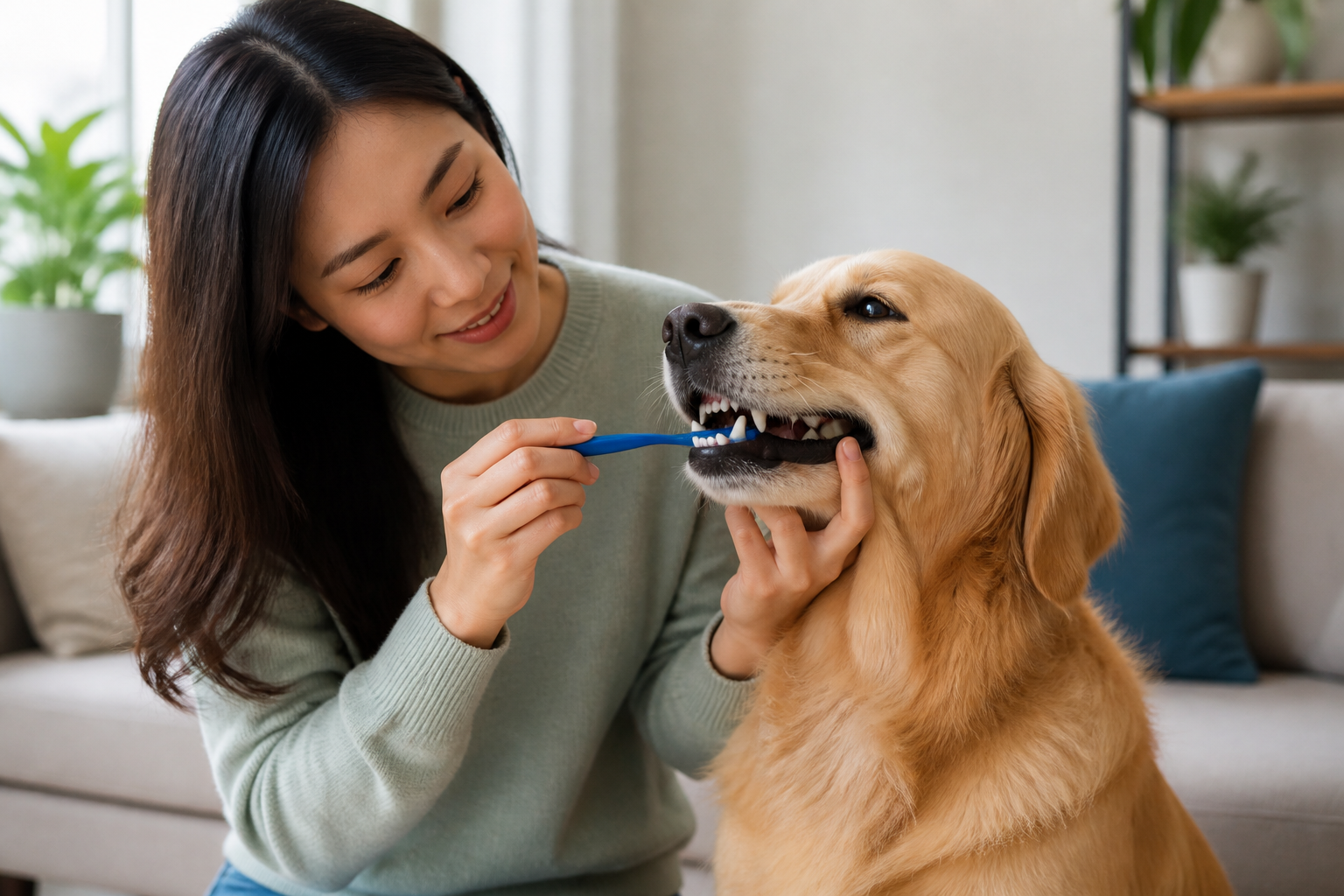
Step 3: Introduce the Brushing Motion
Apply a pea-sized amount of toothpaste to the brush or finger brush. Lift the upper lip and place the brush at a 45-degree angle to the gum line. Use small, circular motions. Focus primarily on the outside surfaces of the teeth, as this is where the most plaque and tartar accumulate. The tongue usually does a decent job of keeping the inner surfaces cleaner. Start with the front canines and slowly work your way back to the molars. A kit such as the OxyFresh Pet Dental Kit combines toothpaste, a water additive, and finger brushes for a simple starting point.
Step 4: Keep it Short and Sweet
For the first few sessions, you might only get to brush two or three teeth. That is perfectly fine. Stop while your dog is still behaving well. Over time, you can increase the duration until you are spending about 30 to 60 seconds on each side of the mouth. Always finish with a favorite toy or a dental-friendly treat to end on a high note.
Bottom line: Patience and positive reinforcement turn a potential struggle into a bonding moment that protects your dog's health.
Alternatives to Traditional Brushing
We understand that some dogs are simply too head-strong or fearful for a toothbrush. If your dog snaps or becomes extremely distressed, do not force the issue. Safety for both you and your pet is the priority. Fortunately, there are several effective ways to reduce plaque without a traditional brush. Our top pet dental care tips include additional ideas for introducing oral-care tools gradually.
Dental chews and treats are a popular choice. These are designed with specific textures that scrape away plaque as your dog chews. Look for products that have the Veterinary Oral Health Council (VOHC) seal of approval. This seal ensures the product has been tested and proven to reduce plaque or tartar. While these are not as effective as manual brushing, they are a fantastic supplement to a dental routine. Browse our dental chews and treats to find options for different chewing preferences.
Water additives are another easy option. These are liquid solutions you add to your dog's daily water bowl. They contain enzymes and ingredients that help kill bacteria in the mouth and freshen breath. They are especially useful for senior dogs or those with sensitive gums who may find brushing painful.
Dental wipes can bridge the gap between a brush and a chew. These are textured cloths that you wrap around your finger to wipe away surface plaque. They are less intrusive than a brush but still allow you to mechanically clean the teeth. They are often infused with mint or other breath-freshening scents.
Finally, consider a dental-specific diet. Some kibbles are formulated to be larger and more fibrous. Instead of crumbling instantly when bitten, the kibble stays intact longer, scrubbing the tooth surface as the dog chews. At BaxterBoo, we see many pet owners find success by combining these methods, such as using a water additive daily and a dental chew every other day. For more treat-focused options, visit our dental food and treats category.
Key Takeaway: While brushing is the gold standard, combining dental chews, water additives, and dental wipes can still significantly slow the progress of periodontal disease.
Professional Care and the BaxterBoo Pharmacy
Even with the best home care, most dogs will eventually need a professional cleaning from a veterinarian. Think of your home routine as "maintenance" and the vet's work as a "deep clean." During a professional dental procedure, your vet can scale away tartar from below the gum line where a toothbrush cannot reach. They can also take X-rays to check for abscesses or bone loss that are not visible to the naked eye.
For dogs with existing dental issues or those prone to rapid tartar buildup, your vet might recommend a prescription dental diet or a specialized dental gel. Our pharmacy carries a wide range of FDA-approved medications and prescription pet foods through our partnership with Pet's Choice. Whether your vet prescribes an antibiotic for a gum infection or a specific therapeutic diet like Farmina Vet Life for overall health, we can help you manage those ongoing needs conveniently.
Having a relationship with a trusted vet and a reliable pharmacy ensures that you have all the tools necessary to fight dental disease. If your dog's breath remains foul despite your home efforts, it is likely that bacteria is trapped deep in the gums. A professional cleaning can reset the clock, making your home brushing much more effective afterward. Our article on what to know about bad teeth in dogs offers another reminder of when veterinary attention may be appropriate.
Vet Tip: Schedule a dental check-up at least once a year. Small changes in the mouth can be precursors to larger health issues, and early detection is always more affordable and less painful for your pet.
Maintaining the Routine Long-Term
Consistency is the hardest part of dog dental care. It is easy to start with good intentions only to have the toothbrush end up at the back of a drawer. To make it stick, tie the brushing to an existing habit. Perhaps you brush your dog's teeth right after you brush your own in the morning, or right before their evening walk.
If you have a busy schedule, consider our Autoship program. You can set your favorite dental chews, toothpaste, and water additives to arrive on a recurring schedule. This ensures you never run out of supplies, which is often the biggest hurdle to maintaining a routine. Plus, you save on every order and get a free MVP Gold membership.
Monitor your dog's mouth regularly. Once a week, do a "breath check" and look for any new yellowing or redness. If you catch changes early, you can often reverse them with increased brushing before they turn into permanent tartar. Remember that every bit of effort counts. Even if you only manage to brush three times a week, you are doing significantly more for your dog's health than if you did nothing at all.
- Set a daily reminder on your phone.
- Keep the toothbrush and paste in a visible, convenient spot.
- Track your progress on a calendar to stay motivated.
- Reward yourself and your dog for a successful week of care.
Bottom line: A few minutes of dental care each day can add years of healthy, happy life to your dog's journey.
Conclusion
Cleaning your dog's teeth at home does not have to be a battle. By starting slowly, using the right supplies, and remaining consistent, you can protect your dog from the pain and complications of dental disease. Whether you use a traditional brush or a combination of chews and additives, your effort makes a real difference in their quality of life. We are here to support you with the best products and expert advice to keep those tails wagging. For all your dental needs, from enzymatic pastes to VOHC-approved treats, explore our dog dental care category and start your pup on the path to a healthier smile today.
FAQ
How often should I clean my dog's teeth at home?
Ideally, you should brush your dog's teeth every single day to prevent plaque from hardening into tartar. If a daily routine is not possible, aim for at least three times per week. Consistency is more important than the length of each session, as plaque begins to mineralize within 48 hours.
Can I use my own toothpaste on my dog if I run out?
No, you should never use human toothpaste on a dog. Human formulas often contain xylitol, which is life-threateningly toxic to dogs, or fluoride and detergents that cause severe stomach upset. Always use a toothpaste specifically formulated for pets that is safe for them to swallow.
What should I do if my dog's gums bleed during brushing?
Minor bleeding can be common if you are just starting a routine or if your dog has mild gingivitis. However, if the bleeding is heavy or persistent, it is a sign of advanced gum disease. You should stop brushing and consult your veterinarian for a professional evaluation and cleaning.
Are dental chews as effective as brushing?
While dental chews are a helpful tool, they are not a complete replacement for the mechanical action of brushing. Brushing allows you to target the gum line and reach specific teeth that a dog may not use as much while chewing. For the best results, use dental chews as a supplement to a regular brushing routine.






