
 Save 15% on your 1st Autoship learn more

 Email us
 Live Chat
 FAQs
FAQs





Introduction
You lean in for a happy morning nuzzle only to be met with a scent that makes you pull away. That familiar "dog breath" is often the first sign that your pet needs a dental routine. Many owners assume bad breath is just a part of being a dog. However, it is actually an early indicator of plaque and bacteria. At BaxterBoo, we know that keeping those pearly whites clean is about more than a fresh smile. It is a critical part of your dog's overall longevity and comfort. This post covers everything from daily brushing techniques to the best dental treats and professional care options. You will learn how to build a routine that prevents painful infections and keeps your dog healthy for years to come.
The Reality of Canine Dental Health
Most dogs show some sign of dental disease by the time they reach three years of age. This starts with a thin film of plaque that forms on the teeth after eating. If this plaque is not removed, it mixes with minerals in the saliva to become hard tartar. You cannot simply brush tartar away once it has formed. It requires professional tools to remove.
The real danger is not just on the surface of the tooth. Bacteria from dental disease can enter the bloodstream through the gums. These bacteria often travel to the heart, liver, and kidneys. This can cause long term damage to these vital organs. Maintaining oral hygiene is one of the best ways to protect your dog's internal health.
Some breeds face higher risks than others. Small dogs and toy breeds often have crowded mouths. This provides more nooks and crannies for food and bacteria to hide. Brachycephalic breeds, like Pugs or Bulldogs, may have misaligned jaws that prevent natural cleaning. If you own one of these breeds, your daily routine is even more important.
Key Takeaway: Dental disease is a systemic health risk that can impact the heart and kidneys, making preventative care a necessity rather than an option.
The Gold Standard: Brushing Your Dog's Teeth
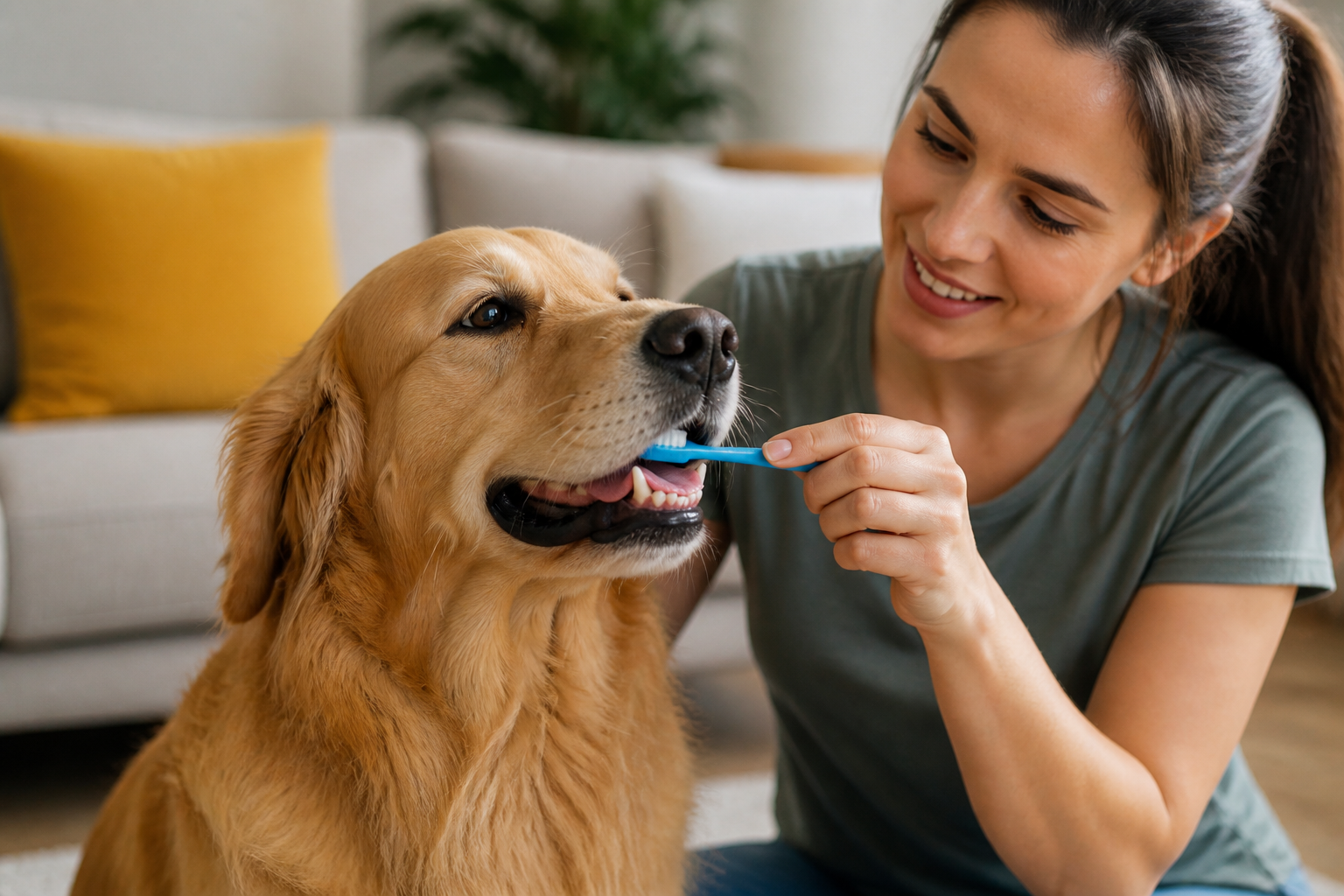
Brushing is the most effective way to remove plaque before it hardens. You do not need to brush for ten minutes like a human does. A quick session focusing on the outside of the teeth is usually enough. The goal is to break up the bacterial film before it mineralizes.
Choosing the Right Tools
Never use human toothpaste for your dog. Human pastes often contain xylitol, which is highly toxic to dogs. They also contain foaming agents that are not meant to be swallowed. Dog toothpaste comes in flavors like poultry, beef, or peanut butter. These tastes make the experience much more pleasant for your pet.
You have a few options for the brush itself. A standard dog toothbrush has a long handle and angled bristles to reach the back molars. A finger brush is a small silicone cap that fits over your fingertip. This is often better for puppies or dogs who are nervous about long objects in their mouths. You can explore our dog dental care selection for brushing supplies and other oral-care products.
Training Your Dog to Accept Brushing
Step 1: Introduce the paste. Let your dog lick a small amount of flavored paste off your finger for a few days.
Step 2: Touch the teeth. Gently rub your finger along their gums and teeth while they enjoy the taste.
Step 3: Introduce the brush. Put paste on the brush and let them lick it without moving the brush around.
Step 4: Start brushing. Use gentle circular motions on the upper outer teeth.
Step 5: Reward. Always follow a brushing session with praise or a healthy treat.
For additional guidance on building a consistent routine, read our tips for regular pet dental care.
Vet Tip: If your dog becomes aggressive or extremely stressed during brushing, stop immediately. Consult your veterinarian for a professional assessment, as they may have underlying mouth pain that makes touching the area uncomfortable.
Dental Chews and Treats
Not every dog will sit still for a toothbrush. This is where dental chews become a valuable tool. These treats are designed with a specific texture that scrapes plaque away as the dog chews. The mechanical action is similar to a squeegee on a window. Browse our dental dog treats to find options for different sizes and chewing preferences.
Looking for the VOHC Seal
When shopping for treats, look for the Veterinary Oral Health Council (VOHC) seal. This seal means the product has been through rigorous testing. It confirms that the treat actually reduces plaque or tartar by a significant percentage. We carry several brands at BaxterBoo that carry this trusted seal, such as Greenies and certain Purina Pro Plan dental chews.
Choosing the Right Size
Size matters when it comes to dental treats. If a treat is too small, your dog might swallow it whole. This eliminates the cleaning benefit and creates a choking hazard. If it is too large, they may struggle to chew it properly. Always match the treat size to your dog's weight.
Bottom line: Dental treats are an excellent supplement to brushing but work best when they require significant chewing time to scrape the teeth.
Water Additives and Oral Powders
If your dog is very resistant to having their mouth touched, water additives are a great alternative. These are liquid solutions that you pour into their daily water bowl. They are usually tasteless and odorless. They contain enzymes that help break down the biofilm on the teeth. Our dental supplements and oral-care products include powders and other options for supporting a home routine.
Dental powders work in a similar way. You sprinkle them directly onto your dog's food. Some powders, like those containing specific probiotics or seaweed extracts, work systemically. They change the chemistry of the saliva to make it harder for plaque to stick to the enamel. This is a very easy way to support oral health without any struggle.
Quick Answer: How do you keep dogs teeth clean without brushing? You can use VOHC-approved dental chews, water additives, and enzymatic powders that break down plaque through chewing or chemical action.
The Role of Specialized Dental Diets
What your dog eats every day has a huge impact on their teeth. While many people think all kibble cleans teeth, most standard kibble crumbles too quickly to do much. Specific dental diets are formulated differently. The kibble pieces are often larger and have a fibrous structure. Instead of shattering, the tooth sinks into the kibble, which wipes the surface clean.
Our pharmacy offers FDA-approved prescription pet foods through our partnership with Pet's Choice. These therapeutic diets, like Royal Canin Dental or Hill's Prescription Diet t/d, are specifically engineered for dogs with a history of dental issues. These foods often contain minerals that bind to calcium in the saliva. This prevents the calcium from turning plaque into tartar.
Because these diets are formulated for specific health needs, they require a prescription. We can help you manage these orders through our Pet's Choice pharmacy services. This ensures your dog gets the professional grade nutrition they need to manage their oral health.
Using Toys for Natural Cleaning
Playtime can also be a time for cleaning. Certain rubber toys are designed with ridges, nubs, and grooves. As your dog gnaws on the toy, these textures massage the gums and rub against the teeth. This is especially helpful for the back molars, which are the hardest to reach with a brush. You can combine play and oral care with our dental dog toys.
Safe Materials
Look for toys made from durable natural rubber. Brands like Kong offer toys that are tough enough to withstand heavy chewing. Avoid toys that are too hard, like real bones or heavy nylon. If a toy is so hard that it would hurt if you hit your own knee with it, it is likely too hard for your dog's teeth. These hard objects can cause painful slab fractures.
Interactive Dental Play
- Rope toys: The fibers can act like floss as they slide between the teeth.
- Rubber dental rings: These often have deep grooves where you can hide a bit of dog toothpaste.
- Textured balls: These help clean the front teeth during a game of fetch.
Professional Veterinary Cleanings
Home care is vital, but it does not replace the need for professional cleanings. Just as humans visit a dentist for deep cleaning, dogs need a professional to reach below the gum line. This is where the most damaging bacteria hide. A veterinarian can see things that an owner cannot, such as pocketing around the roots or hidden abscesses.
Professional cleanings require general anesthesia. This is necessary because it allows the vet to use ultrasonic scalers safely. It also allows them to perform a full exam and take X-rays. X-rays are the only way to see what is happening beneath the surface of the bone.
For a closer look at warning signs that may warrant veterinary attention, read how to recognize hidden dental problems in dogs.
Vet Tip: Schedule a dental checkup at least once a year. Your vet can determine if a professional cleaning is needed before minor inflammation turns into a serious infection.
Recognizing Signs of Dental Trouble
You should check your dog's mouth once a week for any changes. Early detection can save your dog from pain and save you from expensive surgery costs later. Look for these common warning signs:
- Extremely foul breath: While "dog breath" is normal, a rotting or metallic smell is not.
- Red or bleeding gums: Healthy gums should be a light pink color.
- Discolored teeth: Yellow or brown crust near the gum line is a sign of tartar.
- Difficulty eating: If your dog drops food or only chews on one side, they may have a painful tooth.
- Loose or missing teeth: This is a sign of advanced periodontal disease.
- Swelling: Any lumps or bumps on the gums or under the eye should be checked immediately.
Bottom line: Behavioral changes like pawing at the face or avoiding hard toys often signal hidden dental pain that requires a veterinary visit.
Practical Steps for a Dental Routine
Building a routine does not have to be overwhelming. You can start small and add more layers as your dog gets used to the process. Consistency is more important than perfection.
- Daily: Add a water additive to their bowl and provide one dental chew.
- Weekly: Aim to brush their teeth at least three times.
- Monthly: Inspect the gums and teeth for any new tartar or redness.
- Yearly: Visit the vet for a professional oral exam and possible cleaning.
We recommend keeping your supplies in a visible spot. If the toothbrush and paste are near the leash, you might remember to do a quick brush after your evening walk. If the dental treats are in the same cupboard as the dinner bowls, they become a natural part of the evening routine.
For repeat-purchase dental supplies, our Autoship programme can help make regular deliveries easier to manage.
Transitioning to Better Oral Care
If your dog already has significant tartar, do not try to scrape it off yourself. You can accidentally damage the enamel or cause the gums to bleed. Start with a veterinary exam to get a clean slate. Once the vet has removed the existing tartar, your home care will be much more effective at preventing new buildup.
If you are starting with a puppy, take advantage of their curiosity. Get them used to having their mouth handled early. This makes everything easier as they grow into adults. For senior dogs, be extra gentle. They may have sensitive gums or existing dental wear that requires a softer touch.
Conclusion
Keeping your dog's teeth clean is a lifelong commitment that pays off in a happier, healthier pet. By combining daily brushing with dental chews and water additives, you can significantly reduce the risk of painful infections. We at BaxterBoo are here to help you find the right tools for your dog's specific needs. Whether you need a finger brush for a new puppy or a prescription dental diet for a senior, we have the expertise to guide you. Our pharmacy partnership with Pet's Choice ensures you have access to the highest quality dental care products.
To get started on your dog's dental journey:
- Browse our collection of dental treats.
- Check out our specialized dental toys for heavy chewers.
- Speak with your vet about prescription diets available through our pet pharmacy.
Key Takeaway: A proactive dental routine prevents systemic health issues and ensures your dog stays comfortable and pain-free throughout their life.
FAQ
How often should I really brush my dog's teeth?
Ideally, you should brush your dog's teeth every single day to prevent plaque from turning into tartar. However, if your schedule is busy, aiming for three times a week can still make a significant difference. Consistency is the most important factor in keeping the bacterial film from hardening on the enamel.
Can I just give my dog bones to clean their teeth?
While some raw bones can help scrape teeth, they come with significant risks like tooth fractures or intestinal blockages. Cooked bones are even more dangerous because they can splinter and pierce the digestive tract. It is much safer to use specially designed dental toys or VOHC-approved chews that are made to be fully digestible.
My dog has terrible breath, is it too late to start brushing?
It is never too late to start, but if the breath is very foul, there is likely already tartar and infection present. Brushing cannot remove hard tartar once it has formed. You should visit your veterinarian for a professional cleaning first, then use brushing as a way to maintain those clean results at home.
Are water additives safe for my dog to drink every day?
Yes, high-quality water additives are designed for daily use and are safe for long-term consumption. They contain enzymes or ingredients like chlorhexidine in very safe, diluted amounts to target oral bacteria. Always follow the dosage instructions on the bottle and ensure your dog still has access to fresh, plain water if they seem hesitant at first.






