
 Save 15% on your 1st Autoship learn more

 Email us
 Live Chat
 FAQs





Introduction
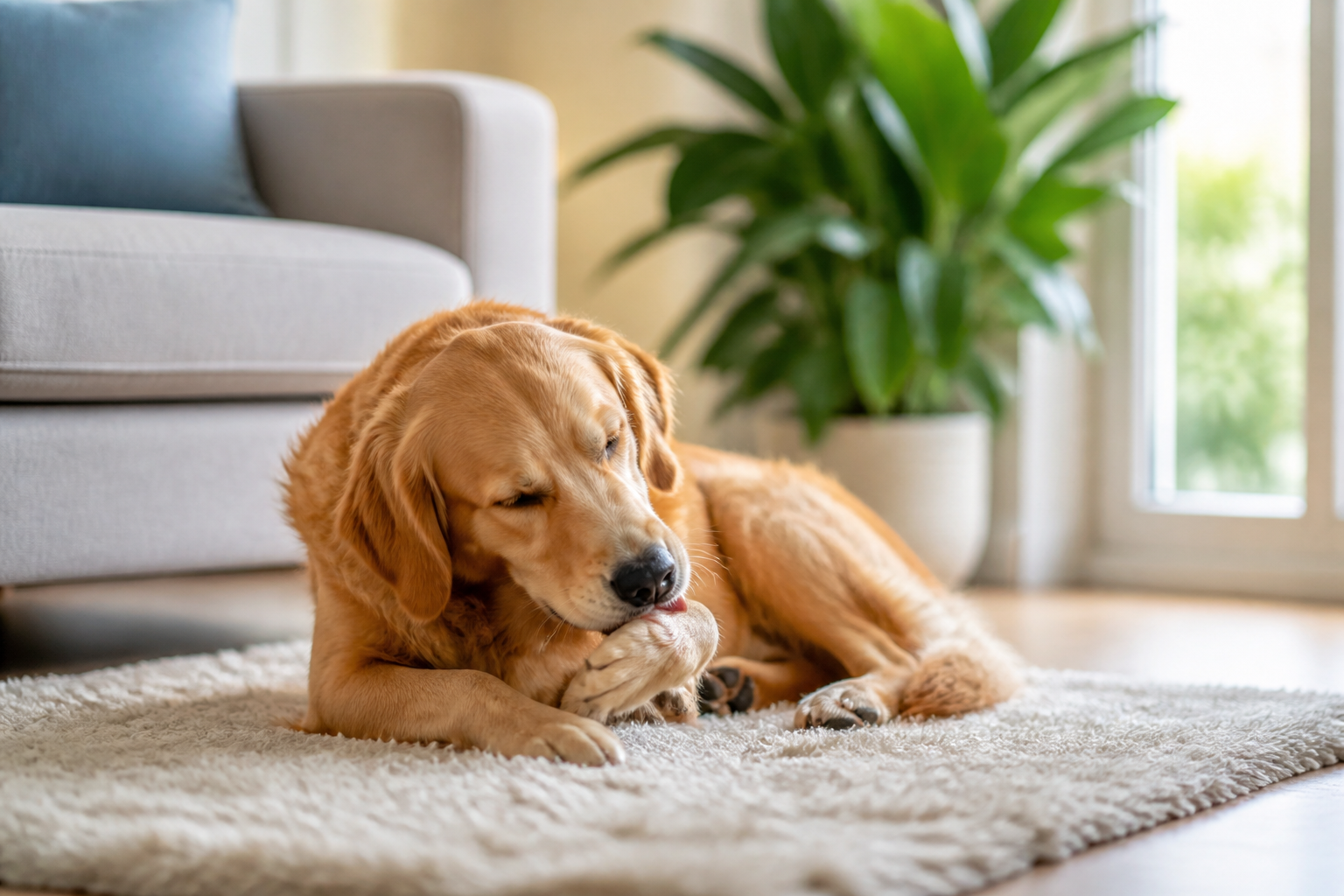
You are sitting on the couch when you hear it. It is that repetitive, wet, slurping sound of your dog gnawing on their front feet. You call their name to make them stop, but they go right back to it a minute later. When you check their paws, the fur is stained brown and the skin looks angry and red. At BaxterBoo, we know how frustrating this cycle is for both you and your dog. It is one of the most common reasons pet owners visit our warehouse or browse our site for relief. This article explains how the health of your dog’s gut directly impacts their skin and paws. We will look at why dogs lick, how probiotics provide a natural solution, and when it is time to visit our pharmacy. Understanding the gut-skin axis is the first step toward a chew-free life for your pup.
The Mystery of the Constant Paw Lick
Many owners think paw licking is just a grooming habit. While cats are fastidious cleaners, dogs usually lick their paws because something feels wrong. If the licking is constant, it often points to an underlying irritation. The skin on the paws is sensitive and frequently comes into contact with environmental triggers. When a dog licks, they are trying to soothe an itch or a tingling sensation. Unfortunately, the moisture from their saliva often makes the problem worse.
Allergies and the Yeast Connection
Allergies are the primary reason for itchy feet. These can be environmental, such as pollen, grass, or dust mites. They can also be related to food sensitivities. When a dog has an allergic reaction, their body releases histamines that cause inflammation. This inflammation often shows up in the paws, ears, and belly.
You might notice a distinct smell coming from your dog's feet. Many owners describe it as smelling like corn chips or old gym socks. This is a tell-tale sign of a yeast overgrowth. Yeast thrives in warm, moist environments. When a dog licks their itchy paws, they create the perfect breeding ground for yeast to multiply. This leads to even more itching, which leads to more licking. It is a cycle that is hard to break without addressing the internal cause.
Quick Answer: Dogs lick their paws primarily due to allergies or yeast infections that cause intense itching. Probiotics help by balancing the immune system and gut bacteria, which reduces the systemic inflammation that leads to itchy skin.
Dog Vitamins & Supplements




How Probiotics Support Skin Health
It might seem strange to give your dog a digestive supplement to fix their feet. However, the gut and the skin are deeply connected. This relationship is often called the gut-skin axis. About 80 percent of a dog's immune system resides in their digestive tract. If the gut bacteria are out of balance, the immune system can become overactive. An overactive immune system is more likely to overreact to allergens, leading to skin flare-ups.
The Gut-Skin Axis Explained
Probiotics are beneficial bacteria that live in the intestines. They help break down food and keep harmful bacteria in check. When the population of good bacteria drops, it can lead to a condition called dysbiosis. This imbalance can cause the gut lining to become more permeable. When this happens, irritants can leak into the bloodstream, triggering body-wide inflammation. By introducing high-quality probiotics, you help restore the "good" bacteria. This strengthens the gut barrier and helps the immune system stay calm. When the immune system is balanced, the skin is less reactive to the environment.
Reducing the Yeast Population
Probiotics also play a role in managing yeast. Beneficial bacteria like Lactobacillus and Bifidobacterium compete with yeast for space and resources in the body. When you flood your dog's system with these good microbes, they help keep yeast populations at a manageable level. This can reduce that "corn chip" smell and the intense itchiness that drives a dog to chew their paws.
Key Takeaway: A healthy gut leads to a more stable immune system. By using probiotics to balance the microbiome, you can reduce the inflammatory response that causes dogs to lick and chew their paws.
What to Look for in Probiotics for Dogs
Not all probiotics are created equal. If you walk into a grocery store and grab a random human supplement, it might not work for your dog. Canine digestive tracts have different pH levels and bacterial needs than human ones. You need a product designed specifically for dogs. At BaxterBoo, we carry brands like Zesty Paws and Honest Paws that focus on these specific canine needs. You can compare options in our dog digestive health category.
Beneficial Bacterial Strains
When reading a label, look for specific strains that have been studied in dogs. Some of the most effective include:
- Bacillus coagulans: This is a hardy, spore-forming bacterium. It survives the harsh environment of the stomach to reach the intestines where it is needed.
- Lactobacillus acidophilus: This strain is excellent for supporting overall immune health and skin condition.
- Bifidobacterium animalis: This is often used to help manage digestive upset and support the skin barrier.
- Enterococcus faecium: This strain helps with nutrient absorption and keeps the gut flora balanced.
Understanding CFU Counts
You will also see a number followed by "CFUs" on the label. This stands for Colony Forming Units. It tells you how many live, active bacteria are in each dose. For a dog with active skin issues or heavy paw licking, you generally want a higher count. Many high-quality supplements offer between 1 billion and 5 billion CFUs per serving.
Vet Tip: If your dog is currently on antibiotics for a skin infection, wait a few hours after the medication before giving a probiotic. Antibiotics kill both good and bad bacteria, so timing the doses helps the probiotics survive.
Oral Supplements vs. Topical Probiotic Sprays
There are two main ways to use probiotics for paw licking. You can give them orally as a treat or powder, or you can apply them topically as a spray. Using both methods together often provides the best results for dogs with severe itching.
Oral Probiotics
Oral supplements address the root cause from the inside out. They work on the immune system and the gut lining. These are best for long-term management of allergies and yeast. Most dogs enjoy probiotic soft chews, which makes it easy to stay consistent with their routine. One example is the Native Pet Probiotic Powder Dog Food Topper.
Topical Probiotic Sprays
Topical sprays are applied directly to the paws. These sprays contain live bacteria that colonize the skin surface. They work by "competitive exclusion." This means the good bacteria take up all the space on the skin so that yeast and harmful bacteria cannot grow. This can provide more immediate relief for the itching and help the skin heal faster.
Step 1: Clean the paws. / Use a damp cloth to remove any dirt or debris from between the pads. Step 2: Dry the area. / Make sure the paws are not dripping wet before applying the spray. Step 3: Apply the probiotic spray. / Spray thoroughly between the toes and on the pads. Step 4: Massage it in. / Rub the solution into the skin to ensure it reaches the areas where yeast likes to hide.
When Supplements Aren't Enough: The Pharmacy Role
Probiotics are a wonderful tool for wellness and mild irritation. However, some dogs have severe allergies or deep-seated infections that require medical intervention. If your dog's paws are bleeding, oozing, or if the licking prevents them from sleeping, you should consult your veterinarian. For prescription support, explore our pet pharmacy for dogs.
Our pharmacy at BaxterBoo offers a wide range of prescription solutions through our partnership with Pet's Choice. Sometimes a dog needs a round of FDA-approved allergy medication or a prescription-strength antifungal cream to get the initial flare-up under control. Once the acute infection is gone, probiotics can then be used to maintain that healthy balance and prevent the next flare-up.
Prescription Diets for Skin Support
In some cases, the licking is a reaction to a protein in their food. Your vet might recommend a prescription diet like Farmina Vet Life. These diets use hydrolyzed proteins or novel protein sources that the immune system does not recognize as a threat. Combining a prescription diet with daily probiotics is a powerful way to manage chronic paw licking.
Vet Tip: Always have your vet perform a skin scraping if the paws are very red or smelly. They can confirm if you are dealing with yeast, bacteria, or mites, which ensures you are using the right treatment.
Managing Paw Health at Home
Beyond supplements, there are several things you can do to help your dog stop licking. Managing the environment is just as important as managing the gut. If your dog is allergic to grass or pollen, they bring those allergens into the house on their feet every time they go outside.
- Paw Wipes: Use unscented wipes to clean your dog's feet every time they come in from a walk. This removes the environmental triggers before they can cause an itch.
- Epsom Salt Soaks: A short soak in lukewarm water with Epsom salts can help draw out toxins and soothe inflamed skin.
- Avoid Plastic Bowls: Some dogs are sensitive to plastic, which can cause irritation around the mouth that spreads to the paws during licking. Use stainless steel or ceramic.
- Consistency: Probiotics take time to work. You might not see a change in the first week. Most owners notice a significant difference after 30 to 60 days of daily use.
Bottom line: A multi-layered approach involving environmental cleaning, probiotics, and potentially prescription support is the most effective way to stop chronic paw licking.
Choosing the Right Routine
Every dog is an individual. What works for a senior dog with seasonal allergies might be different for a puppy with a sensitive stomach. When you shop with us, you have access to over 500 trusted brands. We handpick every item in our warehouse to ensure it meets our standards for quality and safety.
If you are just starting out, we recommend looking at our collection of skin and coat supplements. These often combine probiotics with omega-3 fatty acids from fish oil. Omega-3s help strengthen the skin barrier, making it even harder for allergens to penetrate. This combination can be very effective for "Frito feet" and general itchiness.
Using Our Programs to Save
Since probiotics work best when used every day, consistency is key. You can use our Autoship programme to make this easier. You can set your supplements and food to arrive on a schedule that fits your needs. This ensures you never run out and your dog never misses a dose. Plus, you save on your first order and get a free MVP Gold membership. Our MVP Rewards programme also lets you earn up to 5 percent back on your purchases, which adds up quickly for pets with ongoing health needs.
Why Quality Matters
We have been in business since 2006. In that time, we have seen many trends come and go in the pet industry. We stay focused on products that have real benefits. Whether you are visiting our warehouse in Vernon Hills or ordering online, you are getting products curated by people who truly care about pets.
If your dog is struggling with paw licking, do not feel discouraged. It is a common problem with many solutions. Start with a high-quality probiotic from our selection of Honest Paws products. Clean their paws after walks to remove allergens. If the problem persists, reach out to your vet and use our pharmacy for the specialized care your dog deserves.
FAQ
How long does it take for probiotics to stop paw licking?
Most dogs require four to eight weeks of consistent daily use to see a change in their skin health. Probiotics work by gradually changing the balance of bacteria in the gut and calming the immune system. You may see a decrease in the "yeasty" smell sooner, but the physical habit of licking often takes longer to subside.
Can I give my dog human probiotics for their itchy paws?
While some human probiotic strains are safe, it is much better to use a supplement formulated specifically for dogs. Canine supplements contain strains that are native to the dog's digestive tract and are balanced for their specific internal pH. They also usually come in flavors like beef or chicken that dogs enjoy eating as a treat.
Are there side effects to giving my dog probiotics?
Most dogs tolerate probiotics very well, but some may experience mild digestive upset when first starting. This can include gas or slightly loose stools for the first few days as their microbiome adjusts. If these symptoms are severe or last more than a week, you should consult your veterinarian to ensure the supplement is right for your dog.
When should I use a probiotic spray instead of a chew?
A probiotic spray is ideal for dogs with localized itching and a strong yeast smell on their paws. It provides a direct "boost" of good bacteria to the skin surface to crowd out the yeast. However, for dogs with systemic allergies, an oral chew is usually more effective because it addresses the immune system from the inside out. Using both together is often the best strategy.






- Site & Contents BaxterBoo.com. BaxterBoo is located in the United States.
- Privacy & Security
- Terms of Use
- Accessibility Statement
