
 Save 15% on your 1st Autoship learn more

 Email us
 Live Chat
 FAQs
FAQs





Introduction
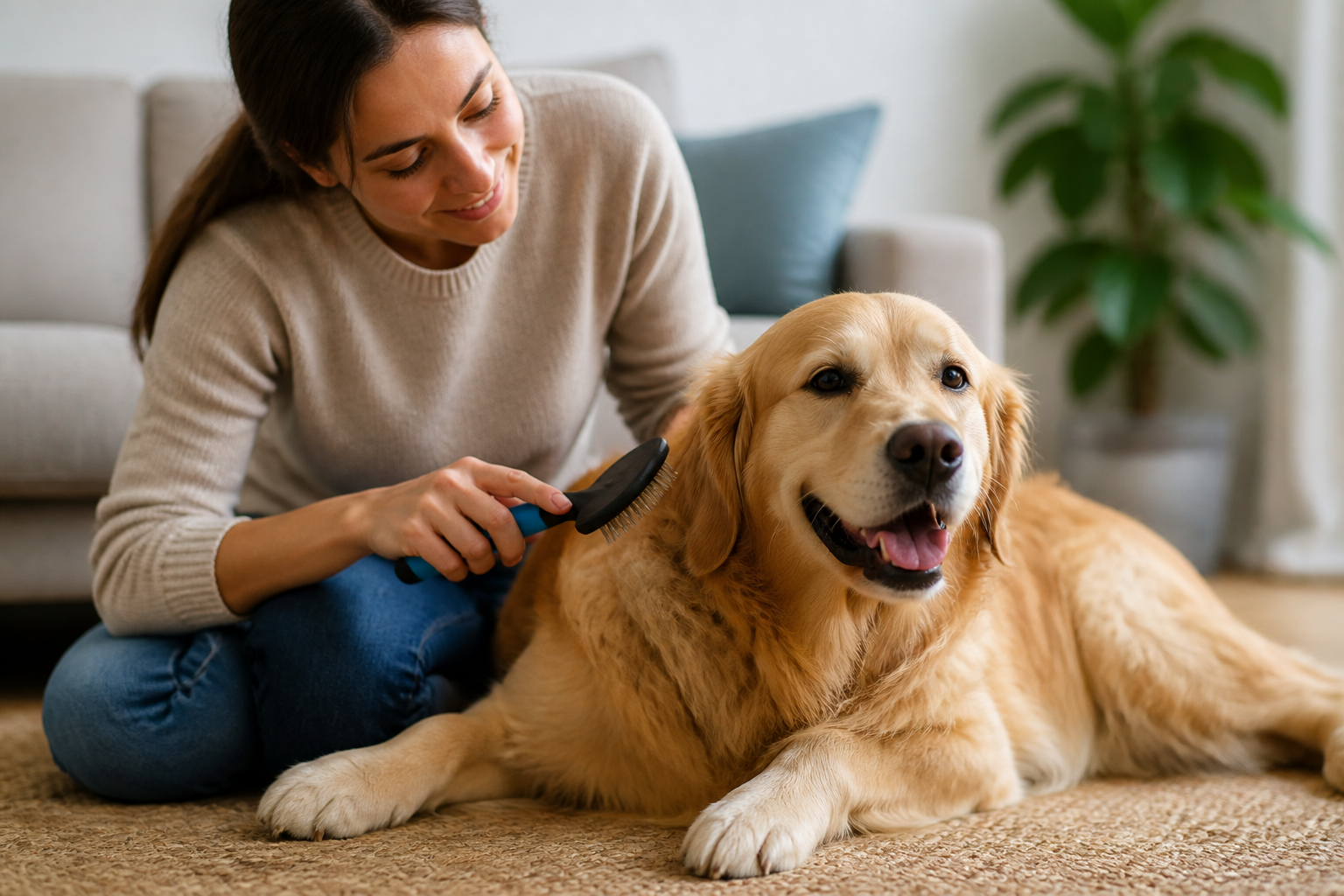
You are relaxing on the sofa with your dog when you notice a small tangle behind their ear or a patch of dull fur on their flank. Maybe you have just vacuumed the rug for the third time this week and wonder if there is a better way to manage the mess. These moments are when most owners ask exactly how often they should be picking up the brush. At BaxterBoo, we see grooming as a foundational part of your dog's health rather than just a way to keep them looking sharp. Brushing removes loose hair, distributes natural skin oils, and helps you spot health issues before they become serious. This guide will help you determine the right brushing schedule for your dog's specific coat type and lifestyle. Understanding these needs ensures your pup stays comfortable and your home stays a little cleaner.
The General Rule for All Breeds
While every dog is an individual, almost every pup benefits from being brushed at least once a week. This baseline frequency helps remove surface dirt and dander that accumulates after walks and playtime. It also gives you a consistent opportunity to check for ticks, fleas, or unusual bumps. Even if your dog has very short hair, a weekly session stimulates the skin and keeps the coat shiny.
If you are just starting a routine, consistency is more important than the length of the session. A quick five-minute brush every few days is often more effective than a marathon session once a month. This approach also helps your dog get used to being handled, which makes professional grooming visits much easier.
Quick Answer: Most dogs should be brushed between one and three times per week. However, dogs with long hair or thick double coats may require daily brushing to prevent painful mats and manage heavy shedding.
Brushing Requirements by Coat Type
The biggest factor in your brushing schedule is the type of hair your dog grows. A Beagle and a Poodle have very different needs because their hair cycles and textures are unique.
Short and Smooth Coats
Dogs like Boxers, Labradors, and Dalmatians have short hair that stays close to the body. You might think these dogs do not need much brushing, but they often shed more than long-haired breeds. For smooth coats, brushing twice a week is usually the sweet spot. This removes the "dead" hair before it ends up on your furniture.
Long and Silky Coats
Breeds like Yorkies, Maltese, and Afghan Hounds have hair that is similar to human hair. It grows continuously and can tangle very easily. These dogs usually need daily brushing. If you skip even two or three days, small knots can quickly turn into tight mats that pull on the skin.
Double Coats
Huskies, German Shepherds, and Golden Retrievers have a soft undercoat and a tougher outer layer. These dogs need a thorough brushing two to three times a week. During "blowing season" in the spring and fall, you will likely need to brush them every single day to keep up with the massive amount of undercoat being released. For more seasonal shedding guidance, read about how Australian Shepherds shed.
Curly and Wavy Coats
Poodles and Doodles are famous for being low-shedding, but they are high-maintenance when it comes to brushing. Their loose hair gets trapped in the curls instead of falling to the floor. This creates a high risk for matting near the skin. Daily brushing with a high-quality slicker brush is highly recommended for these breeds.
Key Takeaway: Your dog's coat type dictates the frequency of care. Short coats need weekly attention to manage shedding, while long and curly coats require daily care.
How Activity Levels Change the Schedule
A dog that spends all day on a climate-controlled sofa stays cleaner than a dog that spends hours hiking through tall grass and brush. If your dog is highly active outdoors, you should brush them after every long outing. This is not just for aesthetics. Brushing after a hike allows you to remove burrs, seeds, and debris that can irritate the skin.
It is also the best time to check for parasites. Ticks often hide in the thickest parts of the fur, such as the neck or the base of the tail. A quick pass with a brush and a comb can help you find these pests before they attach firmly. If you live in an area with high tick activity, this post-walk brush should be a non-negotiable part of your routine. A flea comb for dogs can be useful for checking the coat closely.
Seasonal Brushing Adjustments
The weather plays a major role in how much hair your dog loses. Many dogs go through a heavy shedding period twice a year. During these times, you may find that your usual weekly routine is no longer enough.
- Spring Shedding: As the weather warms, many dogs drop their heavy winter undercoat. You will notice large clumps of fur. Increasing your brushing to every day during this two to four-week window will save your vacuum cleaner and keep your dog cool.
- Fall Shedding: Dogs often shed their lighter summer coat to make room for a thicker winter one. Again, daily sessions for a short period help manage the transition.
- Winter Dryness: Cold air can make skin flaky and hair brittle. Brushing gently during winter helps distribute oils that protect the skin from drying out. Explore winter skin and coat support for dogs when your routine needs extra care.
Why Brushing Matters for Skin Health
Brushing is essentially a massage for your dog's skin. The motion of the bristles or pins increases blood flow to the surface. This brings nutrients to the hair follicles and helps the coat grow strong and healthy. It also spreads sebum, which is the natural oil produced by the skin. Sebum acts as a natural waterproof barrier and gives the coat its healthy glow.
Regular sessions also help you identify skin conditions early. If you notice red patches, hot spots, or crusty areas while brushing, it may be time to consult a professional. Our dog skin and coat care category offers products for dogs dealing with ongoing skin and coat concerns.
Vet Tip: If your dog's skin appears red, inflamed, or has an unusual odor during brushing, schedule a visit with your veterinarian. They can help diagnose underlying allergies or infections that a brush alone cannot fix.
Choosing the Right Tools for the Job
Using the wrong brush can make the experience uncomfortable for your dog and less effective for you. We carry a wide range of options in our dog grooming supplies to suit every coat variety.
The Slicker Brush
This is the most versatile tool. It has fine, short wires closely spaced on a flat or curved head. It is excellent for removing mats and tangles in long, curly, or medium-haired dogs. Use a light touch to avoid "brush burn" on the skin. The Master Grooming Tools Self-Cleaning Slicker Brush is one option designed for removing loose hair, dirt, debris, mats, and tangles.
The Bristle Brush
Best for short-haired dogs or as a finishing tool for longer coats. Natural or synthetic bristles help smooth the hair and move oils across the surface. The closer the bristles are, the better they work on fine hair.
Undercoat Rakes
These tools have long, sturdy teeth designed to reach through the outer coat and pull out loose undercoat hair. These are essential for breeds like Huskies or Malamutes. They are highly effective during shedding season.
Rubber Curry Brushes
These are great for short-haired breeds and for use during bath time. The rubber nubs grab onto loose hair and massage the skin. Most dogs find the sensation of a curry brush very relaxing.
Metal Combs
A sturdy metal comb is the final step for long-haired dogs. It helps you check your work. If the comb can slide from the skin to the tips of the hair without catching, your dog is tangle-free.
Step-by-Step Brushing Technique
To make the most of your sessions, follow a logical order. This ensures you do not miss any spots and keeps the dog calm.
Step 1: Inspect the skin. / Before you start brushing, run your hands over your dog's body. Feel for lumps, bumps, or sore spots that you need to avoid.
Step 2: Start at the head and work back. / Begin with the neck and shoulders. These are usually less sensitive areas. Use gentle strokes in the direction of hair growth.
Step 3: Tackle the "friction zones." / Move to the areas most prone to matting. These include behind the ears, under the armpits, and where the collar or harness sits.
Step 4: Use the "line brushing" method for thick coats. / For dogs with a lot of fur, pull the hair up with one hand and brush the hair underneath. This ensures you are reaching the skin and not just smoothing the top layer.
Step 5: Finish with the tail and legs. / These areas are often the most sensitive. Save them for the end when your dog is relaxed.
Dealing with a Dog That Hates Brushing
Not every dog enjoys the grooming process. If your dog runs away when they see the brush, you need to change their perception. Start by just leaving the brush on the floor and letting them sniff it. Place a treat on the brush so they associate it with something positive.
Once they are comfortable with the object, try one or two gentle strokes while feeding them a high-value treat. Keep these initial sessions very short. Over time, you can increase the duration. It is better to have a successful thirty-second session than a stressful ten-minute struggle.
Key Takeaway: Patience is the most important tool in your grooming kit. Building a positive association with brushing makes the task easier for the rest of your dog's life.
The Connection Between Grooming and Comfort
When a dog's coat becomes matted, it is not just an aesthetic problem. Mats can become so tight that they pinch the skin, making every movement painful. In severe cases, mats can even restrict blood flow or hide sores and infections. By sticking to a regular brushing schedule, you prevent these issues entirely.
Brushing also helps regulate body temperature. A coat that is free of dead undercoat allows for better air circulation. This helps your dog stay cool in the summer and maintains the insulating properties of the fur in the winter.
Advanced Care and Supplements
Sometimes a dull or brittle coat needs more than just a brush. Nutrition plays a huge role in hair quality. Look for foods or supplements rich in Omega-3 and Omega-6 fatty acids. Brands like Zesty Paws or Stella and Chewy's offer options that support skin and coat health from the inside out.
If you find yourself buying grooming supplies and supplements frequently, our Autoship program is a great way to save. You get a discount on your first order and a free MVP Gold membership. This ensures you never run out of the brushes, shampoos, or wipes you need to keep your dog's routine on track.
Bottom line: A consistent brushing routine is the best way to prevent mats, manage shedding, and monitor your dog's overall health.
FAQ
Can I brush my dog too much?
It is possible to over-brush if you use too much pressure or the wrong tool for the coat type. This can lead to "brush burn," which is a skin irritation. Always use a gentle touch and watch for signs of redness on the skin. If the skin looks irritated, give it a few days to rest before brushing that area again.
Should I brush my dog while their fur is wet?
For most breeds, it is better to brush before the bath. Water can actually tighten existing mats, making them much harder to remove. However, for some curly-coated breeds, using a detangling spray on damp hair can help the brush glide through. Generally, ensure the coat is mostly dry or pre-treated with a conditioning spray before a deep brushing session.
How do I get a mat out without cutting the hair?
Never use scissors to cut out a mat, as it is very easy to accidentally nick the skin. Instead, apply a detangling spray or a small amount of cornstarch to the knot. Use a metal comb or a slicker brush to gently pick at the edges of the mat, starting from the outside and working toward the center. Be patient and hold the hair near the skin so you are not pulling on the dog's body.
Does my short-haired dog really need a slicker brush?
Usually, no. A slicker brush may be too sharp for dogs with very thin, short coats like Greyhounds or Whippets. A rubber curry brush or a soft bristle brush is a much better choice for these breeds. The goal for short-haired dogs is to remove loose surface hair and massage the skin, rather than detangling deep knots.
Conclusion
Setting a regular brushing schedule is one of the kindest things you can do for your dog. Whether you have a short-haired Boxer that needs a weekly shine or a Poodle that requires daily attention, the time you spend grooming is an investment in their comfort. Remember to match your tools to your dog's coat type and stay extra vigilant during the changing seasons. By making brushing a positive and consistent experience, you will enjoy a cleaner home and a happier, healthier pet. If you need to upgrade your grooming kit, explore our full collection of brushes and grooming supplies to find the perfect match for your pup.






