
 Save 15% on your 1st Autoship learn more

 Email us
 Live Chat
 FAQs
FAQs





Introduction
You lean in for a happy morning nuzzle only to be met with a puff of breath that smells like old gym socks. Most dog owners have been there. It is easy to assume that "dog breath" is just a natural part of life. However, that odor is often the first sign of dental disease. Since 2006, BaxterBoo has helped pet parents navigate the essentials of daily care. We know that keeping those pearly whites clean is about more than just fresh breath. It is a vital part of your dog's long term health. This guide covers how often you should brush at home and when to schedule professional cleanings. Consistent dental hygiene can add years to your dog's life by preventing systemic infections and painful extractions.
The Short Answer for Dental Frequency
If you want the best for your dog, you should aim for daily brushing. Just like humans, dogs develop a sticky film called plaque every time they eat. Within 24 to 48 hours, that plaque begins to harden into tartar. Once it turns into tartar, you cannot remove it with a toothbrush at home. It requires professional scaling by a veterinarian.
Quick Answer: You should brush your dog's teeth every day to prevent plaque from hardening into tartar. If daily is not possible, aim for at least three times per week to maintain basic oral health.
While daily brushing is the gold standard, we understand that life gets busy. Some dogs are also less than cooperative when you pull out the toothbrush. If you cannot manage a daily scrub, aim for a minimum of three times per week. This frequency is usually enough to keep major gum inflammation at bay. However, skipping more than two days in a row allows tartar to gain a foothold on the enamel.
Why Daily Brushing Matters
Dogs do not get many cavities like humans do. Their mouths are more alkaline, which protects against the specific bacteria that cause tooth decay. Instead, dogs suffer from periodontal disease. This is an infection of the tissues surrounding the teeth. It starts with gingivitis, which is the reddening and swelling of the gums.
When you brush daily, you disrupt the biofilm of bacteria. This prevents the bacteria from migrating under the gumline. Once bacteria get under the gums, they can enter the bloodstream. Research shows a strong link between oral infections and damage to the heart, liver, and kidneys. By spending two minutes brushing today, you are protecting your dog's vital organs for the future. For additional guidance, read these top pet dental care tips.
The Timeline of Dental Decay
- Hours after eating: Plaque forms on the surface of the teeth.
- 24 to 48 hours: Plaque mixes with minerals in saliva and hardens into tartar (calculus).
- Days to weeks: Tartar builds up and irritates the gums, causing gingivitis.
- Months to years: Infection destroys the bone and ligaments holding the teeth in place.
How Often for Professional Cleanings
Most veterinarians recommend a professional dental cleaning once a year. This should typically start when your dog is between one and two years old. Even with perfect home care, some tartar will inevitably build up in hard to reach areas.
A professional cleaning is much more involved than what you do at home. Your vet will place your dog under general anesthesia. This allows them to clean deep under the gumline and take X-rays. X-rays are the most important part of the visit. Most dental disease happens below the surface where you cannot see it. You can also review this guide to warning signs of bad teeth in dogs.
Factors That Change the Frequency
Some dogs need to see the vet for dental work more often than once a year. Your dog’s breed, age, and genetics play a huge role.
- Small and Toy Breeds: Dogs like Yorkies, Chihuahuas, and Pugs have crowded mouths. They often need cleanings every six months because food and hair get trapped easily between their teeth.
- Senior Dogs: Older pets may have receding gums or existing disease that requires more frequent monitoring.
- Chewing Habits: Dogs that chew on hard rubber toys or specific dental treats may scrape off more plaque naturally.
- Diet: Some dogs benefit from prescription dental diets. Our pharmacy carries several FDA approved prescription foods, such as Farmina Vet Life, through our partnership with Pet's Choice. These kibbles are designed to scrub the teeth as the dog eats.
Vet Tip: Always schedule an annual wellness exam. Your vet can check for "pockets" in the gums or loose teeth that might require a professional cleaning sooner than your usual yearly date.
Signs Your Dog Needs an Immediate Cleaning
You do not always have to wait for the one year mark. If you notice certain changes in your dog's behavior or mouth, it is time for a checkup.
- Extreme Halitosis: If the breath is foul enough to fill a room, there is likely an active infection.
- Bleeding Gums: You might see blood on a chew toy or in the water bowl.
- Difficulty Eating: A dog that drops food or only chews on one side of their mouth is often in pain.
- Discolored Teeth: Yellow or brown crust near the gumline is a sign of heavy tartar buildup.
- Pawing at the Face: This can indicate a tooth root abscess or a fractured tooth.
If your dog shows these signs, please consult your veterinarian immediately. Dental pain can be severe, and dogs are masters at hiding discomfort until the situation is dire.
Choosing the Right Tools for Success
To make your cleaning routine effective, you need the right supplies. Using human products can be dangerous. Human toothpaste often contains Xylitol, which is highly toxic to dogs even in small amounts. It also contains foaming agents that can upset a dog's stomach since they cannot spit. You can find toothbrushes, toothpaste, wipes, and other supplies in our dog dental care collection.
The Toothbrush
You have a few options for the actual scrubbing.
- Standard Pet Toothbrushes: These have long handles and angled heads to reach the back molars.
- Finger Brushes: These silicone caps fit over your fingertip. They are great for puppies or dogs that are nervous about a long stick in their mouth.
- Child's Soft Toothbrush: If you are in a pinch, a very soft human toothbrush for toddlers works well.
The Toothpaste
Pet toothpaste comes in flavors like poultry, beef, and peanut butter. This makes the experience feel like a treat rather than a chore. The enzymes in pet toothpaste help break down plaque even if you do not get a perfect scrub on every surface.
Dental Chews and Additives
While nothing replaces brushing, supplemental tools can help.
- Dental Treats: Brands like Greenies are designed to be abrasive. They help "wipe" the teeth as the dog chews.
- Water Additives: These are tasteless liquids you add to the water bowl. They contain enzymes that help kill oral bacteria.
- Dental Wipes: If your dog absolutely refuses a brush, dental wipes can remove some surface plaque.
Browse our dental food and treat selection for supplemental options between brushing sessions. You can also explore this guide to the best dental chews for dogs.
A Step-By-Step Guide to Brushing
If you have never brushed your dog's teeth, do not expect to do a full cleaning on the first day. It is a process of building trust.
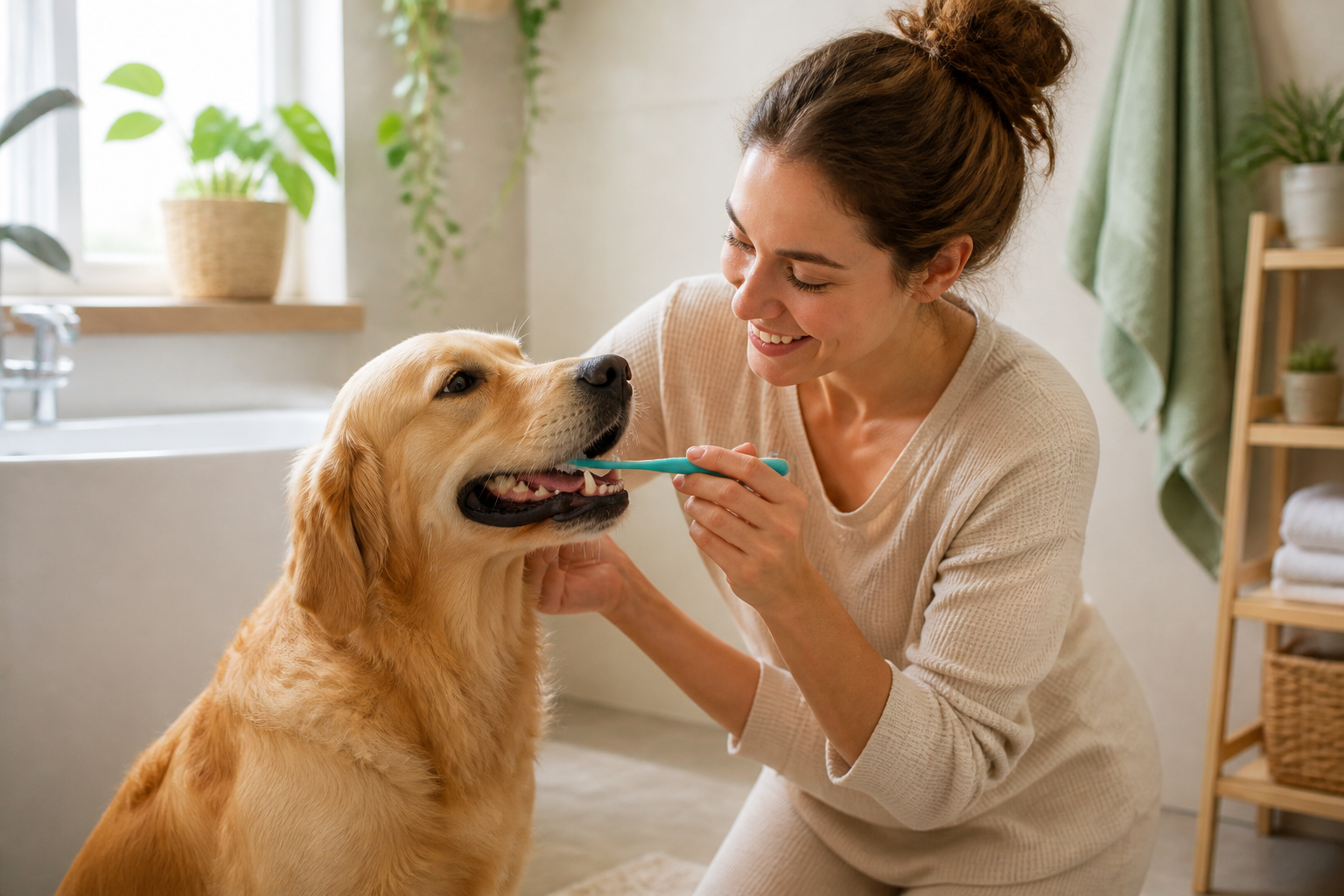
Step 1: Introduce the taste. Put a small amount of flavored pet toothpaste on your finger. Let your dog lick it off. Do this for a few days until they get excited when they see the tube.
Step 2: Touch the mouth. While your dog licks the paste, gently lift their lip and rub your finger along their gums. This gets them used to the sensation of someone touching their mouth.
Step 3: Introduce the brush. Put some paste on the brush and let them lick it. Move the brush around slightly so they feel the bristles.
Step 4: The outer surfaces. Focus only on the outside of the teeth. This is where the most tartar builds up. You do not need to worry about the inside surfaces near the tongue. A dog's tongue does a decent job of cleaning those areas naturally.
Step 5: Increase the time. Slowly work your way from the front canines to the back molars. Praise your dog throughout the process and give a small treat afterward.
Key Takeaway: Consistency is more important than perfection. Brushing for 30 seconds every day is more effective than a five minute scrub once a month.
Breed Specific Dental Challenges
Not all mouths are created equal. Evolution and breeding have changed the way a dog's jaw is shaped. This directly affects how often they need dental attention.
Brachycephalic Dogs
Bulldogs, Pugs, and Boston Terriers have shortened muzzles. This causes their teeth to be crowded or even turned sideways. Food gets trapped in these tight spaces very easily. These dogs are at a much higher risk for early onset periodontal disease. If you own a flat faced breed, daily brushing is non negotiable.
Small and Toy Breeds
Yorkshire Terriers and Chihuahuas often suffer from "persistent deciduous teeth." This means their baby teeth do not fall out when the adult teeth come in. This creates two rows of teeth, trapping hair and debris. Many small dogs lose several teeth by age five if they do not receive aggressive dental care at home and frequent professional cleanings.
Large Breeds
Large dogs like Labradors or German Shepherds generally have better spacing between their teeth. However, they are more prone to fractured teeth from heavy chewing. If your large dog loves to gnaw on bones or stones, check their mouth weekly for jagged edges or purple discoloration.
The Role of the BaxterBoo Pharmacy
Sometimes, a simple cleaning is not enough. If your dog has a severe infection or needs an extraction, your vet will prescribe medications. Our pharmacy offers FDA approved medications to help your pet recover. Through our partnership with Pet's Choice, we can fulfill prescriptions for antibiotics like Clavamox or pain relief medications like Deramaxx.
We also stock specialty prescription diets. These diets are often the first line of defense for dogs with chronic dental issues. They use a specific kibble size and fiber matrix that does not crumble immediately. Instead, the tooth sinks into the kibble, allowing the fibers to scrub the surface. Talk to your vet about whether a prescription diet is right for your dog's needs.
Managing the Cost of Dental Care
Professional dental cleanings can be expensive because they require anesthesia and monitoring. However, preventive care is always cheaper than emergency surgery. A routine cleaning might cost a few hundred dollars, but an emergency extraction of multiple infected teeth can cost thousands.
We offer several ways to make pet care more affordable. Our MVP Rewards program allows you to earn up to 5% back on every purchase. This can help you save on the toothbrushes, pastes, and dental treats you use every day. Learn more about the MVP Rewards programme. We also partner with FIGO Pet Insurance. Many insurance plans offer wellness add-ons that cover a portion of your dog's annual professional cleaning.
Bottom line: Investing in a $10 toothbrush and daily effort can save you thousands of dollars in veterinary surgery fees over your dog's lifetime.
Dental Care for Different Life Stages
Your dog's dental needs will evolve as they grow. Adjusting your frequency and focus at each stage ensures their mouth stays healthy for a lifetime.
Puppies
Start the habit now. Puppies have 28 sharp baby teeth that eventually fall out. While you are not worried about long term tartar yet, you are training them to accept the brush. This is also the time to watch for any baby teeth that refuse to budge, as these can cause alignment issues for adult teeth.
Adults
This is the maintenance phase. Most dogs have all 42 adult teeth by seven months of age. This is when the daily brushing habit becomes critical. Monitor for any signs of red gums or bad breath, as this is when the first stages of gingivitis typically appear.
Seniors
Senior dogs often have some degree of existing dental disease. They may need softer toothbrushes if their gums have receded. If your senior dog stops eating their dry kibble, do not assume they are just getting picky. They may have a painful tooth. Regular dental checkups are even more important for seniors to ensure oral bacteria are not taxing their aging immune systems.
Conclusion
Caring for your dog's teeth is one of the most impactful things you can do for their overall wellness. While a professional cleaning once a year is standard, your daily efforts at home make the real difference. By brushing regularly, using quality dental treats, and monitoring for signs of infection, you are preventing pain and serious illness. We are here to support your journey with the best tools and expert advice. Whether you need a flavored paste your dog loves or a prescription diet from our pharmacy, we have the resources to keep those tails wagging.
- Aim for daily brushing to stop plaque from hardening.
- Schedule a professional veterinary exam once a year.
- Watch for red gums or foul breath as early warning signs.
- Use only pet-safe toothbrushes and enzymatic pastes.
Bottom line: Clean teeth lead to a healthier heart and a longer life for your best friend.
FAQ
Can I use human toothpaste on my dog if I only use a little bit? No, you should never use human toothpaste on a dog. Many human pastes contain Xylitol, which is a sweetener that is deadly to dogs. They also contain detergents that can cause severe stomach upset since dogs cannot rinse and spit.
My dog hates the toothbrush, so what should I do instead? If your dog refuses a brush, try using dental wipes or a piece of clean gauze wrapped around your finger. You can also use dental water additives and high quality dental chews to help reduce plaque. While these are not as effective as brushing, they are much better than doing nothing at all.
How do I know if my dog is in pain from a tooth? Dogs are very good at hiding pain, but you can look for subtle signs. These include dropping food while eating, pawing at the mouth, or a sudden preference for wet food over dry kibble. Excessive drooling or a change in temperament, such as irritability, can also signal dental discomfort.
Is anesthesia really necessary for a dog's teeth cleaning? Yes, a proper dental cleaning requires anesthesia to be safe and effective. It allows the veterinarian to clean deep under the gumline where the most dangerous bacteria live. It also ensures the vet can take accurate X-rays and perform a thorough exam without causing the dog stress or pain.






