
 Save 15% on your 1st Autoship learn more

 Email us
 Live Chat
 FAQs
FAQs





Introduction
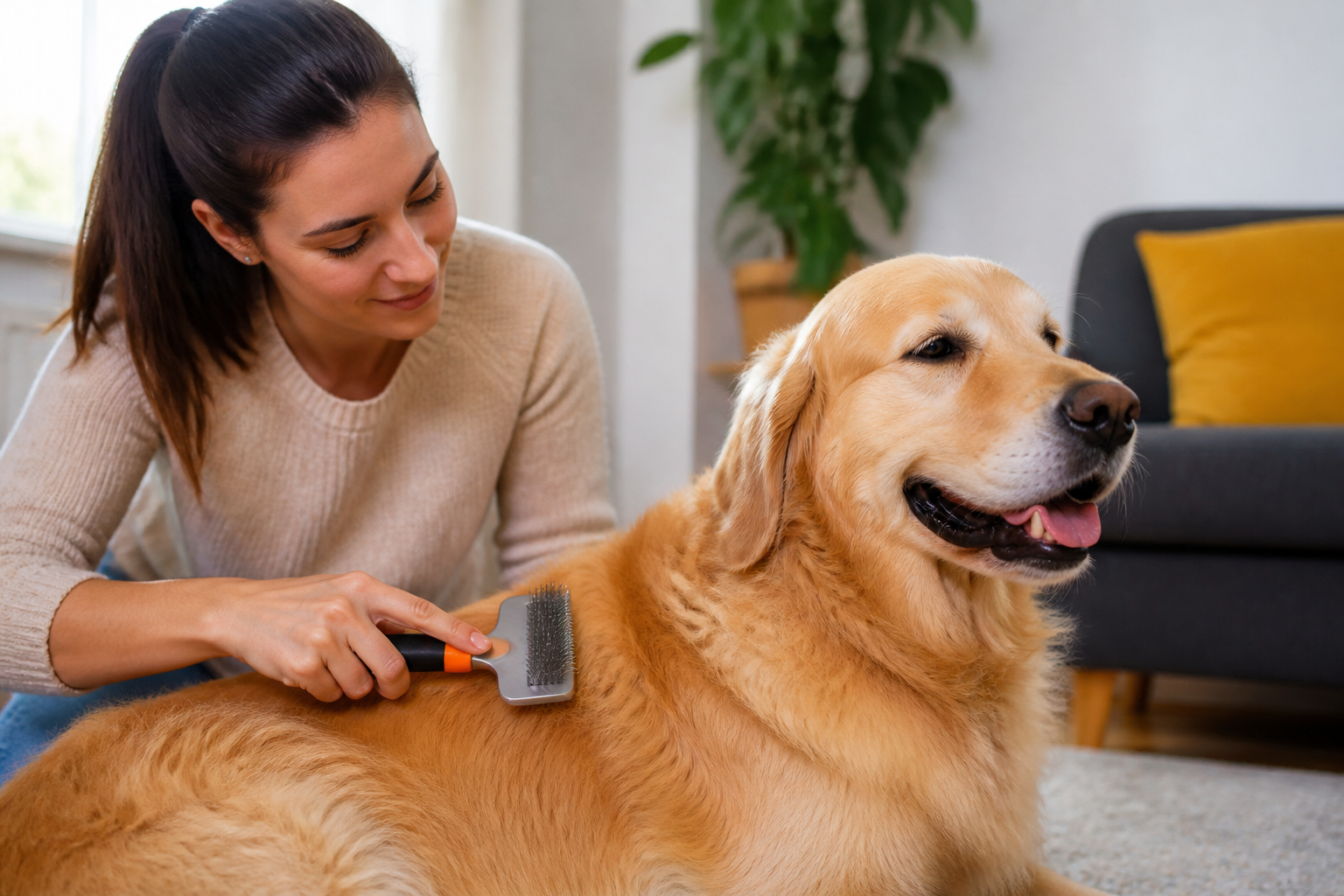
You are relaxing on the sofa when you notice a small, tight tangle behind your dog’s ear. Perhaps you just realized that your once-white carpet is now covered in a layer of tan fur. Knowing how often should a dog be brushed is a fundamental part of being a pet parent. At BaxterBoo, we help owners navigate everything from basic grooming to complex health needs. Brushing is not just about looks. It is a vital health check that helps you spot lumps, bumps, or pests before they become major problems. Your dog's coat type, activity level, and the current season all play a role in your schedule. This article provides a clear roadmap for keeping your dog’s coat in peak condition.
Quick Answer: Most dogs benefit from a thorough brushing at least once a week. Dogs with long hair, curly coats, or heavy undercoats often require daily brushing to prevent painful mats and tangles.
Why Brushing Matters for Dog Health
Brushing is the first line of defense for your dog’s skin. It does much more than just remove loose hair. When you run a brush through your dog’s coat, you are stimulating the skin and distributing natural oils. These oils, known as sebum, act as a natural waterproof barrier and keep the fur shiny. Without regular brushing, these oils can build up near the skin while the ends of the hair become brittle.
Regular sessions also serve as a dedicated time for a physical exam. You are much more likely to notice a new mole, a tick, or an area of redness when you are working through the fur section by section. This proactive approach can lead to earlier veterinary visits and better outcomes for your pet.
Brushing also keeps your home environment cleaner. By capturing loose fur in a tool, you prevent it from ending up on your furniture and floors. For owners with mild pet allergies, frequent brushing can significantly reduce the amount of dander circulating in the air.
Key Takeaway: Brushing is a multi-purpose wellness tool that improves skin health, reduces household allergens, and provides an opportunity for regular health checks.
Understanding Different Coat Types
Before setting a schedule, you must identify your dog's specific coat type. Every breed and mix has different requirements based on how their hair grows and sheds.
Short and Smooth Coats
Dogs like Boxers, Pugs, and Beagles have short hair that lies close to the skin. These dogs shed, but they do not get traditional mats. Brushing for them is primarily about removing dead hair and dander.
Double Coats
Breeds like Siberian Huskies, German Shepherds, and Golden Retrievers have two layers of fur. The soft undercoat provides insulation, while the tougher topcoat protects against moisture. These dogs undergo heavy seasonal shedding and require tools that can reach through the top layer.
Long and Silky Coats
Yorkshire Terriers and Afghan Hounds have hair that grows continuously. This hair is fine and can tangle easily. Without frequent attention, the hair will wrap around itself and form knots.
Curly and Wavy Coats
Poodles and Doodles have hair that traps shed fur within the curls. This means they do not shed much on your floor, but they are at high risk for "pelting," where the shed hair mats against the skin.
Wire Coats
Terriers like the Airedale or Jack Russell have a rough, wiry outer coat. These coats often require a combination of brushing and "stripping" to maintain the texture.
Frequency Guide by Coat Type
The general rule of "once a week" is a starting point, but many dogs need more. Use the following guidelines to set your routine.
- Short-Haired Dogs: Once a week. Use a rubber curry brush or a firm bristle brush to pull away loose hair.
- Medium-Haired or Double-Coated Dogs: Two to three times a week. During shedding season, you may need to move to a daily schedule.
- Long-Haired Dogs: Daily. Focus on high-friction areas like the armpits, behind the ears, and under the collar.
- Curly-Coated Dogs: Daily to every other day. Use a slicker brush and follow up with a metal comb to ensure you have reached the skin.
| Coat Type | Recommended Frequency | Primary Tool |
|---|---|---|
| Smooth/Short | 1x Weekly | Rubber Curry or Bristle |
| Double Coat | 2-3x Weekly | Undercoat Rake or Slicker |
| Long/Silky | Daily | Pin Brush and Metal Comb |
| Curly/Wavy | Daily | Slicker Brush and Metal Comb |
| Wire Coat | 2x Weekly | Slicker Brush or Stripping Tool |
The Impact of Seasonal Shedding
Most dogs "blow" their coats twice a year, usually in the spring and autumn. This is a response to changing daylight and temperature. During these periods, the amount of hair coming off your dog can be overwhelming.
In the spring, dogs lose their heavy winter undercoat to prepare for the heat. In the autumn, they shed their lighter summer coat to make room for thick, insulating fur. If you do not increase your brushing frequency during these weeks, the dead hair can become trapped. This trapped hair prevents air from reaching the skin, which can lead to hot spots or fungal infections.
Vet Tip: If your dog is shedding excessively and showing signs of skin irritation or bald patches, consult your veterinarian. While shedding is normal, sudden hair loss can indicate underlying health issues like thyroid imbalances or skin allergies.
Signs Your Dog Needs More Frequent Brushing
Sometimes your dog will tell you that the current schedule is not working. Watch for these physical signs that it is time to pick up the brush more often.
- Visible Mats: If you see small clumps of hair that look like felt, you are not brushing enough.
- Excessive Scratching: If your dog is itching but does not have fleas, trapped hair or dry skin might be the cause.
- A "Doggy" Odor: Trapped dirt and oils produce a stronger smell. Brushing removes the source of the odor.
- Dull Coat: A healthy coat should have a slight sheen. If the fur looks dusty or flat, it needs the oil distribution that comes from brushing.
- Increased Shedding in the House: If you see more hair on the floor than usual, your dog needs help removing it.
The Anatomy and Danger of Mats
Mats are more than just an aesthetic issue. They are a serious health concern. A mat starts as a small tangle. As the dog moves, more loose hair and dirt get caught in the knot. Eventually, the mat tightens and begins to pull on the skin.
Tight mats can be very painful. They can restrict movement and hide skin infections or parasites. In extreme cases, mats can cut off blood flow to the skin. This is why brushing down to the skin is so important. Many owners brush the top layer of fur but leave the hair closest to the skin untouched. This leads to a layer of mats hidden under a smooth-looking topcoat.
How to Check for Mats
- Run your fingers through your dog's fur, feeling for any hard lumps.
- Pay close attention to "high-traffic" areas like the belly, legs, and tail.
- Use a metal comb. If the comb stops or catches, you have found a tangle.
Choosing the Right Tools for the Job
Using the wrong brush can make the process less effective and may even hurt your dog. We carry a wide variety of tools in our dog brushes and combs collection to match every coat type.
Bristle Brushes
These are best for short-haired dogs. They remove surface dust and distribute oils. Natural bristles are generally gentler on the skin than synthetic ones.
Slicker Brushes
These have fine wire bristles that are slightly angled. They are excellent for removing tangles and mats in medium to long-haired dogs. Be careful not to press too hard, as the wire can scratch the skin.
Rubber Curry Brushes
Tools like the KONG Zoom Groom Natural Rubber Dog Grooming Brush are perfect for short-haired breeds. The rubber nubs massage the skin and act like a magnet for loose hair. These are also great to use during bath time.
Pin Brushes
These look similar to human hairbrushes. They are ideal for long, silky coats because they provide a gentle touch that does not pull the hair out.
Undercoat Rakes
These tools have long, sturdy teeth designed to reach through the topcoat and pull out the loose undercoat. They are essential for breeds like Huskies and Labs.
Key Takeaway: Having the right tool for your dog's specific coat type makes grooming faster, more effective, and more comfortable for your pet.
Step-by-Step: Brushing a Tangle-Prone Dog
If your dog is prone to mats, follow this routine to keep them comfortable.
Step 1: Perform a visual check. / Look for any obvious burrs, dirt, or large tangles before you start with a tool.
Step 2: Use a conditioning spray. / A light mist of a grooming spray can help the brush glide through the hair and reduce static.
Step 3: Brush in sections. / Start at the bottom of a leg and work your way up. This ensures you do not miss any spots.
Step 4: Use the "line brushing" technique. / Pull the hair up with one hand and brush the hair underneath. This ensures you are reaching the skin.
Step 5: Finish with a comb. / Run a metal comb through the entire coat. If it glides through without catching, your job is done.
Brushing Puppies and Senior Dogs
Puppies and seniors have unique needs when it comes to grooming. For a puppy, brushing is a training exercise. You want them to associate the brush with praise and treats. Start with very short sessions and a soft brush, even if they do not have much hair yet. This builds a foundation for a lifetime of easy grooming.
Senior dogs often have thinner skin and may have lumps or arthritis that make certain positions uncomfortable. Use a softer brush and be very gentle over bony areas like the hips and spine. Frequent, short sessions are usually better for an older dog than one long session.
Skin Health and the BaxterBoo Pharmacy
While regular brushing keeps a coat healthy, some dogs suffer from underlying skin conditions. If you notice your dog has chronically red skin, crusty patches, or an intense itch that does not go away with brushing, it may be time for medical intervention.
Our pet pharmacy provides a direct way to manage these issues. Through our partnership with Pet's Choice, we offer FDA-approved medications for allergies and skin infections. This includes prescription shampoos and treatments that address the root cause of coat problems. Brushing is your first way to see these issues, but our pharmacy is where you find the solutions. Always consult your veterinarian if you notice persistent skin irritation or unusual odors.
Bottom line: Brushing helps you monitor your dog's health so you can act quickly when medical needs arise.
Conclusion
Determining how often should a dog be brushed depends on your pet’s unique coat and lifestyle. While once a week is a good baseline, many dogs require daily attention to stay comfortable. Brushing is a simple way to bond with your pet while protecting their skin and keeping your home clean. By choosing the right tools and staying consistent, you can prevent painful mats and catch health issues early. We are here to support you with high-quality grooming gear and a full pharmacy for any prescription needs. To start building your grooming kit, browse our collection of brushes and combs today.
FAQ
Can you brush a dog too much?
It is possible to over-brush if you use a tool that is too abrasive for your dog's skin type. If you notice redness, "brush burn," or thinning hair, you may be using too much pressure or brushing too frequently. Stick to the recommended schedule for your dog's coat type and always use a gentle hand.
Do short-haired dogs really need to be brushed?
Yes, short-haired dogs benefit greatly from weekly brushing. Even though they do not get mats, they still shed dead hair and produce skin oils. Brushing removes that loose hair before it ends up on your furniture and helps keep their skin healthy and vibrant.
What should I do if I find a large mat that won't come out?
Never try to cut a mat out with scissors, as it is very easy to accidentally cut the dog's skin. Try using a detangling spray and a slicker brush to slowly work the mat apart from the outside in. If the mat is tight against the skin, it is safest to have a professional groomer or a veterinarian remove it with electric clippers.
Does brushing help with my dog's seasonal allergies?
Brushing can help by removing environmental allergens like pollen or dust that get trapped in your dog's fur after a walk. By removing these particles, you reduce the amount of time they stay in contact with the skin. For dogs with severe allergies, we recommend talking to your vet about prescription treatments available through our pharmacy.






