
 Save 15% on your 1st Autoship learn more

 Email us
 Live Chat
 FAQs
FAQs





Introduction
You finally sit down on the sofa after a long day only to realize your black leggings are now covered in a layer of tan fur. Maybe you just vacuumed an hour ago, but there is already a fresh tumbleweed of hair rolling across the hardwood floor. Dealing with shedding is a standard part of life for most dog owners, but it does not have to feel like a losing battle. At BaxterBoo, we talk to pet parents every day who are looking for a way to get ahead of the mess. While you cannot stop a dog from shedding entirely, a consistent grooming routine is the most effective way to keep that fur on the brush rather than on your furniture. This post covers how often to brush based on coat type, the best tools for the job, and when shedding might actually be a sign of a health concern.
Quick Answer: Most dogs benefit from brushing two to three times per week to manage shedding. However, double-coated breeds or those in a seasonal blowout period may require daily brushing to prevent fur from piling up in your home.
Understanding Your Dog's Coat Type
The first step in building a grooming schedule is knowing exactly what kind of coat you are dealing with. Not all fur is created equal, and a routine that works for a Boxer will not be enough for a Siberian Husky. The frequency of brushing is dictated by the growth cycle of the hair and whether the dog has an undercoat.
Short and Smooth Coats
Dogs like Beagles, Boxers, and Pugs have short hair that sits close to the skin. Owners often assume these breeds do not need much brushing because the hair is so short. In reality, these dogs can be some of the heaviest shedders because their hair growth cycle is very fast. The individual hairs reach their full length quickly, die, and fall out to make room for new ones.
For these breeds, brushing once or twice a week is usually sufficient. During the spring and fall, you might want to increase this to three times a week. Even though the hair is short, regular sessions help distribute natural skin oils, which keeps the coat shiny and minimizes the amount of dander that ends up in the air.
Double Coats
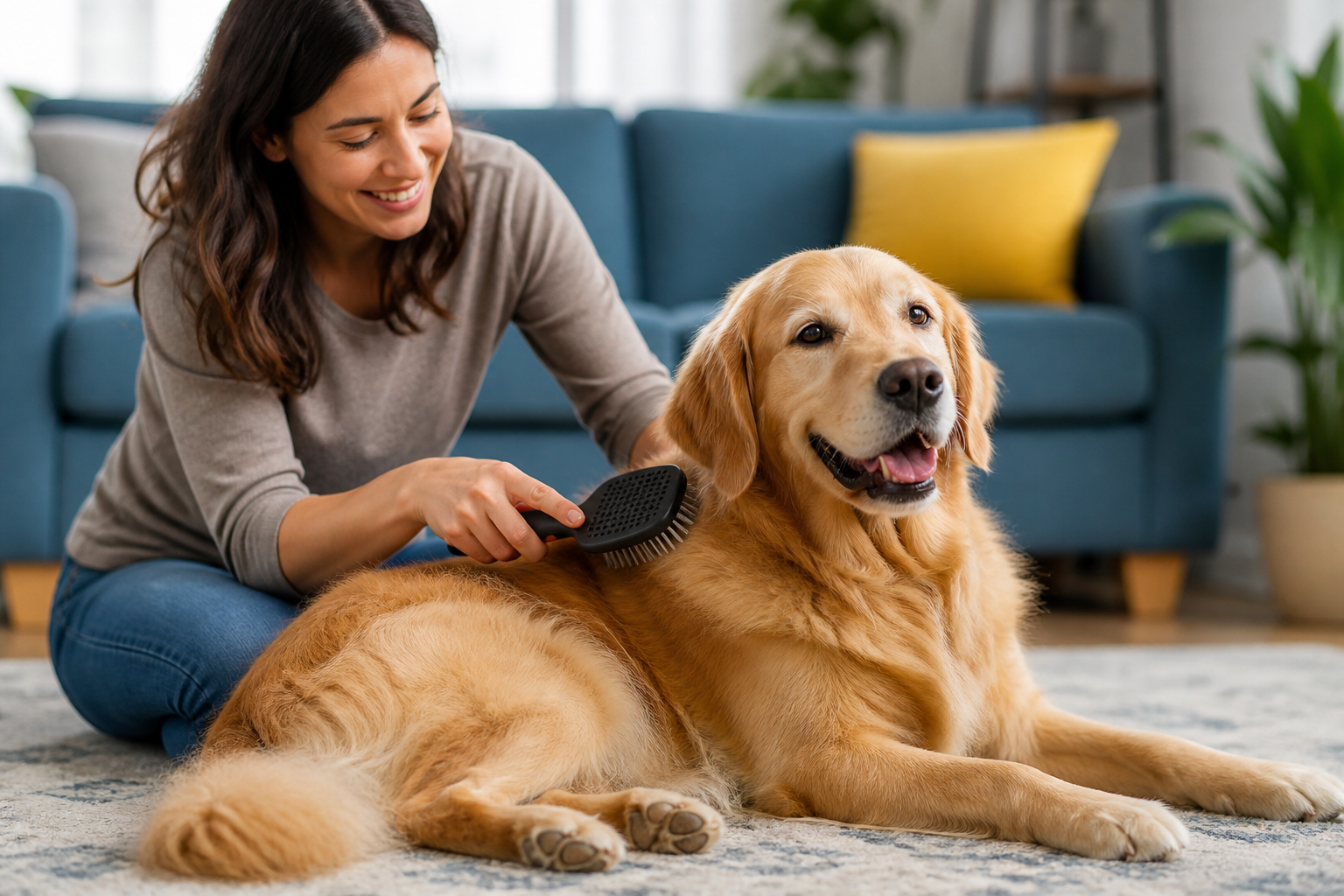
This is the category that most owners find most challenging. Double-coated breeds like Golden Retrievers, German Shepherds, and Labradors have a tough outer layer of guard hairs and a soft, thick undercoat. The undercoat is what does the most shedding. Twice a year, these dogs go through a blowout where they lose nearly the entire undercoat in a matter of weeks.
Outside of blowout season, aim for three full brushing sessions a week. When they are blowing their coat, you should brush them every single day. If you skip even two days during this period, the loose undercoat can become trapped against the skin, leading to painful mats or hot spots.
Long or Silky Coats
Spaniels, Setters, and Yorkies have hair that grows continuously, much like human hair. While they may shed less in terms of volume compared to a Lab, their hair tangles easily. For these dogs, brushing is less about preventing piles of fur on the floor and more about preventing mats.
Daily brushing is the gold standard for long-coated dogs. If you stay on top of it, a five-minute daily session is much easier than a two-hour marathon once a week to work out knots. It also keeps the coat free of debris like grass seeds or burrs they might pick up during walks. Explore our dog brushes and combs to find tools suited to your dog’s coat.
Curly and Wire Coats
Poodles, Doodles, and many Terrier breeds have coats that trap shedding hair within the curls. This can lead to the "non-shedding" reputation, but the hair is still dying and falling out. It just gets stuck in the coat instead of falling on your carpet.
Brushing every other day is necessary to pull that dead hair out. If left alone, the trapped dead hair will felt together with the living hair, creating a solid mat of fur that eventually has to be shaved off by a professional.
Key Takeaway: Identify if your dog has a single or double coat before setting a schedule. Double-coated breeds require the most frequent attention, especially during seasonal transitions.
The Best Tools for Different Coats
Using the wrong brush can make grooming a chore for both you and your dog. If the brush pulls at the skin or fails to reach the undercoat, your dog will learn to hide whenever they see the grooming kit come out. We carry a wide variety of tools in our dog grooming collection designed to make the process smoother and more comfortable.
Slicker Brushes
A slicker brush has fine, short wires spaced closely together on a flat or curved head. This is a versatile tool that works well for many coat types, particularly medium to long hair. It is excellent for removing tangles and pulling out loose hair from the mid-levels of the coat.
Rubber Grooming Mitts
For short-haired dogs, a rubber mitt is often the best choice. The rubber nubs act like a magnet for loose fur while providing a gentle massage for the dog. Many dogs who dislike traditional brushes enjoy the feeling of the mitt because it feels like they are just being petted. The KONG Zoom Groom Natural Rubber Dog Grooming Brush is one option designed for removing dead hair during brushing or bathing.
Deshedding Rakes
If you have a double-coated dog, a rake is a mandatory tool. These have long, sturdy tines that reach through the topcoat to grab the loose fluff underneath. It is important to use these with a light hand to avoid irritating the skin. Brands like Kong offer durable options that help you get a grip on that stubborn undercoat.
Bristle Brushes
A natural bristle brush is best for the finishing touch. It does not remove a lot of hair, but it is perfect for smoothing the coat and distributing oils. It is a great everyday tool for dogs with very short hair or for puppies who are just getting used to being groomed.
How to Brush Effectively
Frequency is important, but technique matters just as much. If you are only brushing the very top of a thick coat, you are missing the bulk of the shedding hair.
Step 1: Inspect the skin.
Before you start, run your hands over your dog. Feel for any new lumps, bumps, or sore spots. Look for signs of fleas or ticks. This is a great time to check their overall health.
Step 2: Start with the heavy lifting.
Use your deshedding tool or slicker brush first. Work in sections, starting from the neck and moving toward the tail. Be extra gentle around sensitive areas like the belly, ears, and back of the legs.
Step 3: Brush in the direction of hair growth.
Always follow the natural lay of the fur. Brushing against the grain can be uncomfortable and may cause the hair to snap.
Step 4: Use a finishing tool.
Once you have removed the loose fur, go over the dog with a bristle brush or a finishing comb. This picks up the last few stray hairs and leaves the coat looking polished.
Vet Tip: If your dog's skin looks red, flaky, or irritated after brushing, you may be using too much pressure or the wrong tool. A quick consult with your veterinarian can help rule out underlying skin sensitivities or allergies.
The Role of Nutrition in Shedding
You can brush your dog every hour of the day, but if their skin is not healthy, they will continue to shed excessively. A coat is often a reflection of what is going on inside the body. High-quality nutrition is the foundation of a healthy, low-shedding coat.
Look for foods that are rich in Omega-3 and Omega-6 fatty acids. These nutrients strengthen the hair follicle and keep the skin hydrated. Brands like Stella and Chewy's, Open Farm, or Farmina often include these essential fats in their recipes. If your dog is on a budget-friendly kibble that lacks these nutrients, you might notice their coat feels dry or brittle.
Supplements can also make a significant difference. Adding a pump of salmon oil or a chew from Zesty Paws or Honest Paws can help reduce the volume of hair you see on the floor. It takes about three to four weeks of consistent supplementation to see a change in the coat.
In some cases, a dog might have a food sensitivity that causes skin inflammation and hair loss. If you suspect your dog has an allergy, your vet might recommend a prescription diet. Our dog pharmacy carries a range of FDA-approved prescription pet foods, such as Farmina Vet Life and Royal Canin, through our partnership with Pet's Choice. These specialized diets are formulated to support the skin barrier and reduce the inflammatory response that leads to excessive shedding.
When Shedding Becomes a Medical Concern
It is important to distinguish between normal seasonal shedding and hair loss caused by a medical issue. If you notice any of the following, it is time to schedule a visit with your veterinarian:
- Symmetrical bald patches on the sides or back
- Thinning hair that leaves the skin visible
- Excessive itching, biting, or licking of the skin
- Red, inflamed, or scabby skin
- A foul odor coming from the coat
Conditions like hypothyroidism, Cushing’s disease, or parasitic infections like mange can all cause a dog to lose hair at an abnormal rate. Stress is another common factor. If you have recently moved or added a new family member, your dog might "blow" their coat as a physical response to the anxiety.
If your vet diagnoses a condition requiring medication, remember that we provide easy access to a full pharmacy. Through Pet's Choice, we offer FDA-approved medications for allergies, hormonal imbalances, and flea and tick prevention. Staying current on flea and tick preventives like Frontline or NexGard is essential, as even a few flea bites can cause an allergic reaction that leads to massive hair loss.
Key Takeaway: Proper nutrition and pest prevention are just as important as brushing when it comes to managing the amount of fur in your home.
Bathing and Drying Techniques
Bathing is a double-edged sword when it comes to shedding. A good bath can help loosen dead hair and wash it down the drain, but bathing too often can dry out the skin and actually increase shedding.
For most dogs, a bath once every four to six weeks is enough. Use a shampoo specifically formulated for shedding, which often contains ingredients like oatmeal and aloe to soothe the skin. During the bath, use a rubber grooming mitt to massage the shampoo into the coat. This physical agitation helps pull the loose hair out while the fur is wet. Browse our dog shampoo and conditioner selection for bathing supplies.
The drying process is where you can really make an impact. If you have a double-coated dog, using a high-velocity dryer is a game-changer. These dryers use a powerful stream of cool air to literally blow the loose undercoat out of the follicles. You should do this outside if possible, as it will create a "snowstorm" of fur.
Avoid using a human hairdryer on a high heat setting. Dogs have much thinner skin than humans, and you can easily cause a burn. If you do not have a pet-specific dryer, towel dry them thoroughly and then do a final brushing session once the coat is completely dry.
Managing the Seasonal Blowout
Twice a year, owners of double-coated breeds face the "blowout." This usually happens in the spring as the dog loses their winter coat and in the fall as they prepare for new growth. During these weeks, the rules of normal grooming change.
You will need to increase your brushing frequency to at least once a day. If you can manage a quick five-minute session in the morning and another in the evening, you will significantly reduce the amount of hair that ends up on your clothes.
Focus on the "pants" (the back of the thighs) and the neck area, as these are usually the spots where the undercoat is thickest. If you find that the hair is coming out in large clumps, do not panic. This is normal for breeds like Huskies or Shepherds. Just keep brushing until the rake comes through clean.
Creating a Routine That Sticks
Consistency is what makes a grooming routine successful. If you only brush your dog when the fur becomes unbearable, the task will be long and frustrating for both of you. Instead, try to tie brushing to a daily habit. Maybe you brush your dog while you watch the evening news or right after your morning walk.
Make it a positive experience by offering treats from our collection of healthy rewards. If your dog learns that a brushing session means a piece of freeze-dried liver or a dental chew, they will start to look forward to it.
If you are a frequent buyer of grooming supplies or supplements, our Autoship program can help you stay stocked while saving money. You can set up recurring deliveries for shampoo, fish oil, or even prescription diets, ensuring you never run out of the essentials needed to keep that coat in check. Plus, Autoship customers get a free MVP Gold membership, which earns you points on every purchase. Learn more about the MVP Rewards programme and its available benefits.
Bottom line: Brushing frequency depends on your dog's unique coat, but a consistent schedule combined with good nutrition is the best way to manage shedding.
Summary of Brushing Frequency
| Coat Type | Brushing Frequency | Best Tool |
|---|---|---|
| Short/Smooth | 1-2 times per week | Rubber Mitt or Bristle Brush |
| Double Coat | 3 times per week (Daily in season) | Deshedding Rake or Slicker Brush |
| Long/Silky | Daily | Slicker Brush and Finishing Comb |
| Curly/Wire | Every other day | Slicker Brush or Rake |
Conclusion
Managing shedding is less about a one-time fix and more about a steady routine. By brushing your dog two to three times a week, you remove the dead hair at the source before it can take over your home. We are proud to have served pet owners since 2006, providing the tools and expert advice needed to keep pets healthy and homes a little cleaner. Whether you need a new slicker brush, a bottle of salmon oil, or a prescription skin support diet from our pharmacy, we are here to help. Start a regular grooming habit today and enjoy a closer bond with your pet and a much cleaner vacuum bag.
FAQ
Can I shave my double-coated dog to stop shedding?
You should never shave a double-coated dog to manage shedding. The undercoat actually provides insulation against both heat and cold, and the topcoat protects their skin from the sun. Shaving can permanently damage the texture of the coat and does not stop the shedding process; it just makes the shed hairs shorter and sharper.
Does bathing my dog more often help with shedding?
Bathing too frequently can actually make shedding worse by stripping the natural oils and drying out the skin. Stick to a schedule of once every four to six weeks unless your dog gets particularly dirty. Focus on using a high-quality deshedding shampoo and a thorough brushing session after the coat is dry for the best results.
Why is my dog shedding so much in the middle of winter?
If your dog lives primarily indoors, their coat cycle can be influenced by artificial lighting and heating. This can lead to a phenomenon called "year-round shedding" where the dog never truly completes a seasonal blowout. Additionally, indoor heating can dry out a dog's skin, leading to more hair loss than usual.
Are there any supplements that really work for shedding?
Omega-3 fatty acids are the most proven supplements for skin and coat health. Products containing fish oil or flaxseed oil help strengthen the hair at the root, which can reduce the amount of hair that falls out. Always consult with your veterinarian before adding a new supplement to your dog's diet to ensure it is appropriate for their specific needs.






