
 Save 15% on your 1st Autoship learn more

 Email us
 Live Chat
 FAQs
FAQs





Introduction
You lean in for a happy morning nuzzle only to be met with a puff of breath that smells like a fish market. While many owners laugh off "dog breath" as a standard part of life with a canine, it is often the first sign of a developing health problem. Most dogs show some form of periodontal disease by the time they reach three years old. At BaxterBoo, we have helped thousands of pet parents navigate the transition from occasional brushing to a solid dental routine. This post covers the ideal frequency for at-home brushing, when to schedule professional cleanings, and the warning signs that your dog needs immediate care. Proper dental hygiene is a commitment that can add years to your dog’s life.
Quick Answer: You should ideally brush your dog's teeth every single day to prevent plaque from hardening into tartar. If daily brushing is not possible, aim for at least three times per week to maintain basic oral health.
The Daily Goal for At-Home Brushing
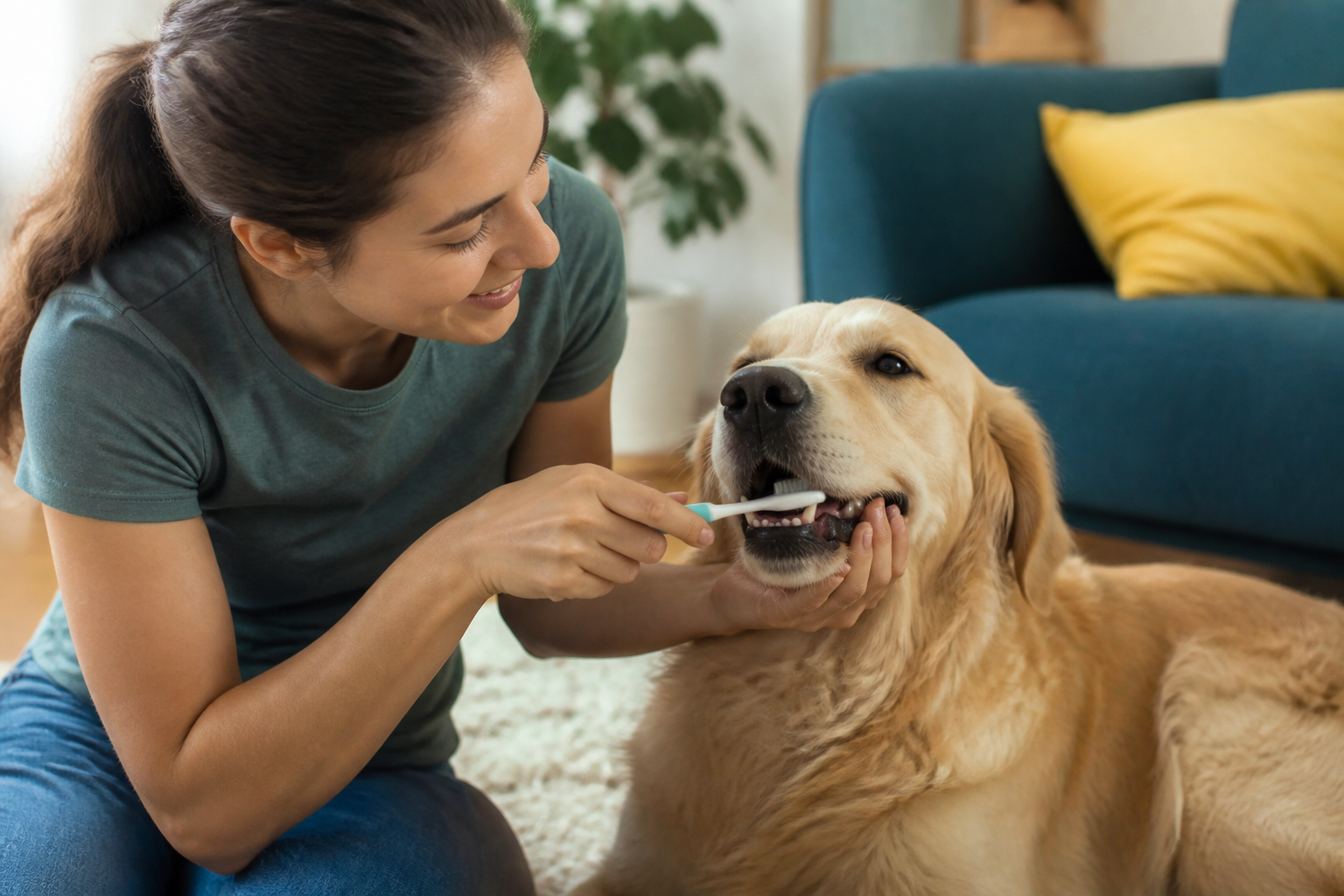
The gold standard for dog dental care is daily brushing. This might sound like a tall order for a busy pet owner. However, the biological timeline of a dog's mouth makes daily attention necessary. Plaque is a sticky film of bacteria that begins to form on the teeth within hours of eating. If that plaque is not physically brushed away, it reacts with the minerals in your dog's saliva. Within 48 to 72 hours, plaque hardens into dental calculus, also known as tartar.
Once tartar has formed, a toothbrush can no longer remove it. Tartar provides a rough surface where even more plaque can grab hold. This creates a cycle of buildup that eventually migrates under the gumline. Brushing every day ensures you are dealing with soft plaque rather than cement-like tartar.
If your schedule is packed, do not give up entirely. Brushing three times a week is significantly better than once a week. Anything less than three times per week is generally considered ineffective for preventing long-term gum disease. Consistent mechanical scrubbing is the only way to break up the biofilm before it damages the structural integrity of the teeth.
Key Takeaway: Plaque turns into permanent tartar in less than three days, which is why brushing at least every other day is the minimum requirement for health.
Why Professional Cleanings are Necessary
Even the most diligent brushers cannot reach every nook and cranny in a dog's mouth. Humans brush twice a day and floss, yet we still visit a dentist for professional scaling. Dogs require the same level of expert care. Most veterinarians recommend a professional dental cleaning once a year.
A professional cleaning, often called a COHAT (Comprehensive Oral Assessment and Treatment), is different from what you do at home. During this procedure, the dog is placed under general anesthesia. This allows the vet to clean deep under the gumline where the most dangerous bacteria hide. It also allows for dental X-rays, which are vital because roughly 60 percent of dental disease occurs out of sight beneath the gums.
For additional guidance on exams and professional cleanings, read our pet dental care tips.
Frequency Based on Breed Size
Not every dog follows the same timeline. Small breed dogs, such as Yorkies, Chihuahuas, and Pugs, are notorious for dental struggles. Their teeth are often crowded into tiny mouths. This creates many small gaps where food and bacteria get trapped. For these breeds, a vet might suggest a professional cleaning every six to nine months.
Large breeds with more space between their teeth may be able to go a full year or slightly longer between professional visits. However, this depends entirely on their genetics and your at-home routine. Your vet will evaluate the "grade" of your dog's teeth during their annual wellness exam to determine the best schedule.
Vet Tip: Always consult your veterinarian before starting a new dental routine, especially if your dog already has brown buildup or red gums. They can perform an initial assessment to ensure you are not brushing over a painful infection or a loose tooth.
The Dangers of Ignoring Dental Health
Dental care is about much more than fresh breath. It is a critical component of systemic health. When a dog has periodontal disease, the gums become inflamed and porous. This allows bacteria from the mouth to enter the bloodstream directly.
Once in the blood, these bacteria can travel to major organs. The heart, kidneys, and liver are particularly vulnerable to this bacterial "showering." Chronic dental infections can lead to endocarditis, which is an inflammation of the heart valves. It can also cause slow-burning kidney failure as the organs work overtime to filter out oral toxins.
Recognizing the Stages of Disease
- Gingivitis: This is the only reversible stage. You will see a thin red line along the gums. The gums may look slightly puffy.
- Early Periodontitis: The gums start to recede. You will see more of the tooth root. There is usually significant tartar at this stage.
- Established Periodontitis: The structures supporting the tooth begin to break down. You might see bleeding when the dog chews on toys.
- Advanced Periodontitis: This involves bone loss and loose teeth. Chronic pain is a constant factor for the dog at this point.
Bottom line: Oral bacteria can travel through the bloodstream to damage the heart and kidneys, making dental health a life-extending priority.
Identifying the Warning Signs
If you are wondering if it is time for a cleaning, your dog's behavior and mouth appearance will tell the story. You should check your dog’s mouth at least once a month for any changes.
Bad breath is the most obvious sign. While "doggy breath" is common, a truly foul or metallic smell indicates infection. Look for yellow or brown crust near the gumline. This is tartar, and it cannot be brushed away at home.
Watch for behavioral changes during mealtime. If your dog starts dropping kibble or suddenly prefers wet food over dry, they may be experiencing oral pain. Some dogs will paw at their faces or rub their muzzles against the carpet. In severe cases, you might notice one-sided facial swelling, which often indicates a tooth root abscess.
For a closer look at common symptoms, read the warning signs of bad teeth in dogs.
- Excessive drooling, sometimes tinged with blood
- Red, swollen, or bleeding gums
- Loose or missing teeth
- Reluctance to play with tug toys or hard chews
- Visible tartar that looks like small brown stones
Choosing the Right Tools for Success
You should never use human toothpaste for a dog. Human pastes contain fluoride and often xylitol. Both of these ingredients are toxic to dogs when swallowed. Since dogs cannot spit, they will ingest the entire amount of paste used.
Instead, look for an enzymatic dog toothpaste. These are designed to work even if you do not get a perfect scrub on every surface. The enzymes help break down protein and bacteria chemically. Most of these pastes come in flavors like poultry, beef, or peanut butter to make the experience more enjoyable for the dog.
For the brush itself, you have a few options. Many people start with a finger brush. This is a small rubber cap that fits over your index finger. It gives you more control and allows you to feel exactly where you are in the dog's mouth. If your dog has a larger mouth, a long-handled pet toothbrush with angled heads can help you reach the back molars. A soft-bristled child's toothbrush is also a safe and affordable alternative.
We carry a variety of dental kits and specialized pastes in our dog dental care collection that are designed for different mouth sizes. Having the right tools makes the process faster and less stressful for everyone involved.
A Step-by-Step Guide to Brushing
If your dog is not used to having their mouth touched, do not rush the process. Forcing a brush into their mouth on day one will only create fear. Take it slow and use plenty of positive reinforcement.
Step 1: Get them used to the taste. Let your dog lick a small amount of dog-safe toothpaste off your finger. Do this for a few days until they get excited when they see the tube.
Step 2: Touch the teeth and gums. While they are licking the paste, gently lift their lip and rub your finger along their gums. Keep these sessions very short.
Step 3: Introduce the brush. Put a little paste on the brush and let them lick it. Gently touch the brush to one or two front teeth. Reward them with praise or a small treat immediately after.
Step 4: Start scrubbing. Focus on the outside surfaces of the teeth. This is where the most plaque accumulates. Use a circular motion and try to get right to the gumline.
Step 5: Work toward the back. The large molars in the back of the mouth are the most prone to tartar. Once your dog is comfortable with the front teeth, gradually move further back each day.
Bottom line: Patience and positive reinforcement are the keys to a successful long-term brushing routine.
Support Beyond the Toothbrush
Brushing is the most effective at-home care, but it is not the only tool available. You can use several other products to support your dog’s oral health between brushings.
Dental chews are a popular option. These treats are designed with a specific texture that helps scrub the teeth as the dog chews. Some even contain ingredients that help prevent plaque from sticking. Brands like Greenies or RedBarn provide a mechanical cleaning action that can be very helpful for dogs that absolutely refuse a toothbrush.
For more ideas, explore our dental chews and treats.
Water additives and dental wipes are also available. Wipes are great for dogs that do not like the sensation of a brush. You simply wrap the wipe around your finger and rub the surfaces of the teeth. Water additives are tasteless liquids you add to the water bowl. They contain enzymes that help kill oral bacteria throughout the day.
Prescription dental diets are another path your vet might suggest. These kibbles are much larger than standard food. They are designed not to shatter when the dog bites down. Instead, the tooth sinks into the kibble, allowing the fibers to scrub the tooth surface. If your vet prescribes a specific dental diet or a medicated oral rinse, our pet pharmacy can help.
Comparing At-Home Dental Aids
| Method | Effectiveness | Ease of Use | Best For |
|---|---|---|---|
| Daily Brushing | High | Moderate | All dogs; preventative care |
| Dental Chews | Moderate | High | Dogs with high chew drive |
| Water Additives | Low-Moderate | Very High | Busy owners; uncooperative dogs |
| Dental Wipes | Moderate | High | Dogs afraid of toothbrushes |
| Prescription Diet | Moderate | Very High | Dogs prone to rapid tartar buildup |
The Role of Diet and Chewing
What your dog chews on matters just as much as how often you brush. Some objects are too hard and can actually cause dental fractures. A general rule of thumb is the "knee cap test." If you would not want to be hit in the knee with the object, it is probably too hard for your dog's teeth.
Avoid real bones, antlers, and hard nylon toys. These are the primary causes of broken teeth in dogs. A broken tooth is not just a cosmetic issue. It exposes the pulp and nerves, leading to intense pain and potential abscesses. Instead, look for rubber toys or dental treats that have some "give" when pressed with a fingernail.
Diet also plays a minor role. While dry kibble is often touted as being better for teeth than wet food, standard kibble usually shatters too quickly to provide much cleaning. However, wet food can stick to the teeth more easily, which may lead to faster plaque accumulation if you are not brushing.
Understanding Anesthesia-Free Cleanings
You may see advertisements for "anesthesia-free" dental cleanings. These are often offered at grooming salons or boutique shops. While they might make your dog's teeth look whiter, they are widely discouraged by veterinary dentists.
Anesthesia-free cleanings only remove the tartar that is visible on the surface of the tooth. They cannot clean under the gumline, which is where the real damage happens. Furthermore, scaling a dog's teeth while they are awake creates microscopic scratches in the enamel. Without professional polishing, which requires a still patient, these scratches actually allow plaque to build up faster than before.
More importantly, a dog will not sit still for a proper oral exam or X-rays while awake. This means that painful issues like cracked teeth, oral tumors, or root infections are missed entirely. For a safe and effective cleaning, the controlled environment of a veterinary hospital is the only real option.
Vet Tip: If you are worried about anesthesia, talk to your vet about their monitoring protocols. Modern anesthesia is very safe, and the risks of untreated dental infections often far outweigh the risks of the procedure itself.
Establishing a Sustainable Routine
Consistency is more important than perfection. If you can only manage a thirty-second brush today, that is still a win. The goal is to make dental care a non-event in your dog's daily life.
Many owners find success by tying brushing to another habit. You might brush your dog’s teeth right after you brush your own at night. Or, you could make it the "entry fee" for their favorite evening walk. Whatever you choose, keep the supplies in plain sight so you do not forget.
At BaxterBoo, we believe that proactive care is the best way to show your dog you love them. By maintaining a frequent cleaning schedule, you are protecting their heart, their comfort, and your wallet from expensive emergency extractions later in life. Whether you are looking for the perfect poultry-flavored paste or a durable dental toy, we have the expert-curated selection you need to keep those pearly whites shining.
You can also learn more from our guide to the best dental chews for dogs.
Key Takeaway: Combining daily at-home brushing with annual professional cleanings is the most effective way to prevent painful dental disease and systemic health issues.
Conclusion
Caring for your dog's teeth is a lifelong commitment that pays off in fresher breath and a healthier pet. Ideally, you should brush your dog's teeth every day, or at least three times a week. Pair this at-home effort with an annual professional cleaning from your veterinarian to ensure the areas beneath the gumline stay healthy. Watch for red flags like bleeding gums or changes in eating habits, and never hesitate to seek professional advice. We invite you to explore our dog dental care selection for dental tools or visit our pharmacy for any prescription needs your vet recommends. Taking these small steps today ensures many more years of happy, healthy snuggles.
FAQ
Can I use baking soda to clean my dog's teeth? While baking soda is not immediately toxic, it is not recommended for regular use. It has a high alkaline content that can upset a dog’s stomach if swallowed in large amounts. Additionally, the taste is often unpleasant for dogs, which can make them resist the brushing process. It is much better to use a flavored enzymatic toothpaste designed specifically for canines.
What should I do if my dog’s gums bleed during brushing? Light bleeding can sometimes occur if your dog has early-stage gingivitis and you are just starting a routine. However, if the bleeding is heavy or persistent, you should stop and consult your veterinarian. Bleeding is a sign of inflammation and may indicate that the dental disease has progressed to a point where a professional cleaning is required before you can safely continue at-home brushing.
How do I know if my dog's dental pain is an emergency? Signs of a dental emergency include a sudden refusal to eat, a swelling under the eye or along the jawline, or a tooth that has been clearly fractured with the pink pulp exposed. If your dog is pawing at their mouth aggressively or acting lethargic alongside oral foulness, seek veterinary care immediately. These symptoms often point to a painful abscess that requires antibiotics and professional intervention.
Are dental chews enough to replace brushing? Dental chews are a helpful supplement, but they are not a total replacement for brushing. Chews mostly clean the chewing surfaces of the teeth and may miss the gumline where periodontal disease starts. Think of dental chews like chewing sugar-free gum for humans; it helps, but it does not mean you can skip the toothbrush and floss.






