
 Save 15% on your 1st Autoship learn more

 Email us
 Live Chat
 FAQs
FAQs





Introduction
You are sitting on the sofa after a long day and your dog jumps up for a snuggle. They lean in for a happy lick, and you are suddenly hit with a wave of breath that smells like old fish. This common moment is more than just a smelly inconvenience. It is often the first sign that your dog needs a more consistent dental routine. At BaxterBoo, we talk to pet owners every day who wonder if they are doing enough for their dog's oral health. This article covers the ideal frequency for brushing at home, when to schedule professional cleanings, and the tools that make the job easier. Keeping those pearly whites clean is about more than a fresh smell. It is a vital part of protecting your dog's internal organs and overall longevity.
Quick Answer: You should aim to brush your dog's teeth every single day to prevent plaque from hardening into tartar. If daily brushing is not possible, three times a week is the minimum required to maintain oral health.
The Reality of Canine Dental Health
Most dogs show signs of periodontal disease by the time they are three years old. This happens because plaque forms on the teeth within hours of eating. If that plaque is not brushed away, it mixes with minerals in the saliva. Within 48 to 72 hours, it hardens into tartar, which is also known as calculus. You cannot brush tartar away at home. Only a professional cleaning under anesthesia can remove it.
Dental disease is not just a mouth problem. It is a whole-body problem. When the gums are inflamed, they become a doorway for bacteria. This bacteria enters the bloodstream and travels to the heart, liver, and kidneys. Routine care prevents these systemic infections and can help your dog live a longer life.
Key Takeaway: Plaque turns into permanent tartar in less than three days. This makes frequent brushing the most effective way to avoid expensive veterinary procedures.
How Often to Brush Dog Teeth at Home
The gold standard for dog dental care is daily brushing. We know this sounds like a big commitment for a busy pet owner. However, think of it like your own dental routine. You would not go a week without brushing your teeth and expect your gums to stay healthy. Explore our dental and breath care collection to find supplies for your routine.
The Daily Routine
Daily brushing keeps the bacterial load in the mouth low. It prevents the sticky biofilm of plaque from ever getting the chance to harden. If you can make it a habit after the final walk of the night, it becomes a natural part of the day.
The Weekly Minimum
If your schedule or your dog's personality makes daily brushing impossible, you must aim for at least three times per week. Brushing once a week is better than nothing, but it is not enough to stop tartar build-up. Once tartar forms against the gumline, it begins to push the gum tissue away from the tooth root. This creates pockets where even more bacteria can hide.
Why Consistency Matters
Dogs thrive on routine. If you only brush their teeth once a month, they will likely be scared or resistant every time. When you do it daily, it becomes a predictable activity. Most dogs eventually learn to enjoy the flavor of the poultry or beef-flavored toothpaste. For additional guidance, read these pet dental care tips.
Vet Tip: If you notice your dog's gums are red or bleeding during brushing, do not stop. This is a sign of gingivitis. However, you should schedule a veterinary exam to ensure there are no deep infections or loose teeth.
Frequency of Professional Veterinary Cleanings
Even with perfect home care, most dogs still need professional cleanings. This is called a COHAT, which stands for Comprehensive Oral Assessment and Treatment. This procedure is performed by a veterinarian while your dog is under general anesthesia.
Annual Cleanings
Most veterinarians recommend a professional cleaning once a year starting around age two or three. During this visit, the vet scales the teeth above and below the gumline. They also take X-rays to look for problems that are invisible to the naked eye, such as bone loss or root abscesses.
Breed-Specific Timing
Small breeds like Chihuahuas, Yorkies, and Pugs have crowded mouths. Their teeth are often rotated or packed tightly together. This creates many more places for food and bacteria to get trapped. Because of this, small breeds often need professional cleanings every six to nine months.
Senior Dogs
As dogs age, their immune systems change. Senior dogs are more prone to rapid dental decay. We often suggest more frequent check-ups for older pets to ensure they are not living with hidden oral pain. A healthy mouth is especially important for seniors managing other conditions like diabetes or heart disease. Learn more about warning signs of bad teeth in dogs.
The Truth About Anesthesia-Free Cleaning
You might see advertisements for "anesthesia-free" dental cleanings. These services are often cheaper and seem less scary to pet owners. However, they are strictly cosmetic. A dog who is awake will not allow a technician to scrape deep under the gumline or clean the inside surfaces of the teeth.
Anesthesia-free cleanings leave the most dangerous bacteria behind. They also prevent the veterinarian from performing a full exam or taking X-rays. At BaxterBoo, we believe in following the guidance of veterinary dental experts who warn that these services can give owners a false sense of security while their dog's dental disease continues to progress under the surface.
Key Takeaway: Professional cleanings must involve anesthesia to be effective. It is the only way to reach the bacteria under the gumline that causes organ damage.
Tools to Make Cleaning Easier
Having the right supplies makes you more likely to stick to the schedule. We carry a wide variety of dental products designed for every type of dog and owner preference. You can browse our grooming tools and dental supplies for brushes, toothpaste, and oral care kits.
Toothbrushes and Paste
- Finger Brushes: These are great for beginners or small dogs. They slip over your pointer finger and give you a better feel for where you are in the mouth.
- Dual-Ended Brushes: These have a large brush on one end and a tiny one on the other. This helps you reach the tiny molars at the back of the mouth.
- Enzymatic Toothpaste: Never use human toothpaste. It contains xylitol or fluoride, both of which are toxic to dogs. Enzymatic pastes use proteins to break down food particles even after you stop brushing.
For a dog-safe option, consider Petsmile Professional Toothpaste for Dogs and Cats.
Dental Chews and Toys
Dental chews like Greenies or RedBarn treats can help scrub the teeth as your dog eats. They should not replace brushing, but they are an excellent supplement. Toys like the Kong Dental Stick are designed to scrape the teeth while your dog plays. See more dental chew ideas for dogs.
Water Additives and Wipes
If your dog absolutely refuses a brush, dental wipes are the next best thing. You simply rub them over the outer surfaces of the teeth. Water additives can also help reduce the overall bacterial count in the mouth.
How to Start a Brushing Routine
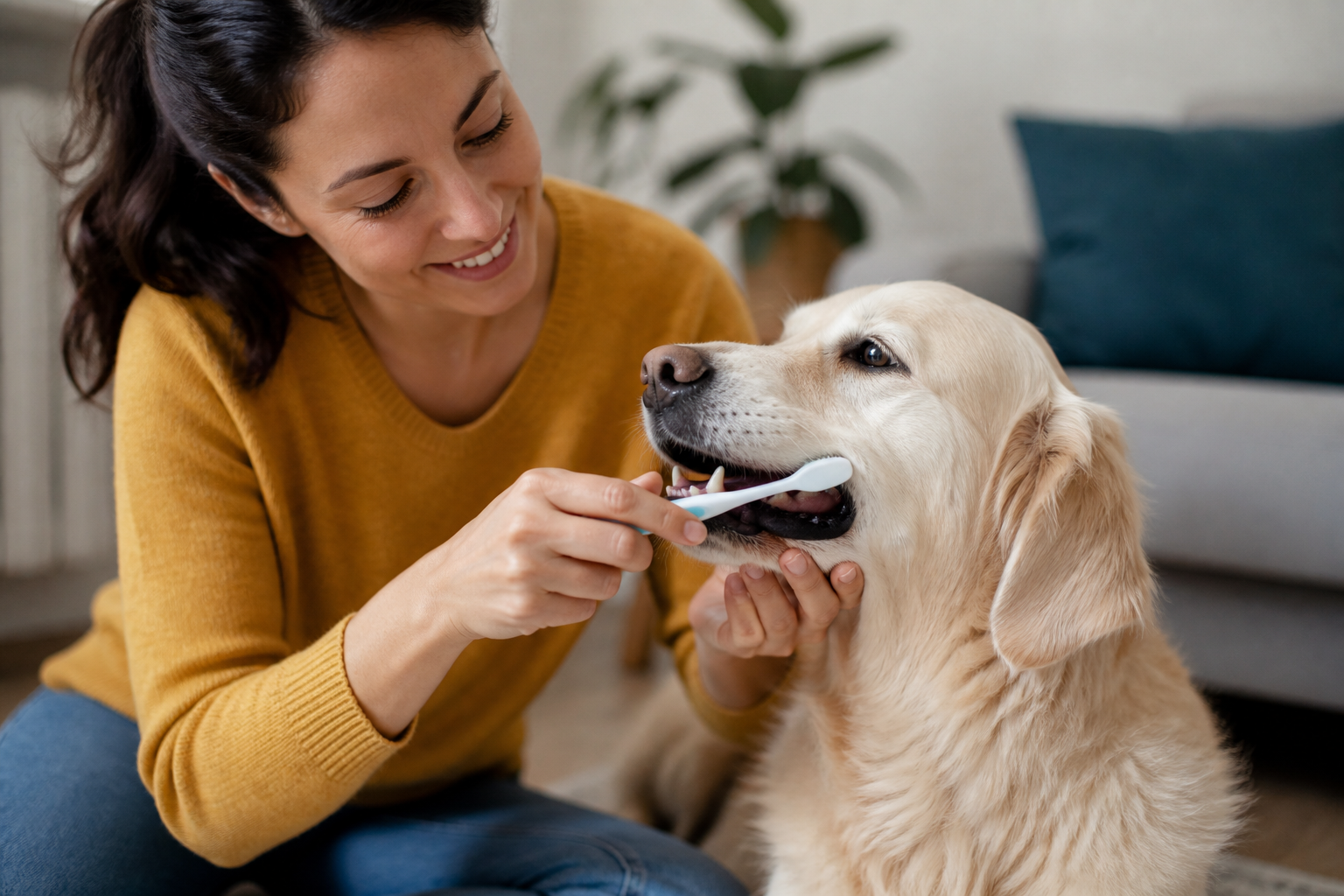
If you have never brushed your dog's teeth, do not expect to finish the whole mouth on the first day. It takes time to build trust. These step-by-step dental care tips can help you introduce the process gradually.
Step 1: Introduce the flavor.
Put a small dab of dog-safe toothpaste on your finger. Let your dog lick it off. Do this for a few days until they get excited when they see the tube.
Step 2: Touch the teeth.
While your dog licks the paste, gently lift their lip. Rub your finger along their gums and teeth. This gets them used to the sensation of having their mouth handled.
Step 3: Introduce the brush.
Put paste on the brush and let them lick it. Gradually move to brushing one or two front teeth in a circular motion.
Step 4: Work toward the back.
Slowly increase the number of teeth you brush each day. The back molars are where the most tartar builds up, so those are the most important.
Bottom line: Start slow and use lots of praise. The goal is to make dental care a positive experience rather than a struggle.
Signs Your Dog Needs an Immediate Cleaning
You should not wait for your annual exam if you notice specific red flags. Dental pain is often silent because dogs have a natural instinct to hide discomfort. For more warning signs, review this guide to hidden dental problems in dogs.
- Foul Breath: While "dog breath" is normal, a truly putrid or rotten smell indicates infection.
- Changes in Eating: If your dog starts dropping kibble or only chewing on one side, their mouth might be sore.
- Pawing at the Face: This is a common sign of a toothache or a stuck piece of debris.
- Visible Tartar: If you see brown or yellow crusty buildup that does not brush away, it is time for a professional.
- Blood on Toys: Finding blood on a chew toy or in the water bowl often means the gums are heavily inflamed.
If your dog is diagnosed with advanced periodontal disease, your vet may prescribe specific medications or a prescription dental diet. Our pet pharmacy carries FDA-approved medications and prescription foods through our partnership with Pet's Choice. You can easily manage these health needs through our website once your vet provides the prescription.
Nutrition and Dental Health
What your dog eats can impact how quickly plaque forms. There is a common myth that all dry kibble cleans teeth. While the crunch helps a little, most kibble is too small and brittle to provide a real scrubbing action.
Specific dental diets are different. The kibbles are much larger and have a fibrous texture that does not shatter. Instead, the tooth sinks into the kibble, which wipes away plaque as the dog chews. Brands like Royal Canin and Farmina offer specialized formulas for oral health. If your dog has a history of rapid tartar buildup, ask your vet if a prescription diet is a good choice.
The Role of Dental Chews
We love dental chews as a reward, but they work best when used correctly. A chew that is swallowed in two seconds will not help. You want a chew that requires your dog to work at it for several minutes. This mechanical action is what actually removes the plaque.
Look for products with the VOHC (Veterinary Oral Health Council) seal. This seal means the product has been tested and proven to reduce plaque or tartar by a certain percentage. We stock several VOHC-approved options at BaxterBoo to ensure you are getting products that actually work.
Managing the Cost of Dental Care
We understand that professional veterinary cleanings can be expensive. However, preventive care is always cheaper than emergency care. A simple cleaning is far less costly than a procedure involving multiple tooth extractions and oral surgery.
To help manage these costs, we offer the MVP Rewards program. You can earn up to 5% back on every purchase of toothbrushes, toothpaste, and dental treats. Using our Autoship program also ensures you never run out of supplies. It provides savings on your first order and grants you a free MVP Gold membership. Consistency is the key to saving money on your dog's health in the long run.
Why Small Breeds Need Extra Attention
Small breeds often keep their puppy teeth too long. These are called retained deciduous teeth. When a permanent tooth and a baby tooth occupy the same spot, they trap hair, food, and bacteria. This can cause the adult tooth to rot before the dog is even two years old.
If you have a small breed puppy, check their mouth frequently. If you see "double" teeth, talk to your vet. Often, these baby teeth are removed during the spay or neuter surgery. For small dogs, brushing is not optional. It is a daily necessity to prevent early tooth loss.
Keeping Senior Dogs Comfortable
Dental care for seniors is about quality of life. An older dog with a mouth full of infection will feel lethargic and may stop eating. Many owners think their dog is just "getting old" when they slow down. In reality, the dog might just be in pain.
We often see senior dogs get a "second wind" of energy after a professional dental cleaning. Removing those sources of chronic inflammation makes a huge difference in how they feel every day. If you are worried about anesthesia for an older pet, talk to your vet about pre-anesthetic blood work. This helps ensure your dog's organs are strong enough for the procedure.
Conclusion
Determining how often should you clean dogs teeth depends on your dog's individual needs, but the universal goal is daily care. Brushing every day at home combined with an annual professional exam is the best way to prevent pain and expensive surgeries. At BaxterBoo, we are here to support you with the best tools and advice to keep your dog's mouth healthy. Whether you need a starter kit for a new puppy or prescription support for a senior, we have the expertise to help.
- Brush daily if possible, or at least three times a week.
- Schedule a professional veterinary cleaning every 12 months.
- Use only dog-safe, enzymatic toothpaste.
- Watch for signs of pain like dropping food or bad breath.
Bottom line: A few minutes of brushing each day can add years to your dog's life by preventing systemic organ damage.
FAQ
Is it okay if I only brush my dog's teeth once a week?
While brushing once a week is better than not brushing at all, it is usually not enough to prevent tartar buildup. Plaque hardens into tartar within 48 to 72 hours. Once it hardens, a toothbrush cannot remove it. For the best results, you should aim for at least three times a week to interrupt that hardening process.
Can I use a human toothbrush on my dog?
Yes, you can use a human toothbrush if it has soft bristles. A child-sized toothbrush often works well for medium or small dogs because the head is smaller and easier to maneuver. However, you must never use human toothpaste. It contains ingredients like xylitol that are highly toxic to dogs. Always stick to toothpaste specifically formulated for pets.
Why does my dog need anesthesia for a dental cleaning?
Anesthesia is necessary because a dog will not sit still for the deep cleaning required under the gumline. To properly clean the teeth, a vet must use ultrasonic scalers and sharp instruments. Without anesthesia, there is a high risk of injury to the dog's mouth. Additionally, anesthesia allows the vet to take X-rays and perform a full exam of the oral cavity.
My dog's breath is terrible but their teeth look white. What does that mean?
White teeth do not always mean a healthy mouth. Bacteria and infection can hide under the gumline or at the back of the mouth where it is hard to see. Foul breath is often a sign of periodontal disease or an abscessed tooth that is not visible on the surface. You should schedule a veterinary exam to find the source of the smell.






