
 Save 15% on your 1st Autoship learn more

 Email us
 Live Chat
 FAQs
FAQs





Introduction
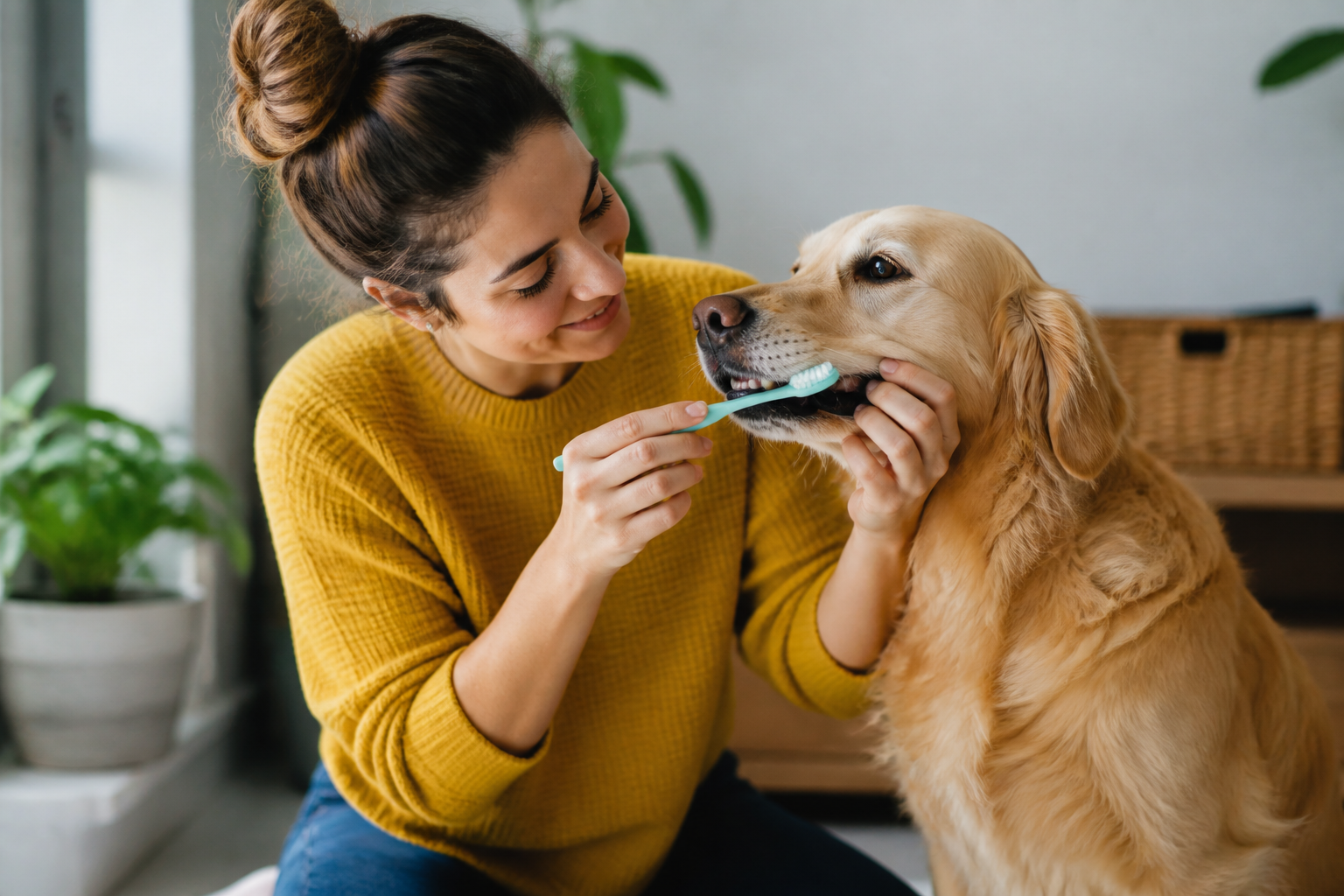
You are relaxing on the sofa when your dog hops up to give you a big, enthusiastic lick, and suddenly you are hit with a scent that is definitely not roses. We hear this story all the time from our customers at BaxterBoo. While "dog breath" is often joked about, that lingering odor is usually the first sign that your dog is overdue for a dental cleaning. Many owners wonder if they really need to brush every day or if a dental chew now and then is enough to keep the vet away. This guide covers exactly how often you should be brushing at home, when to schedule professional cleanings, and how to spot the early signs of gum disease. Protecting your dog's mouth is about much more than fresh breath: it is a vital part of their long term health.
Quick Answer: You should ideally brush your dog's teeth every single day to prevent plaque from hardening into tartar. If daily brushing is not possible, aim for at least three times per week to maintain basic oral hygiene and schedule a professional cleaning once a year.
The Science of Plaque and Tartar
To understand the frequency of cleaning, you first need to understand what is happening inside your dog's mouth. Every time your dog eats, a thin, sticky film called plaque begins to form on their teeth. Plaque is a mixture of saliva, food particles, and bacteria. If you have ever felt a "fuzzy" sensation on your own teeth after a long day, you have felt plaque.
The problem is that plaque does not stay soft for long. Within 48 to 72 hours, plaque reacts with the minerals in your dog's saliva and begins to harden into tartar, also known as dental calculus. Once plaque has turned into tartar, you cannot simply brush it away with a toothbrush. It becomes a hard, cement-like substance that provides a perfect hiding spot for even more bacteria to grow. This bacteria eventually migrates under the gumline, leading to inflammation, infection, and eventually tooth loss.
How Often to Brush at Home
If you ask a veterinary dentist for the ideal schedule, they will tell you to brush every day. Just like humans, dogs benefit from daily removal of the day's accumulated film. Since it only takes a few days for plaque to mineralize into permanent tartar, skipping even a few days can lead to buildup that you cannot fix at home.
However, we know that life gets busy. If daily brushing feels like an impossible goal, you should aim for a minimum of three times per week. Brushing every other day provides a decent chance of catching plaque before it fully hardens. If you are only brushing once a week or once a month, you are likely only cleaning the surface of existing tartar, which does very little to prevent gum disease.
Key Takeaway: Consistency is more important than duration. A quick thirty second brush three times a week is significantly more effective than a deep ten minute scrubbing once a month.
Why Small Breeds Need More Frequent Care
At BaxterBoo, we noticed that owners of small breeds like Chihuahuas, Yorkies, and Pugs often deal with dental issues much earlier than large breed owners. This is not just bad luck. Small dogs have the same number of teeth as large dogs (42 adult teeth) but those teeth are crowded into a much smaller jaw.
This crowding creates tiny nooks and crannies where food and bacteria get trapped. Furthermore, many small breeds have shallow roots, meaning that even a little bit of gum recession can lead to a loose tooth very quickly. If you own a toy or small breed, you should be even more diligent about daily brushing. Many small breed dogs require professional cleanings every six to nine months rather than the standard once a year.
Signs Your Dog Needs an Immediate Cleaning
Sometimes the calendar does not tell the whole story. You might be brushing regularly, but your dog's genetics or diet could be working against them. You should keep a close eye on their mouth during your grooming sessions. If you notice any of the following signs, it is time to skip the home brush and head to the veterinarian.
- Persistent Bad Breath: While dogs do not have minty breath, a truly foul or "rotting" smell is a sign of infection.
- Visible Tartar: Look for yellow or brown crusty buildup, especially on the back molars near the gumline.
- Red or Bleeding Gums: Healthy gums should be a pale pink. If they look red, swollen, or bleed when you brush, your dog likely has gingivitis.
- Difficulty Eating: If your dog drops food, chews on only one side, or suddenly refuses hard kibble, they may have a painful tooth.
- Pawing at the Mouth: This is a common sign of oral discomfort or a stuck piece of debris causing an abscess.
Vet Tip: Do not ignore bleeding gums. While you might think you are just brushing too hard, bleeding is usually a sign of active periodontal disease. Consult your vet to see if a professional cleaning or a course of antibiotics from our pet pharmacy is necessary.
For additional warning signs and practical next steps, read our guide to recognizing signs of bad teeth in dogs.
The Role of Professional Dental Cleanings
Even with the best at-home care, most dogs will eventually need a professional cleaning. A professional cleaning, often called a COHAT (Comprehensive Oral Assessment and Treatment), is much more than just a "scaling" of the teeth.
Most veterinarians recommend a professional cleaning once a year starting around age two or three. During this procedure, the dog is placed under general anesthesia. This is a crucial step because it allows the vet to clean deep under the gumline where the real damage happens. It also allows them to take dental X-rays to check for bone loss or "hidden" infections that are not visible to the naked eye.
Why Anesthesia-Free Cleaning Is Not Enough
You may see services offering "anesthesia-free" dental cleaning. While this might sound safer and more convenient, it is largely a cosmetic procedure. A dog will not sit still while a technician scrapes under their gums with sharp metal tools. Without anesthesia, the technician can only remove the tartar from the visible surface of the tooth. This makes the teeth look white, but it leaves all the disease-causing bacteria under the gumline. It gives owners a false sense of security while the dog's oral health continues to decline.
Choosing the Right Tools
Using the right supplies makes the process easier for both you and your dog. Never use human toothpaste. Human toothpaste contains detergents and fluoride that are not meant to be swallowed, and many brands contain Xylitol, which is highly toxic to dogs.
We recommend using an enzymatic toothpaste designed specifically for pets. These pastes come in flavors like poultry, beef, or peanut butter to make the experience more like a treat. The enzymes work to break down organic matter even if you do not get a perfect scrub on every single tooth. You can find toothbrushes, toothpaste, wipes, and other supplies in our dog dental care collection.
- Finger Brushes: Great for puppies or dogs who are nervous about long objects in their mouth.
- Dual-Headed Brushes: These have a large end for molars and a small end for the tiny front teeth.
- Dental Wipes: A good alternative for dogs who absolutely will not tolerate a brush.
- Water Additives: These help reduce the bacterial load in the mouth every time your dog takes a drink.
For more help choosing supplies and introducing a routine, explore these pet dental care tips.
How to Start a Brushing Routine
If your dog is not used to having their mouth touched, do not expect to do a full cleaning on day one. You want to build trust and make it a positive experience.
Step 1: Get them used to the taste. / Put a small dab of pet toothpaste on your finger and let them lick it off. Do this for a few days until they get excited when they see the tube.
Step 2: Touch the teeth and gums. / While they lick the paste, gently slide your finger along their gums. This gets them used to the sensation of having their lips lifted.
Step 3: Introduce the brush. / Put some paste on the brush and let them lick it. Gradually move to brushing just the front "canine" teeth (the long ones).
Step 4: Reach the back. / Most of the tartar builds up on the upper back molars. Once your dog is comfortable, focus your energy on those back teeth, as they do the most work.
Bottom line: You only need to brush the outside faces of the teeth, as the tongue usually does a decent job of keeping the inside surfaces clean.
Dietary Support for Dental Health
What your dog eats can also influence how often you need to clean their teeth. There is a long standing debate about wet food versus dry food. Generally, crunchy kibble provides a slight abrasive action that can help scrape away some plaque. However, most kibble is too small or brittle to provide a real cleaning effect.
There are specific prescription dental diets that are formulated with a larger kibble size and a specialized fiber matrix. Instead of crumbling, the tooth sinks into the kibble, allowing the fibers to "scrub" the tooth surface. Our dog pharmacy carries several of these prescription diets, which can be a great tool for dogs prone to rapid tartar buildup.
Dental Chews and Treats
Dental treats like Greenies or specialized rawhide-free chews can be an excellent supplement to brushing. These treats are designed to encourage prolonged chewing, which stimulates saliva production and mechanically removes plaque. When choosing a treat, look for the VOHC (Veterinary Oral Health Council) seal, which indicates the product has been tested and proven to reduce plaque or tartar. You can browse our selection of Greenies products for dental treat options.
For more ideas, see our guide to the best dental chews for dogs.
The Danger of Hard Chews
While chewing is good, chewing on the wrong things can lead to broken teeth. We often see dogs with "slab fractures," where a large piece of the tooth breaks off because they chewed on something too hard.
Avoid giving your dog antlers, dried hooves, or real animal bones. A good rule of thumb is the "knee test." If you would not want to be hit in the kneecap with the object, it is likely too hard for your dog's teeth. Stick to rubber toys or flexible dental chews that have some "give" to them.
Long Term Health Impacts of Dental Care
Cleaning your dog's teeth is about more than just avoiding a smelly mouth. The mouth is the gateway to the rest of the body. When a dog has advanced periodontal disease, the gums become a highway for bacteria to enter the bloodstream.
Chronic oral infection puts a constant strain on the immune system. Over time, this bacteria can settle in the heart valves, leading to endocarditis, or damage the filtration systems in the liver and kidneys. Studies have shown that dogs with consistent dental care can live significantly longer than those with neglected mouths. By keeping up with a routine, you are quite literally adding years to your dog's life.
Key Takeaway: Oral health is systemic health. Preventing gum disease protects your dog's heart, liver, and kidneys from bacterial damage.
Managing Dental Care Costs
Professional cleanings can be expensive, especially if extractions are required. This is why at-home prevention is so valuable. By brushing regularly, you may be able to extend the time between professional cleanings or ensure that when your dog does go in, they do not need any teeth pulled.
To help manage these costs, we recommend looking into FIGO pet insurance, which can offer coverage for dental accidents and illnesses. Additionally, signing up for our Autoship programme for your dental treats and toothpaste ensures you never run out, keeping your routine consistent and your costs predictable.
Summary of Dental Cleaning Frequency
To keep your dog's smile bright and their body healthy, follow this general schedule:
- Daily: Ideally, brush with enzymatic toothpaste.
- Weekly: At minimum, brush three times a week and check for any redness or swelling.
- Daily: Provide one VOHC approved dental chew.
- Yearly: Schedule a professional veterinary exam and cleaning.
- Twice Yearly: For small breeds or seniors, consider a professional checkup every six months.
FAQ
Can I use baking soda to brush my dog's teeth?
While baking soda is not toxic in tiny amounts, it has a very high salt content and a taste that most dogs find unpleasant. If swallowed in larger quantities, it can upset your dog's stomach and throw off your dog's electrolyte balance. It is much safer and more effective to use a flavored pet toothpaste that contains enzymes to break down plaque.
My dog's gums bleed when I brush, should I stop?
Bleeding gums are usually a sign of gingivitis, meaning there is already a buildup of bacteria causing inflammation. You should not stop brushing, but you should be very gentle and schedule a visit with your veterinarian. Once the vet performs a professional cleaning to remove the underlying tartar, the bleeding should stop with continued at-home care.
How can I tell if my dog has a toothache?
Dogs are experts at hiding pain, so they may continue to eat even with a significant toothache. Look for subtle signs like "shying away" when you touch their face, excessive drooling, or a sudden preference for wet food. Some dogs may also become more irritable or sleep more than usual because they are dealing with chronic discomfort.
Are dental water additives actually effective?
Water additives are not a replacement for brushing, but they are a helpful "layer" of protection. They typically contain ingredients like chlorhexidine or enzymes that help reduce the number of bacteria in the mouth. They are most effective when used as part of a multi-pronged approach that includes brushing and dental chews.
Conclusion
Keeping your dog's teeth clean is a lifelong commitment that pays off in a happier, healthier pet. While the goal is daily brushing, even a few times a week makes a massive difference compared to no care at all. Always keep an eye out for changes in your dog's breath or eating habits, and do not be afraid to talk to your vet about the right schedule for your specific breed.
Our team at BaxterBoo is here to help you stay on top of your dog's oral hygiene. From our selection of dental care supplies to our pharmacy's prescription dental diets and medications, we have everything you need to keep those pearly whites shining. Start a routine today and your dog will thank you for years to come.
Bottom line: Brushing your dog's teeth is the single most effective thing you can do at home to prevent painful disease and expensive vet bills.






