
 Save 15% on your 1st Autoship learn more

 Email us
 Live Chat
 FAQs
FAQs





Introduction
You lean in for a morning nuzzle from your dog and catch a scent that is anything but sweet. Bad breath is more than a social nuisance for pets. It is often the first sign that bacteria are taking hold in the mouth. At BaxterBoo, we know that staying on top of oral hygiene is one of the most effective ways to extend your dog’s life and prevent unnecessary pain. Many owners wonder if they should be brushing daily or if an occasional dental chew is enough to get the job done. This post explains the ideal frequency for both at-home brushing and professional veterinary cleanings while considering your dog's age and breed. Our goal is to help you build a sustainable routine that keeps your pup’s smile bright and their body healthy.
Quick Answer: Ideally, you should brush your dog's teeth every single day to prevent plaque from hardening into tartar. At a minimum, aim for three times per week. Professional cleanings by a veterinarian should typically happen once a year, though small breeds may need them every six months.
The Daily Standard: How Often to Brush at Home
The most effective way to manage your dog’s dental health is through our dental and breath care category. Plaque begins to form on the teeth within minutes of eating. If it is not removed, it can harden into tartar (calculus) in as little as 72 hours. Once plaque turns into tartar, you cannot remove it with a toothbrush. Only a professional veterinary scaling can clear away that hardened material.
Daily brushing might feel like a tall order for a busy schedule. If every day is not possible, you should aim for at least three times a week. This frequency helps break up the plaque film before it mineralizes against the gumline. Even a thirty-second session focused on the outer surfaces of the upper teeth can make a massive difference in preventing gingivitis.
Key Takeaway: Plaque hardens into tartar within three days. Brushing at least every other day is necessary to stop this process.
Tips for Starting a Brushing Routine
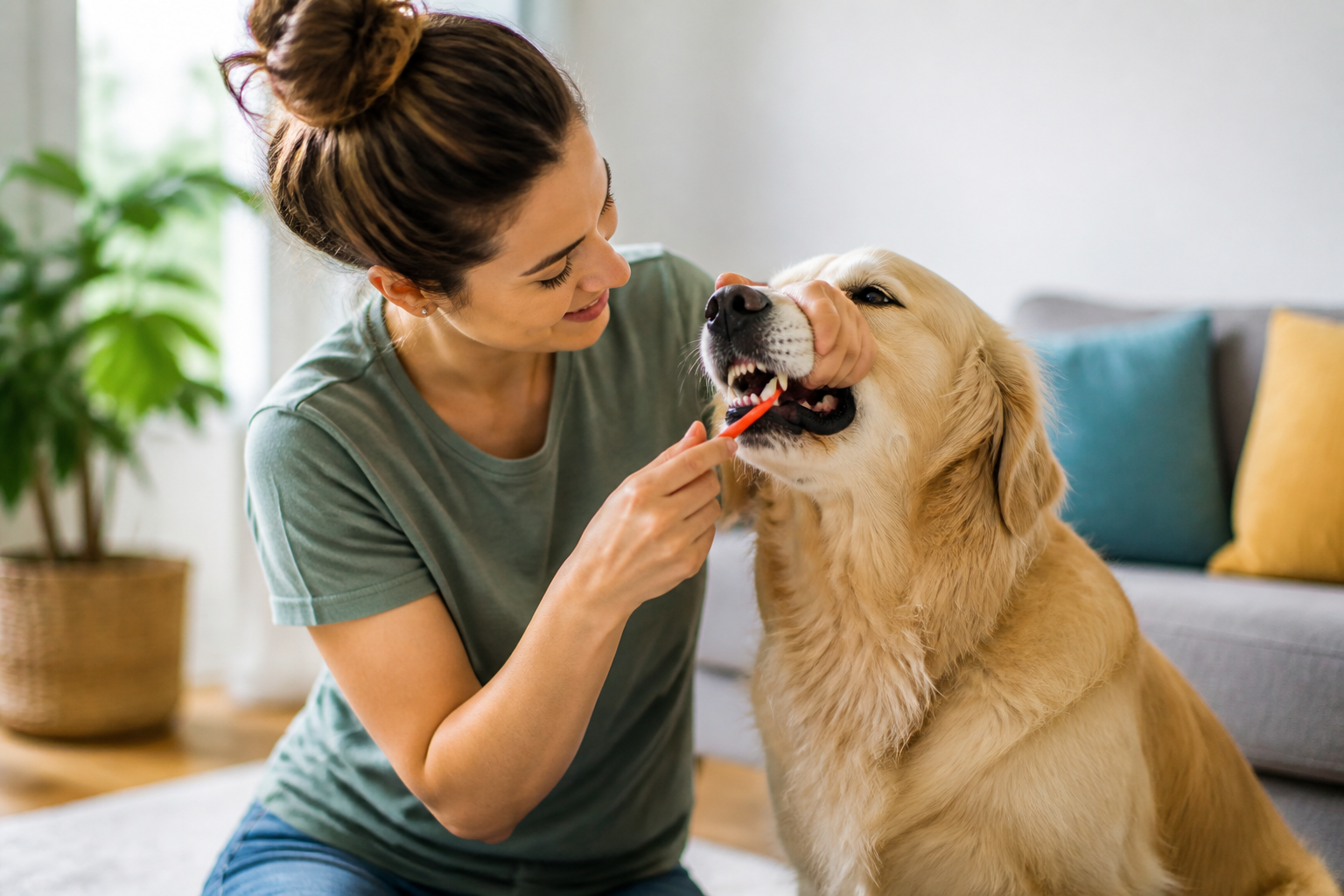
If your dog is not used to having their mouth handled, take it slow. You do not need to scrub every surface on the first day. Start by letting them lick a pet-safe toothpaste off your finger. These pastes come in flavors like poultry or beef to make the experience a reward rather than a chore.
Step 1: Get your dog comfortable. / Rub your finger along their gums for a few seconds daily for one week.
Step 2: Introduce the paste. / Let them taste the flavored enzymatic toothpaste without any brushing.
Step 3: Use a finger brush or soft toothbrush. / Gently brush the large canine teeth in a circular motion.
Step 4: Expand the area. / Gradually work toward the back molars where most tartar accumulates.
For additional guidance on introducing brushing gradually, read these pet dental care tips.
Professional Veterinary Cleanings: The Annual Requirement
Even with excellent home care, most dogs require a professional cleaning at least once a year. Think of this like your own visit to the dental hygienist. A veterinarian can reach areas under the gumline where a toothbrush cannot. They also use specialized tools to scale away tartar and polish the enamel.
A professional cleaning is officially known as a Comprehensive Oral Assessment and Treatment (COHAT). During this procedure, the vet can identify hidden issues like fractured teeth, oral tumors, or deep infections. These problems are often invisible during a quick look in a wiggly dog's mouth at home.
Vet Tip: Schedule a dental checkup during your dog's annual wellness exam. Your vet can give your dog a "dental grade" to help you decide if a professional cleaning is needed sooner than twelve months.
Age and Breed: Factors That Change the Schedule
Not every dog follows the same dental timeline. Smaller breeds and certain face shapes are significantly more prone to dental disease than others. If you own a toy breed or a flat-faced dog, your cleaning schedule will likely be more aggressive.
Small and Toy Breeds
Dogs like Yorkies, Chihuahuas, and Pomeranians often have 42 adult teeth crowded into a very small mouth. This crowding creates tiny crevices where food and bacteria get trapped. Small dogs also have shallower tooth roots. This means that even a small amount of gum recession can lead to tooth loss. Many veterinarians recommend professional cleanings every six to nine months for these breeds.
Brachycephalic (Flat-Faced) Breeds
Pugs, Bulldogs, and French Bulldogs often have misaligned jaws. This is called malocclusion. When teeth do not meet properly, the natural mechanical cleaning that happens during chewing does not occur. These dogs may need more frequent professional interventions to prevent premature decay.
Senior Dogs
As dogs age, their immune systems may not fight off oral bacteria as effectively. Senior dogs are also more likely to have underlying health conditions that make oral infections more dangerous. We recommend more frequent oral exams for dogs over the age of seven to ensure that "old dog breath" is not actually a masking scent for a serious infection.
Bottom line: Small breeds and seniors typically need professional cleanings twice as often as large, young dogs.
Recognizing the Signs: When an Extra Cleaning is Necessary
You should not always wait for the one-year mark to see the vet. Sometimes, dental issues arise suddenly due to a cracked tooth or a foreign object stuck in the gums. Watch your dog for changes in behavior or physical appearance around the mouth.
- Persistent bad breath: A "fishy" or "rotting" smell is a primary indicator of infection.
- Bleeding or red gums: Gums should be a healthy pink. Redness at the tooth line indicates gingivitis.
- Changes in eating habits: If your dog starts dropping food or chewing only on one side, they may be in pain.
- Excessive drooling: New or increased drooling can signal oral discomfort.
- Pawing at the face: This is a common sign of a toothache or something stuck between teeth.
- Visible tartar: Yellow or brown crusty buildup on the teeth that does not brush away.
For a closer look at warning signs, read how to recognize hidden dental problems in dogs.
If you notice any of these signs, a trip to the vet is the right next step. These symptoms often indicate that periodontal disease has progressed beyond the point where home care can help.
The Connection Between Dental Health and Overall Wellness
Dental care is not just about a pretty smile. It is about protecting your dog’s vital organs. The mouth is highly vascular, meaning it has a rich supply of blood vessels. When the gums are inflamed and infected, bacteria can easily enter the bloodstream.
Once in the blood, these bacteria can travel to the heart, kidneys, and liver. Chronic dental disease has been linked to endocarditis (inflammation of the heart valves) and various types of organ failure. By keeping your dog’s mouth clean, you are essentially protecting their entire body from systemic inflammation.
Key Takeaway: Oral bacteria can travel through the bloodstream and cause permanent damage to the heart, liver, and kidneys.
Why Anesthesia is Necessary for Real Cleaning
You may see advertisements for "anesthesia-free" dental cleanings. While these might sound safer or more convenient, they are generally not recommended by veterinary dental specialists. Anesthesia-free cleanings are primarily cosmetic. They remove the tartar you can see but leave behind the bacteria under the gumline.
Proper dental work requires the dog to be completely still. This allows the vet to take X-rays and use sharp instruments safely around delicate tissue. Anesthesia also allows for the placement of a tube that protects the dog’s airway from the water and bacteria being sprayed during the cleaning.
If you are worried about anesthesia, talk to your vet about their monitoring protocols. Modern veterinary medicine uses advanced technology to track heart rate, blood pressure, and oxygen levels throughout the procedure. For many pets, the risk of untreated dental infection is far higher than the risk of a controlled anesthetic event.
Building a Dental Care Routine That Works
Consistency is the most important part of any dental plan. At BaxterBoo, we believe in making pet care manageable for real life. If you cannot brush every day, combine different methods to provide round-the-clock protection.
- Morning: Give a dental chew after breakfast to help mechanically scrub the teeth.
- Evening: Use a water additive in their bowl to help reduce the bacterial load in the mouth.
- Bedtime: Spend one minute brushing the upper molars.
- Weekly: Check for any new redness, swelling, or broken teeth.
This multi-pronged approach ensures that even if you miss a day of brushing, your dog is still getting some level of oral support. For repeat-purchase dental supplies, our Autoship programme can help you maintain a consistent schedule.
Using Treats and Food to Support Oral Hygiene
Diet plays a supporting role in how often you need to clean your dog’s teeth. While no food can replace brushing, certain textures can help. Dry kibble is often better than wet food for dental health because the crunching action provides a slight scraping effect.
However, some dogs need specialized diets. Prescription dental foods have a specific fiber matrix that does not crumble immediately. Instead, the tooth sinks into the kibble, allowing the fibers to scrub the surface of the tooth. Our pharmacy carries these prescription pet foods through our partnership with Pet's Choice. If your vet recommends a specific dental diet like Royal Canin Dental or Farmina Vet Life, you can fulfill those needs through our pharmacy for dogs with a valid prescription.
Dental Chews and Treats
Brands like Greenies and RedBarn offer treats specifically designed to fight plaque. When choosing a dental chew, look for the Veterinary Oral Health Council (VOHC) seal. This seal ensures the product has been tested and proven to reduce plaque or tartar.
You can compare options in our dental food and treats category. A specific option is Greenies Dental Dog Chews - Blueberry Flavor, which is designed for adult dogs.
Be careful with very hard chews like antlers or cow hooves. While they do scrape the teeth, they are often harder than the tooth enamel itself. We frequently see dogs with "slab fractures" on their large upper premolars because they chewed on something too hard. A good rule of thumb is that if you cannot indent the chew with your thumbnail, it might be too hard for your dog’s teeth.
Vet Tip: Always supervise your dog when they are enjoying a dental chew. Remove any small pieces that could become a choking hazard.
For more ideas, explore dental chews for dogs.
Conclusion
Determining how often to clean your dog's teeth involves a mix of daily habits and annual professional care. Brushing every day is the gold standard for at-home hygiene. Most dogs will still need a professional cleaning once a year to address buildup under the gumline. Smaller breeds and seniors may require these visits every six months due to their higher risk of periodontal disease.
By staying proactive, you can prevent the painful infections and systemic health issues that stem from poor oral care. We invite you to explore our dental care category to find the brushes, pastes, and water additives that fit your lifestyle. If your vet has prescribed a specific dental diet or medication for gum health, remember that our pharmacy partnership with Pet's Choice is here to help you get those essential supplies delivered right to your door.
- Aim for daily brushing or at least three times per week.
- Schedule professional cleanings annually.
- Watch for signs of pain or bad breath between visits.
- Use VOHC-approved treats and chews for extra support.
Bottom line: Consistent at-home care and regular veterinary cleanings are the two best tools for ensuring your dog enjoys a long, pain-free life.
FAQ
Can I use human toothpaste for my dog?
No, you should never use human toothpaste for a dog because it contains ingredients that are toxic to pets. Many human pastes contain Xylitol, an artificial sweetener that causes life-threatening low blood sugar and liver failure in dogs. Additionally, dogs cannot spit out the foam, and the fluoride in human paste can upset their stomach or cause toxicity if swallowed.
Is a dental chew as good as brushing?
While dental chews are helpful tools, they are not as effective as manual brushing. A toothbrush allows you to target the gumline and the specific crevices where bacteria hide. Think of dental chews as a supplement to your routine, similar to how a human might use mouthwash or sugar-free gum between brushings.
My dog’s breath is terrible but their teeth look white. Do I still need a cleaning?
Yes, you should still consult a veterinarian. Bad breath is often caused by bacteria living under the gumline or in the back of the throat, which you cannot see during a casual inspection. White teeth can still be associated with deep periodontal pockets or infections that require professional treatment and X-rays to diagnose.
Does my dog really need to be put under for a dental cleaning?
Yes, anesthesia is the only way to perform a safe and thorough dental cleaning for a dog. It allows the veterinarian to clean beneath the gumline, take accurate X-rays, and evaluate every side of every tooth. Without it, the procedure is stressful for the dog and only addresses the visible tartar, leaving the most dangerous bacteria behind.






