
 Save 15% on your 1st Autoship learn more

 Email us
 Live Chat
 FAQs
FAQs





Introduction
You lean in for a happy morning nuzzle, but instead of sweetness, you get a face full of "dog breath" that makes you recoil. Many owners think this smell is just a natural part of being a canine, but it is often the first sign of dental neglect. At BaxterBoo, we know that keeping those pearly whites clean is about much more than just fresh breath. It is a vital part of your dog's overall longevity and comfort. Plaque begins to harden into tartar in as little as three days, meaning your window to act is small. This guide will help you understand the necessary frequency for both at-home brushing and professional veterinary cleanings. By the end of this post, you will have a clear schedule to keep your dog healthy and pain-free.
Quick Answer: For the best results, you should brush your dog's teeth every day at home. Professional veterinary cleanings should typically happen once per year, though small breeds and seniors may need them every six months.
The Daily Gold Standard for At-Home Care
If you ask a veterinarian how often you should brush your dog's teeth, the answer is always the same: every single day. This might sound like a tall order for a busy pet owner. However, the biological reasons for daily care are hard to ignore. Just like in humans, bacteria and food particles form a sticky film called plaque on the teeth immediately after eating. If this plaque is not physically brushed away, it mixes with minerals in the saliva.
Within 48 to 72 hours, that soft plaque undergoes a chemical change. It hardens into dental calculus, or tartar. Once plaque has turned into tartar, you cannot remove it with a toothbrush at home. It becomes a cement-like substance that provides a porous surface for even more bacteria to grow. This leads to gingivitis, which is the inflammation of the gums.
If you cannot manage a daily session, aim for at least three times per week. Brushing less than this provides very little benefit for preventing long-term disease. We recommend keeping a toothbrush and pet-safe toothpaste near your dog's evening treats or leash to help you remember the routine. For additional guidance, read our tips for building a regular pet dental care routine.
Key Takeaway: Plaque hardens into permanent tartar within three days. Brushing daily is the only way to stop this cycle and prevent the need for more frequent professional interventions.
Why Professional Cleanings Are Non-Negotiable
Even the most diligent brushers cannot reach every nook and cranny in a dog's mouth. Dogs have 42 teeth, and many of them are shaped in ways that naturally trap debris. This is why professional cleanings are a necessary part of a dog's life. Most veterinary dentists recommend a professional cleaning once every year.
During these visits, your vet does more than just scrape away tartar. They perform a full oral examination. This includes checking for oral tumors, loose teeth, and deep pockets in the gums where infection hides. Most importantly, they clean under the gumline. This is an area that home brushing simply cannot reach.
Vet Tip: If you notice your dog has persistent bad breath, bleeding gums, or is dropping food, schedule a veterinary exam immediately. These are signs of advanced dental disease that a toothbrush cannot fix. Your vet can determine if a professional cleaning or prescription medication from our pet pharmacy is necessary.
Factors That Change How Often You Should Clean
Not every dog follows the once-a-year rule. Several factors can speed up the timeline for dental issues. Understanding where your dog fits into these categories will help you adjust your schedule.
The Small Breed Factor
Small and toy breeds, such as Yorkies, Chihuahuas, and Pugs, are notorious for dental problems. These dogs have the same number of teeth as a large dog but much smaller mouths. This causes severe overcrowding. When teeth are crowded, there is almost no way for saliva to naturally wash away food particles. Small dogs often need professional cleanings every six to nine months.
Age and Life Stage
By the age of three, roughly 80 percent of dogs show some sign of periodontal disease. As dogs enter their senior years, their immune systems change and their teeth have endured years of wear. Senior dogs may need more frequent checkups to ensure that bacteria from the mouth are not entering the bloodstream and affecting the heart or kidneys. You can also review warning signs of hidden dental disease in dogs.
Diet and Chewing Habits
A dog that eats only soft, wet food will likely need more frequent cleanings than a dog on a crunchy kibble diet. Wet food sticks to the teeth and does not provide any abrasive action to help scrub the surface. Similarly, dogs that are "power chewers" and use dental toys often have less tartar buildup than dogs that do not chew.
Recognizing the Signs of Trouble
You should not always wait for the one-year mark to have your dog's mouth checked. Being proactive can save your dog from significant pain. Because dogs are stoic, they often hide dental pain until it is nearly unbearable. Watch for these red flags:
- Discolored Teeth: Yellow or brown crust near the gumline is a sign of heavy tartar buildup.
- Red or Swollen Gums: Healthy gums should be a soft pink. Bright red or bleeding gums indicate infection.
- Changes in Eating: If your dog starts eating on one side of their mouth or stops wanting hard kibble, they may have a painful tooth.
- Excessive Drooling: A sudden increase in drool, especially if it is tinged with blood, is a major warning sign.
- Pawing at the Face: This is a clear sign of discomfort or something being stuck between the teeth.
The Role of Professional Anesthesia
One of the most common questions we hear is whether a dog can have their teeth cleaned without anesthesia. While "anesthesia-free" cleanings are marketed by some groomers or boutiques, they are not a substitute for veterinary care.
When a dog is awake, it is impossible to clean under the gumline or the back of the molars safely. It is also impossible to take dental X-rays, which are necessary to see the roots of the teeth. At BaxterBoo, we believe in the highest standard of care. Our pharmacy partnership with Pet's Choice ensures that if your vet prescribes specific medications or prescription diets for recovery after an anesthetic procedure, you can access them easily.
The Benefits of a Sedated Cleaning:
- A stress-free experience for the dog.
- The ability to perform a deep scale and polish.
- Detailed X-rays to find hidden abscesses.
- The safety of the veterinary staff.
Step-by-Step: Transitioning to Daily Brushing
If your dog is not used to having their mouth touched, you cannot just jump into a full brushing session. You must move slowly to build trust.
Step 1: Get them used to the touch. / For the first few days, simply rub your finger along your dog's gums and teeth. Use a calm voice and offer a small treat afterward.
Step 2: Introduce the flavor. / Put a small amount of pet-safe toothpaste on your finger and let them lick it off. Most dog pastes are flavored like beef or poultry to make this easier.
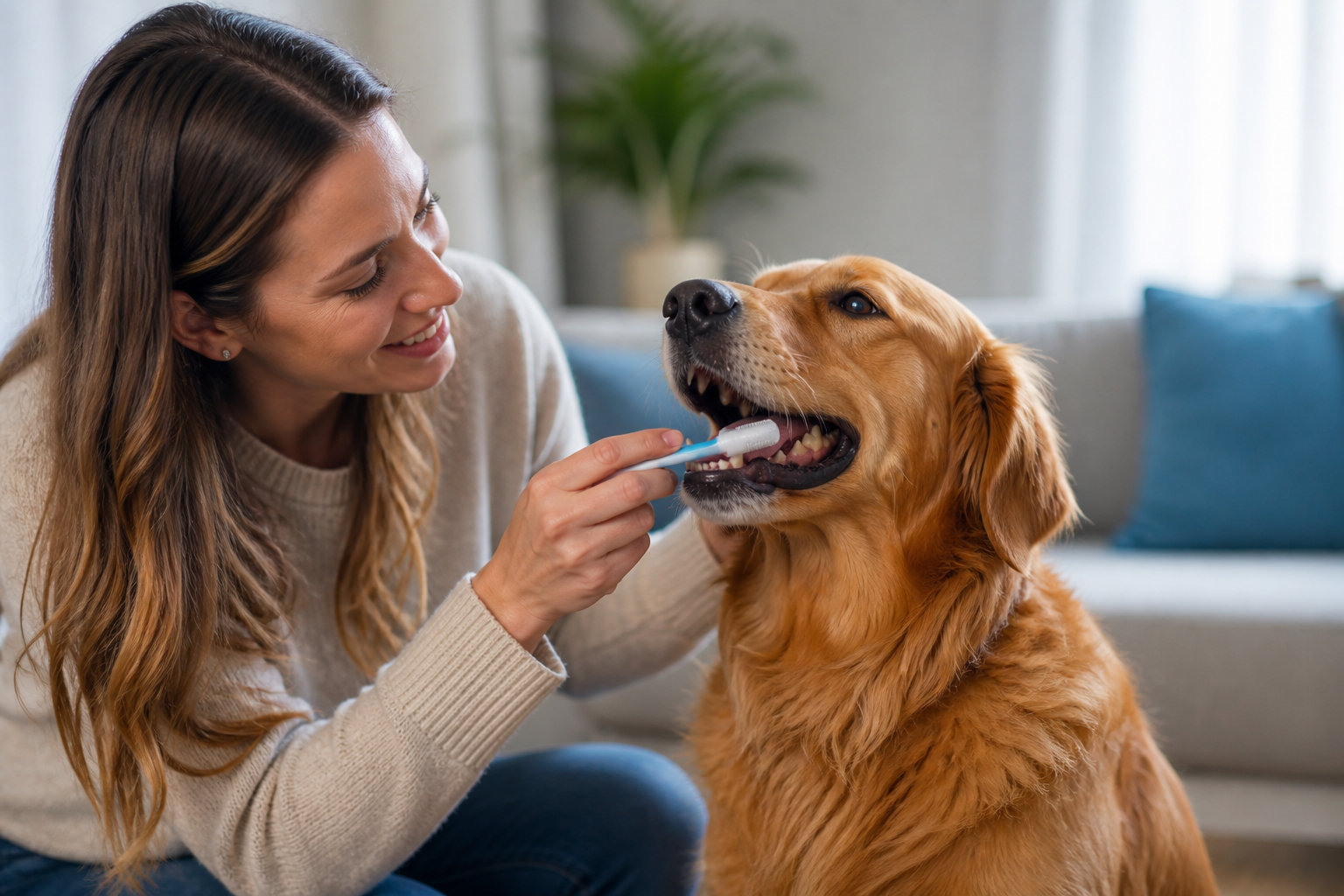
Step 3: Try a finger brush. / Use a silicone finger brush to gently rub the front teeth in a circular motion. Do not worry about the back teeth yet.
Step 4: Move to a standard toothbrush. / Once they are comfortable with the finger brush, transition to a dog-specific toothbrush with a long handle. Focus on the outside surfaces of the teeth, as this is where most tartar accumulates. A product such as the Ark Naturals Brushless Toothpaste Dog Chews can also support the transition when used as directed.
Bottom line: A slow, positive introduction ensures your dog will tolerate the daily cleanings they need for a healthy life.
Supporting Oral Health with Diet and Gear
Brushing is the most effective tool, but it is not the only one. You can support your dog's dental health through the products you choose every day. We carry a wide range of items designed to make this job easier. Explore our dog dental care collection for brushes, toothpaste, chews, and other oral-care supplies.
Dental Chews and Treats
Brands like Greenies or RedBarn offer dental chews that are specifically designed to scrub the teeth as the dog bites down. These treats contain ingredients that help break down the biofilm of plaque. While they do not replace brushing, they are an excellent daily supplement. You can compare options in our guide to the best dental chews for dogs.
Water Additives and Wipes
If you have a dog that absolutely refuses a toothbrush, dental wipes and water additives are better than doing nothing. Wipes allow you to physically remove some surface plaque without the bulk of a brush. Water additives contain enzymes that help kill the bacteria that cause bad breath and plaque. Our dental supplements and oral-care products include options for adding variety to your routine.
Prescription Dental Diets
For dogs with a history of rapid tartar buildup, your vet may recommend a prescription dental diet. These kibbles are larger and have a specific fiber matrix that does not shatter when the dog bites it. Instead, the tooth sinks into the kibble, allowing the fibers to scrub the tooth surface. These specialized diets are available through our pharmacy partnership for those with a valid prescription.
- Check for the VOHC (Veterinary Oral Health Council) seal on products.
- Replace toothbrushes every three months or when bristles are frayed.
- Never use human toothpaste, as it contains xylitol which is toxic to dogs.
- Supervise all chewing sessions to prevent choking or broken teeth.
The Connection Between Dental Health and Overall Wellness
It is a mistake to think that dental issues stay in the mouth. The mouth is a gateway to the rest of the body. When a dog has periodontal disease, the gum tissue is chronically inflamed and infected. This creates a direct path for bacteria to enter the bloodstream.
Once in the blood, these bacteria can travel to the heart valves, causing endocarditis. They can also lodge in the kidneys and liver, leading to organ failure over time. Some studies suggest that dogs with healthy mouths live an average of two to three years longer than those with untreated dental disease. By sticking to a regular cleaning schedule, you are quite literally adding years to your dog's life.
How BaxterBoo Supports Your Dental Routine
We are committed to helping you find the right tools for your dog's specific needs. Since 2006, our team has handpicked products that we would use on our own pets. Whether you need a starter kit for a new puppy or advanced dental support for a senior, we have the selection to help.
Our MVP Rewards program allows you to earn 5% back on all your dental care purchases, from brushes to chews. If you find a routine that works, our Autoship program ensures you never run out of toothpaste or treats, saving you money on every recurring order.
For more complex needs, our partnership with Pet's Choice provides access to the BaxterBoo pharmacy. This is the place to find FDA-approved medications for oral infections or prescription-only dental diets like Royal Canin or Farmina Vet Life. We believe that value and expertise go hand-in-hand, and we are here to support your journey as a responsible pet owner. You can also browse our Redbarn products when looking for chew and treat options.
Key Takeaway: Proper dental care is a combination of daily at-home habits and annual professional expertise. Together, these steps prevent pain and extend your dog's life.
Conclusion
Managing your dog's dental health does not have to be an overwhelming chore. By understanding that plaque turns into tartar in just a few days, you can see why daily brushing is the goal. However, life happens, and we are here to provide the tools that fill the gaps. From dental chews to professional-grade pharmacy diets, keeping your dog's mouth clean is one of the best investments you can make. Start today by simply checking your dog's gums and planning your next brushing session. Begin by exploring our dog dental care supplies.
Bottom line: A healthy dog starts with a healthy mouth, so make dental care a non-negotiable part of your routine.
FAQ
Is it really necessary to brush my dog's teeth every day?
Yes, daily brushing is the most effective way to prevent the buildup of plaque and tartar. Plaque begins to mineralize into hard tartar within 72 hours, so brushing every 24 hours stops this process before it becomes permanent. If daily is impossible, aim for at least three times per week to see any measurable health benefit.
Can I just use a dental chew instead of brushing?
While dental chews are a helpful supplement, they are not a replacement for manual brushing. Chews usually only reach the tips of the teeth and the chewing surfaces, often missing the gumline where most disease starts. Think of dental chews like chewing gum for humans; it helps, but you still need to brush your teeth.
Why do small dogs need their teeth cleaned more often than large dogs?
Small dogs have the same 42 teeth as large dogs, but they are squeezed into a much smaller jaw. This overcrowding creates many hidden spots where food and bacteria can hide. Additionally, small dogs often have shallower tooth roots, meaning that a small amount of gum disease can lead to tooth loss much faster than in a large breed.
How do I know if my dog needs a professional cleaning right now?
The most common sign is persistent bad breath that does not go away after eating. You should also look for yellow or brown buildup on the teeth, red or bleeding gums, and any signs of pain like pawing at the mouth or dropping food. If you see these symptoms, a professional veterinary exam is the necessary next step to prevent further infection.






