Save 15% on your 1st Autoship learn more

 Email us
 Live Chat
 FAQs
FAQs





Introduction
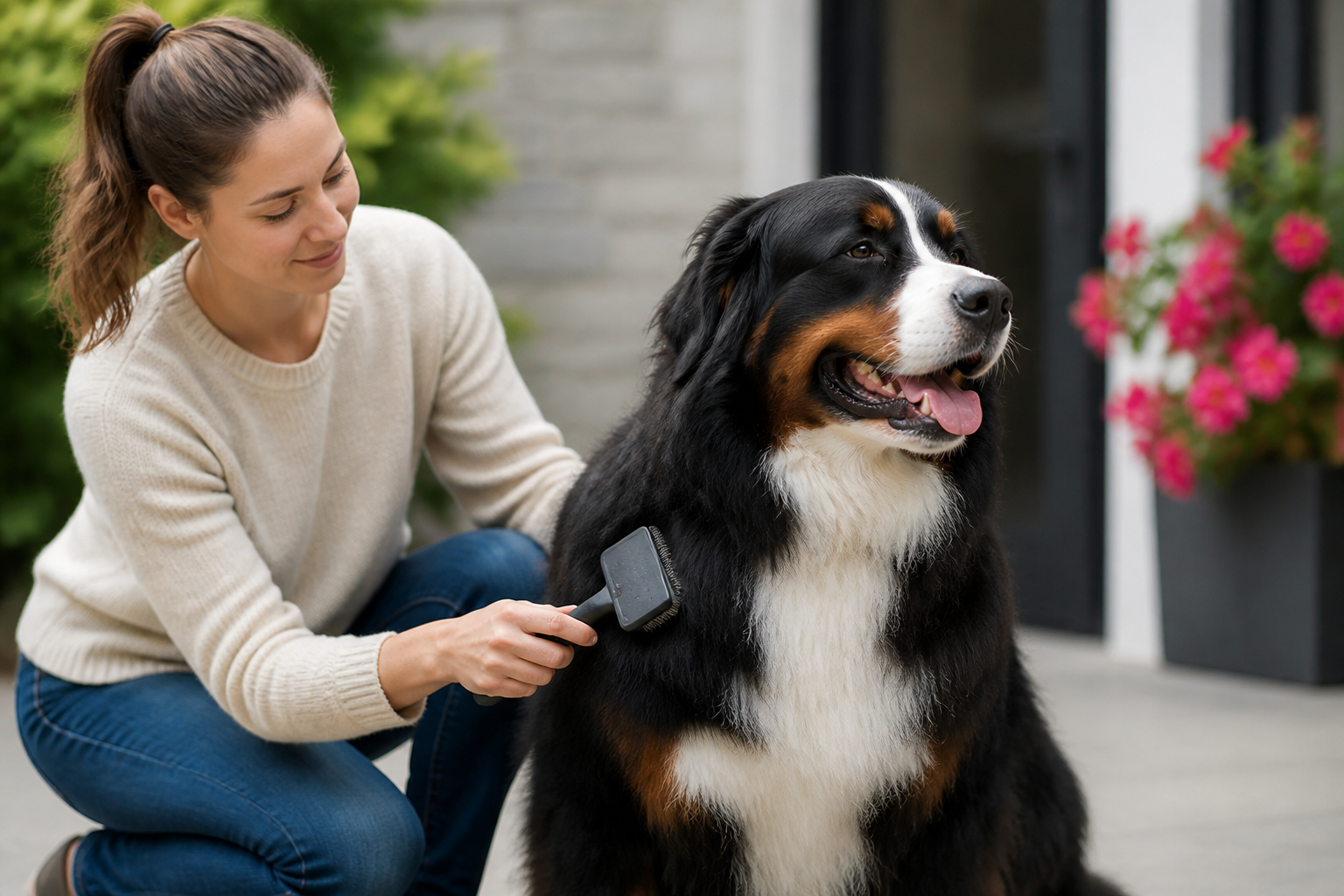
If you share your home with a Bernese Mountain Dog, you already know the specific struggle of finding "Berner glitter" on every surface you own. These beautiful tri-colored giants are famous for their thick, luxurious coats, but that beauty comes with a lot of loose fur. Living with a double-coated breed means your vacuum cleaner stays busy, and your black clothes are never truly safe. At BaxterBoo, we know that grooming a dog of this size can feel like a full-time job. This guide covers the essential tools and techniques required to manage that heavy undercoat and keep your dog comfortable. Regular brushing does more than just reduce shedding. It protects the skin and ensures your dog stays cool in the summer and warm in the winter. Mastering the right brushing routine is the best way to bond with your Berner while maintaining a tidy home.
Quick Answer: Brush your Bernese Mountain Dog at least once or twice a week using a slicker brush and an undercoat rake. During seasonal shedding periods in the spring and fall, daily brushing is necessary to remove dead hair and prevent painful mats from forming near the skin.
Understanding the Bernese Mountain Dog Double Coat
To brush a Bernese Mountain Dog effectively, you must first understand what you are working with. This breed has a classic double coat. The outer coat consists of long, slightly wavy hair that is designed to repel water and dirt. Beneath that sits a thick, woolly undercoat. This undercoat is what provides insulation against the cold Swiss mountain air. It is also the source of most of the shedding you see around your house.
This undercoat does not just stay in place. It grows and dies in cycles. When the hair dies, it often gets trapped by the long outer guard hairs instead of falling to the floor. This trapped hair is the primary cause of matting. If you only brush the surface, you leave that dead woolly hair trapped against the skin. Over time, this hair tangles and forms tight knots called mats. These mats can pull on the skin, cause irritation, and even lead to hot spots or infections.
The coat also regulates your dog's temperature. Some owners make the mistake of shaving their Bernese Mountain Dog in the summer. We strongly advise against this. The double coat actually protects them from the sun and helps circulate air to keep them cool. Shaving can permanently damage the coat texture and leave their skin vulnerable to sunburn. Brushing is the only healthy way to help them manage the heat.
Essential Tools for Berner Grooming
You cannot groom a large double-coated dog with a standard brush from a grocery store. You need heavy-duty tools that can reach all the way down to the skin. Using the wrong tools will result in "surface brushing," where the top looks shiny but the undercoat remains a tangled mess. Browse our dog grooming collection for brushes, combs, shampoos, ear care, and other grooming supplies.
The Slicker Brush
A high-quality slicker brush is your primary tool. These brushes have fine, short wires close together on a flat or curved surface. They are excellent for grabbing loose hair and smoothing out the topcoat. When shopping at BaxterBoo or looking through our collection, look for a "long-pin" slicker brush. The longer pins are necessary to penetrate the dense Berner fur without scratching the skin.
The Undercoat Rake
This is perhaps the most important tool for a Bernese Mountain Dog owner. An undercoat rake has a single or double row of metal tines designed to reach deep into the fur. It pulls out the dead, fuzzy undercoat before it has a chance to mat. This tool is a lifesaver during the spring and fall when your dog "blows" their coat. A product such as the Master Grooming Tools Ergonomic Undercoat Rakes for Dogs and Cats is designed to remove loose, dead undercoat hair.
The Stainless Steel Greyhound Comb
A sturdy metal comb is the ultimate test of your work. After you have used the slicker brush and the rake, you should be able to run a metal comb through the fur from the skin to the tips without hitting a snag. It is also the best tool for detail work around the ears and the "feathers" on the legs.
Detangling Spray
Never brush a dry Berner coat if you can avoid it. Dry hair is more prone to breakage and static. A light mist of a conditioning or detangling spray helps the tools glide through the hair. It also adds a protective layer to the hair shaft, which helps repel dirt between grooming sessions.
Key Takeaway: Proper grooming requires a combination of tools: a long-pin slicker brush for the surface, an undercoat rake for the heavy lifting, and a metal comb for checking your work.
A Step-By-Step Guide to Brushing Your Berner
Brushing a dog this size requires a systematic approach. If you just start brushing randomly, you will likely miss spots. We recommend a technique called "line brushing." This ensures you are reaching the skin across the entire body.
Step 1: Prepare the Coat
Start by lightly misting your dog with a detangling spray. Do not soak the fur, just a light dampness is enough. This reduces static and makes the process much more comfortable for your dog. If your dog is prone to anxiety during grooming, consider using some calming treats from our Anxiety and Calming section to help them relax.
Step 2: Start at the Bottom
It is easiest to start at the rear legs and work your way forward. Use one hand to push the hair up and out of the way. With your other hand, use the slicker brush to pull a small "line" of hair down. Brush from the skin outward. Once that section is clear and you can see the skin, move up an inch and repeat the process.
Step 3: Tackle the Undercoat
Once you have done a pass with the slicker brush, go over the same area with your undercoat rake. Use light, short strokes. You will likely be amazed at how much fur comes out even after using the slicker brush. Keep a trash can nearby because the piles of fur will grow quickly.
Step 4: The Sensitive Areas
Pay special attention to the areas behind the ears, the armpits, and the "breeches" on the back of the legs. These are high-friction areas where mats form most easily. Use your metal comb here to ensure there are no small tangles starting to form. Be very gentle, as the skin in these spots is thinner and more sensitive.
Step 5: The Final Finish
After the whole body has been line-brushed and raked, do one final pass with the slicker brush over the entire coat. This smooths everything down and gives that classic Berner shine. This is a great time to check for any lumps, bumps, or ticks that might be hiding under that thick fur.
Vet Tip: While brushing, always check the skin for redness, sores, or "hot spots." Bernese Mountain Dogs are prone to skin irritations that can hide under thick fur. If you find a persistent sore or an area your dog is obsessively licking, consult your veterinarian to rule out infections or allergies.
Managing the Seasonal Blow Out
Twice a year, usually in the spring and fall, your Bernese Mountain Dog will "blow" their coat. This is a period of intense shedding where the undercoat falls out in clumps. During these times, your weekly brushing routine needs to become a daily routine. For additional perspective on managing a thick double coat, see this guide to seasonal shedding and undercoat care.
If you ignore the coat during a blow out, the dead hair will quickly felt together. This creates a solid layer of matting that prevents the skin from breathing. When this happens, moisture can get trapped against the skin, leading to painful bacterial infections.
Using a high-velocity dryer can be a huge help during this time. Even if you aren't giving your dog a bath, the powerful air from a dog-specific dryer can blow out thousands of loose hairs that a brush might miss. Many professional groomers use this trick to save time and reduce the manual labor of brushing.
Dealing with Mats Safely
Even with the best intentions, mats happen. If you find a mat, do not reach for the scissors immediately. Cutting out a mat often results in a "staircase" look in the coat, or worse, you might accidentally snip the skin. Dog skin is very stretchy, and it is easy to pull the skin into the mat without realizing it.
Instead, try to pick the mat apart with your fingers or the end of a metal comb. Work from the outside of the mat toward the skin. Apply a generous amount of detangler directly to the knot and let it sit for a few minutes. If the mat is too tight to brush out, a specialized dematting tool can help. These tools have sharp, recessed blades that "slice" through the mat so it can be brushed away in smaller pieces. You can find dematting options alongside our dog brushes and combs.
If your dog is heavily matted across large portions of their body, it is time to visit a professional. At that point, trying to brush out the mats can be extremely painful for the dog and may damage their trust in you. A professional can safely clip the hair down to allow the skin to heal and the coat to regrow.
Paw and Ear Maintenance
Brushing isn't just about the back and sides. Bernese Mountain Dogs have a lot of "feathering" on their feet and around their ears. These areas require specific attention to keep the dog comfortable and healthy.
Foot Care
Hair grows between the pads of a Berner's feet. This hair can trap mud, ice balls in the winter, and burrs in the summer. It also makes the dog more likely to slip on hardwood floors. Use a small pair of safety shears or a dedicated pet trimmer to keep the hair flush with the paw pads. This improves traction and keeps the feet cleaner.
Ear Care
Because Berners have heavy, floppy ears, they are prone to ear infections. The hair around the ear canal can trap moisture and wax. During your weekly brushing session, take a moment to flip the ears over. If you see dirt or smell a foul odor, use a vet-approved ear cleaner. Our dog ear care collection includes ear cleaning solutions and wipes.
Bottom line: Complete grooming includes trimming the hair between the paw pads and checking the ears for signs of infection or excessive wax buildup.
Health, Skin, and the BaxterBoo Pharmacy
A healthy coat starts from the inside. If your Bernese Mountain Dog has dry, brittle hair or seems to be shedding excessively outside of the normal seasons, it could be a sign of an underlying health issue. Skin allergies are common in the breed and often manifest as constant itching, redness, or "hot spots."
When your veterinarian identifies a skin condition or allergy, they may prescribe specialized shampoos, topical treatments, or even prescription diets. Our pet pharmacy provides a convenient way to explore prescription support. We carry a wide range of prescription flea and tick preventatives like NexGard and Frontline, which are essential for protecting that thick coat from parasites.
If your dog struggles with chronic skin issues, your vet might suggest a prescription diet from brands like Farmina Vet Life. These foods are formulated to support the skin barrier and reduce inflammation. Having access to a full-service pharmacy means you can manage your Berner’s health and grooming needs in one place.
Key Takeaway: Internal health directly impacts coat quality. If your dog has persistent skin issues, work with your vet and utilize our pharmacy for prescription support.
Training Your Berner to Love Grooming
A Bernese Mountain Dog is a lot of weight to move if they don't want to cooperate. Teaching your dog to stand or lie still for grooming is essential. The best way to do this is through positive reinforcement and short, frequent sessions.
Start when they are puppies, if possible. Even if they don't have much hair yet, go through the motions with a soft brush. Give them a high-value treat after every few strokes. Make it a relaxing time, perhaps while you are watching TV in the evening. If the dog learns that brushing equals a massage and snacks, they will eventually come running when they see the brush come out.
For adult dogs that are already fearful of the brush, go slow. Just show them the brush and give a treat. Touch them with the back of the brush and give a treat. Gradually work up to a single stroke. It may take weeks, but building that trust is worth the effort.
Tips for a Cleaner Home
While you can never completely stop a Berner from shedding, you can contain it. In addition to regular brushing, here are a few tips to manage the fur:
- Autoship Your Supplies: Never run out of detangler or grooming wipes. Using our Autoship programme ensures you have your essentials on hand and gives you a discount on your orders.
- Use Grooming Wipes: Between baths, use heavy-duty grooming wipes to remove surface dirt and allergens from the coat.
- Strategic Bathing: While Berners don't need frequent baths, a good "deshedding" bath during the blow out season can help loosen the undercoat. Always ensure you dry them completely to prevent hot spots.
- High-Quality Nutrition: Feeding a diet rich in Omega-3 fatty acids, like those found in Stella and Chewy's or Zesty Paws supplements, can improve skin health and reduce non-seasonal shedding.
The Importance of Professional Grooming
Even if you are diligent at home, we recommend taking your Bernese Mountain Dog to a professional groomer every 8 to 12 weeks. Professionals have the heavy-duty equipment, like industrial dryers and large tubs, that make the process more efficient. They can also perform tasks like "sanitary trims" and deep ear cleaning that can be difficult to do at home.
A professional will also be able to "card" the coat, which is a specialized technique for removing the undercoat without damaging the guard hairs. Think of a professional groomer as a partner in your dog's care. Your work at home makes their job easier, and their work ensures your dog stays in top condition.
Conclusion
Brushing your Bernese Mountain Dog is a commitment, but it is one of the most important things you can do for their well-being. By using the right tools like undercoat rakes and long-pin slicker brushes, you can keep the "Berner glitter" under control and ensure your dog's skin stays healthy. Remember that grooming is an extension of their overall health. Keep an eye out for skin changes, and don't hesitate to reach out to your vet if you notice anything unusual. At BaxterBoo, we are here to support you with everything from high-quality brushes and combs to prescription skin supports through our pharmacy.
- Brush weekly to prevent mats.
- Use line brushing to reach the skin.
- Manage seasonal sheds with daily care.
- Monitor skin and ear health during every session.
Ready to upgrade your grooming kit? Visit our dog grooming tools for specialized grooming supplies or explore our dog healthcare category for additional support.
FAQ
How often should I brush my Bernese Mountain Dog?
For most of the year, a thorough brushing once or twice a week is sufficient to keep the coat healthy. However, during the spring and fall shedding seasons, you should aim to brush your dog every day to remove the massive amount of loose undercoat. Frequent brushing prevents the dead hair from felting into mats that are difficult and painful to remove.
Can I shave my Bernese Mountain Dog in the summer to keep them cool?
No, you should never shave a Bernese Mountain Dog unless it is medically necessary for surgery or extreme matting. Their double coat acts as insulation against both heat and cold, and the outer guard hairs protect their fair skin from sunburn. Shaving can also cause the undercoat to grow back faster than the guard hairs, leading to a coat that is even more prone to tangling and heat retention.
Why does my Bernese Mountain Dog get mats behind the ears?
The fur behind a Berner's ears is much softer and finer than the hair on the rest of their body. This silky texture, combined with the friction from the ears moving and being scratched, makes it the most common spot for tangles to form. Using a metal comb in this area at least every other day is the best way to catch these tangles before they turn into hard mats.
What should I do if I find a hot spot while brushing?
If you find a red, oozing, or hairless patch of skin, your dog likely has a hot spot, which is a localized skin infection. You should consult your veterinarian immediately, as these can spread rapidly and are very painful. Your vet may prescribe a topical treatment or antibiotics, which you can conveniently fulfill through our pet pharmacy.