
 Save 15% on your 1st Autoship learn more

 Email us
 Live Chat
 FAQs
FAQs





Introduction
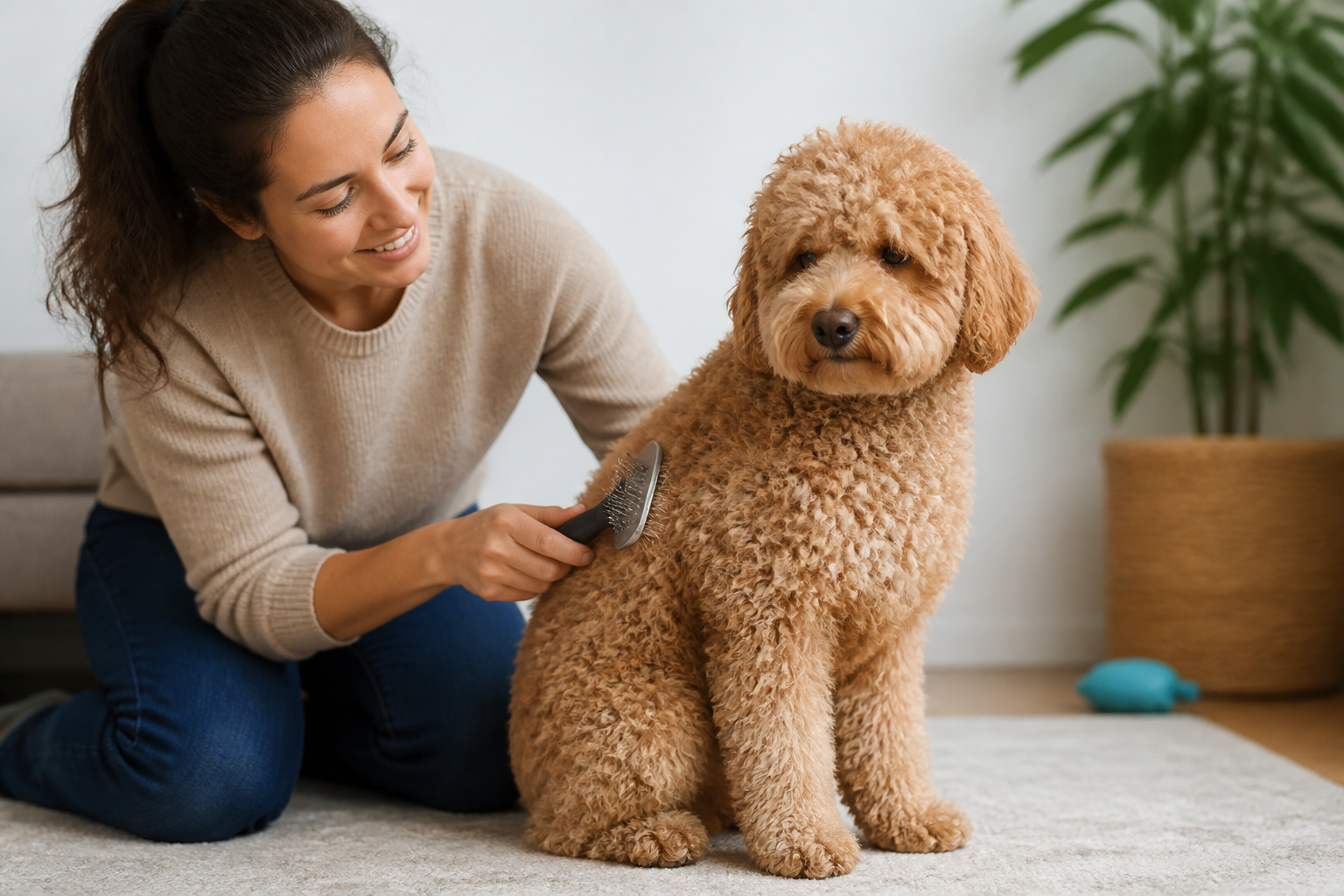
You are relaxing on the sofa with your Poodle or Goldendoodle when your hand catches on a hard, tight knot near their ear. You try to work your fingers through it, but the curl has turned into a solid mass. This is the reality of owning a curly-coated dog. While these breeds are famous for being low-shedding companions, their beautiful ringlets act like a trap for loose fur and outdoor debris. Without the right approach, those charming curls quickly turn into painful mats that pull on the skin.
At BaxterBoo, we know that grooming a curly dog is about more than just looking good. It is a fundamental part of their physical health and comfort. This post covers the specific tools you need, the professional line-brushing technique, and how to manage the most sensitive areas of your dog. By learning these methods, you can transform grooming from a chore into a bonding experience that keeps your dog happy and tangle-free.
Quick Answer: Brushing a curly dog requires a technique called line brushing to reach the skin. Use a slicker brush to work through small sections at a time and follow up with a metal comb to ensure every knot is gone.
Understanding the Unique Curly Coat
Curly coats are different from the fur you find on a Lab or a Beagle. Most curly breeds have hair that grows continuously rather than reaching a certain length and falling out. While people often call them non-shedding, they actually do shed. The difference is that the loose hair does not fall onto your carpet. Instead, it gets tangled inside the existing curls.
If you do not remove this dead hair, it wraps around the healthy hair. This creates a spiderweb effect that eventually tightens into a mat. Mats are not just an aesthetic problem. They can trap moisture and bacteria against the skin, leading to hot spots or fungal infections. They can also become so tight that they restrict the dog's movement or pinch the skin every time the dog takes a step.
Proper grooming ensures that air can reach the skin. This airflow is vital for temperature regulation. A matted curly dog cannot effectively cool themselves down in the summer. By keeping the coat open and fluffy, you are helping your dog stay comfortable in all seasons.
The Essential Toolkit for Curly Dogs
You cannot effectively brush a curly dog with a generic brush from a big-box grocery store. You need tools designed to penetrate dense, springy curls. We have seen many owners struggle because they are using tools meant for short-haired breeds. Explore our dog grooming supplies to find tools for brushing, bathing, and coat care.
The Slicker Brush
The slicker brush is the workhorse for curly hair. It features fine, short wires settled close together on a flat or slightly curved head. These wires are designed to grab the loose undercoat and pull it through the curls. Look for a slicker brush with long, soft pins if your dog has a very thick coat. This ensures the brush reaches the base of the hair without scratching the skin.
The Metal Greyhoud Comb
A high-quality metal comb is your most important diagnostic tool. It usually has two sides: one with wide-spaced teeth and one with narrow teeth. You use the wide side to check for knots and the narrow side for finishing touches around the face and paws. If a comb cannot pass through the hair from the skin to the tips, your dog is not truly brushed. Browse our dog brushes and combs for slicker brushes, combs, and dematting tools.
Detangling Sprays and Conditioners
Brushing dry curly hair can cause breakage and static. It can also be painful for the dog. A light misting of a detangling spray provides "slip." This allows the brush to glide through the hair more easily. We carry several gentle formulas that help break down the surface tension of a knot without leaving a greasy residue.
Key Takeaway: Always follow your brushing session with a metal comb. If the comb snags, there is still a knot that needs your attention.
The Professional Line Brushing Method
Many owners make the mistake of only brushing the top layer of the dog's coat. The dog looks fluffy on the surface, but a thick layer of matting is hiding underneath. Line brushing is the gold standard for avoiding this "hidden matting" problem. For additional guidance, see our article on grooming dogs with curly hair.
Step 1: Start at the bottom of a leg or the base of the neck. Use one hand to push the hair upward, exposing a "line" of skin.
Step 2: Use your slicker brush to brush a small section of hair downward, away from the hand holding the hair up. Ensure you are brushing from the skin out to the ends.
Step 3: Once that small section is clear, move your hand up about an inch. Create a new line and repeat the process.
Step 4: Continue this pattern over the entire body. Work in small, manageable rows. This ensures every single hair is brushed from the root.
Step 5: After you finish an area with the slicker brush, run your metal comb through it. If the comb stops, go back to the slicker brush for that specific spot.
This method takes more time than a quick surface brush. However, it is the only way to prevent the dreaded "shave-down" at the groomer. If you do this twice a week, the sessions will get shorter because you are catching knots before they become serious.
Managing Sensitive and High-Friction Areas
Curly dogs have specific "hot spots" where mats form faster than anywhere else. These are usually areas where there is frequent movement or friction.
- Behind the ears: This is often where the hair is finest and softest. It tangles easily, especially if your dog wears a collar or scratches their ears often.
- The friction zones: These include the armpits, the groin, and the area where the harness sits. The constant rubbing of skin against skin or fabric against hair creates tight mats very quickly.
- The tail and "trousers": The long hair on the back of the legs and the tail collects burrs, twigs, and dried mud. These act as anchors for tangles.
- The face and beard: Food and moisture from drinking can cause the hair around the mouth to stick together. If not cleaned and brushed daily, these areas can develop a sour smell.
When working on these areas, be extra gentle. The skin in the armpits and groin is very thin. Use your fingers to hold the base of the hair so you do not pull on the skin while brushing. If you find a tight mat in a sensitive spot, it is often safer to use a pair of blunt-nosed grooming scissors to carefully snip into the mat rather than trying to pull it out. For difficult tangles, a tool such as the Master Grooming Tools Ergonomic Dematting Tools may be useful.
Vet Tip: Check your dog's ears and armpits weekly for redness or a foul odor. Mats in these areas can trap moisture and lead to infections that require a veterinary visit.
Bathing and Its Impact on Curls
A common mistake is bathing a curly dog before brushing them. If your dog has any tangles, the water and shampoo will act like glue. The moisture causes the hair shafts to swell and the knots to tighten significantly. Once the dog dries, those knots become nearly impossible to remove.
Always perform a full line-brushing session before the dog gets wet. During the bath, use a high-quality conditioner to keep the hair hydrated. Dry hair is brittle and more prone to tangling. When drying your dog, avoid rubbing them vigorously with a towel. This circular motion creates more tangles. Instead, pat the coat dry or use a high-velocity dryer to blow the water out of the curls. You can compare conditioners and detangling products in our dog shampoo and conditioner collection.
If your dog has persistent skin issues or allergies that lead to excessive scratching, they may need specialized care. Our pet pharmacy offers medications and prescription shampoos. If you notice your dog is constantly itchy, consult your veterinarian to see if a medicated routine is necessary to protect their skin and coat.
Behavioral Tips for a Stress-Free Session
Grooming can be overwhelming for some dogs, especially if they have had painful mats removed in the past. Your goal is to make the brush feel like a massage rather than a punishment.
Keep your sessions short in the beginning. You do not have to brush the entire dog in one sitting. You can do one leg in the morning and another in the evening. Use high-value treats to reward your dog for staying still. If you hit a tough knot, give the dog a treat while you work through it. This creates a positive association with the sensation of the brush.
If your dog starts to show signs of stress, like panting, lip licking, or trying to hide, take a break. Forcing a dog through a painful grooming session will only make them fight you harder next time. We carry various calming aids and lick mats that can help distract your pet while you work on their curls.
The Role of Professional Groomers
Even with dedicated home care, most curly dogs need a professional haircut every six to eight weeks. Professional groomers have heavy-duty equipment like high-velocity dryers and professional-grade clippers that help manage the coat's density.
When you take your dog to the groomer, be honest about your home brushing routine. If the dog is severely matted, the kindest thing to do is a short "reset" shave. Trying to brush out total-body matting is incredibly painful for the dog and can cause them to become aggressive or fearful of grooming. Once the coat is short, it is the perfect time to start your new home brushing routine as the hair grows back.
Bottom line: Home brushing is about maintenance and health, while professional grooming is about styling and deep cleaning. You need both for a curly dog to thrive.
Diet and Supplements for Coat Health
What goes into your dog's body shows up on the outside. A dog with a nutritional deficiency will have dry, brittle hair that breaks and tangles more easily. Look for foods rich in Omega-3 and Omega-6 fatty acids. Brands like Farmina and Open Farm offer excellent recipes that support skin and coat health.
If your dog's curls seem dull or the skin is flaky, consider adding a supplement. Fish oil or biotin supplements can help strengthen the hair shaft. This makes the curls more resilient and less likely to "velcro" together. Always check with your vet before starting new supplements, especially if your dog is on other medications.
Common Brushing Mistakes to Avoid
Even well-meaning owners fall into common traps when caring for a curly coat. Avoiding these will save you and your dog a lot of frustration.
- Using a human hairbrush: Human brushes are not designed to reach through the dense undercoat of a dog. They usually just slide over the top.
- Brushing too hard: You want to reach the skin, but you do not want to "brush burn" it. Use light, repetitive strokes rather than heavy pressure.
- Ignoring the paws: Hair grows between the pads of the feet. This hair can trap burrs and pebbles, making it painful for your dog to walk.
- Skipping days: For many curly breeds, daily brushing is the only way to stay ahead of the mats. Even five minutes a day can make a massive difference.
If you find yourself overwhelmed, remember that you are doing this for your dog's well-being. A clean, brushed dog feels lighter, cooler, and more comfortable.
Summary of the Curly Dog Brushing Routine
Maintaining a curly coat requires the right tools and a consistent technique. By following these steps, you can keep your dog looking great and feeling even better.
- Use a slicker brush and a metal comb for every session.
- Employ the line-brushing technique to ensure you reach the skin.
- Focus extra attention on high-friction areas like armpits and ears.
- Always brush before giving your dog a bath.
- Reward your dog frequently to keep the experience positive.
Maintaining these beautiful coats is a big commitment, but it is one of the best ways to show your dog you care. Our team at BaxterBoo is always here to help you find the right tools for your specific breed. Whether you are looking for a new slicker brush or need to refill a prescription through our pet pharmacy, we have the expertise to support your grooming journey.
Key Takeaway: Consistency is more important than duration. Short, daily brushing sessions are more effective and less stressful than one long session per month.
FAQ
How often should I brush my curly-coated dog?
Most curly dogs benefit from being brushed at least three to four times a week. For breeds with very tight curls or long hair, daily brushing is often necessary to prevent small tangles from turning into mats. Regular maintenance makes each session shorter and more comfortable for your pet.
Why does my dog get mats even though I brush them every day?
You may be only brushing the top layer of the coat, a common issue known as "surface brushing." If you do not use the line-brushing technique to reach the skin, the hair at the base will continue to tangle and mat. Ensure you are using a metal comb to check your work all the way down to the skin.
Can I use a detangler meant for humans on my dog?
It is best to use products specifically formulated for dogs. Canine skin has a different pH level than human skin, and human products can cause dryness or irritation. Dog-specific detanglers are also designed to be safe if the dog happens to lick their fur after the application.
What should I do if the mat is too tight to brush out?
If a mat is tight against the skin, do not try to pull it out with a brush, as this is very painful and can tear the skin. You can try to carefully split the mat with grooming scissors or use a specialized de-matting tool. If the matting is extensive or very close to the skin, it is safest to have a professional groomer shave that specific area.






