
 Save 15% on your 1st Autoship learn more

 Email us
 Live Chat
 FAQs
FAQs





Introduction
You are relaxing on the couch when you feel a hard, lumpy knot behind your dog’s ear. Or perhaps you notice a cloud of fur drifting across the floor every time your pup walks by. Brushing seems like a simple chore, but doing it incorrectly can lead to skin irritation, painful mats, or a dog that runs away the moment they see a brush. At BaxterBoo, we talk to pet owners every day who want to do right by their dogs but feel overwhelmed by the aisles of different tools. This guide will teach you the specific techniques needed for different coat types and how to handle common grooming challenges. Mastering the art of the brush keeps your dog comfortable and your home much cleaner.
Choosing the Right Tools for the Job
You would not use a fine-tooth comb on a thick rug, and you should not use the wrong brush on your dog. Using a tool designed for a short-haired Boxer on a fluffy Pomeranian will not yield good results. It might even hurt your pet. The right tool depends entirely on the length and texture of your dog's hair.
A slicker brush is the workhorse of the grooming world. It has fine wire bristles that are slightly hooked. These brushes are excellent for removing loose hair and breaking up small tangles. We carry brands like Evolution that offer self-cleaning slicker brushes to make the process easier for you. You can compare options in our dog brushes and combs category.
A metal comb, often called a Greyhound comb, is your most important diagnostic tool. While a brush works on the surface and middle layers, a metal comb reaches all the way to the skin. If a comb can glide through the fur from root to tip, your dog is truly tangle-free.
Rubber brushes are the best choice for short-haired breeds. Tools like the KONG Zoom Groom Natural Rubber Dog Grooming Brush act like a magnet for loose fur. They also provide a gentle massage that stimulates the skin and distributes natural oils. This keeps the coat shiny and healthy without the risk of scratching the skin.
Quick Answer: Proper dog brushing requires a tool matched to the coat type. Use a rubber brush for short hair, a slicker brush and metal comb for long or curly hair, and an undercoat rake for double-coated breeds.
Brushing Dogs with Short or Smooth Coats
Dogs with short, smooth coats like Boxers, Great Danes, or Chihuahuas are the easiest to groom. However, they still shed. If you do not brush them, that hair ends up on your furniture and clothes.
Start with a rubber grooming tool. Use medium pressure and move the brush in circular motions. This loosens the dead hair and dander from the skin. Once you have loosened the fur, switch to a soft bristle brush. Brush in the direction of hair growth to sweep away the debris.
Even though these dogs have short hair, they can still get skin irritations. Brushing allows you to check for red spots, bumps, or parasites. Finishing with a chamois cloth or a damp towel can give their coat a showroom shine.
- Brush at least once a week to control shedding.
- Use a rubber brush to massage the skin.
- Always brush in the direction of hair growth.
- Check for fleas or ticks during the process.
Managing the Thick Double Coat
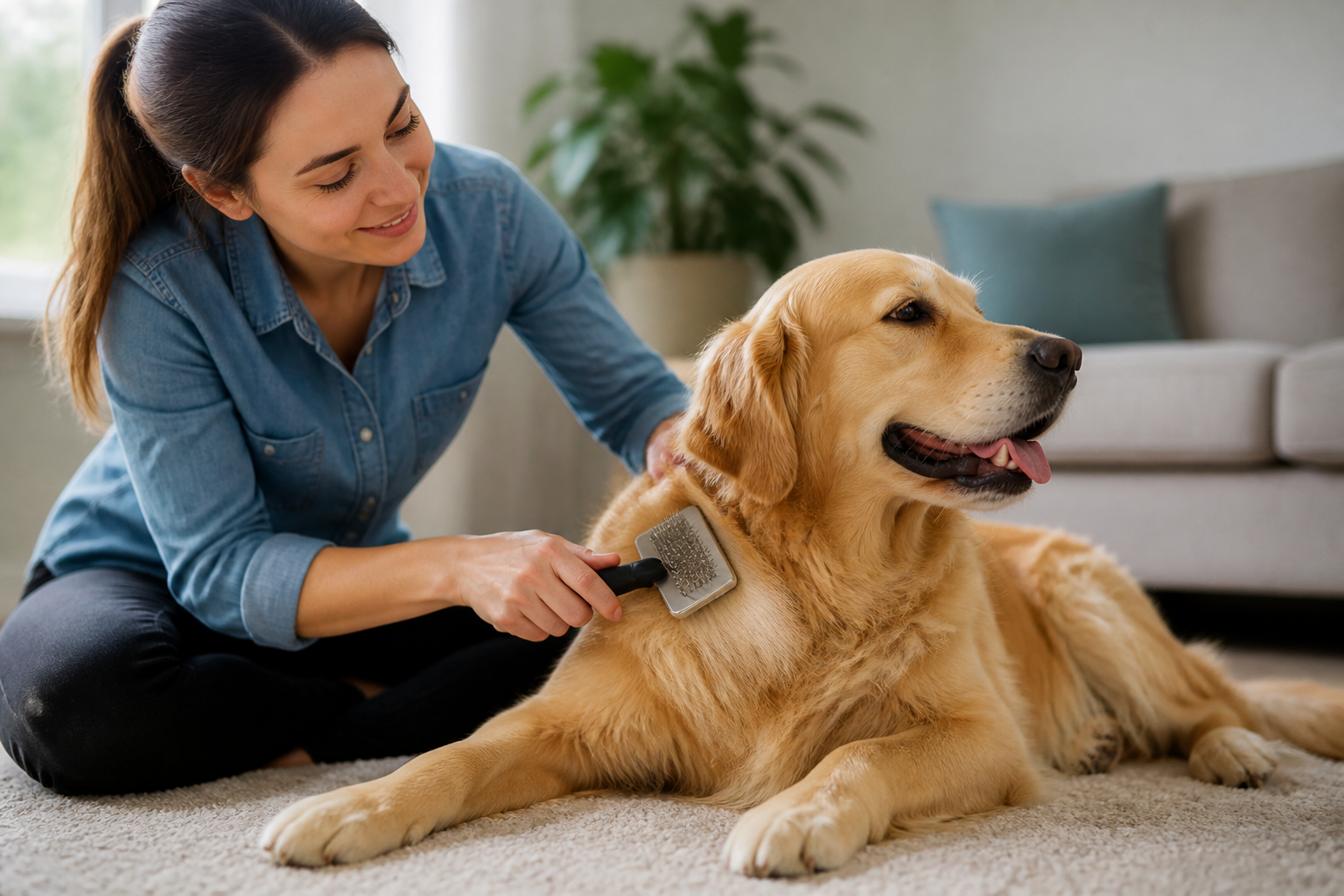
Double-coated breeds like Labrador Retrievers, Huskies, and Golden Retrievers have a soft, insulating undercoat and a tougher outer layer. These dogs "blow" their coats twice a year during seasonal changes. During these times, you may feel like the shedding never ends.
To brush a double-coated dog properly, you must reach the undercoat. A surface-level brushing will leave the dead hair trapped underneath. This trapped hair can cause the coat to pelt, which leads to skin infections and overheating.
Use an undercoat rake first. This tool has long, widely spaced tines that reach deep into the thick fur. Pull the rake gently through the coat. You will likely see large clumps of fur coming out. This is normal and necessary. Follow up with a slicker brush to smooth the top layer and capture any remaining loose strands.
Key Takeaway: Double-coated dogs require deep brushing with an undercoat rake to prevent the soft undercoat from matting against the skin.
The Technique for Curly and Wavy Coats
Poodles, Goldendoodles, and Bichon Frises have hair that grows continuously rather than fur that sheds out. Because this hair is curly, loose strands get caught in the coat instead of falling to the floor. This creates mats almost instantly if you do not brush daily.
The best technique for these breeds is called line brushing. This ensures you are reaching the skin and not just smoothing the top layer of curls. If you only brush the top, the hair near the skin will turn into a solid sheet of felted hair.
Step 1: Start at the bottom of a leg or the base of the tail. Step 2: Use one hand to lift the hair up, exposing a "line" of skin. Step 3: Use a slicker brush to brush a small section of hair downward from that line. Step 4: Once that section is clear, move your hand up an inch and repeat the process.
After you have line-brushed the whole dog, go back with your metal comb. If the comb hits a snag, do not pull. Use your slicker brush to gently pick at the knot until it breaks apart. Then, check it again with the comb.
Vet Tip: If your dog has tight mats near the skin, do not try to cut them out with scissors. A dog's skin is very thin and can easily be pulled into the mat. If the matting is severe, consult a professional groomer or your veterinarian to safely shave the area.
Dealing with Long, Silky Coats
Breeds like Yorkshire Terriers and Shih Tzus have hair that is very similar to human hair. It is fine and tangles easily. These dogs need a pin brush or a soft slicker brush. A pin brush looks like a human hairbrush but usually has rounded tips to protect the skin.
When brushing silky hair, it is helpful to use a grooming spray or a diluted leave-in conditioner. Brushing dry, fine hair can cause it to break. A light misting of water or conditioner makes the hair more elastic and easier to detangle.
Focus on the high-friction areas. These include the armpits, behind the ears, and where the collar or harness sits. These spots are usually the first to mat. If your dog wears a harness for walks, try to brush those areas as soon as the harness comes off.
The Golden Rule: Brush Before the Bath
One of the most common mistakes we see at BaxterBoo is owners bathing a matted dog. It seems logical to wash the dirt out first, but water acts like glue for mats. When hair gets wet, it swells. As it dries, it shrinks and tightens.
If your dog has a small knot and you put them in the tub, that knot will become a rock-hard mat by the time they are dry. Always perform a thorough brush-out and comb-through before the water touches your dog. This ensures the shampoo can actually reach the skin and clean the entire coat.
Once the bath is over and your dog is dry, do a quick second brushing. This removes any hair that was loosened during the washing process and leaves the coat looking fluffy. For bathing tools, explore our dog grooming collection.
Bottom line: Never bathe a dog that has tangles or mats, as the water will cause the knots to tighten and become much harder to remove.
Maintaining Skin Health During Grooming
Brushing is about more than just looks. It is a vital health check. As you move through the coat, look closely at the skin. Healthy skin should be pale and smooth. If you see redness, flaking, or a greasy residue, there may be an underlying issue.
Brushing also helps you find "hot spots" or areas of irritation. If your dog has been scratching or licking a specific spot, the hair there may be damp or discolored. Frequent matting can trap moisture against the skin, leading to fungal or bacterial infections.
Our pharmacy at BaxterBoo, through our partnership with Pet's Choice, carries FDA-approved treatments for skin conditions and allergies. If you notice persistent redness or if your dog seems painful when you brush a certain area, it is time to consult your veterinarian. They can provide a diagnosis and a prescription for medicated shampoos or topical treatments.
- Look for fleas, ticks, or "flea dirt" (small black specks).
- Check for new lumps or bumps, especially in senior dogs.
- Watch for signs of discomfort during brushing.
- Keep an eye out for dry, flaky skin which may indicate a need for supplements.
Training Your Dog to Love Brushing
Many dogs are "brush shy" because they associate grooming with pulling or discomfort. You can change this by using positive reinforcement. If you have a puppy, start the grooming process as early as possible to get them used to the sensation.
Start with very short sessions. Let your dog sniff the brush, then give them a high-value treat. Touch the brush to their side without actually brushing, then treat again. Gradually work up to one or two actual strokes of the brush.
If your dog is already nervous, try brushing them when they are tired after a long walk. Use a lick mat covered in peanut butter or plain yogurt to keep them occupied while you work. If they start to get stressed, stop. It is better to do five minutes of successful brushing than twenty minutes of a struggle.
Key Takeaway: Use high-value rewards and keep grooming sessions short to build a positive association with brushing for your dog.
Seasonal Shedding and Undercoat Management
Most dogs go through a major shedding cycle in the spring and fall. This is often called "blowing the coat." During these times, the amount of hair you find around the house can be staggering. You may need to increase your brushing frequency to every day during these peaks.
For double-coated dogs, a deshedding tool like the Furminator can be very helpful. These tools are designed to grab the loose undercoat and pull it through the top layer. However, you must be careful not to over-use them. Using too much pressure or going over the same spot too many times can cause "brush burn" or thinning of the healthy hair. For more seasonal shedding guidance, read how shedding changes throughout the year.
If your dog is shedding excessively outside of these seasonal windows, it could be a sign of a nutritional deficiency. High-quality food from brands like Farmina or Orijen provides the fatty acids needed for a strong coat. You can also look into Omega-3 supplements to help reduce non-seasonal shedding.
The Danger of Mats and Pelting
When a dog’s coat is not brushed properly, the loose hair becomes trapped and weaves itself into the living hair. This forms a mat. If these mats are left alone, they grow larger and eventually join together. This is called pelting.
Pelting is a serious health concern. A pelted coat acts like a tight cage around the dog’s body. It can restrict movement and hide serious skin infections. In some cases, pelting can even cut off blood flow to the skin or the extremities like the tail and ears.
Removing a pelted coat is a job for a professional. It often requires a very close shave with surgical blades. This is stressful for the dog and can lead to nicks because the skin is pulled so tightly into the mats. Regular brushing is the only way to prevent this painful situation.
Vet Tip: Check your dog’s "high-traffic" areas daily. These include the collar line, behind the ears, and the groin. Catching a small tangle today prevents a painful mat tomorrow.
Step-by-Step Guide to a Perfect Grooming Session
To make the process efficient, follow a consistent routine. This helps your dog know what to expect and ensures you do not miss any spots.
Step 1: Inspect the coat. / Run your hands over your dog's body to feel for any large mats or sensitive areas. Step 2: Prepare the hair. / Use a grooming spray if your dog has long or fine hair to prevent breakage. Step 3: Brush the body. / Start at the neck and work your way toward the tail, following the direction of hair growth. Step 4: Handle the legs and belly. / These areas are sensitive, so use a gentle touch and lift the legs carefully. Step 5: The final check. / Run a metal comb through the entire coat to ensure no tangles remain.
How Brushing Supports General Wellness
A clean, brushed dog is a happy dog. Brushing stimulates blood flow to the skin and helps spread natural oils that act as a waterproof barrier. It also gives you a dedicated time to bond with your pet. Many dogs eventually learn to find the rhythmic motion of the brush relaxing.
While you brush, you can also check other hygiene needs. Look at the length of the nails and the cleanliness of the ears. If you notice a foul odor from the ears or the skin, it is a sign that a vet visit is needed. We offer a variety of grooming supplies and ear cleaners to help with routine maintenance between professional appointments. Our BASS Brushes selection includes several grooming options for regular coat care.
Our Autoship program is a great way to ensure you never run out of the brushes, combs, or supplements your dog needs. You can set your favorite grooming sprays or treats on a recurring schedule so they are always on hand when it is time for a grooming session. Learn how our Autoship programme can support recurring pet-care purchases.
Summary of Brushing by Breed Type
| Coat Type | Recommended Tools | Brushing Frequency |
|---|---|---|
| Smooth (Boxer, Beagle) | Rubber Brush, Bristle Brush | Once weekly |
| Double (Lab, Husky) | Undercoat Rake, Slicker Brush | 2-3 times weekly |
| Long/Silky (Yorkie, Maltese) | Pin Brush, Metal Comb | Daily |
| Curly (Poodle, Doodle) | Slicker Brush, Metal Comb | Daily |
| Wire (Terriers) | Stripping Comb, Slicker Brush | 1-2 times weekly |
Keeping the Experience Positive
The goal of brushing should be a clean dog and a happy relationship. If you find yourself getting frustrated with a difficult mat, take a break. Your dog will pick up on your stress, which can make them more resistant to grooming in the future.
If you are struggling to keep up with your dog's coat, consider keeping it in a shorter "puppy cut" year-round. This reduces the amount of daily maintenance required while still keeping them comfortable. A shorter coat is often better for active dogs that spend a lot of time outdoors or in the water.
Remember that every dog is different. Some might love a firm slicker brush, while others might find it too scratchy. Pay attention to your dog's body language. If they lean into the brush, they likely enjoy the pressure. If they flinch or move away, try a softer tool or a lighter touch.
Proper grooming is an essential part of responsible pet ownership. By choosing the right tools from our warehouse and staying consistent with your technique, you can keep your dog’s coat healthy and beautiful for years to come.
Key Takeaway: Consistency is more important than the length of the grooming session. Five minutes of brushing every day is more effective than an hour once a month.
Conclusion
Brushing your dog properly is a skill that pays off in both your pet’s health and the cleanliness of your home. By matching your tools to your dog's specific coat type and using the correct techniques, you can prevent painful matting and skin issues. At BaxterBoo, we are committed to providing the expert-curated tools you need to make grooming a success. Whether you are managing a heavy shedder or a curly-coated pup, the right approach makes all the difference. To get started with the best supplies, explore our collection of grooming brushes and combs today.
FAQ
How often should I brush my dog?
The frequency depends on your dog's coat type and lifestyle. Short-haired dogs usually need a good brushing once a week, while long-haired or curly-coated breeds often require daily attention to prevent mats. During shedding seasons in the spring and fall, you may need to brush double-coated dogs every day.
Can I use a human hairbrush on my dog?
It is generally not recommended to use human brushes because they are not designed to penetrate thick pet fur or handle the texture of a dog's coat. Human brushes may also have sharp edges that can scratch a dog’s sensitive skin. Specialty pet brushes like slickers and rakes are much more effective and safer for your pup.
What should I do if I find a large mat?
If you find a large mat, do not try to pull it out with a brush, as this is very painful. You can try to gently pick it apart with a metal comb starting from the ends of the hair, or use a dematting tool. If the mat is tight against the skin, it is safest to have a professional groomer or vet remove it with clippers.
Why does my dog's skin look red after brushing?
Redness after brushing is often a sign of "brush burn," which happens when too much pressure is used or a tool is dragged across the same spot too many times. Ensure you are using a tool appropriate for your dog's coat and use light, gentle strokes. If the redness persists, it may be a skin infection that requires a veterinary consultation.






