
 Save 15% on your 1st Autoship learn more

 Email us
 Live Chat
 FAQs
FAQs





Introduction
Finding a hard, tight clump of fur behind your dog’s ears or tucked into an armpit is a common frustration for many pet owners. These mats are more than just an eyesore. They can pull on the skin and cause significant discomfort or even lead to hidden skin infections. At BaxterBoo, we see many owners struggling to maintain high-maintenance coats between professional grooming visits. We want to help you manage these tangles at home before they become a painful problem for your pup. This guide covers the best tools to use, the specific techniques for different coat types, and when it is time to put down the brush and call a professional. Learning how to handle mats correctly will keep your dog’s skin healthy and their grooming sessions stress-free.
Understanding Why Dog Mats Form
A mat is a dense cluster of tangled fur that has knotted around itself. This usually happens when loose, dead hair stays trapped in the coat instead of being brushed away. Over time, this dead hair wraps around live hairs. It creates a knot that grows tighter as more debris and moisture get caught in the fibers. Friction is one of the most common causes. You will often find mats where a collar or harness rubs against the body. Areas where legs rub together, such as the armpits or the groin, are also high-risk zones.
Environmental factors play a large role too. Moisture often acts like glue for tangles. If your dog goes for a swim or gets a bath without being thoroughly brushed and dried afterward, the hair can curl and knot as it dries. Seasonal changes also trigger matting. During the spring and fall, many dogs shed their undercoats. If this thick layer of dead fur is not removed, it quickly becomes a tangled mess against the skin.
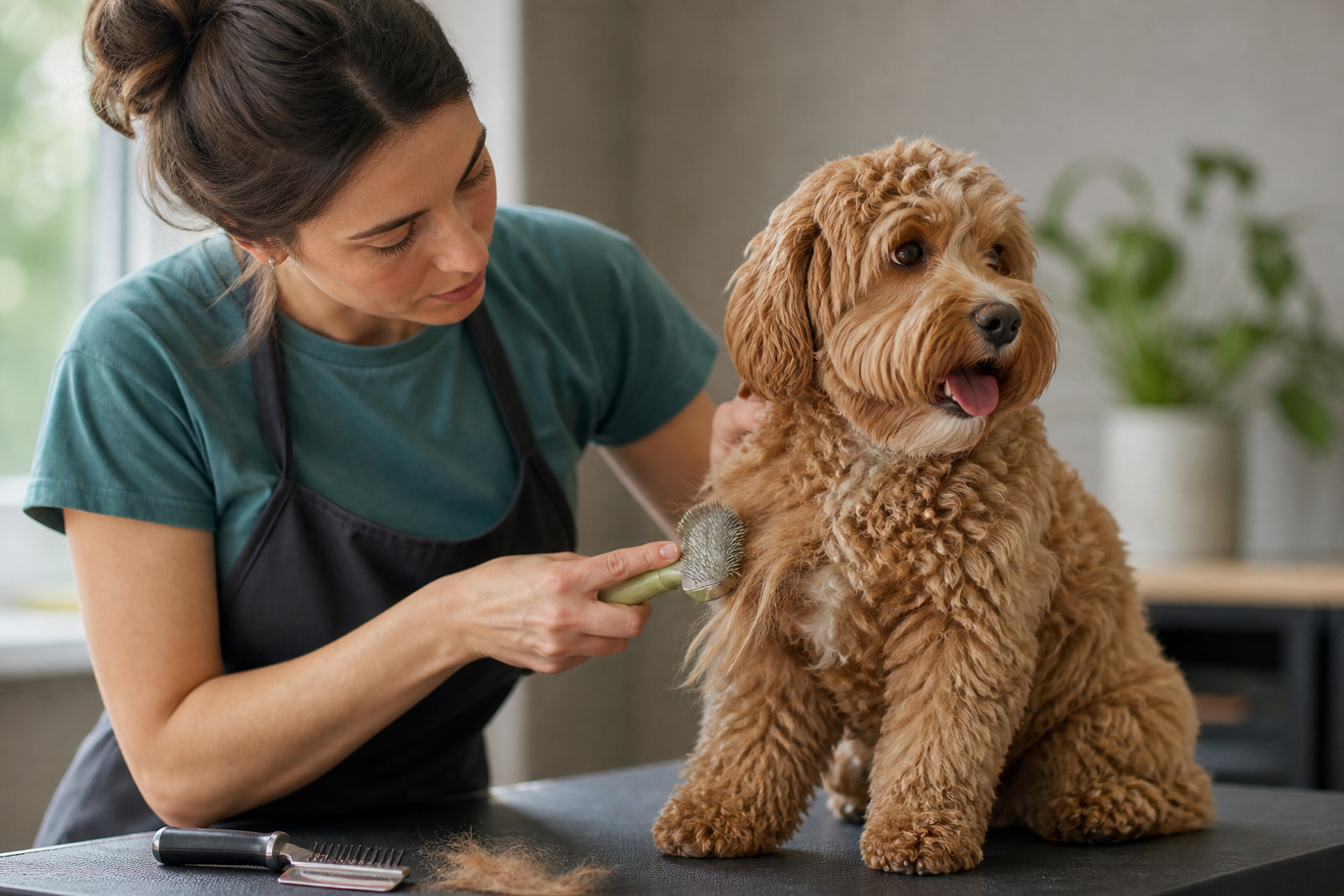
Quick Answer: To brush out a mat, apply a detangling spray and use your fingers to loosen the clump. Use a slicker brush to work from the ends of the hair toward the skin. Always hold the base of the fur to prevent pulling on your dog's skin.
Identifying Your Dog's Coat Type
Not all mats are created equal because not all coats are the same. Understanding the texture of your dog’s fur helps you choose the right approach.
Curly and Wavy Coats
Breeds like Poodles, Bichon Frises, and various "Doodle" mixes have hair that grows continuously. They do not shed in the traditional sense. Instead, the dead hair gets caught in the curls. Without daily or every-other-day brushing, these coats will pelt. Pelting is a severe form of matting where the fur forms a solid layer against the skin. For more guidance, read this advice on grooming curly-haired dogs.
Double Coats
Dogs like Golden Retrievers, German Shepherds, and Great Pyrenees have a soft undercoat and a coarse outer coat. The undercoat is the primary source of mats. When the undercoat sheds, it gets trapped under the top layer. This creates thick clumps, especially around the "pants" on the back legs and the thick ruff around the neck. Seasonal shedding can make this especially challenging, so these double-coat grooming tips may also help.
Silky and Long Coats
Yorkshire Terriers and Maltese dogs have fine, hair-like fur. This texture is very prone to static and fine tangles. These mats are often small but can be very tight. They frequently form behind the ears where the fur is thinnest and most prone to friction.
Essential Tools for Mat Removal
Having the right equipment makes the difference between a successful grooming session and a painful experience for your dog. You should avoid cheap plastic tools. They tend to bend or break when they hit a tough knot. Explore our dog brushes and combs to find tools suited to your dog’s coat.
- Slicker Brush: This is a flat or curved brush with fine wire bristles. It is excellent for grabbing loose hair and breaking up small tangles.
- Stainless Steel Greyhound Comb: This comb usually has wide teeth on one end and fine teeth on the other. It is the best tool for checking your work and finding hidden mats.
- Detangling Spray or Conditioner: These products provide "slip" to the hair fibers. This allows them to slide past each other rather than snapping.
- Mat Rake or Dematting Tool: These tools have sharpened blades designed to cut through the center of a knot. They should be used with extreme caution.
- Electric Clippers: For mats that are too tight to brush out, a small pair of quiet clippers is the safest way to remove the clump.
Key Takeaway: High-quality metal tools are necessary for effective mat removal. A slicker brush and a steel comb are the foundation of any home grooming kit.
The Step-by-Step Guide to Brushing Out Mats
Before you start, ensure your dog is relaxed. If they are nervous, give them a long-lasting treat or a lick mat covered in peanut butter. This keeps them occupied and creates a positive association with grooming.
Step 1: Isolate the mat. / Use your fingers to separate the tangled clump from the healthy, surrounding fur. This prevents you from pulling on hair that is not part of the knot.
Step 2: Apply a detangler. / Spray the mat thoroughly with a dog-safe detangling spritzer. Let it sit for a minute or two to penetrate the center of the knot.
Step 3: Loosen with your fingers. / Gently pull at the edges of the mat with your fingertips. Do not try to rip it apart. Just try to open the knot up so the brush bristles can reach inside.
Step 4: Use the slicker brush. / Hold the base of the mat firmly with one hand. This is crucial. It ensures that the pulling force stays on your hand rather than the dog's sensitive skin. Brush only the ends of the hair first.
Step 5: Work toward the skin. / Once the ends are clear, move the brush slightly closer to the skin. Continue using short, fast strokes. Never try to rake the brush through the entire mat at once.
Step 6: Check with the comb. / Once the slicker brush moves easily through the area, follow up with the fine-toothed side of your metal comb. If the comb catches, there is still a small knot that needs attention.
Vet Tip: Never use scissors to cut out a mat. Dog skin is incredibly thin and can easily be pulled into the knot. It is very common for owners to accidentally create a deep laceration that requires stitches. Use electric clippers if the mat is too tight to brush.
When to Stop and Seek Professional Help
There is a limit to what you should handle at home. If your dog is showing signs of extreme distress, such as growling, snapping, or trembling, stop immediately. Pushing a dog through a painful grooming session can cause long-term behavioral issues.
You should also stop if you encounter pelting. When the mats are so tight that you cannot see the skin or put a comb between the knot and the body, it is a professional's job. A groomer or a veterinary technician can safely shave these mats. Attempting to brush out a pelted coat is painful and often impossible. It can lead to "brush burn," which is a painful skin irritation caused by repetitive friction from the brush bristles.
Severe matting can also hide health problems. We often find that heavy mats trap moisture, leading to fungal or bacterial infections. They can also hide parasites. Our dog pharmacy carries a variety of prescription flea and tick medications. If you find fleas while brushing, you will need to treat the infestation immediately with guidance from your veterinarian.
Bottom line: Safety and comfort come first. If the matting is severe or the dog is in pain, a professional shave is the most humane option.
Common Hot Spots to Check Daily
Preventing mats is much easier than removing them. You can catch tangles before they become solid clumps by checking these specific areas every day.
- Behind the Ears: The fur here is very soft and fine. It knots quickly from scratching or head rubs.
- The Armpits: Friction from walking causes mats here. This area is very sensitive, so be gentle.
- Under the Collar: Take the collar off every evening and brush the neck area. This prevents the "ring" of mats that often forms.
- The Tail and "Pants": Long hair on the tail and back legs gets tangled easily, especially if the dog sits on grass or leaves.
- Between the Toes: Mud and debris can get trapped in paw hair. This creates hard, painful knots between the pads.
Creating a Routine
A daily five-minute check is more effective than a two-hour session once a month. Use your metal comb to "line brush." This involves parting the hair and ensuring you are combing all the way from the skin to the tips. Many owners make the mistake of only brushing the top layer of fur. This leaves the undercoat to mat underneath, creating a deceptive appearance of a healthy coat.
Nutrition and Coat Health
The physical strength of the hair plays a role in how easily it tangles. Dry, brittle hair snaps and knots much faster than healthy, supple fur. Diet is the foundation of coat health. We carry several premium brands at BaxterBoo that focus on skin and coat support, including our Open Farm products.
Look for foods rich in Omega-3 and Omega-6 fatty acids. Brands like Open Farm, Farmina, and Stella and Chewy's offer recipes specifically designed to nourish the skin. If your dog has chronic skin issues that lead to scratching and matting, your vet might recommend a prescription diet. Our pharmacy can fulfill those orders once your vet provides the prescription.
Supplements can also help. Products like Zesty Paws or Honest Paws often contain salmon oil or biotin. These ingredients help the hair retain moisture. A well-hydrated hair shaft is smoother and less likely to snag on other hairs. You can browse our dog healthcare selection for supplements and other wellness products.
Key Takeaway: A healthy coat starts from the inside. High-quality protein and healthy fats make the hair more resilient and less prone to matting.
Training Your Dog to Enjoy Brushing
If your dog hides when they see the brush, you need to work on desensitization. This is a slow process of changing their emotional response to grooming tools.
Start by just leaving the brush on the floor. Let your dog sniff it and give them a treat. After a few days, touch them with the back of the brush while giving a treat. Do not actually brush them yet. Gradually move toward a single stroke of the brush, followed by a high-value reward.
Keep sessions very short. Two minutes of a positive experience is better than ten minutes of a struggle. If you find a mat during a training session, do not try to tackle it all at once. Work on it for a minute, then stop and play. You want your dog to feel like grooming is just another form of bonding and attention.
- Use a soft brush for training, even if it is not the most effective for mats.
- Avoid sensitive areas like the belly or tail during the early stages of training.
- Always end the session on a positive note with a favorite toy or treat.
- Practice "handling" by touching their paws and ears frequently throughout the day.
Dealing with Water and Mats
Many owners make the mistake of bathing a matted dog to "soften" the knots. This is the worst thing you can do. Water causes the hair shafts to swell and then shrink as they dry. This process cinches the knots even tighter. It can turn a loose tangle into a rock-hard mat.
Always brush your dog thoroughly before they get wet. If they go for a swim, rinse them with clean water and apply a leave-in conditioner. Then, brush them while they are still damp or as you blow-dry them. Using a hair dryer on a cool setting while brushing helps straighten the hair and prevents new tangles from forming. Our dog grooming collection includes bathing and coat-care supplies for your routine.
If your dog has a double coat, a high-velocity dryer is a great investment. It blows the water and the loose undercoat out of the fur at the same time. This significantly reduces the amount of manual brushing required and helps prevent seasonal matting.
The Role of Professional Grooming
Even with the best home care, most long-haired or curly-haired dogs need professional grooming every 4 to 6 weeks. Professionals have the tools and the tables to reach areas that are difficult for you to see at home. They can also perform "sanitary trims." This involves shaving the hair around the paw pads, the belly, and the rear end to keep those areas clean and mat-free.
Regular professional visits also help identify skin issues early. A groomer might notice a hot spot or a cyst that is hidden under thick fur. If they find something concerning, they will recommend a visit to the veterinarian. For any prescribed skin treatments or medicated washes, you can rely on our pharmacy to provide the necessary supplies once you have a diagnosis.
Summary of Best Practices
Maintaining a mat-free coat is a combination of the right tools, consistent habits, and proper nutrition. It requires patience and a gentle hand.
- Brush daily in high-friction areas like the armpits and neck.
- Use a detangling spray to protect the hair from breakage.
- Always hold the base of the fur to avoid pulling the skin.
- Never use scissors to cut out a knot.
- Ensure your dog’s diet supports skin and coat health.
- Brush thoroughly before any bath or swimming session.
We invite you to explore our selection of dog grooming tools and supplements to keep your dog's coat in top condition. Whether you need a new slicker brush or a skin-support supplement, we handpick our products to ensure your pet gets the best care possible.
Bottom line: Consistent, gentle brushing and the right metal tools will prevent the pain and skin issues associated with matted fur.
FAQ
Can I use a human hairbrush to get mats out of my dog?
It is not recommended because human brushes are designed for much thinner hair and different skin sensitivity. Dog slicker brushes have specific wire tension meant to penetrate thick fur and reach the undercoat without scratching the skin. Using a human brush will likely only smooth the top layer, leaving the mats to grow larger underneath.
Is it okay to just cut a mat out if I am very careful?
Using scissors is very risky because dog skin is stretchy and can easily get caught between the blades without you realizing it. If a mat is too tight to brush out, it is much safer to use electric clippers. These are designed to glide over the skin and cut only the hair, significantly reducing the risk of a trip to the vet for stitches.
Why does my dog get mats even though I brush them every week?
You might only be brushing the top layer of the fur, which is a common mistake called "surface brushing." To prevent mats, you must use a comb to reach all the way down to the skin to remove the trapped undercoat. If you can't run a metal comb from the skin to the tips of the hair without it catching, there are still tangles present.
Does my dog's diet really affect how much they mat?
Yes, because a poor diet leads to dry, brittle hair that tangles much more easily than healthy, hydrated fur. If the hair is weak, it breaks and creates rough edges that snag on other hairs. Feeding a diet high in Omega fatty acids helps keep the hair shaft smooth and resilient, making it much easier to brush out.






