
 Save 15% on your 1st Autoship learn more

 Email us
 Live Chat
 FAQs
FAQs





Introduction
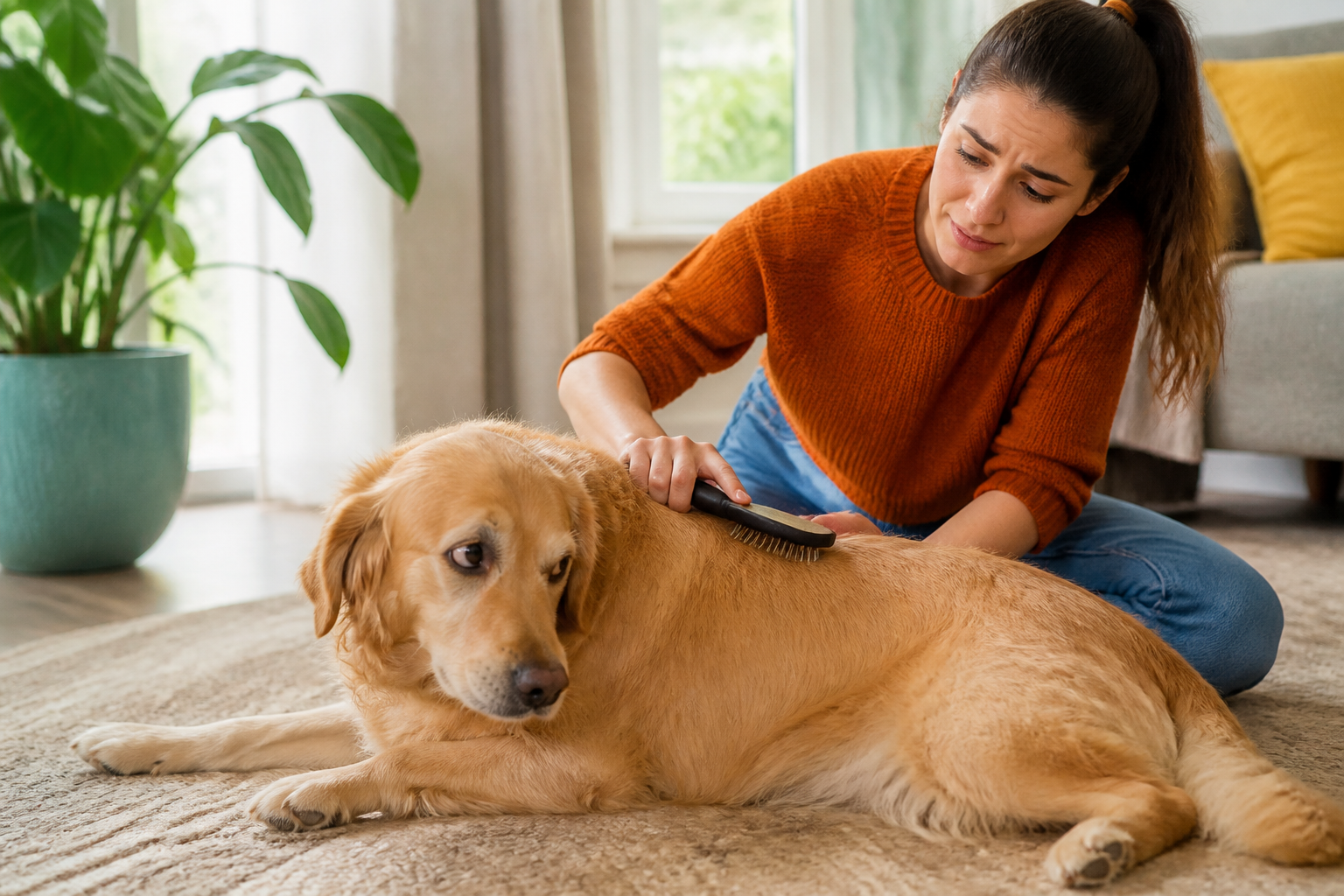
You reach for the plastic bin under the sink. You haven't even touched the handle of the brush yet. Suddenly, your dog vanishes. You hear the frantic click of paws on the hardwood as they bolt for the safety of the guest bedroom or the dark space behind the sofa. This game of hide-and-seek is exhausting for you and stressful for your pet. At BaxterBoo, we understand that grooming is often the most difficult part of pet ownership. We want to help you turn these stressful standoffs into a calm routine that supports your dog's health and comfort. This post covers why dogs develop a fear of the brush and how to use positive reinforcement to change their minds. With the right tools and plenty of patience, you can stop the chasing and start the bonding.
Understanding the Root of the Fear
Before you can fix the behavior, you need to understand why your dog is reacting this way. Fear of grooming rarely comes out of nowhere. Many dogs develop a negative association because of a past experience that caused them physical pain. If a brush previously snagged a deep mat or scratched a sensitive area, your dog remembers that sensation. Their brain now links the sight of the brush with the feeling of a sharp pull on their skin.
Sensitivity is another major factor. Some dogs have thinner skin or higher nerve density in certain areas. The belly, the backs of the legs, and the tail are common "no-touch" zones. If you start your grooming session by diving straight into these vulnerable areas, your dog will likely feel defensive. They are not being "bad" or stubborn. They are trying to protect themselves from discomfort.
Anxiety also plays a role for many pets. The feeling of being held in place or cornered can trigger a flight-or-fight response. If your dog is naturally shy or has a history of rescue trauma, the grooming process can feel like a loss of control. Identifying whether the issue is pain, sensitivity, or general anxiety helps you choose the right approach for training.
Vet Tip: If your dog suddenly starts growling or snapping during brushing when they used to be fine, schedule a check-up. Hidden skin infections, arthritis, or even ear issues can make touch painful. Our pet pharmacy for dogs offers prescription treatments through our partnership with Pet's Choice.
The Role of Skin Health and Pain
Sometimes the brush isn't the problem. The condition of the skin underneath the fur might be the culprit. If your dog suffers from seasonal allergies, their skin may be inflamed and tender. Even a soft brush can feel like sandpaper on irritated skin. Dogs with dry, flaky skin often experience more static electricity during brushing. This creates tiny, annoying shocks that can make a dog jumpy.
Matting is the most common cause of grooming-related pain. When fur clumps together near the skin, it pulls the skin tight. This creates a constant state of tension that makes every movement uncomfortable. If you try to brush through these mats, you are essentially pulling on the dog's skin with every stroke. This is why many dogs begin to hate the brush the moment they develop tangles.
If you suspect your dog has underlying skin issues, it is important to address them before starting a rigorous brushing schedule. A healthy coat is much easier to manage than a damaged one. Consider adding supplements to their diet to improve coat elasticity and skin moisture.
Key Takeaway: Address physical discomfort first. A dog in pain cannot be trained to enjoy brushing until the source of that pain is managed or removed.
Creating a Low-Stress Environment
Where you brush your dog matters just as much as how you brush them. If you try to groom your dog in a high-traffic area of your home, they will be distracted and more likely to bolt. Choose a quiet corner where your dog already feels relaxed. Avoid slippery floors where your dog might feel unstable. A non-slip mat or a thick towel provides the traction they need to feel secure.
Keep your body language calm and neutral. Dogs are experts at reading our emotions. If you are frustrated or tense because you know the session will be a struggle, your dog will pick up on that energy. Sit on the floor with them rather than standing over them. Standing over a dog can feel intimidating and confrontational.
Gather all your supplies before you call your dog over. This includes:
- A soft brush or grooming glove
- High-value treats like freeze-dried liver or small bits of cheese
- A calming supplement if your dog is particularly high-strung
- A puzzle toy or lick mat to provide a distraction
Quick Answer: The best way to brush a dog that hates it is through desensitization. You must slowly introduce the brush while pairing it with high-value rewards. Start with very short sessions and never force the process.
The Slow Introduction Method
If your dog runs when they see the brush, you have to change what the brush means to them. This process is called desensitization. You start by leaving the brush on the floor in a common area. Do not try to use it. Just let it exist in their space. Every time your dog walks past it or sniffs it, give them a treat and plenty of verbal praise.
The goal is to move the brush from the "scary" category to the "good things happen" category in your dog's mind. Once they are comfortable being near the brush, you can pick it up. Hold the brush in one hand and a treat in the other. Show them the brush, give them the treat, and then put the brush away. Do this several times a day for a few days.
Eventually, you will move to touching them with the back of the brush. Do not use the bristles yet. Simply touch their shoulder or back with the smooth side. Reward them immediately. You are building a foundation of trust. You are showing them that the brush being near them does not result in pain or confinement.
Bottom line: Speed is the enemy of progress when training a fearful dog to accept grooming.
Choosing the Right Tools
The wrong tool can make a bad situation worse. If your dog has sensitive skin, a stiff slicker brush with sharp metal pins might be too aggressive. For a dog that truly hates grooming, a grooming glove is often the best starting point. These gloves have rubber nubs that mimic the feeling of petting. Most dogs are comfortable being petted, so the transition is much easier.
If your dog has a thick double coat, you might eventually need a pin brush or a de-shedding tool. However, do not start with these. Use a soft bristle brush for the training phase. It provides a gentle sensation that is less likely to cause a negative reaction. Once your dog accepts the soft brush, you can slowly introduce more effective tools for their specific coat type.
We carry a wide variety of brands like Kong and RC Pets that offer grooming tools designed for comfort. Look for brushes with ergonomic handles. These allow you to maintain a steady, gentle pressure without straining your hand. A steady hand leads to a more predictable and relaxing experience for your dog.
The Brush, Treat, Brush Technique
Once your dog is comfortable being touched by the brush, you can begin the actual grooming process. This should be done in very small increments. Think of it as a series of micro-sessions rather than one long event.
Step 1: Present the brush. / Let your dog sniff it and give them a high-value treat.
Step 2: Take one single stroke. / Choose an easy area like the shoulder or the side of the neck.
Step 3: Reward immediately. / Give a treat the second the brush leaves the fur.
Step 4: End the session. / Stop while your dog is still calm and happy.
By ending the session before your dog gets upset, you leave them with a positive memory. Over time, you can increase the number of strokes to two, then three. If your dog shows signs of stress, such as licking their lips, yawning, or looking away, you have moved too fast. Go back to the previous step where they were comfortable.
| Training Phase | Action | Goal |
|---|---|---|
| Phase 1 | Sight only | Dog stays calm when the brush is visible. |
| Phase 2 | Scent and Touch | Dog allows the brush to touch their fur without pulling. |
| Phase 3 | Single Stroke | Dog accepts one pass of the bristles. |
| Phase 4 | Sectional Brushing | Dog allows one body part to be brushed. |
Utilizing High-Value Distractions
Distraction is a powerful tool for dogs that are impatient or mildly anxious. If your dog is focused on a delicious task, they will pay less attention to what you are doing with the brush. Lick mats are particularly effective for this. Spread some dog-safe peanut butter or plain yogurt on the mat and stick it to a wall or the floor.
As your dog works on the mat, you can quietly work on their coat. This works because licking is a naturally self-soothing behavior for dogs. It lowers their heart rate and keeps them occupied. You can also use puzzle toys like those from Kong. Fill them with frozen treats to make the distraction last longer.
If you use this method, keep the grooming session shorter than the time it takes to finish the treat. You want the grooming to stop while the "party" is still going on. This reinforces the idea that grooming is just a background activity to a very rewarding snack time. This is also a great time to introduce calming supplements from brands like Zesty Paws or Honest Paws to help take the edge off.
Key Takeaway: A distracted dog is a relaxed dog. Use high-value food to create a positive association with the grooming space.
Handling Mats and Tangles Humanely
Mats are the primary source of conflict during grooming. If you encounter a mat, do not try to pull it out with a brush. This is painful and will ruin all the trust you have built. Instead, use your fingers to gently pull the mat apart. Start from the outer edges and work your way toward the center.
If the mat is too tight to pull apart by hand, you may need a specialized dematting tool or a pair of blunt-nosed grooming scissors. Never pull the fur away from the skin when cutting a mat. Place a comb between the mat and the skin to act as a guard. This prevents you from accidentally nicking the dog's skin.
If your dog is heavily matted, it is often kinder to have them professionally shaved by a groomer. This provides a "reset" for their coat. Once the hair grows back, you can start your new, positive brushing routine on a clean slate. Trying to brush out a full body of mats on a dog that already hates grooming is a recipe for disaster.
The Importance of Consistency
Training a dog to love brushing is not a one-time fix. It requires a commitment to a daily routine. Even if you only brush for two minutes a day, that consistency is vital. It teaches your dog that grooming is a normal, non-threatening part of their life. It becomes as routine as going for a walk or eating dinner.
When you are consistent, you also catch mats before they become a problem. Brushing a coat that is already in good shape is easy and painless. This reinforces the positive experience for the dog. If you only brush once a month, you are more likely to encounter tangles and long sessions that test your dog's patience.
Our Autoship program is a great way to ensure you never run out of the treats or calming supplements you need for these daily sessions. You can set up recurring deliveries and save money while keeping your training on track. Plus, you get a free MVP Gold membership, which offers even more rewards for your regular purchases.
Managing Aggression and Extreme Fear
If your dog growls, barks, or tries to bite when the brush comes out, you must prioritize safety. Aggression is usually a sign of extreme fear or pain. Do not punish your dog for growling. They are using their only way to communicate that they are uncomfortable. If you punish the growl, the dog may skip the warning and go straight to a bite next time.
In cases of extreme fear, you may need professional help. A certified fear-free dog trainer can help you work through deep-seated phobias. They can observe your dog's subtle body language and help you adjust your technique. Sometimes, a vet-prescribed sedative is necessary to help a dog stay calm enough to learn.
Our pharmacy for dogs provides access to prescription medications through our Pet's Choice partnership. If your vet determines that your dog needs medicinal support to manage their grooming anxiety, we can help you get those prescriptions filled easily. Safety for both you and your pet is the most important factor.
Vet Tip: Never force a dog to endure grooming if they are showing signs of extreme distress. This can lead to a permanent fear that is much harder to fix later. Consult your vet about anxiety management options if your dog's fear seems unmanageable at home.
Post-Grooming Rituals
How you end the session is just as important as how you start it. Always end on a high note. Even if you only managed two strokes of the brush, give your dog a "jackpot" reward at the end. This could be a favorite toy, a game of fetch, or a larger-than-usual treat.
This final reward serves as a period at the end of the sentence. It tells the dog, "The work is over, and you did a great job." Over time, your dog may even start to look forward to the end of the session, making them more willing to participate in the middle part.
At BaxterBoo, we have helped thousands of owners manage their pets' needs since 2006. We know that every dog is an individual. What works for a golden retriever might not work for a nervous terrier. Be patient with yourself and your pet as you find the rhythm that works for your household.
Summary of Training Steps
Transitioning a brush-hating dog into a cooperative partner takes time. Remember these core principles as you move forward:
- Start with the environment and ensure your dog feels physically secure.
- Use desensitization to make the brush a neutral or positive object.
- Pick the softest tool possible for the initial training phases.
- Keep sessions incredibly short, often under sixty seconds at first.
- Never pull on mats or cause physical pain during a training session.
- Reward every small success with high-value treats and praise.
Key Takeaway: Success in grooming is measured by your dog's comfort level, not the amount of fur you remove in a single sitting.
Looking Toward a Stress-Free Future
With time and dedication, the sight of the brush will no longer send your dog running for the hills. You will be able to maintain their coat health, prevent painful mats, and check for skin issues like lumps or ticks. This routine care is a cornerstone of a healthy life for your dog.
As you continue this journey, we are here to support you with expertly curated products. From the softest grooming gloves to the most enticing treats, we have everything you need to succeed. Our 4.9-star Google rating reflects our commitment to providing the best service and products for pets and their owners.
If you are a new customer, don't forget to take advantage of our $10 reward on your first order of $39 or more when you sign in at checkout. It is a great way to stock up on the training supplies you need to make grooming a success. Your dog's comfort is worth the effort, and the bond you build through this process will last a lifetime.
FAQ
Why does my dog bite the brush when I try to use it?
Your dog likely views the brush as a toy or a threat rather than a grooming tool. If they are young, it might be play-biting or a way to get you to stop. For older dogs, it is often a defensive reaction to prevent anticipated pain. Use a high-value distraction like a lick mat to give them something else to do with their mouth while you work.
How often should I brush a dog that hates grooming?
You should aim for very short, daily sessions. Consistency is more important than duration. Even thirty seconds of calm brushing followed by a treat is better than a twenty-minute struggle once a week. Frequent sessions prevent mats from forming, which ensures the process remains painless for your dog.
Can I use human hairbrushes on my dog?
It is generally better to use brushes specifically designed for pets. Human brushes often have bristles that are too soft to reach through a dog's undercoat or too sharp for their skin. Dog-specific brushes, like those from RC Pets, are engineered to handle the unique texture of canine fur while protecting the skin underneath.
What should I do if my dog is too matted to brush?
If the mats are tight against the skin, do not try to brush them out at home. This is extremely painful and can lead to skin tears. The most humane option is to have a professional groomer shave the mats out. Once the coat is short, you can start a positive, daily brushing routine to prevent the mats from returning as the fur grows back.






