
 Save 15% on your 1st Autoship learn more

 Email us
 Live Chat
 FAQs
FAQs





Why Your Cat's Immune System Deserves More Attention
Immune boost for cats is one of the smartest investments you can make in your pet's long-term health. Here's a quick overview of the most effective ways to strengthen your cat's immune system:
Quick Ways to Boost Your Cat's Immune System:
- L-Lysine - supports respiratory health and fights viral infections (250-500mg daily)
- Probiotics - balance gut bacteria where most immune cells live
- Omega-3 fatty acids - reduce inflammation and support immune response
- Vitamins C and E - antioxidants that protect immune cells
- Colostrum - provides immunoglobulins that support adaptive immunity
- Mushroom extracts - beta-glucans that activate the innate immune system
- Zinc - essential mineral for long-term immune health
- Stress reduction and exercise - lifestyle factors that directly affect immune strength
A cat's immune system is its first line of defense against bacteria, viruses, fungi, and toxins. When it's working well, your cat stays active, maintains a healthy coat, and fights off infections easily. When it's not, even minor threats can become serious health problems.
Here's something worth knowing: feline leukemia virus (FeLV) is the second leading cause of death in cats, right behind trauma. And cats living with heavy smokers face three times the risk of developing lymphoma, a cancer of the immune system. These aren't rare edge cases - they're reminders of how vulnerable feline immunity can be.
The good news? There's a lot you can do about it.
Understanding the Feline Immune System
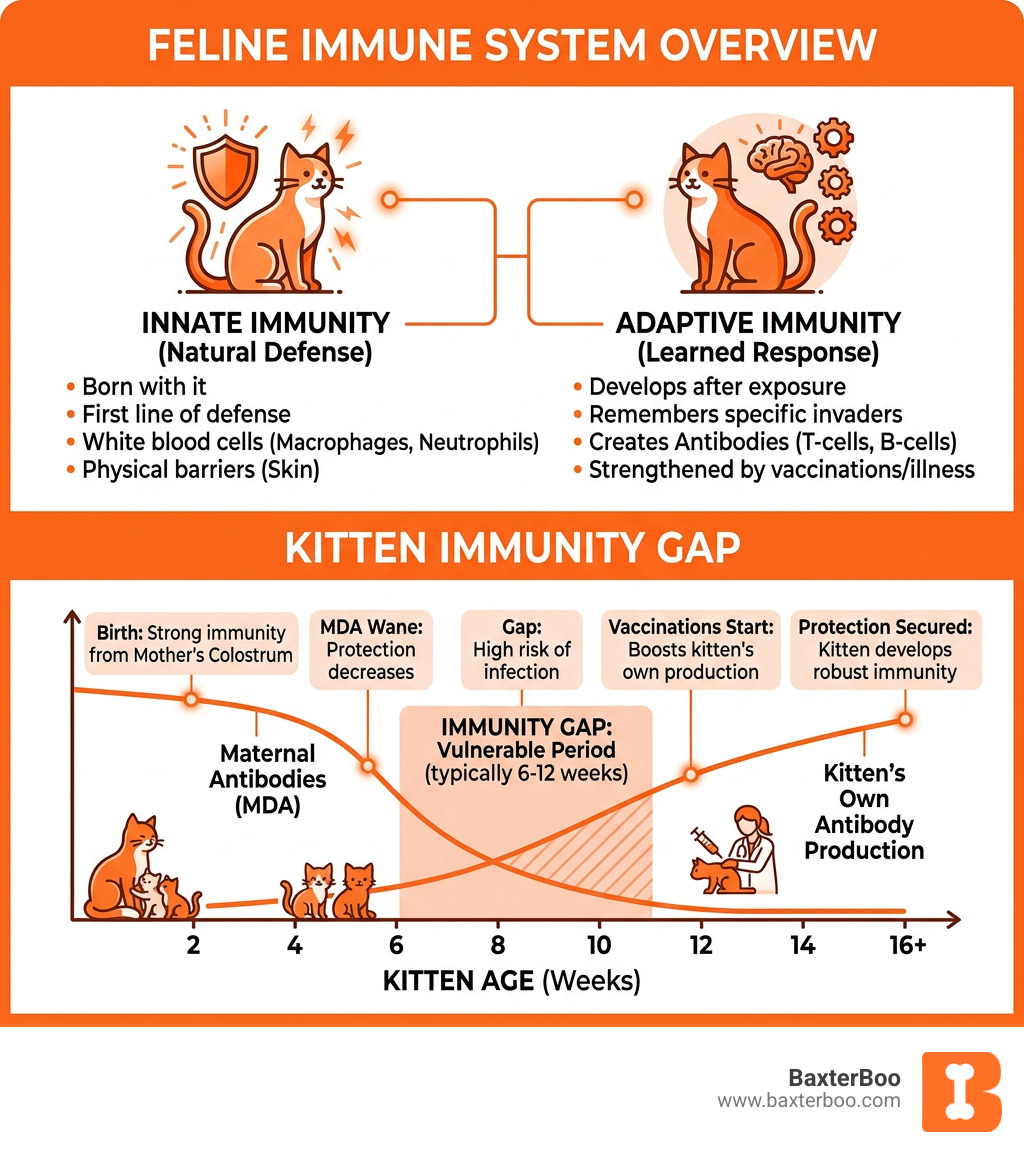
To provide an effective immune boost for cats, we first need to understand how their internal "security team" operates. A cat's immune system is a complex network of organs, cells, and proteins. It has two primary divisions: the innate immune system and the adaptive (acquired) immune system.
The innate immune system is the first line of defense. It’s what a cat is born with. It includes physical barriers like the skin, as well as specialized white blood cells like macrophages, neutrophils, and "killer" T-cells. These cells are the first responders; they don’t need to "learn" what a virus is to know it doesn't belong there. To keep this system sharp, cats require specific nutrients, including protein, vitamins A, C, E, and B, and minerals like copper, iron, and manganese.
The adaptive immune system is more like a specialized task force. It "remembers" specific pathogens after an initial exposure (or vaccination). This system relies on antibodies and T-lymphocytes to target specific invaders. As cats age, this system can begin to decline—a process known as immune senescence—which is why senior cats often need extra support.
One often overlooked aspect of immunity is physical condition. Maintaining a healthy weight is crucial because obesity has been linked to impaired immune function and chronic inflammation. You can use a body condition score chart to ensure your feline friend isn't carrying extra weight that could compromise their health.

Common Signs of a Weakened Immune System
How do you know if your cat needs an immune intervention? Since cats are masters at hiding discomfort, we have to look for subtle clues. Common signs of a struggling immune system include:
- Lethargy: A noticeable drop in energy or interest in play.
- Frequent Infections: Recurring respiratory issues, "gunky" eyes, or skin infections.
- Poor Coat Quality: A dull, brittle, or thinning coat can indicate internal health struggles.
- Slow Wound Healing: Scratches or sores that take an unusually long time to disappear.
- Weight Loss: Unexplained dropping of pounds or a sudden lack of appetite.
- Oral Health Issues: Red, inflamed gums or persistent bad breath.
Interestingly, the health of the mouth is often a window into the immune system. If you're concerned about your cat's internal balance, an oral health test can provide insights into the bacteria present in their mouth, which is closely tied to overall systemic health.
Top Ingredients for an Effective Immune Boost for Cats
When shopping for supplements, the ingredient list can feel like a chemistry textbook. However, a few heavy hitters consistently prove their worth in feline wellness. Effective boosters usually focus on neutralizing free radicals (antioxidants), supporting cell production (zinc), or activating immune receptors (polysaccharides).
| Ingredient | Primary Function | Best For |
|---|---|---|
| L-Lysine | Inhibits viral replication | Respiratory health & Herpesvirus |
| Sodium Ascorbate | Antioxidant & Antihistamine | Inflammation & Allergy support |
| Probiotics | Gut microbiome balance | 70% of the immune system |
| Omega-3s | Reduces inflammation | Skin, coat, and joint health |
| Colostrum | Provides immunoglobulins | Kittens and "Immunity Gap" support |
| Mushroom Max | Beta-glucans activate T-cells | Advanced immune support |
L-Lysine: A Targeted Immune Boost for Cats
L-Lysine is perhaps the most well-known immune boost for cats, particularly for those prone to upper respiratory infections. It is an essential amino acid, meaning the body cannot produce it on its own; it must come from diet or supplements.
L-Lysine works by competing with arginine, an amino acid that many viruses (like Feline Herpesvirus-1) need to replicate. By limiting the available "fuel" for the virus, L-Lysine helps reduce the severity of sneezing, runny noses, and watery eyes.
Dosage Tip: The average maintenance dose is between 250mg and 500mg per day. For cats experiencing active flare-ups, some high-strength formulas provide up to 1000mg per day to provide more aggressive support. It’s often easiest to administer as a flavored powder or "granule" mixed directly into wet food.
Sodium Ascorbate: A Gentle Immune Boost for Cats
While humans take Vitamin C (ascorbic acid) to fight colds, standard ascorbic acid can be too acidic for a cat's sensitive stomach. This is where Sodium Ascorbate comes in. It is a non-acidic, buffered form of Vitamin C that is much gentler on the digestive tract.
Sodium Ascorbate acts as a potent antioxidant and has natural antihistamine and anti-inflammatory effects. It’s particularly useful for cats dealing with allergies or chronic infections.
Titrating to "Bowel Tolerance": To find the perfect dose, many holistic practitioners recommend starting with a small amount (about 1/8 teaspoon or 500mg for an adult cat) and gradually increasing it until the cat's stool becomes slightly loose. Then, you back off slightly to find the maximum effective dose your cat can handle.
Probiotics and Gut-Based Immunity
Did you know that approximately 70% of a cat's immune cells reside in the gastrointestinal tract? This makes gut health the foundation of a bulletproof immune system. A balanced microbiome prevents "bad" bacteria from taking over and ensures the immune system doesn't overreact to environmental triggers (which causes allergies).
Using a superfood digestion supplement provides the necessary fiber and "good" bacteria to keep the gut lining strong. When the gut is healthy, the rest of the immune system can focus on external threats rather than internal imbalances.
Supporting Feline Immunity Through Every Life Stage
A cat's immune needs change as they age. A "one size fits all" approach rarely works, especially when dealing with the extremes of kittenhood and the golden years.
Specialized Support for Kittens and Seniors
Kittens: Between 8 and 12 weeks of age, kittens enter what veterinarians call the "Immunity Gap." This is the period when the protective antibodies they received from their mother’s milk begin to wear off, but their own immune system hasn’t fully matured yet. This is a high-risk window for respiratory infections. Supplements containing Colostrum (the "first milk") can bridge this gap by providing ready-made immunoglobulins to protect the kitten.
Senior Cats: As cats enter their teens, their immune response naturally slows down. They become more susceptible to chronic conditions like FIV (Feline Immunodeficiency Virus) or FeLV. For these cats, "immunomodulators" like DMG (Dimethylglycine) are vital. DMG supports the production of antibodies and helps the body utilize oxygen more efficiently at a cellular level.
Additionally, incorporating Omega-3 fatty acids can help manage the low-grade inflammation that often accompanies aging, keeping the immune system from becoming "overworked." Mushroom-based complexes, which contain beta-glucans, are also excellent for seniors as they help "wake up" the immune cells that may have become sluggish with age.
Lifestyle and Environmental Factors in Feline Health
Supplements are powerful, but they work best when paired with a healthy lifestyle. Think of supplements as the "soldiers" and lifestyle as the "fortress."
- Exercise: Just like humans, cats need movement to keep their lymphatic system (a key part of immunity) flowing. Interactive toys, cat trees, and scratching posts encourage the "zoomies" that keep the heart and immune system strong.
- Cleanliness: A clean environment reduces the "pathogen load" the immune system has to deal with. This means scooping the litter box daily, washing food bowls, and keeping their bedding fresh.
- Hydration: Water is essential for flushing toxins. If your cat is a "kibble addict," consider adding a hydrating topper or bone broth to their meal to support kidney and immune health.
- Smoke-Free Living: As mentioned earlier, second-hand smoke is a major carcinogen for cats. If you smoke, doing so outdoors can significantly lower your cat's risk of immune-system cancers.
Reducing Stress to Protect Immune Function
Stress is a silent killer of feline immunity. When a cat is stressed, their body produces cortisol. While cortisol is helpful in a "fight or flight" moment, chronic stress keeps cortisol levels high, which eventually suppresses the immune system's ability to fight off actual illness.
Common feline stressors include moving house, new pets, or even a dirty litter box. To help keep your cat's cortisol in check, you can use environmental enrichment like pheromone diffusers or a calming liquid support. These products help "take the edge off" so their immune system can stay focused on keeping them healthy rather than reacting to anxiety.
Frequently Asked Questions about Feline Immunity
What is the "Immunity Gap" in kittens?
The Immunity Gap occurs between 8 and 12 weeks of age. During this time, the maternal antibodies (the protection a kitten gets from its mother's milk) are fading away, but the kitten's own immune system isn't yet fully functional or fully vaccinated. This makes them highly vulnerable to "kitten flu" and other infections.
Can second-hand smoke affect my cat's immune system?
Yes, and the impact is severe. Research shows that cats living in homes where people smoke more than a pack a day have a three times higher risk of developing lymphoma. Cats groom the carcinogens from their fur, leading to direct ingestion of toxins that attack the immune system.
When should I consult a veterinarian about immune supplements?
You should always talk to your vet before starting a new supplement regimen, especially if your cat:
- Is currently on prescription medications (to avoid interactions).
- Has a pre-existing condition like kidney disease or diabetes.
- Is pregnant or nursing.
- Shows persistent symptoms like a chronic cough or unexplained weight loss.
Conclusion
Building a bulletproof immune system isn't about a single "magic pill." It’s a holistic journey that involves high-quality nutrition, targeted supplements, and a low-stress environment. At BaxterBoo, we are committed to feline wellness by providing expertly curated, vet-approved options for every stage of your cat's life.
Whether you're looking for L-Lysine to manage a respiratory flare-up or a daily probiotic to keep their gut in check, the right immune boost for cats can lead to a longer, happier life for your favorite feline. Ready to give your cat the protection they deserve? Shop all-in-one cat vitamins and immune support today and build that feline fortress!






