
 Save 15% on your 1st Autoship learn more

 Email us
 Live Chat
 FAQs
FAQs





Introduction
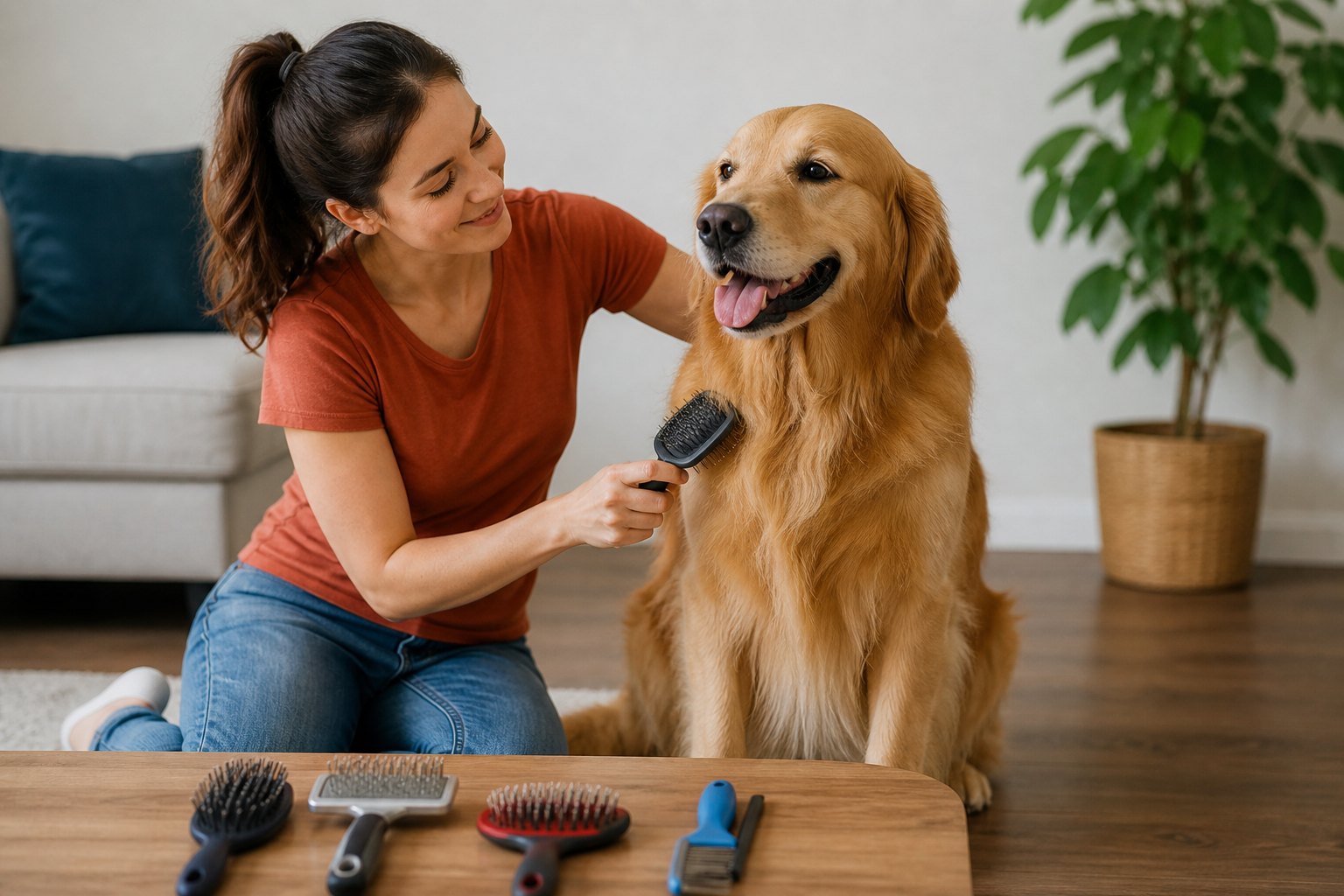
You are standing in the grooming aisle or scrolling through pages of pet supplies. You see brushes with wire pins, brushes with soft bristles, and tools that look like miniature garden rakes. Your dog is shedding all over the rug, and you just want a tool that works without causing discomfort. Choosing what dog brush to use depends entirely on your pet's specific coat type and grooming needs. At BaxterBoo, we have spent years helping pet parents navigate these choices to keep their dogs comfortable and clean. This guide will break down every major brush type and explain which one fits your dog’s lifestyle. You will learn how to identify your dog's coat and how to use each tool safely. Using the right equipment turns a messy chore into a rewarding bonding moment for you and your dog.
Quick Answer: The best brush depends on coat length and density. Short-haired dogs need bristle brushes or rubber mitts. Long-haired or curly dogs require slicker brushes and metal combs to prevent mats. Double-coated breeds need undercoat rakes to manage heavy shedding.
Identifying Your Dog's Coat Type
Before you pick up a tool, you must understand the hair you are brushing. Not all fur is created equal. Some dogs have a single layer of hair that grows constantly. Others have a thick, fuzzy undercoat protected by longer guard hairs. Knowing the difference prevents you from using a tool that might scratch the skin or fail to reach the tangles.
Short and Smooth Coats
Dogs like Boxers, Beagles, and Great Danes have short hair that lies close to the body. These dogs do not get traditional mats. However, they do shed fine hairs that can be difficult to remove from furniture. The goal here is to remove loose hair and distribute skin oils for a healthy shine.
Double Coats
Breeds such as Huskies, Golden Retrievers, and German Shepherds have two layers. The top coat is weather-resistant. The undercoat is soft and dense for insulation. This undercoat is what ends up in "tumbleweeds" around your home. You need a brush that can reach through the top layer without damaging it.
Long or Silky Coats
Yorkshire Terriers and Afghan Hounds have hair that is more similar to human hair. It is fine and prone to tangles. If you do not brush these dogs frequently, the hair will wrap around itself and form tight knots. These coats require gentle detangling tools.
Curly and Wooly Coats
Poodles and many "Doodle" mixes fall into this category. Their hair traps shed fur instead of letting it fall to the ground. This makes them appear low-shedding, but it also means they mat very easily. You must brush all the way to the skin to keep these dogs comfortable.
Key Takeaway: Always match the brush to the coat layer. A brush that only touches the surface will leave hidden mats near the skin in double-coated or curly-haired breeds.
The Versatile Slicker Brush
The slicker brush is perhaps the most common tool in a grooming kit. It has a flat or slightly curved head with rows of thin wire pins. These pins are usually angled to help grab loose hair and break up small tangles. We often recommend this as a primary tool for many different breeds.
Slicker brushes work best for:
- Medium to long-haired dogs
- Curly-haired breeds like Poodles
- Wire-haired Terriers
- Removing light mats and debris
When using a slicker brush, you must be careful not to press too hard. The wire pins can be sharp. If you scrape the skin repeatedly in the same spot, you can cause "brush burn." This is a red, irritated patch of skin that is painful for your dog. Use long, gentle strokes and check the skin frequently. For a ready-to-use option, consider the Master Grooming Tools Self-Cleaning Slicker Brush.
Step 1: Part the hair. Use your hand to pull the hair upward so you can see the skin. Step 2: Brush downward. Use the slicker brush to pull the hair away from the skin in the direction of growth. Step 3: Move in sections. Do not try to brush the whole dog at once. Work on one small area until it is smooth.
Bottom line: The slicker brush is an essential tool for detangling and removing loose fur from medium to long coats.
Undercoat Rakes for Heavy Shedders
If you own a dog that seems to shed a new puppy's worth of fur every week, you need an undercoat rake. These tools have long, widely spaced metal teeth. They are designed to pass through the top coat and pull out the dead, fuzzy undercoat. This is especially helpful during "blowing coat" season in the spring and fall.
Rakes come in different pin lengths. You should choose one that matches the depth of your dog’s fur. If the pins are too short, they will not reach the undercoat. If they are too long, they might poke the skin. These tools are much more efficient than a standard brush for breeds like Malamutes, Samoyeds, and Newfoundlands. You can compare different options in our dog brushes and combs collection.
Using a rake requires a light touch. You are not trying to "rake" the skin. You are trying to hook the loose fur in the undercoat and pull it out. If you feel resistance, stop. You might have hit a mat. Pulling through a mat with a rake will hurt your dog.
- Best for: Double-coated breeds.
- Frequency: Two to three times a week during heavy shedding seasons.
- Goal: To remove the dead undercoat before it mats or falls off.
Vet Tip: If your dog is shedding excessively and has patches of hair loss or very red skin, consult your veterinarian. These can be signs of allergies or skin infections rather than normal shedding. Our BaxterBoo Pharmacy offers prescription skin supports and allergy medications through our partnership with Pet's Choice if your vet identifies an underlying medical issue.
Bristle Brushes for Shine and Maintenance
Bristle brushes are the simplest grooming tools. They use natural or synthetic bristles to smooth the hair. These do not reach deep into thick coats. Instead, they are used for surface-level cleaning and adding shine.
For short-haired dogs, a firm bristle brush is often all you need. It mimics the feeling of being petted, which most dogs enjoy. The bristles pull away dust, dirt, and loose surface hair. At the same time, they massage the skin. This stimulates the production of natural oils, which the brush then spreads along the hair shaft.
For long-haired dogs, a soft bristle brush is a "finishing" tool. You use it after you have already removed the tangles with a slicker brush or comb. It smooths the hair down and gives the coat a polished, professional look. A dual-sided option such as the U-Groom Combo Brush for Dogs and Cats combines pins and bristles for these two steps.
Bottom line: Bristle brushes are perfect for short-haired breeds and for adding a finishing shine to longer coats.
Pin Brushes and Their Specific Uses
A pin brush looks very similar to a human hairbrush. It has wire pins with rounded or plastic tips to prevent scratching. While these are popular, they are not the most effective tools for removing large amounts of shed hair. They are best used as a gentle detangling tool for dogs with long, silky hair.
If your dog has a very thin or fine coat, a slicker brush might be too harsh. The pin brush is a softer alternative. It provides enough tension to straighten the hair without the risk of wire scratches. Many show dog owners use pin brushes to maintain the length of the coat without breaking the individual hairs.
- Ideal for: Silky coats like Maltese or Silky Terriers.
- Benefit: Gentler on the skin and hair than a slicker brush.
- Limit: Will not remove a thick undercoat or break up heavy mats.
Rubber Brushes and Curry Combs
Rubber brushes are fantastic for two specific scenarios: bathing and short-coat maintenance. These tools are usually made of soft, flexible rubber with thick nubs. Because they are not sharp, they are an excellent choice for puppies or dogs that are nervous about grooming.
During a bath, use a rubber brush to massage shampoo deep into the coat. This helps break up oils and dirt. It also helps loosen "dead" hair that is ready to shed. Many owners find that using a rubber brush in the tub significantly reduces the amount of hair they find around the house later. Explore our dog grooming supplies to find brushes and bath-time essentials.
On dry, short-haired dogs, use the rubber brush in a circular motion. This "curry" action pulls loose hair to the surface. You can then wipe the hair away with a damp cloth or a soft bristle brush. It is a very gentle way to manage shedding in breeds like Pugs or Pit Bulls.
Key Takeaway: Rubber brushes are the safest option for sensitive dogs and are highly effective at removing hair during bath time.
Choosing the Right Metal Comb
No grooming kit is complete without a high-quality metal comb. We recommend a "greyhound style" comb, which has fine teeth on one half and medium teeth on the other. A comb is the only way to be 100 percent sure that you have removed all the tangles.
After you brush your dog with a slicker or pin brush, run the comb through the fur. If the comb catches, there is still a tangle or a small mat. Brushes often glide over the top of a knot, but a comb will find it. This is especially important for areas that mat easily, such as:
- Behind the ears
- In the "armpits" (where the legs meet the body)
- The back of the thighs
- Around the collar area
How to Handle a Mat
If the comb finds a mat, do not pull. Pulling on a mat is like pulling on your own hair. It hurts. Instead, hold the base of the mat with your fingers so you aren't pulling the skin. Use the edge of your comb or a slicker brush to gently "pick" at the outer edges of the knot. Slowly work your way inward until the knot breaks apart.
Vet Tip: Never use scissors to cut out a mat near the skin. Dog skin is very thin and can easily be pulled into the knot. It is very common for owners to accidentally cut their pets while trying to remove mats. If a mat is too tight to brush out, consult a professional groomer or your veterinarian for a safe shave-down.
The Role of De-shedding Tools
Specialty de-shedding tools, like the Furminator, are designed specifically to reach through the top coat and remove the undercoat. These tools often have a very fine, comb-like edge. They are incredibly effective at removing massive amounts of fur.
However, these tools must be used with caution. Because the teeth are very close together and made of metal, they can actually cut or "strip" the coat if used too aggressively. You should never use a de-shedding tool on a dog with a single coat or a curly coat, as it can damage the hair. For additional guidance on curly coats, read how to groom a dog that has curly hair.
Step 1: Ensure the coat is completely dry. Step 2: Use very light pressure. Let the tool do the work. Step 3: Do not over-brush one area. A few passes are enough. Step 4: Avoid sensitive areas like the stomach or legs where the skin is thin.
Bottom line: De-shedding tools are powerful for double coats but require a careful hand to avoid damaging the hair or skin.
Grooming Frequency and Health Checks
Brushing is not just about looks. It is an essential health check. When you brush your dog, you are feeling their entire body. This is the best time to look for things that do not belong.
While you brush, look for:
- Fleas or flea dirt (small black specks)
- Ticks, especially after walks in wooded areas
- Lumps or bumps under the skin
- Redness, sores, or dry patches
- Odd smells coming from the skin or ears
If you find fleas or ticks during your grooming session, it is important to act quickly. BaxterBoo carries a wide range of prevention products in our flea and tick collection. Our pharmacy also provides FDA-approved flea and tick medications through our partnership with Pet's Choice, including many options that require a veterinary prescription for year-round protection. You can also review flea and tick prevention products when comparing prevention approaches.
Grooming Frequency Table
| Coat Type | Recommended Brush | Frequency |
|---|---|---|
| Short / Smooth | Bristle brush or rubber mitt | Once a week |
| Double Coat | Undercoat rake and slicker | 2-3 times a week |
| Curly / Wooly | Slicker brush and metal comb | Daily to every other day |
| Long / Silky | Pin brush and metal comb | Daily |
| Wire-haired | Slicker brush and metal comb | 1-2 times a week |
Making Grooming a Positive Experience
If your dog runs away when they see the brush, you have a difficult road ahead. The goal is to make the brush a source of rewards. Start by letting your dog sniff the brush while you give them a high-value treat.
Keep your early grooming sessions very short. Brush for thirty seconds, then stop and give a treat. Gradually increase the time as your dog becomes more comfortable. If they show signs of stress, such as lip licking, yawning, or trying to move away, stop the session. You want them to feel like they have a choice in the process.
It is also helpful to groom your dog when they are tired. A long walk before a grooming session can make a high-energy dog much more willing to sit still. If you are calm and relaxed, your dog is more likely to be calm as well.
Essential Grooming Add-ons
While the brush is the main tool, a few other items can make the process easier. A detangling spray is a lifesaver for long-haired or curly dogs. It provides "slip" to the hair, allowing the brush to glide through knots without pulling.
A flea comb is another vital tool. These have extremely fine, tightly packed teeth. Even if you use regular prevention, a flea comb helps you check for "hitchhikers" after a trip to the park. It is a simple, inexpensive way to keep your home pest-free.
Lastly, consider where you groom. Brushing a shedding dog inside can be a nightmare for cleaning. If the weather is nice, grooming outside is best. If you must groom inside, a non-slip mat on top of a table or a dedicated area with easy-to-clean flooring will save you time.
When to Seek Professional Help
Sometimes, a home grooming session is not enough. Professional groomers have heavy-duty dryers that can blow out loose undercoat much faster than a hand brush. They also have the experience to handle difficult mats safely.
You should see a professional if:
- Your dog is severely matted to the skin.
- Your dog becomes aggressive or extremely fearful during brushing.
- You have a breed that requires specific clipping or "hand-stripping."
- Your dog has a skin condition that makes brushing painful.
Groomers and veterinarians work together to keep your pet's skin healthy. If your groomer notices a recurring skin issue, they will often suggest a vet visit. This is where a prescription diet or medicated shampoo from a pharmacy can make a huge difference in the quality of your dog’s coat.
Summary of Brush Selection
Choosing what dog brush to use does not have to be a guessing game. Focus on your dog's coat first. A short-haired dog needs a soft touch and oil distribution. A double-coated dog needs a tool that reaches deep to the skin. A curly-coated dog needs constant vigilance against mats.
At BaxterBoo, we recommend building a small kit rather than relying on just one tool. A slicker brush and a metal comb are the foundation for almost every dog. Adding a rake or a rubber brush based on your dog's specific needs will give you the best results. Regular grooming keeps your house cleaner, but more importantly, it keeps your dog healthy and happy.
Final Checklist for Your Grooming Kit:
- Identify the coat type (Single, Double, Curly, or Silk)
- Select a primary brush (Slicker, Rake, or Bristle)
- Get a metal comb for "finishing" and checking for mats
- Keep a detangling spray on hand for longer coats
- Have a flea comb for regular health checks
Bottom line: Consistent grooming with the correct tools prevents painful mats and allows you to monitor your dog's health effectively.
FAQ
What is the best brush for a dog that sheds a lot?
For heavy shedders with a double coat, an undercoat rake is the most effective tool. It reaches through the top coat to pull out the loose, fuzzy undercoat before it falls off. If your dog has short hair and sheds, a rubber curry brush or a firm bristle brush works best to lift and remove hair.
Can I use a human hairbrush on my dog?
While a human brush might work on the very surface of a long-haired dog, it is generally not effective. Human brushes are designed for human hair density and scalp sensitivity. Dog brushes like slickers or rakes are specifically built to penetrate thick fur and grab the types of tangles dogs develop.
How do I know if I am brushing my dog too hard?
Watch your dog's skin and behavior. If the skin looks red or pink after brushing, you are likely using too much pressure or brushing the same spot too many times. If your dog flinches, whines, or tries to move away, lighten your touch and check the tool for sharp edges.
How often should I brush my dog?
Short-haired dogs usually need a thorough brushing once a week. Long-haired, curly, or double-coated breeds often require brushing every two to three days, or even daily during shedding season. Regular sessions are much shorter and easier than trying to tackle a week's worth of tangles all at once.






