
 Save 15% on your 1st Autoship learn more

 Email us
 Live Chat
 FAQs
FAQs





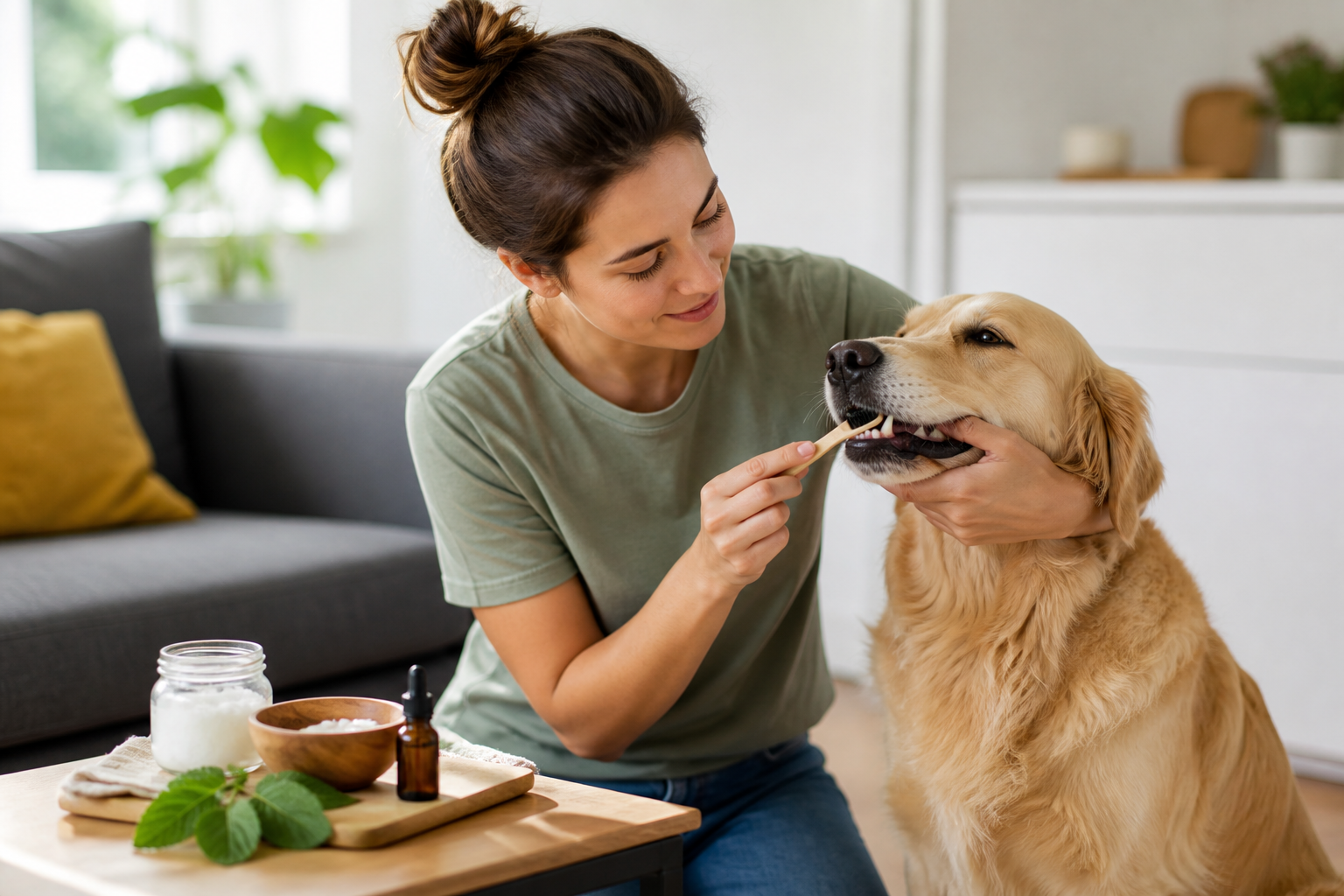
Introduction
You are sitting on the couch when your dog leans in for a friendly lick. Suddenly, a wave of bad breath hits you. It is a common moment for many pet owners. We often notice the smell before we notice the yellow buildup on their teeth. While traditional brushing is the gold standard for oral care, many dogs simply will not tolerate a toothbrush. At BaxterBoo, we understand that wrestling with your dog every night is stressful for everyone involved. Fortunately, you can support your dog's oral health using natural methods that work with their instincts. This article covers mechanical tools, systemic supplements, and healthy whole foods that help keep teeth clean. A consistent natural routine can significantly reduce plaque and help your dog maintain a healthy smile for years.
Quick Answer: You can clean a dog's teeth naturally by using mechanical tools like raw carrots and rubber toys. Systemic options like seaweed-based powders and water additives also help break down plaque through saliva. These methods work best when used daily to prevent soft plaque from hardening into tartar.
Understanding Plaque and Tartar
To clean your dog's teeth effectively, you must understand what you are fighting. Plaque is a sticky film of bacteria that forms on the teeth within hours of eating. At this stage, it is soft. You can remove it relatively easily through chewing or light abrasion. If plaque stays on the teeth for more than 48 hours, it begins to mineralize. It mixes with the minerals in your dog's saliva and hardens into tartar.
Tartar is the hard, yellow or brown substance you see near the gumline. You cannot remove tartar at home with natural methods or a toothbrush. Once tartar forms, it requires a professional veterinary cleaning under anesthesia. Natural dental care is most effective when it focuses on daily plaque removal. By disrupting the film every day, you prevent the buildup that leads to gum disease.
Key Takeaway: Daily consistency is more important than the specific method you choose. Disrupting plaque every 24 hours prevents it from hardening into permanent tartar.
The Power of Seaweed and Systemic Cleaning
One of the most effective natural ways to clean a dog's teeth involves a specific type of seaweed called Ascophyllum nodosum. This is a systemic approach. You do not need to rub it on the teeth. Instead, you add a small amount of the dried seaweed powder to your dog's food. Once ingested, the compounds in the seaweed enter the bloodstream and change the composition of the dog's saliva.
The altered saliva helps break down the bacterial film of plaque. It also softens existing tartar over time, making it easier to scrape away during play or chewing. The most well-known version of this is ProDen PlaqueOff Powder Dog and Cat Teeth Care. This product carries the Veterinary Oral Health Council (VOHC) Seal of Acceptance. This seal means that independent trials proved the product effectively reduces plaque and tartar. It is a great choice for dogs who refuse to have their mouths touched.
Mechanical Cleaning With Whole Foods
Many owners are surprised to learn that certain vegetables act as natural toothbrushes. These foods provide mechanical abrasion. This means the physical act of crunching against the hard surface of the vegetable scrapes plaque off the teeth.
Raw Carrots
Raw carrots are a fantastic natural dental tool. They are firm and require significant chewing. As your dog crunches through a large carrot, the fibers act like bristles. This action helps clean the surfaces of the back molars. Carrots are also low in calories and high in Vitamin A. For the best results, give your dog a whole, large carrot rather than baby carrots. Large carrots encourage more chewing time.
Sliced Apples
Apples contain malic acid, which can help dissolve some of the stains on teeth. The crunchy texture also provides a mild cleaning effect. However, apples are higher in sugar than carrots. Use them as an occasional supplement rather than a daily tool. Always remove the seeds and the core. Apple seeds contain small amounts of cyanide and are dangerous for dogs.
Vet Tip: If you notice your dog’s gums are bleeding while they chew on carrots or toys, stop the activity. Bleeding gums are a sign of advanced gingivitis. You should consult your veterinarian for a dental exam to ensure there are no underlying infections or loose teeth.
Using Toys for Natural Plaque Removal
Playtime is an excellent opportunity for dental care. Not all toys are created equal when it comes to cleaning teeth. You want to look for toys with textures that can reach the gumline.
- Nubby Rubber Toys: Brands like Kong make rubber toys with specific ridges and nubs. As your dog bites down, the rubber "fingers" massage the gums and scrape the teeth.
- Cotton Rope Toys: Natural cotton ropes act like floss. When a dog chews on a rope, the fibers slide between the teeth. This can help remove food particles trapped in tight spaces.
- Supervision is Key: Always watch your dog with chew toys. If a toy begins to break apart, remove it immediately. Swallowing large pieces of rubber or rope can cause intestinal blockages.
For a purpose-built option, consider the KONG Dental Ball Dog Toy with Teeth Cleaning Gel, which combines chewing with raised textures designed for dental play.
The Role of Water Additives
Water additives are often described as a drinkable mouthwash for dogs. You add a small amount of the liquid to your dog's water bowl every time you refill it. These products usually contain enzymes or natural antibacterial agents like green tea extract.
The additive works every time your dog takes a drink. It coats the teeth and gums with a layer of protection that inhibits bacterial growth. This is a passive method. It requires no effort from the dog and no handling from you. While it is not as powerful as mechanical scrubbing, it is a helpful layer of defense. It is especially effective at freshening bad breath.
You can explore our dog dental health collection for water additives, gels, wipes, and other oral-care options.
Natural Chews and the Bone Debate
Bones are the most traditional natural dental tool, but they are also the most controversial. Raw meaty bones can be very effective at keeping teeth white. The cartilage and sinew act like a natural abrasive. However, there are significant risks to consider.
- Cooked Bones: Never give a dog a cooked bone. Cooking makes bones brittle. They can splinter and pierce the digestive tract.
- Hardness Issues: Very hard items like elk antlers or heavy marrow bones can actually fracture teeth. If a dog chews too aggressively on something harder than the tooth itself, the enamel can snap.
- Bacteria Risks: Raw bones can carry bacteria like Salmonella. This is a concern for both the dog and the humans in the house.
If you choose to use bones, look for "knuckle bones" that are softer and less likely to splinter. Always supervise the chewing session and remove the bone once it is small enough to be swallowed.
For a commercial alternative, Greenies Original Dental Dog Chews are designed for daily chewing and oral care.
Specialized Natural Diets
The food your dog eats every day has a massive impact on their oral health. There is a common myth that all dry kibble cleans teeth. This is not true for most standard foods. Most kibble is small and shatters as soon as the dog bites it. This provides almost no cleaning action.
Some premium brands, like Farmina or Royal Canin, offer specialized dental formulas. These kibbles are larger and have a specific fiber structure. Instead of shattering, the tooth sinks into the kibble. This creates a scrubbing effect on the tooth surface. If your dog has a history of dental issues, your vet might recommend a therapeutic diet. Our pharmacy carries a variety of prescription pet foods and FDA-approved medications.
Key Takeaway: Standard kibble rarely cleans teeth. Look for dental-specific formulas or supplement a standard diet with raw vegetables and mechanical chews.
Safe Home Remedies for Fresh Breath
If your primary concern is "dog breath," there are a few natural items in your pantry that can help.
- Fresh Parsley: Chop up a tablespoon of fresh parsley and mix it into your dog's food. Parsley is a natural deodorizer and contains chlorophyll, which helps neutralize smells.
- Coconut Oil: Some owners use coconut oil as a natural "toothpaste." It has mild antibacterial properties. You can rub a small amount on their gums or let them lick it off a spoon.
- Cinnamon: A tiny pinch of cinnamon on food can help reduce oral bacteria. Do not use large amounts, and ensure it is Ceylon cinnamon for the safest results.
Transitioning Your Dog to a New Routine
If your dog is not used to having their mouth handled, start slowly. You want this to be a positive experience.
Step 1: Start with food-based methods. Add a seaweed supplement or a raw carrot to their daily routine. These require zero handling. Step 2: Introduce dental toys during play. Use praise and encouragement when they chew on textured rubber. Step 3: Gradually try to touch your dog's muzzle and lips while they are relaxed. Offer a high-value treat after every touch. Step 4: Once they are comfortable, you might try using a dental wipe or a piece of gauze wrapped around your finger. This is less intrusive than a brush but provides great mechanical cleaning.
For additional guidance, read The Top 10 Pet Dental Care Tips.
Bottom line: Natural dental care is about layering different methods to create a comprehensive defense against plaque.
Signs Your Dog Needs a Professional Cleaning
Natural methods are preventative. They cannot cure existing dental disease or remove heavy tartar. It is important to know when home care is not enough. If you see any of the following signs, you should book an appointment with your veterinarian.
- Excessive Drooling: This can indicate pain or an inability to swallow correctly.
- Dropping Food: If your dog wants to eat but drops the kibble out of their mouth, they likely have a painful tooth.
- Red or Swollen Gums: This is a sign of gingivitis or infection.
- Lumps in the Mouth: Any new growths or swellings along the gumline need an immediate veterinary check.
- Unbearable Odor: While dog breath is never "minty," a truly foul or rotten smell usually indicates an abscess or deep infection.
For a closer look at warning signs, see Is Your Dog Hiding Bad Teeth? Warning Signs and What to Do.
Professional cleanings allow your vet to check under the gumline where you cannot see. They use ultrasound tools to remove hardened tartar safely. After a professional cleaning, your natural home routine will be much more effective at maintaining the results.
Summary
Cleaning your dog's teeth naturally is a realistic goal for most pet owners. By combining mechanical tools like carrots and toys with systemic support like seaweed, you can keep plaque at bay. Remember that consistency is the most important factor in any dental routine. Start slowly, make it fun, and keep a close eye on your dog's gum health. At BaxterBoo, we have been helping pet owners find the right gear and health supplies since 2006. Whether you choose to use the MVP Rewards programme for your daily dental treats or visit our warehouse in Vernon Hills, we are here to support your pet's wellness journey.
FAQ
Can coconut oil really clean a dog's teeth?
Coconut oil contains lauric acid, which has mild antimicrobial and antibacterial properties that can help reduce the bacteria in a dog's mouth. While it does not provide the mechanical scrubbing needed to remove plaque, it can be a helpful supplement for gum health and fresher breath. You can add a small spoonful to their food or use it as a natural lubricant for gentle gum massages.
Are raw carrots as effective as brushing?
Raw carrots provide excellent mechanical abrasion that helps scrape soft plaque off the surface of the teeth during chewing. However, they are not as effective as brushing because they cannot reach into every crevice or clean under the gumline as a brush can. They should be used as one part of a multi-layered dental routine rather than a total replacement for oral care.
How often should I use natural dental methods?
To be effective, natural dental methods should be used daily because plaque begins to reform within hours of eating. Consistency is necessary to ensure that plaque is disrupted before it has a chance to mineralize into hard tartar. A daily routine of seaweed supplements combined with a few sessions of chewing on dental toys each week provides the best protection.
Is it safe to give my dog bones to clean their teeth?
Raw meaty bones can help clean teeth through mechanical action, but they carry risks like tooth fractures, splintering, and bacterial contamination. You should always supervise your dog with any bone and avoid cooked bones entirely, as they are prone to splintering. Many veterinarians recommend safer alternatives like VOHC-accepted rubber toys or dental chews to avoid the risk of emergency dental surgery.






