
 Save 15% on your 1st Autoship learn more

 Email us
 Live Chat
 FAQs
FAQs





Introduction
You lean in for a pup kiss and quickly pull back because the smell is overwhelming. Upon closer look, you notice a hard, yellowish-brown layer packed against your dog's gumline. This material does not brush away like food debris. It is tartar, also known as dental calculus. At BaxterBoo, we understand that dental hygiene can feel like a chore, but it is one of the most important ways to protect your dog's long term health. This guide will cover how to clean a dog's teeth tartar and how to prevent it from coming back. We will look at home care tools, the role of professional cleaning, and how to manage your dog's oral wellness. Keeping those pearly whites clean is a journey that starts with the right knowledge and the right routine.
Quick Answer: Tartar is hardened plaque that usually requires professional veterinary scaling to remove completely. At home, you can soften mild buildup with enzymatic toothpastes and specialized gels, but consistent brushing is the only way to prevent new tartar from forming.
Understanding the Difference Between Plaque and Tartar
To keep your dog's mouth healthy, you must know what you are fighting. Plaque is a sticky, colorless film of bacteria that forms on the teeth within hours of eating. It is soft and easy to remove with a toothbrush or even a dental chew. However, if plaque stays on the tooth for more than 48 to 72 hours, it reacts with the minerals in your dog's saliva.
This chemical reaction causes the plaque to harden into tartar. Once plaque becomes tartar, it turns yellow or brown. It also becomes porous, which means it traps even more bacteria against the gums. Unlike plaque, tartar is cemented to the tooth enamel. You cannot simply brush it away with a standard toothbrush once it has fully mineralized.
Key Takeaway: Plaque is the soft precursor that you can manage at home, while tartar is the hardened result of neglected plaque that often requires professional tools.
The Risks of Tartar Buildup
Tartar is not just a cosmetic issue. It is a breeding ground for bacteria that can cause significant pain. When tartar builds up along the gumline, it pushes the gum tissue away from the tooth. This process is called gum recession. It creates small pockets where more bacteria can hide, leading to a condition known as periodontal disease.
If left untreated, this inflammation can destroy the bone and tissue that hold the teeth in place. This leads to loose teeth and eventual tooth loss. More importantly, the bacteria in the mouth can enter the bloodstream. This allows infection to travel to the heart, liver, and kidneys. Routine dental care is a full body health priority, not just a way to fix bad breath.
Can You Remove Hard Tartar at Home?
It is a common question: can you scrape tartar off at home? The short answer is that you should be very careful. Professional veterinarians use specialized ultrasonic scalers to vibrate tartar loose without damaging the enamel. At home, using metal scrapers or "scales" is risky. You can easily slip and cut the gums or scratch the tooth enamel. Scratches on the enamel actually give bacteria a better place to hide, making future tartar buildup happen even faster.
Instead of scraping, home care should focus on softening mild tartar and preventing new plaque from hardening. There are several tools in our dog dental care collection that help break down the chemical bonds of tartar over time.
Enzymatic Toothpastes
These are the gold standard for home care. Unlike human toothpaste, which can be toxic to dogs, these contain enzymes like glucose oxidase. These enzymes work to break down organic matter and bacteria. When you apply these pastes, the enzymes continue to work even after you stop brushing.
Dental Gels and Sprays
If your dog will not tolerate a brush, dental gels are a solid alternative. You apply the gel to the gumline, and your dog's tongue moves it around the mouth. These often contain mild abrasives or antibacterial agents that help thin out the tartar layer.
Water Additives
These are specialized liquids you add to your dog's water bowl. They help neutralize the bacteria in the saliva and can slow down the mineralization of plaque into tartar. Our dog dental supplements include water additives and other oral-care options.
Vet Tip: If your dog has bright red gums, bleeding, or loose teeth, do not attempt to scrub the tartar away. This indicates advanced periodontal disease, and a veterinary exam is necessary to prevent further pain.
A Step-By-Step Guide to Brushing for Tartar Control
Brushing is the most effective way to keep your dog's mouth clean. If your dog is not used to it, you must move slowly to build trust.
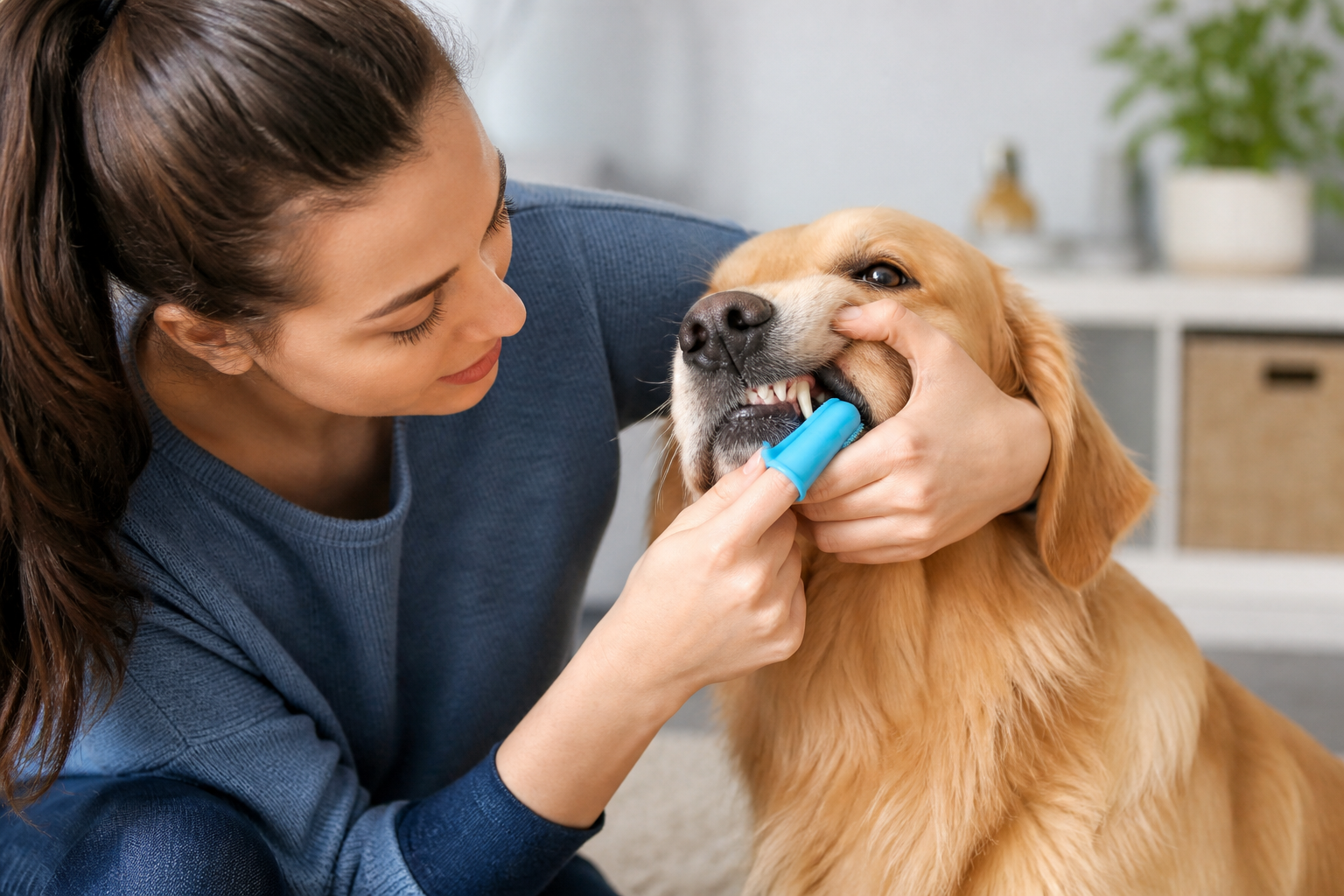
Step 1: Choose the right supplies. / Use a dog specific toothbrush with soft bristles and an enzymatic toothpaste. Never use human toothpaste because it often contains xylitol, which is life threatening for dogs.
Step 2: Let them taste the paste. / Put a small amount of toothpaste on your finger and let your dog lick it off. Most dog pastes come in flavors like poultry or beef to make this a positive experience.
Step 3: Get them used to mouth contact. / Gently lift the lip and rub your finger along the teeth and gums. Do this for a few days until they are comfortable with the sensation.
Step 4: Introduce the brush. / Apply a small amount of paste to the brush. Hold the brush at a 45 degree angle to the gumline.
Step 5: Use circular motions. / Focus on the outside surfaces of the teeth. This is where most tartar accumulates. You do not need to worry as much about the inside surfaces, as the tongue helps keep those clean.
Step 6: Keep it short. / Aim for 30 to 60 seconds total. Always end the session with a treat or extra praise so they look forward to the next time.
For more guidance, read our tips for building a pet dental care routine.
Bottom line: Daily brushing is the single most effective way to stop plaque from turning into hard tartar.
The Role of Dental Chews and Toys
Not every dog is a fan of the toothbrush. In these cases, mechanical cleaning through chewing is a great secondary strategy. Brands like Kong offer durable rubber toys with ridges specifically designed to scrub teeth as the dog chews.
When a dog chews on a textured toy or a dental treat, the friction helps scrape away soft plaque. Some treats, like Greenies, are also formulated to dissolve easily and contain minerals that help reduce tartar. It is important to choose the right size chew for your dog. A chew that is too small can be a choking hazard, while one that is too hard can fracture a tooth.
You can compare options in our dental chews and treats collection.
What to Look for in a Dental Chew:
- The VOHC Seal: Look for products with the Veterinary Oral Health Council seal of approval.
- The right texture: It should be firm enough to scrub but flexible enough not to break a tooth.
- Appropriate calories: Dental treats are still treats, so adjust your dog's daily food intake accordingly.
For more ideas, see our guide to the best dental chews for dogs.
Advanced Support Through Our Pharmacy
Sometimes home care is not enough, especially for dogs with a genetic predisposition to dental issues. Smaller breeds like Chihuahuas and Yorkies often have crowded teeth, which makes them tartar magnets. In these cases, your veterinarian might recommend a prescription dental diet.
Our pet pharmacy offers access to prescription pet foods, including options like Royal Canin Dental or Farmina Vet Life, through our partnership with Pet's Choice. These diets feature kibble with a specific size and texture. The kibble does not shatter when the dog bites it. Instead, the tooth sinks into the kibble, allowing the fibers to scrub the tooth surface all the way to the gumline. If your vet prescribes a dental diet or an oral antibiotic for an infection, we can help you fulfill those needs easily.
Professional Veterinary Dental Cleanings
Even with the best home routine, most dogs will eventually need a professional cleaning. This is because home care cannot reach the tartar that hides under the gumline. A professional cleaning at the vet's office involves several steps that cannot be done at home.
First, your dog is placed under general anesthesia. This is necessary because the equipment is loud and can be scary. More importantly, it allows the vet to clean deeply under the gums and take X-rays to check for bone loss. After the tartar is scaled away, the vet polishes the teeth. Polishing smooths out the microscopic scratches left by the cleaning, making it harder for plaque to stick in the future.
Key Takeaway: Think of home care like brushing and flossing, and the vet visit like your six month dental checkup. You need both for total health.
Diet and Natural Aids for Tartar Management
What your dog eats affects their mouth environment. Diets high in simple carbohydrates can encourage the growth of bacteria. Some owners find success adding natural supplements to the diet.
Sea kelp is a popular natural additive. Specific types of dried kelp contain enzymes that, when digested, actually change the chemistry of the saliva to help dissolve plaque. Crunchy vegetables like carrots or apple slices can also provide a mild mechanical cleaning effect, though they are not a substitute for brushing.
Making Dental Care a Routine
The key to success is consistency. We find that the most successful pet owners tie dental care to an existing habit. Maybe you brush your dog's teeth right after you brush your own at night. Or perhaps they get their dental chew every morning after their walk.
Using our Autoship programme can help ensure you never run out of toothbrushes, pastes, or treats. At BaxterBoo, we want to make it easy for you to maintain these habits. By keeping these supplies on a recurring delivery, you ensure that your dog's oral health never takes a back seat. Plus, the MVP Rewards programme lets you earn points on every dental purchase, which adds value to your long term care plan.
When Dental Issues Become an Emergency
While tartar buildup is a slow process, the infections it causes can become urgent. You should contact your veterinarian immediately if you notice:
- A swelling on the face, especially under the eye.
- Your dog dropping food or crying out when eating.
- A sudden change in temperament or hiding.
- Blood in the water bowl or on chew toys.
These are often signs of a tooth root abscess. This is a painful pocket of infection that requires professional intervention and often antibiotics from a pharmacy. For additional guidance, read how to recognize warning signs of dental disease in dogs.
Summary of Home Care Strategies
Managing tartar is about a multi-layered approach. You cannot rely on just one method.
- Brush daily or at least three times a week with enzymatic paste.
- Provide VOHC approved dental chews for mechanical scrubbing.
- Use water additives or gels if brushing is not possible.
- Feed a high quality diet and consider prescription dental kibble if recommended by a vet.
- Schedule annual or bi-annual veterinary dental exams.
Bottom line: You are the most important part of your dog's dental team. Your daily efforts prevent the need for more invasive and expensive procedures later.
Conclusion
Cleaning a dog's teeth tartar requires a mix of patience and the right tools. While you can manage plaque and mild buildup at home, remember that hardened tartar is a sign that it is time to consult your veterinarian. Our goal is to provide the expert-curated products you need to keep your dog's mouth healthy and their breath fresh. Whether you are looking for a new toothbrush, a specialized toy from Kong, or a prescription diet through our pharmacy, we are here to help. Start a dental routine today to ensure your dog stays happy, healthy, and ready for all the kisses they want to give.
FAQ
Can I use a human toothbrush on my dog?
You can use a very soft human toothbrush for a medium or large dog, but a dog specific brush is usually better. Dog brushes are angled to reach the back molars more easily and often have smaller heads for tiny mouths. Finger brushes are also a great option for dogs that are intimidated by a standard handle.
How often should I brush my dog's teeth?
Ideally, you should brush your dog's teeth every day. Plaque can begin to harden into tartar in as little as 36 to 48 hours. If daily brushing is not realistic for your schedule, aim for at least three times per week to significantly reduce the rate of tartar accumulation.
Does dry food really clean a dog's teeth?
Most standard dry kibble does not clean teeth because it shatters as soon as the dog bites it. Only specialized dental diets are designed to provide a "squeegee" effect on the tooth surface. However, dry food is generally better for dental health than soft, canned food, which can stick to the teeth and gums.
Is anesthesia-free dental cleaning a good alternative?
Anesthesia-free cleanings can remove some visible tartar, but they are generally not recommended by veterinarians. These procedures do not allow for cleaning under the gumline or taking X-rays, which is where the most serious dental problems occur. They can also be very stressful for the dog and may result in accidental injury.






