
 Save 15% on your 1st Autoship learn more

 Email us
 Live Chat
 FAQs
FAQs





Introduction
You lean in for a pup kiss and notice something is not quite right. That familiar "dog breath" has become a sharp, metallic odor. When you lift your dog's lip, you see a thick layer of yellow or brown buildup along the gumline. Many owners want to address this but feel anxious about the risks or costs of general anesthesia. At BaxterBoo, we talk to pet owners every day who are looking for practical ways to maintain oral health at home.
This guide covers the most effective methods for cleaning your dog's teeth without the use of sedation. We will look at daily brushing habits, dental chews, and water additives. We will also explain when a professional veterinary cleaning is the only safe option. Improving your dog's oral hygiene starts with consistent effort and the right tools.
Quick Answer: You can clean a dog's teeth without anesthesia by using daily brushing with enzymatic toothpaste, dental wipes, and water additives. While these methods remove plaque and prevent tartar, they cannot treat deep infections or clean beneath the gumline like a professional veterinary procedure.
The Difference Between Plaque and Tartar
Understanding how dental disease develops is the first step in preventing it. It all starts with a sticky film called plaque. This film is made of saliva, food particles, and bacteria. It forms on the teeth within hours of eating. If you do not remove plaque, it reacts with minerals in your dog's saliva. Within 48 to 72 hours, plaque hardens into tartar, also known as calculus.
Plaque is soft. You can easily brush it away with a cloth or a toothbrush. Once it turns into tartar, it becomes like concrete. You cannot brush tartar away. It requires professional tools to remove. Tartar provides a rough surface where even more bacteria can grow. This leads to gum inflammation, known as gingivitis.
If gingivitis is ignored, it progresses to periodontal disease. This is a serious infection that destroys the bone and tissues supporting the teeth. It is painful for your dog and can lead to tooth loss. Bacteria from the mouth can also enter the bloodstream. This puts a strain on the heart, liver, and kidneys. This is why daily maintenance is a health necessity rather than just a cosmetic concern.
The Gold Standard: Daily Brushing at Home
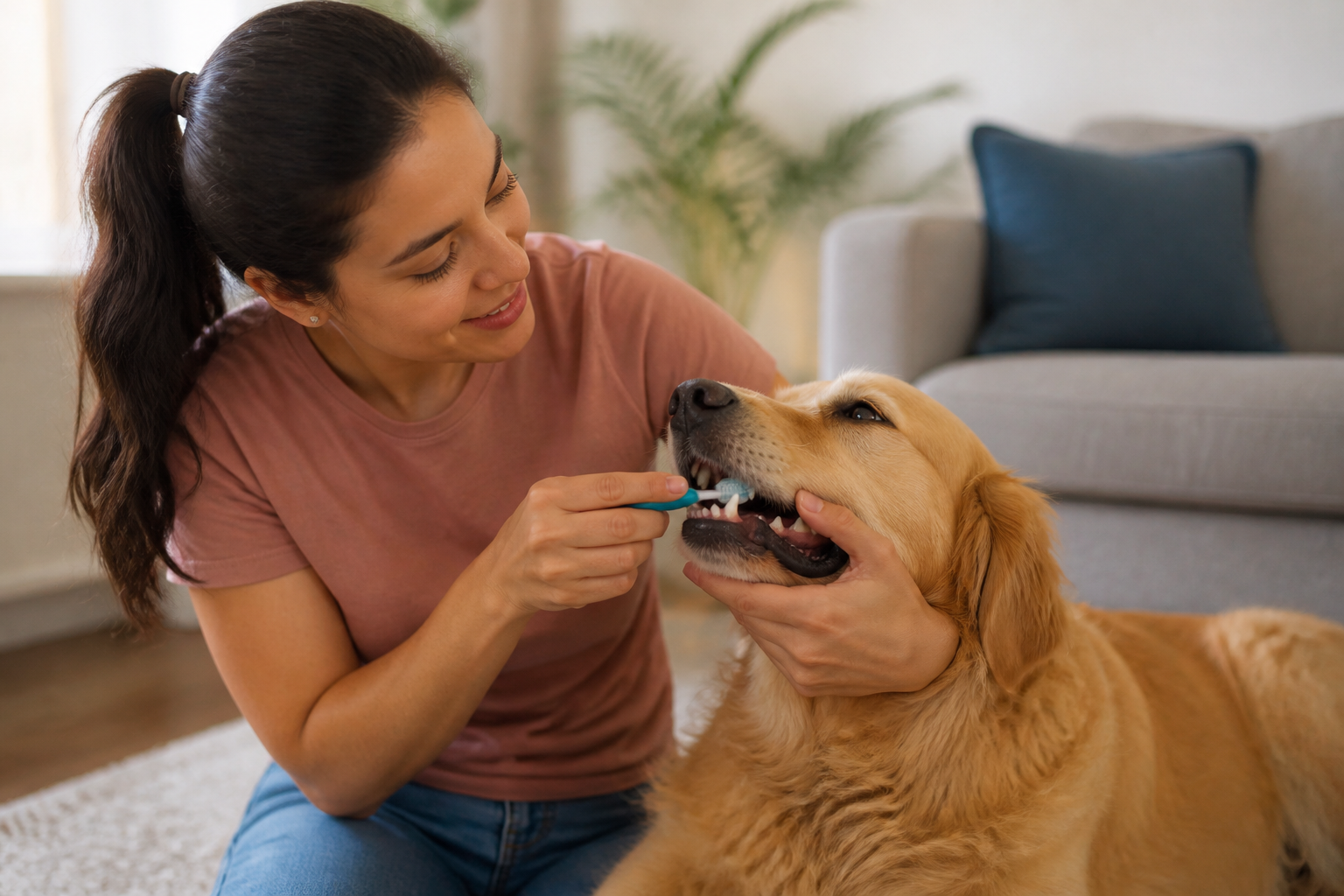
Brushing is the single most effective way to clean your dog's teeth without anesthesia. It is the only method that physically disrupts the biofilm of plaque before it hardens. You do not need to spend twenty minutes on this task. A quick, one-minute session every day is enough to make a massive difference. For suitable tools, explore our dog dental health category.
You must use a toothpaste specifically formulated for dogs. Never use human toothpaste. Our toothpaste contains fluoride and xylitol. Both of these ingredients are toxic to dogs. Pet toothpaste is enzymatic. These enzymes help break down food particles even if you do not get every single spot with the brush. Plus, it comes in flavors like poultry or beef to make the experience more pleasant for your dog. One option is Pure and Natural Pet Organic Dental Solutions CanineTooth Gel with Bamboo Dog Toothbrush.
Choosing the Right Brush
The type of brush you use depends on your dog's size and comfort level. A standard long-handled pet toothbrush is great for reaching the back molars. If your dog is small or nervous, a finger brush might be better. These are silicone sleeves that fit over your pointer finger. They allow you to feel exactly where you are cleaning. For very small breeds, a piece of sterile gauze wrapped around your finger can also work.
Step-by-Step Brushing Guide
Step 1: Introduce the paste. / Put a small amount of enzymatic toothpaste on your finger. Let your dog lick it off so they associate the flavor with a reward.
Step 2: Touch the mouth. / Gently lift your dog's lips and rub your finger along their gums. Do this for several days until they are comfortable with you touching their mouth.
Step 3: Introduce the brush. / Apply toothpaste to the brush. Focus on the large canine teeth first. These are the easiest to reach and get your dog used to the sensation.
Step 4: Use circular motions. / Angle the bristles at a 45-degree angle toward the gumline. Use small, gentle circles to sweep away plaque.
Step 5: Focus on the outsides. / Most tartar builds up on the cheek side of the teeth. You do not need to worry as much about the tongue side, as the dog's tongue naturally keeps those surfaces cleaner.
Step 6: Keep it short. / Start with 15 seconds per side. Gradually work your way up to a full minute. Always end the session with a high-value treat or praise.
Key Takeaway: Consistency is more important than perfection. Brushing for 30 seconds every day is significantly more effective than brushing for ten minutes once a month.
Using Dental Wipes for Difficult Dogs
Some dogs simply will not tolerate a toothbrush in their mouth. If you have a rescue dog with a sensitive history or a particularly stubborn pup, dental wipes are a great alternative. These are pre-moistened pads treated with enzymes or antiseptic solutions like chlorhexidine. You can also browse our dog dental care supplies for other oral-care options.
Wipes work by physically rubbing the plaque off the surface of the teeth. They are less invasive than a brush and allow for more control. You simply wrap the wipe around your finger and swipe across the teeth and gums. While they do not reach into the tiny crevices as well as bristles do, they are much better than doing nothing at all.
Dental Chews and Toys
Chewing is a natural behavior for dogs. It is also a mechanical way to clean teeth. When a dog chews on a textured object, the material scrapes against the tooth surface. This helps rub off plaque. However, not all chews are created equal. For additional options, visit our dog treats category.
You should look for products that have the Veterinary Oral Health Council (VOHC) seal of approval. This seal means the product has been tested and proven to reduce plaque or tartar. Brands like Greenies are popular because they are designed to be flexible. This allows the tooth to sink into the chew, cleaning all the way down to the gumline. You can explore our selection of Greenies products.
Hardness Matters
Be careful with very hard chews like natural bones, antlers, or hard plastic toys. If a chew is harder than the tooth itself, it can cause a slab fracture. A good rule of thumb is the "fingernail test." If you cannot make a small indent in the chew with your thumbnail, it is likely too hard.
Rubber toys with nubs or ridges are excellent for dental health. You can even smear a little bit of pet-safe toothpaste into the grooves of a Kong toy. As your dog works to get the flavor out, they are inadvertently brushing their own teeth.
Water Additives and Oral Rinses
Water additives are the easiest way to support oral health with zero effort. These are liquid solutions that you pour into your dog's water bowl. They contain ingredients that help kill oral bacteria and prevent plaque from sticking to the teeth. See our dog dental health collection for water additives and other oral-care products.
These additives often use enzymes or zinc gluconate to freshen breath and maintain a healthy oral environment. They are especially helpful for senior dogs who may have existing dental issues or for owners with very busy schedules. They are not a replacement for brushing, but they serve as an excellent "insurance policy" for the days you skip a brushing session.
Vet Tip: If your dog has persistent bad breath, bleeding gums, or loose teeth, a water additive will not solve the problem. These symptoms usually indicate an infection below the gumline. Please consult your veterinarian for a full oral exam to rule out painful periodontal disease.
The Role of Diet in Dental Health
What your dog eats affects their oral hygiene. Many owners believe that dry kibble cleans teeth because it is crunchy. In reality, most kibble is small and shatters easily. It does not provide enough friction to clean the teeth. However, there are specific prescription dental diets designed for this purpose. Browse our dog food selection when comparing everyday nutrition options.
Brands like Royal Canin and Farmina Vet Life offer dental-specific formulas. These kibbles are usually much larger. They have a specific fiber matrix that does not shatter. Instead, the tooth sinks into the kibble, which scrubs the surface as the dog bites down. Some of these diets also contain polyphosphates. These minerals bind to calcium in the saliva to prevent tartar from forming.
Our pharmacy at BaxterBoo offers these prescription diets through our partnership with Pet's Choice. If your veterinarian recommends a specialized dental food, you can easily manage those orders through our pet pharmacy. These diets are often part of a long-term plan for dogs prone to rapid tartar buildup.
Why Professional Non-Anesthetic Scaling is Controversial
You may have seen advertisements for professional "anesthesia-free" dental cleanings. These are often performed by groomers or specialized technicians. While they can make your dog's teeth look white and clean, many veterinarians advise against them for several reasons.
First, the procedure is mostly cosmetic. A technician can scrape the tartar off the visible part of the tooth. However, they cannot clean under the gumline where the real damage happens. This creates a false sense of security for the owner. The teeth look white, but the roots may still be rotting.
Second, the procedure is stressful. A dog must be physically restrained for a long time while sharp metal instruments are used in their mouth. One sudden movement can lead to a cut on the tongue or gums. Finally, without anesthesia, it is impossible to take dental X-rays. About 60 percent of a dog's tooth is hidden beneath the gum. Without X-rays, many painful problems are missed. For additional guidance, read our article about warning signs of bad teeth in dogs.
When Anesthesia is the Only Option
While we want to do as much as possible at home, some dental issues require a medical procedure. If your dog already has thick tartar, red and swollen gums, or a broken tooth, no amount of at-home brushing will fix it.
A professional veterinary cleaning under anesthesia allows the vet to perform a "COHAT" (Comprehensive Oral Health Assessment and Treatment). This includes:
- Full-mouth digital X-rays to check for bone loss and abscesses.
- Subgingival scaling to remove bacteria from deep under the gums.
- Probing for pockets where food and bacteria get trapped.
- Polishing the teeth to smooth out micro-scratches left by scaling.
- Safe extractions of teeth that are beyond repair.
Modern anesthesia is very safe. Your vet will perform bloodwork beforehand to ensure your dog's organs are functioning well. They use monitoring equipment to track heart rate, blood pressure, and oxygen levels. For most dogs, the risk of untreated dental infection is far greater than the risk of the anesthesia itself.
Supporting Recovery and Ongoing Health
If your dog does require a professional cleaning or extractions, you may need to manage their recovery at home. This often includes a course of antibiotics or pain medication. Our pharmacy carries FDA-approved medications and prescription pet foods through our partnership with Pet's Choice. This makes it simple to get the medications your vet prescribes without an extra trip to the clinic. You can learn more through our pharmacy for dogs.
Once the vet has given your dog a clean slate, it is the perfect time to start a daily brushing routine. It is much easier to maintain clean teeth than it is to fix diseased ones. For more practical tips, see our pet dental care guide.
Bottom line: At-home dental care is about prevention and maintenance, while veterinary cleanings are about treatment and surgery.
Helping Your Senior Dog
Senior dogs often face the most challenges with dental health. Years of plaque buildup can lead to chronic inflammation. This inflammation does not just stay in the mouth. It can contribute to overall systemic decline. If you have a senior dog, you might worry that they are too old for a cleaning.
Age is not a disease. Many senior dogs can safely undergo anesthesia if their bloodwork is stable. If your vet determines they are not a candidate for surgery, you must be even more diligent with at-home care. Use the softest brushes or wipes available. Consider adding a joint supplement like Cosequin or Senilife to their routine. While these do not directly clean teeth, they support the overall health of a senior dog managing multiple age-related changes.
Making Dental Care a Habit
The biggest hurdle to cleaning your dog's teeth without anesthesia is not the tools. It is the habit. Most owners start with great intentions but stop after a few days. To make it stick, tie the dental routine to something you already do.
Brush your dog's teeth right after you brush your own at night. Or, make it a part of their "going to bed" routine. If you keep the supplies in a visible spot, like right next to their treats, you are more likely to remember.
Reward-Based Training
If your dog hates having their mouth touched, you can use the principles of training to change their mind. We carry a wide variety of treats that can be broken into tiny pieces for training. Give a treat for letting you lift the lip. Give another treat for touching one tooth with the brush. This positive reinforcement turns a scary chore into a game.
Summary of Oral Care Options
| Method | Best For | Effectiveness | Effort Level |
|---|---|---|---|
| Brushing | Every dog | Highest | High |
| Dental Wipes | Nervous dogs | Moderate | Medium |
| Chews/Toys | Aggressive chewers | Moderate | Low |
| Water Additives | Busy owners | Low (Preventative) | Very Low |
| Prescription Diets | High-risk breeds | High (Preventative) | Very Low |
Conclusion
Cleaning your dog's teeth without anesthesia is entirely possible when you focus on daily prevention. While you cannot safely scrape away hardened tartar at home, you can stop it from forming in the first place. By combining daily brushing with enzymatic toothpaste, dental chews, and water additives, you can keep your dog's mouth healthy and their breath fresh.
Remember that at-home care is a partnership with your veterinarian. Regular checkups ensure that any hidden issues are caught before they become painful emergencies. If your dog needs specialized care, our pharmacy is here to help with prescription diets and medications.
Check out our full collection of dental care products or sign up for our Autoship programme to ensure you never run out of toothpaste and treats. Your dog will thank you with a healthier smile and much better kisses.
FAQ
Is it safe to scrape my dog's teeth with a metal scaler at home?
No, it is not safe to use metal scaling tools at home. You can easily slip and cause a deep puncture wound in the gums or damage the protective enamel on the teeth. If your dog has tartar that requires a scaler, it should be handled by a veterinary professional.
How often do I really need to brush my dog's teeth?
Ideally, you should brush your dog's teeth every single day. Plaque can turn into tartar in as little as 48 hours, so skipping several days allows that buildup to harden. If daily is impossible, aim for at least three times a week to see a benefit.
Can I use baking soda to clean my dog's teeth?
Baking soda is not recommended for dogs. It has a high alkaline content that can upset their stomach if swallowed. Additionally, dogs do not like the salty taste, which can make them resist future brushing sessions. It is always better to use a flavored enzymatic toothpaste made for pets.
What are the signs that my dog needs a professional cleaning immediately?
You should see a vet if you notice red or bleeding gums, loose teeth, or a sudden change in eating habits. Other warning signs include pawing at the mouth, excessive drooling, or a very foul odor that does not improve with brushing. These symptoms usually indicate pain and infection that require medical intervention.






