
 Save 15% on your 1st Autoship learn more

 Email us
 Live Chat
 FAQs
FAQs





Introduction
You lean in for a habitual morning cuddle with your senior dog only to be met with a puff of breath that smells surprisingly foul. It is easy to dismiss bad breath as just a part of aging, but it is actually a sign that your dog needs help. As our dogs move into their golden years, their dental health becomes a critical gateway to their overall wellness. At BaxterBoo, we have been helping pet owners navigate these senior care challenges since 2006 from our home in Vernon Hills, Illinois. Maintaining a clean mouth can prevent bacteria from entering the bloodstream and affecting vital organs like the heart and kidneys. This guide will walk you through the safest ways to manage oral hygiene for an aging pet. You will learn how to handle sensitive gums, choose the right tools, and use professional resources to keep your senior dog comfortable.
Quick Answer: Clean an older dog's teeth at home by using a soft-bristled brush or gauze and dog-specific toothpaste. Focus on a slow, gentle approach to accommodate sensitive gums and supplement with dental chews or water additives to reduce plaque buildup between brushings.
Why Dental Care Is Critical for Senior Dogs
When a dog reaches age seven or eight, their body begins to handle inflammation and bacteria differently. Plaque and tartar do not just sit on the surface of the teeth. They eventually lead to periodontal disease, which is an infection of the gums and the structures that hold the teeth in place. In older dogs, this infection can be particularly aggressive because their immune systems may not be as robust as they once were.
Chronic dental issues are more than just a localized problem in the mouth. Bacteria from infected gums can travel through the blood to the heart, liver, and kidneys. For a senior dog already managing age-related changes, this extra internal stress can be significant. Regular home cleaning helps keep these bacterial levels low. It also allows you to monitor for broken teeth or oral growths that are more common in older pets.
For more guidance on recognizing dental problems, read our guide to warning signs of bad teeth in dogs.
Understanding the Senior Mouth
Older dogs often have receding gum lines. This exposes the roots of the teeth, which are more sensitive and prone to decay. Their teeth may also become more brittle over time. If you notice your dog dropping food or tilting their head while chewing, they might be experiencing dental pain.
Vet Tip: If your senior dog has heavy tartar buildup, pus near the gum line, or loose teeth, do not attempt to scrub them at home. Schedule a veterinary exam first to ensure you are not causing pain or brushing against an active infection.
Essential Tools for Cleaning Senior Teeth
You cannot use human products on your dog. Human toothpaste contains fluoride and often Xylitol, both of which are toxic to dogs. Since dogs cannot spit, they swallow everything you put in their mouth. You need a toolkit specifically designed for the unique needs of a senior canine.
Choosing the Right Toothbrush
Standard pet brushes can sometimes be too stiff for an older dog with thinning gum tissue. Consider these options:
- Finger Brushes: These are silicone sleeves that fit over your pointer finger. They give you excellent control and allow you to feel exactly how much pressure you are applying.
- Ultra-Soft Bristle Brushes: Look for brushes specifically labeled as soft. Some are designed with angled heads to reach the back molars without requiring the dog to open their mouth wide.
- Gauze Pads: For dogs who are very resistant to a brush, a simple piece of clean gauze wrapped around your finger can gently rub away soft plaque.
Explore our dog dental care collection for toothbrushes, toothpaste, dental chews, and other oral-care supplies.
Picking a Palatable Toothpaste
Dog toothpaste comes in flavors like poultry, beef, and malt. For an older dog, the goal is to make the experience feel like a treat. If they enjoy the taste, they will be much more likely to let you work in their mouth. We carry a variety of flavor options from trusted brands like Virbac and Petrodex to help make this process easier.
You can also browse our selection of Virbac products for pet toothpaste and other dental-care tools.
Key Takeaway: Proper senior dental care requires soft tools and dog-safe enzymatic toothpaste. Never use human dental products as they contain ingredients that are dangerous if swallowed.
A Step-by-Step Guide to Brushing Older Teeth
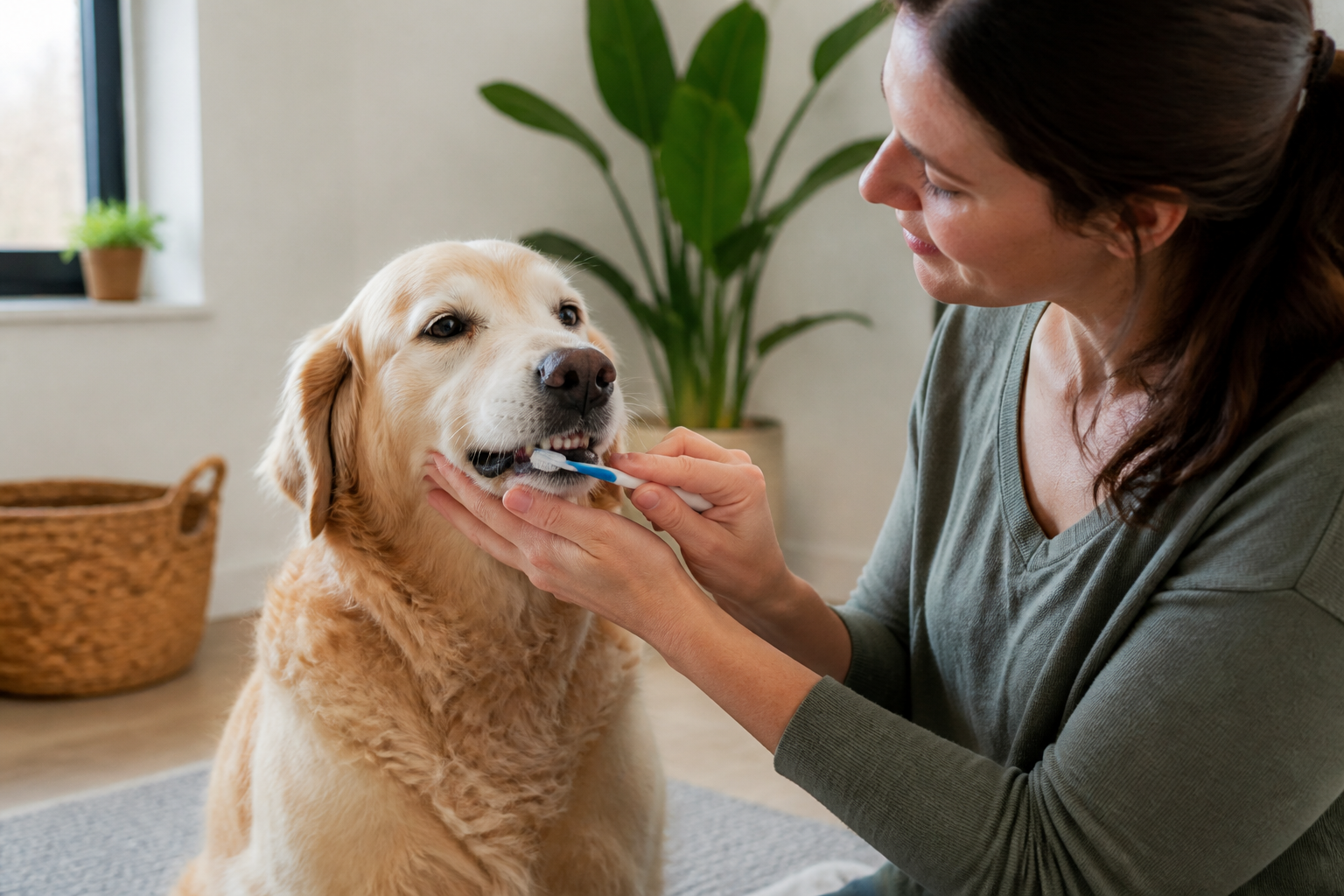
If you have never brushed your dog’s teeth before, do not expect to finish the whole mouth on the first try. Senior dogs can be set in their ways and may be sensitive to having their faces handled. Patience is the most important part of the process.
Step 1: Introduce the taste. / Put a small dab of dog toothpaste on your finger and let your dog lick it off. Do this for a few days until they get excited when they see the tube.
Step 2: Touch the gums. / While they are licking the paste, gently lift their lip and rub your finger along their gums. This gets them used to the sensation of you working inside their mouth.
Step 3: Introduce the tool. / Apply toothpaste to the brush or gauze. Let the dog lick the brush so they associate the bristles with the flavor they like.
Step 4: Start at the front. / Gently brush the large canine teeth and the small incisors at the very front. Use a circular motion and stay near the gum line where plaque accumulates.
Step 5: Move to the back. / Once they are comfortable with the front, slide the brush toward the back molars. This is where the heaviest tartar usually hides.
Step 6: Reward the effort. / Always end the session with a dental-safe treat or a favorite activity. You want your dog to view this as a positive bonding moment rather than a chore.
For a specific toothpaste option, consider Virbac C.E.T. Enzymatic Pet Toothpaste for Dogs and Cats - Poultry.
Bottom line: Success with senior dogs depends on a gradual introduction and a very gentle touch to avoid causing discomfort to sensitive gums.
Alternatives and Supplements for Senior Dental Health
Brushing is the gold standard, but it is not the only way to support oral health. Some senior dogs have cognitive issues or severe arthritis in the jaw that makes brushing difficult. In these cases, you can use a multi-layered approach with other products.
Dental Chews and Toys
Chewing is a natural way for dogs to scrape plaque off their teeth. However, you must be careful with the hardness of the chews. Avoid real bones, antlers, or very hard nylon toys for seniors, as these can easily snap a brittle tooth. Instead, look for softer dental chews like Greenies or Kong senior rubber toys. These provide mechanical cleaning without the risk of fractures.
Read our pet dental care tips for additional ideas about dental treats, brushing, and routine mouth checks.
Water Additives and Gels
Dental water additives are tasteless liquids you add to your dog’s bowl. They contain enzymes or compounds that help break down the biofilm on the teeth. This is a great "hands-off" option for dogs who refuse to have their mouths touched. Dental gels can also be applied to the gums with a finger and do not require active brushing to work.
Specialized Diets
Certain prescription and premium diets are formulated specifically for dental health. Brands like Royal Canin and Farmina Vet Life offer kibble that is larger and has a specific texture. Instead of crumbling immediately, the kibble stays together longer, forcing the dog to chew and providing a scrubbing action.
Our pharmacy at BaxterBoo provides access to these prescription diets through our partnership with Pet's Choice. If your veterinarian recommends a specific dental food to manage your senior dog's oral health, we can help you get those orders delivered right to your door.
You can also review our senior dog nutrition guide when considering age-related dietary needs.
The Role of Professional Care
Home care is meant to maintain the mouth, but it cannot remove hard tartar that has already turned into "stone." This hardened material, called calculus, requires professional scaling. Many owners worry about putting a senior dog under anesthesia for a cleaning. This is a valid concern that you should discuss thoroughly with your vet.
Modern veterinary medicine has made anesthesia much safer for seniors through pre-anesthetic blood work and tailored protocols. In many cases, the risk of untreated infection in the mouth is higher than the risk of a supervised dental procedure. If your dog has significant dental disease, a professional cleaning provides a "clean slate" that makes your at-home brushing much more effective.
Vet Tip: Always request a blood panel before any dental procedure involving anesthesia. This helps your vet confirm that your dog's liver and kidneys are healthy enough to process the medications safely.
Creating a Sustainable Routine
Consistency is better than intensity. Brushing for thirty seconds every day is far more effective than trying to do a ten-minute deep clean once a month. For senior dogs, routines provide comfort. Try to brush their teeth at the same time every day, perhaps right after a walk or before their evening meal.
As you brush, keep a close eye on the condition of the mouth. Watch for:
- Bleeding gums that do not improve with gentle cleaning.
- New lumps or bumps on the gums or under the tongue.
- Teeth that seem wobbly or have changed color.
- A sudden refusal to eat dry food or hard treats.
If you notice these signs, it is time for a checkup. Catching a problem early can prevent the need for more invasive oral surgery later.
Key Takeaway: Combining daily brushing with water additives and safe chews creates a comprehensive defense against dental disease in aging dogs.
Monitoring Your Progress
You will know your at-home efforts are working when your dog's breath improves and their gums look a healthy, vibrant pink rather than a dark, angry red. At BaxterBoo, we curate our dental collection to ensure you have access to the same professional-grade tools used by groomers and trainers. We want to make sure your senior dog's golden years are spent in comfort, not in pain from preventable tooth issues.
Our MVP Rewards program is a great way to save on these recurring needs, like toothpaste and dental chews. By staying consistent with your at-home care, you are doing more than just cleaning teeth. You are protecting your dog's heart, supporting their nutrition, and extending the quality of their life.
Conclusion
Cleaning an older dog's teeth at home requires a blend of patience, the right tools, and a very gentle touch. By focusing on soft brushes, enzymatic pastes, and supplemental chews, you can significantly reduce the risk of painful infections. Remember that home care is a partnership with your veterinarian. If you encounter significant tartar or signs of pain, seek professional help immediately.
- Use only dog-specific toothpaste and soft brushes.
- Introduce the routine slowly over several days or weeks.
- Supplement brushing with water additives and dental-safe toys.
- Monitor gums for redness, bleeding, or unusual growths.
Bottom line: Daily dental care is one of the most effective ways to support your senior dog's systemic health and overall comfort as they age.
To keep your routine consistent, consider setting up our Autoship programme for your favorite dental supplies. This ensures you never run out of the essentials while saving you money on every order.
FAQ
Is it too late to start brushing my senior dog's teeth if I never did it when they were young?
It is never too late to start, and even starting in the senior years can provide significant health benefits. While you may not be able to remove existing hard tartar, you can prevent new plaque from forming and reduce the bacterial load in the mouth. Just be sure to move much slower during the training phase to help your older dog adjust to the new sensation.
My senior dog's gums bleed a little when I brush. Should I stop?
Minor bleeding can be a sign of gingivitis, which means the gums are inflamed and need more regular cleaning. However, if the bleeding is heavy or if your dog seems to be in significant pain, you should stop and consult your veterinarian. They can determine if there is an underlying infection or if the gum tissue has become too fragile for standard brushing.
Can I just use dental chews instead of brushing for an older dog?
Dental chews are a helpful supplement, but they are generally not as effective as manual brushing. Chews often only clean the chewing surfaces of the teeth and may miss the gum line where the most dangerous bacteria reside. For the best results, use a combination of daily brushing and dental chews to ensure all surfaces of the teeth are being addressed.
What should I do if my senior dog absolutely refuses to let me brush their teeth?
If brushing causes too much stress or physical discomfort, do not force it. Instead, focus on dental water additives, oral rinses, and enzymatic gels that can be wiped onto the gums quickly. You can also talk to your vet about prescription dental diets available through our pharmacy partnership with Pet's Choice, which are designed to clean teeth simply through the act of eating.






