
 Save 15% on your 1st Autoship learn more

 Email us
 Live Chat
 FAQs
FAQs





Introduction
You are sitting on the couch when your dog leans in for a friendly lick, and the smell hits you. It is not just typical dog breath. It is a sharp, foul odor that makes you turn your head. When you lift their lip, you see yellow or brown crust along the gumline. This is a common moment for many pet owners, and it is usually the first sign that your dog needs a better dental routine. At BaxterBoo, we know that keeping a dog’s mouth clean is about more than just fresh breath. It is a critical part of their overall health that can prevent pain and expensive vet visits later in life. This guide covers everything from the basics of brushing to the best dental chews and when it is time to call in the professionals. Taking care of those dirty teeth now ensures your dog stays comfortable and happy for years to come.
Quick Answer: The most effective way to clean dirty dog teeth is a combination of daily brushing with dog-safe toothpaste and the use of mechanical cleaners like dental chews. If the buildup is hard and brown, your dog likely has tartar that requires a professional veterinary cleaning under anesthesia.
Understanding Plaque vs Tartar
Before you grab a toothbrush, it is helpful to understand exactly what you are trying to clean. Dental issues start with plaque. This is a sticky, colorless film of bacteria that forms on the teeth within hours of eating. Because it is soft, you can easily remove it with a brush or even a dental wipe.
If plaque stays on the teeth for more than 24 to 48 hours, it begins to harden. It mixes with the minerals in your dog’s saliva to create tartar, also known as calculus. Tartar is the hard, brown or yellow substance you see cemented to the teeth near the gums. Unlike plaque, tartar cannot be brushed away. It acts like a shield for bacteria, allowing them to burrow under the gumline and cause infection.
Ignoring this buildup leads to periodontal disease. This condition does not just stay in the mouth. The bacteria from infected gums can enter the bloodstream and eventually damage the heart, liver, and kidneys. This is why regular cleaning is a health necessity rather than a cosmetic choice.
Key Takeaway: Plaque is soft and easy to remove at home, but once it hardens into tartar, only a veterinarian can safely remove it.
The Gold Standard: Brushing Your Dog’s Teeth
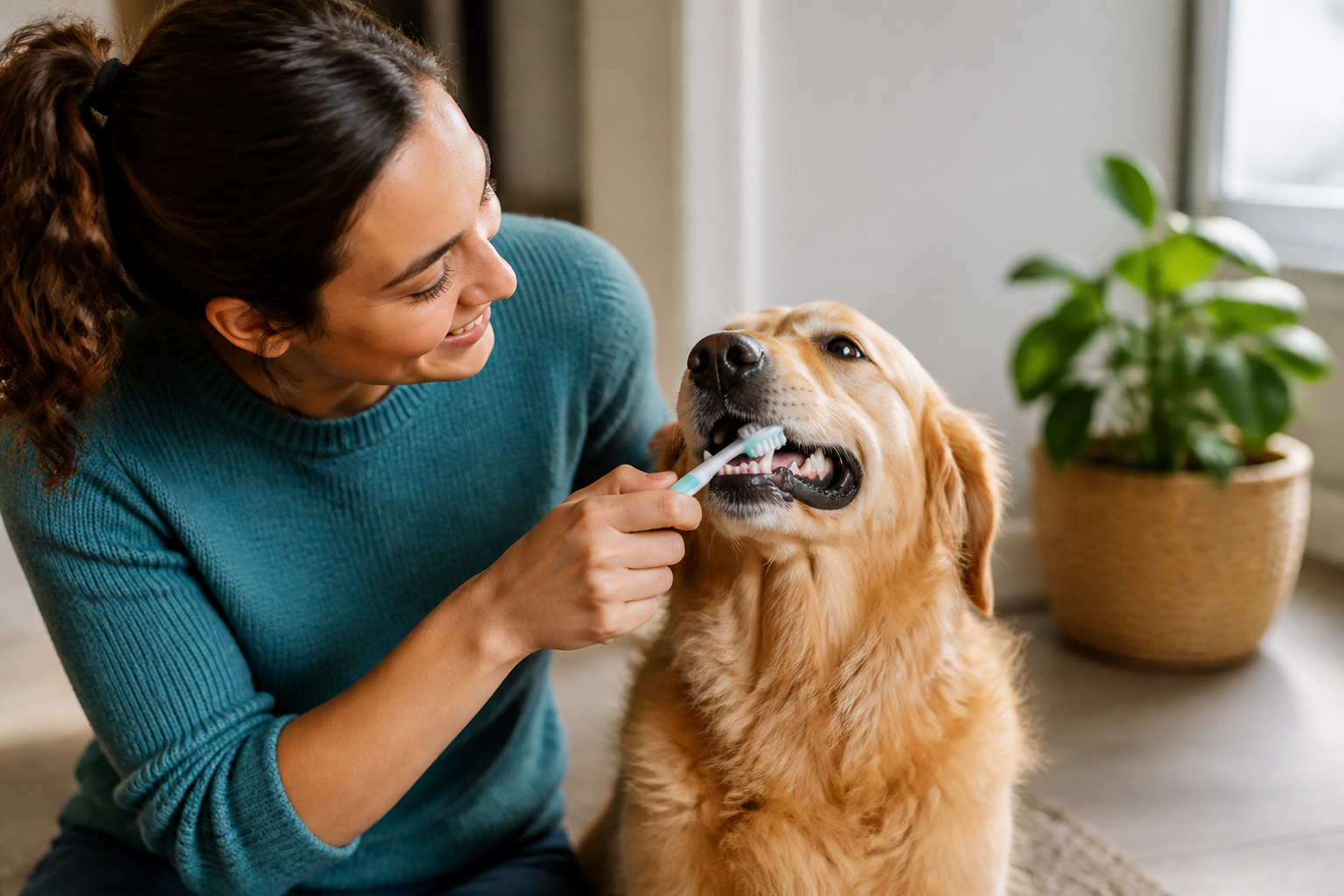
Brushing is the single most effective way to keep your dog’s teeth clean at home. While it might seem daunting if your dog is not used to it, most pets can learn to accept it with a little patience. You should aim to brush their teeth every day, or at least three times a week, to stay ahead of plaque formation.
Choosing the Right Tools
Never use human toothpaste on your dog. Many human pastes contain xylitol, an artificial sweetener that is highly toxic to dogs. They also contain foaming agents that are meant to be spit out, which dogs cannot do. Instead, use a toothpaste formulated specifically for pets. These come in flavors like poultry, beef, or peanut butter that dogs actually enjoy. You can find pet-safe toothpaste and brushing supplies in our dog dental care category.
For the brush, you have two main options. A traditional dog toothbrush has a long handle and angled bristles to reach the back molars. A finger brush is a small rubber cap that fits over your index finger. Finger brushes are often better for beginners or small dogs because they allow for more control and feel less threatening to the pet.
Step-by-Step Brushing Guide
Step 1: Get them comfortable. / Spend a few days just lifting your dog’s lips and touching their teeth with your finger. Reward them with a small treat so they associate mouth handling with something positive.
Step 2: Introduce the taste. / Put a small amount of dog toothpaste on your finger and let them lick it off. Most dogs love the flavor, which makes the next steps much easier.
Step 3: Start with a few teeth. / Rub the toothpaste onto the outside surfaces of the front teeth using your finger or a brush. Do not worry about the inside surfaces yet, as a dog’s tongue does a decent job of cleaning those.
Step 4: Reach the back. / Gradually work your way toward the large premolars and molars at the back of the mouth. This is where most tartar builds up.
Step 5: Keep it short. / A full brushing session should only take about one to two minutes. Always end on a happy note with praise or a favorite toy.
Vet Tip: If your dog’s gums bleed slightly when you first start brushing, it is often a sign of early gingivitis. Continue brushing gently to reduce the inflammation, but if the bleeding is heavy or persistent, schedule an exam with your veterinarian to check for deeper infection.
Using Dental Chews and Treats
Not every dog will sit still for a toothbrush. This is where dental chews become a valuable part of your toolkit. These treats are designed to be hard enough to provide mechanical scrubbing as the dog chews, helping to scrape away plaque. Browse our dog dental food and treats to find options for your dog’s routine.
Many popular brands, such as Greenies, also contain enzymes that help break down bacteria. When choosing a chew at BaxterBoo, look for the Veterinary Oral Health Council (VOHC) seal of approval. This seal means the product has been scientifically tested and proven to reduce plaque or tartar.
It is important to remember that dental chews add calories to your dog’s diet. If you give one every day, you may need to slightly reduce their meal portions to prevent weight gain. Always supervise your dog while they are enjoying a chew to ensure they do not swallow large chunks, which could lead to choking or a digestive blockage.
Why Texture Matters
The texture of a chew is what does the work. For example, a Kong toy stuffed with healthy treats can keep a dog chewing for twenty minutes. This prolonged chewing stimulates saliva production, which contains natural enzymes that protect the teeth. Avoid extremely hard items like sterilized bones, antlers, or hooves. These are often harder than the tooth enamel itself and are a leading cause of fractured teeth in aggressive chewers.
For more ideas, read our guide to the best dental chews for dogs.
Bottom line: Dental chews are an excellent supplement to brushing, but they should be used as one part of a larger dental plan rather than a total replacement.
Water Additives and Dental Wipes
If you are struggling with a senior dog or a pet with a very sensitive mouth, water additives and dental wipes are helpful alternatives. These products are designed for convenience and can help lower the bacterial load in the mouth. Our dog dental supplements include options for adding variety to your pet’s oral care routine.
Oral Solutions and Additives
Dental water additives are liquids that you mix into your dog’s daily drinking water. They typically contain ingredients like chlorhexidine or enzymes that kill bacteria on contact. While they do not provide the mechanical scrubbing that brushing does, they are very effective at reducing bad breath and slowing down the rate at which plaque forms. This is a great "hands-off" option for pets that are difficult to handle.
Dental Wipes
Wipes are textured pads that you wrap around your finger and rub over the teeth. They are more effective than water additives because they provide some physical friction to remove film. They are also less intimidating than a bulky toothbrush. Wipes are particularly useful for cleaning the front teeth and the outside of the canines where plaque is most visible.
For additional routine-building ideas, see these pet dental care tips.
The Role of Diet in Dental Health
What your dog eats every day has a direct impact on the cleanliness of their teeth. There is a common belief that dry kibble cleans teeth better than wet food because of its crunch. While kibble is generally better than soft food, most standard kibbles shatter too easily to provide much cleaning.
Prescription Dental Diets
If your dog is prone to heavy tartar buildup, your vet might suggest a prescription dental diet. We carry brands like Royal Canin and Farmina Vet Life through our pharmacy partnership that are specifically engineered for oral health. The kibble in these diets is larger and has a fibrous structure that does not shatter. Instead, the tooth sinks into the piece, and the fibers scrub the tooth surface as the dog bites down.
Natural Abrasives
Some fresh vegetables can act as natural toothbrushes. Raw carrot sticks or apple slices (without seeds or the core) require significant chewing. This mechanical action can help rub off soft plaque. These are low-calorie options that also provide vitamins, making them a great alternative to processed treats.
When Home Cleaning Is Not Enough
Even with the best home care, most dogs will eventually need a professional dental cleaning. This is especially true for small breeds like Chihuahuas or Yorkies, whose crowded teeth trap food and bacteria more easily.
Signs of Dental Disease
You should monitor your dog’s mouth weekly for signs that go beyond simple "dirty teeth." If you notice any of the following, home brushing is no longer the solution:
- Persistent bad breath that does not go away after brushing
- Gums that are bright red, swollen, or bleeding
- Loose or broken teeth
- Difficulty eating or dropping food from the mouth
- Pawing at the face or sensitivity when you touch their muzzle
- Visible brown tartar that covers more than half the tooth
If these symptoms appear, it is time to consult your veterinarian. A professional cleaning involves scaling the teeth with ultrasonic tools to remove tartar from above and below the gumline. This procedure is done under general anesthesia to ensure the vet can reach every part of the mouth safely and take dental X-rays to check for hidden abscesses.
Read warning signs of dental problems in dogs to help you identify concerns that may need veterinary attention.
Key Takeaway: Professional cleanings are a medical necessity when tartar has formed below the gumline, as home tools cannot reach these areas safely.
BaxterBoo Pharmacy and Prescription Care
Managing a dog with chronic dental issues often requires specialized support. Our pet pharmacy offers access to prescription medications and veterinary products when recommended by your veterinarian. If your vet determines that your dog has a high risk for periodontal disease, they may prescribe specific diets or oral rinses that are more potent than over-the-counter versions.
Using our pharmacy service is a convenient way to get these items delivered directly to your door. We carry top brands like Royal Canin and Farmina to ensure you have access to the exact nutrition your vet recommends. Transitioning to a prescription diet can significantly reduce the frequency of professional cleanings for many dogs.
Creating a Sustainable Routine
The secret to clean dog teeth is not a single product but a consistent routine. It is much easier to spend two minutes a day on preventative care than it is to deal with an infected tooth later on.
A Sample Dental Schedule
- Daily: Brush the teeth with dog-safe toothpaste or use a dental wipe.
- Daily: Provide one VOHC-approved dental chew or a stuffing-filled chew toy.
- Weekly: Check the gums for redness and the teeth for new brown spots.
- Annually: Schedule a wellness exam with your vet that includes a thorough dental check.
By combining these steps, you can keep your dog’s mouth healthy and their breath fresh. At BaxterBoo, we have been helping pet owners find the right tools for this routine since 2006. Whether you need a starter brush kit or a recurring order of dental treats, we are here to support your pet’s wellness journey.
For recurring dental supplies, explore our Autoship programme.
Bottom line: Consistency is the most important factor in preventing dental disease and keeping your dog's teeth sparkling clean.
Conclusion
Cleaning dirty dog teeth is one of the best things you can do for your pet’s long-term comfort. While the initial task of brushing might seem difficult, the benefits of avoiding pain, tooth loss, and systemic infections are well worth the effort. Start slow, use the right tools, and supplement with high-quality chews and toys to create a well-rounded oral care plan. If you ever notice signs of pain or heavy tartar, reach out to your veterinarian for a professional evaluation. For all your dental care needs, from enzymatic toothpaste to prescription diets, you can find a curated selection of over 500 brands at BaxterBoo. Consider signing up for our Autoship programme to ensure you never run out of the dental chews and supplies that keep your dog's smile bright.
FAQ
Can I use baking soda to clean my dog’s teeth?
While baking soda is not toxic in very small amounts, it has a high alkaline content and a salty taste that most dogs dislike. It can also upset their stomach if they swallow too much of it. It is much better to use a flavored dog toothpaste that contains enzymes specifically designed to break down canine plaque.
How often should my dog get a professional dental cleaning?
Most dogs benefit from a professional cleaning every one to two years, though this varies by breed and individual health. Small breeds and senior dogs may require more frequent visits. Regular home brushing can often extend the time between these professional appointments by keeping tartar buildup to a minimum.
Are dental chews enough to keep teeth clean without brushing?
Dental chews are a great help, but they are not a total replacement for brushing. Chews mostly clean the chewing surfaces of the molars and can miss the canine teeth and the gumline where many infections start. For the best results, use chews as a supplement to a regular brushing routine.
Why does my dog have bad breath even after I clean their teeth?
If your dog’s breath remains foul after cleaning, it may indicate an infection deep under the gumline or a systemic issue like kidney or liver disease. It could also mean there is a "pocket" or abscess that you cannot see. If a thorough cleaning does not improve their breath, you should schedule a visit with your veterinarian for a full health check.






